
By Erika Segales, El Deber:
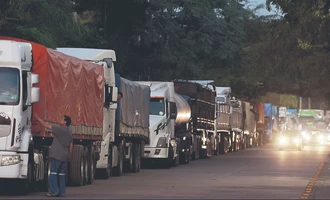
Fuel supply lines continue, mainly in the country’s central axis. / Photo: Ricardo Montero
The opening of the fuel market represents a significant change aimed at ending the monopoly and reducing pressure on international reserves, but it requires dollars, efficient logistics, and clear regulations
The availability of U.S. dollars, logistics capable of guaranteeing supply, and clear regulations will be decisive factors in determining whether opening the fuel market to private imports produces tangible results. Experts and industry representatives agree that Supreme Decree No. 5644, which expands private-sector participation, is an important step, but they warn that the measure’s success will depend on three key factors.
On June 29, the government of Rodrigo Paz enacted Supreme Decree No. 5644, authorizing private individuals and companies to import diesel and gasoline both for their own consumption and for sale in the domestic market, while maintaining the sale of subsidized fuels through Yacimientos Petrolíferos Fiscales Bolivianos (YPFB).
“Whether the importer is a private company or the State, whether it is YPFB or a private firm, imports require dollars, and that ultimately depends on the exchange rate,” explained Raúl Velásquez, hydrocarbons expert at Fundación Jubileo, in an interview with EL DEBER.
Velásquez emphasized that Bolivia imports approximately 95% of the diesel and nearly 60% of the gasoline it consumes. As a result, the first challenge remains access to foreign currency, since any company seeking to supply the market must have dollars available to purchase fuel abroad.
Although allowing private firms to import fuel for commercial distribution could help reduce pressure on international reserves.
“Now, part of the dollars used for fuel imports will come from the private sector, and the Central Bank of Bolivia (BCB) will be able to save the dollars that private companies contribute. I believe it is a good measure because it introduces competition into the sector and reduces dependence solely on YPFB,” said former Hydrocarbons Minister Álvaro Ríos.
However, logistics must also be considered as a second key factor. While private participation will broaden supply sources, service-station operators argue that delays in fuel dispatch remain one of the main problems that must be addressed.
Susy Dorado, manager of the Santa Cruz Association of Service Station Owners (Asosur), stated that delays at distribution plants continue to affect supply.
“As the saying goes, what is visible speaks for itself. We cannot hide the long lines we are seeing today. These are due to delays in YPFB’s logistics. On our side, our tanker trucks are practically sleeping at the gates of the plants waiting to enter and collect product, but the delays and the logistics system currently being used are what cause the lines at service stations,” she said.
According to Dorado, Santa Cruz requires approximately 3.5 million liters per day of both diesel and gasoline, but current allocations do not reach those volumes.
For specialists, opening the market will help diversify supply, although successful distribution will also depend on the efficiency of the entire logistics chain, from importation to delivery at retail stations.
A third factor is the regulation that must be issued by the National Hydrocarbons Agency (ANH). Although the new decree authorizes service stations to sell both YPFB fuels and privately imported fuels simultaneously, that possibility still depends on the forthcoming regulatory framework.
Dorado noted that service stations are awaiting those regulations to understand the technical and administrative requirements they will need to meet before beginning sales. She estimated that if the resolution is issued within the expected timeframe and procedures move forward quickly, the first privately imported fuels could begin reaching the market during the first days of August.
Hydrocarbons Minister Marcelo Blanco said that one of the aspects to be regulated by the ANH will be a reference price.
“There will be a reference price established by the ANH. There is a regulatory entity that will set this benchmark price. If someone exceeds that reference price, we will first see what the regulations stipulate, because a regulatory framework will be established. In addition, they will be punished by consumers. If you offer something for Bs 100 while the station next door sells it for Bs 50, people simply will not buy it,” he said.
The minister also assured that subsidized fuel will continue to be available on the market at current prices. “The imports carried out by Yacimientos will not experience any change in price whatsoever,” he emphasized.
Por Erika Segales, El Deber:
Las filas por el abastecimiento de combustibles persisten, principalmente en el eje central del país./Foto: Ricardo Montero
La apertura del mercado de combustibles representa un cambio relevante para dejar atrás el monopolio y reducir la presión sobre las reservas internacionales, pero exige dólares, logística eficiente y reglas claras
La disponibilidad de dólares, una logística que garantice el abastecimiento y una reglamentación clara serán determinantes para que la apertura del mercado de combustibles a la importación por parte de privados tenga resultados concretos. Expertos y representantes del sector coinciden en que el Decreto Supremo N° 5644 que amplía la participación de privados es un paso importante, pero advierten que los resultados de la medida dependerán de tres factores.
El 29 de junio, el Gobierno de Rodrigo Paz promulgó el Decreto Supremo N° 5644 que autoriza importar diésel y gasolina a personas naturales y jurídicas privadas tanto para consumo propio como para su comercialización en el mercado interno, y al mismo tiempo mantiene la venta de combustibles subvencionados por parte de Yacimientos Petrolíferos Fiscales Bolivianos (YPFB).
“Ya sea que el privado o el Estado, ya sea que YPFB o una empresa privada importe, requiere dólares, y eso pasa por el tipo de cambio”, explicó el experto en hidrocarburos de la Fundación Jubileo, Raúl Velásquez en entrevista con el grupo EL DEBER.
El experto subrayó que Bolivia importa alrededor del 95% del diésel y cerca del 60% de la gasolina que consume, por lo que el primer desafío sigue siendo el acceso a divisas ya que cualquier empresa interesada en abastecer el mercado deberá contar con dólares para comprar el combustible en el exterior.
Aunque el ingreso de privados al mercado de importación de combustibles para la comercialización puede reducir la presión sobre las reservas internacionales.
“Ahora una parte de estos dólares destinados a la importación de combustibles van a salir del sector privado, y el Banco Central de Bolivia (BCB) va a poder ahorrar los dólares que el sector privado aumente. Creo que es una buena medida porque permite introducir competencia en el sector, dejar de depender únicamente de YPFB”, resaltó el exministro de hidrocarburos Álvaro Ríos.
No obstante, también se debe considerar la logística como un segundo factor ya que si bien el ingreso de privados ampliará las fuentes de abastecimiento, representantes de las estaciones de servicio sostienen que las demoras en el despacho es uno de los principales problemas a resolver.
La gerente de la Asociación de Empresarios Propietarios de Estaciones de Servicio (Asosur) de Santa Cruz, Susy Dorado, aseguró que actualmente las demoras en las plantas de distribución continúan afectando el abastecimiento.
“Lo que se ve se anota, dicen. No podemos ocultar las largas filas que tenemos ahora y esto es debido a las demoras que tiene la logística de YPFB, de parte de nosotros nuestras cisternas están prácticamente durmiendo en la puertas de las plantas para poder ingresar y recoger el producto pero las demoras que tienen, la logística que usan este momento es lo que causa la fila en los surtidores”, señaló.
Según la representante del sector, Santa Cruz requiere aproximadamente 3,5 millones de litros diarios tanto de diésel como de gasolina, pero la programación actual no alcanza esos volúmenes.
Para los especialistas, la apertura del mercado permitirá diversificar la oferta, aunque el abastecimiento dependerá también de que la cadena logística, desde la importación hasta la distribución en surtidores.
Asimismo, se debe considerar como un tercer elemento la reglamentación que debe emitir la Agencia Nacional de Hidrocarburos (ANH), aunque el nuevo decreto autoriza que las estaciones comercialicen simultáneamente combustibles de YPFB e importados por privados, esa posibilidad aún depende de la normativa.
Dorado indicó que los surtidores esperan esa reglamentación para conocer los requisitos técnicos y administrativos que deberán cumplir antes de iniciar la comercialización. Estimó que, si la resolución se emite dentro de los plazos previstos y los trámites avanzan con rapidez, los primeros combustibles privados podrían comenzar a venderse durante los primeros días de agosto.
El ministro de hidrocarburos Marcelo Blanco dijo que uno de los aspectos que reglamentará la ANH será un precio referencial.
“Habrá un precio de referencia establecido por la ANH. Hay una entidad que regula y va a sacar el precio de referencia, si alguien sobrepasa el precio de referencia, primero se verá qué va a decir la normativa, porque se va a establecer un reglamento, además va a ser castigado por el consumidor, si usted ofrece a Bs 100 algo que vende al lado a Bs 50 pesos no lo va a comprar”, expresó.
El ministro aseguró que se continuará ofertando en el mercado el combustible subvencionado, con los precios actuales. “Las importaciones que tiene Yacimientos no van a sufrir ninguna alteración en cuanto a precio se refiere”, remarcó.


Leave a Reply