By Brújula Digital:
Martínez warned that this measure violates the 1904 Treaty and its 1937 supplementary protocol, which guarantee Bolivia free transit “at all times, in all places, and for all types of goods.”

Stranded trucks / Unitel
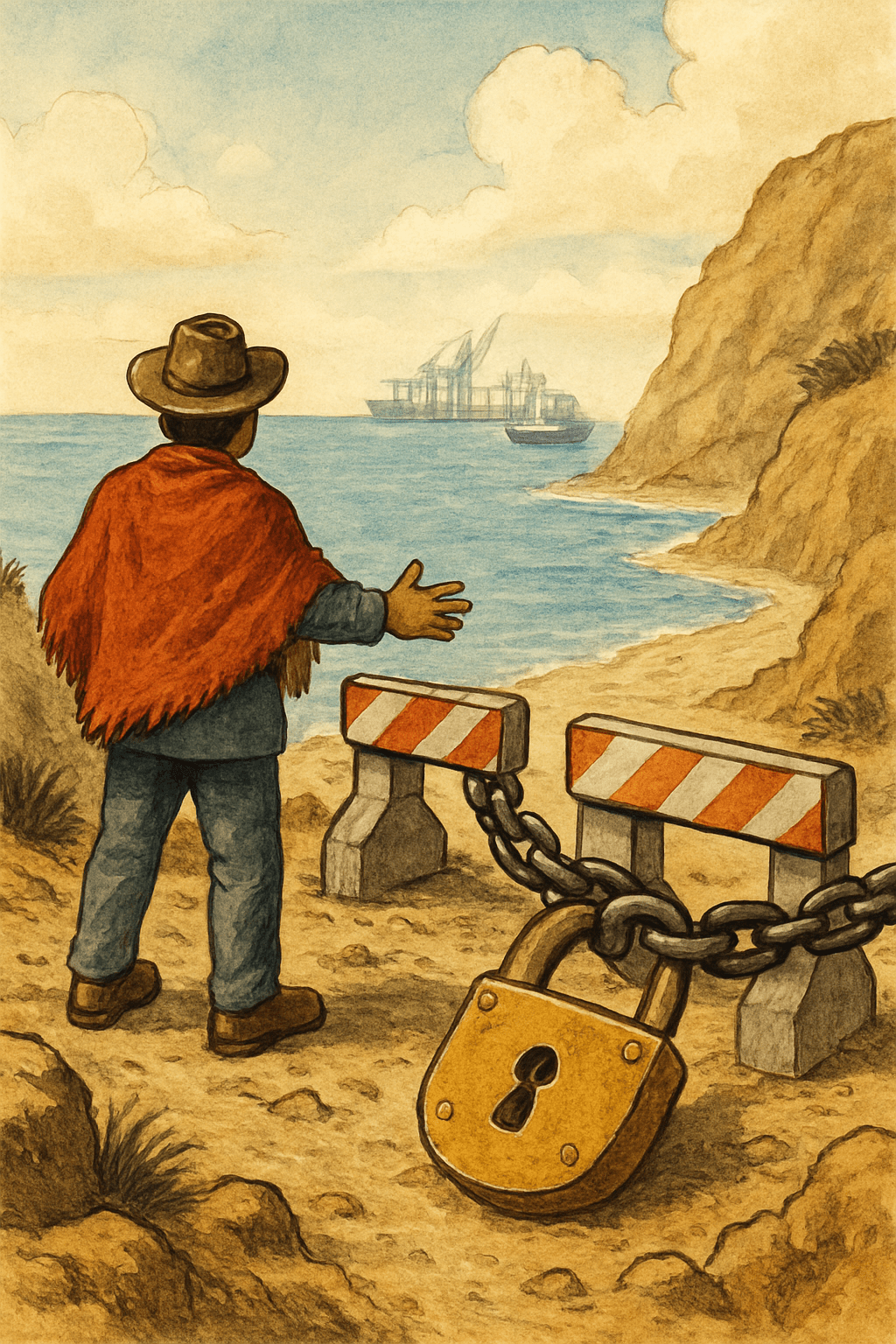
Diplomat and international affairs analyst Ricardo Martínez described as “an unfriendly and bad-faith action” the unilateral decision by the Chilean government to restrict border transit hours for Bolivian trade at Colchane, limiting operations to certain shifts and ending 24-hour service.
Martínez warned that the measure violates the 1904 Treaty and its 1937 supplementary protocol, which guarantee Bolivia free transit “at all times, in all places, and for all types of goods.” He called for a firm diplomatic response to reverse what he considers a deliberate obstacle at a time when Bolivia is facing its worst logistical crisis in years. Colchane is the Chilean border crossing connected to Pisiga, Oruro.
The explanation provided by Chilean authorities is “low user traffic” in the area and ongoing road repairs. “As communicated on June 17, due to ongoing repair work and the low flow of users, the temporary closure of the border complex during the night shift will remain in effect until November 30 of this year,” states a message posted on social media by the Tamarugal Provincial Delegation.
The La Paz Departmental Transport Chamber (Cadetran) warned that the nighttime closure of the border crossing has left between 400 and 500 Bolivian trucks stranded at the site. According to Chilean authorities, the measure will remain in force until November.
“It is incredible that while Bolivia, through its foreign minister, is striving to maintain good relations with Chile—including the possibility of restoring ambassador-level diplomatic ties—we receive responses like this,” added Martínez, who is also Executive Director of the Laboratory for the Analysis of International Relations and Diplomacy Policies (Laprid).
The analyst emphasized that the timing of Santiago’s decision further strengthens perceptions of hostility, as Bolivia is experiencing one of its worst economic and social crises following more than 50 days of internal blockades and protests that disrupted much of the country.
“I do not know whether Chile’s measure, beyond everything else, could imply bad faith by seeking to further aggravate Bolivia’s already delicate situation. It is a gesture that does nothing to promote bilateral understanding,” he said.
Finally, Martínez called on Bolivia’s Foreign Ministry to act swiftly and firmly, using all available diplomatic and legal mechanisms—including those provided under the 1904 Treaty and through international organizations—to demand the immediate lifting of the restriction.
BD/RPU
Por Brújula Digital:
Martínez advirtió que esta medida viola el Tratado de 1904 y su protocolo complementario de 1937, que garantizan a Bolivia el libre tránsito “en todo tiempo, en todo lugar y para todo tipo de mercancías”
Camiones varados/Unitel
El diplomático y analista internacional Ricardo Martínez calificó como “una acción inamistosa y de mala fe” la decisión unilateral adoptada por el gobierno de Chile de restringir los horarios de tránsito fronterizo para el comercio boliviano en Colchane al limitar la operación a ciertos turnos y negar la atención las 24 horas.
Martínez advirtió que esta medida viola el Tratado de 1904 y su protocolo complementario de 1937, que garantizan a Bolivia el libre tránsito “en todo tiempo, en todo lugar y para todo tipo de mercancías”, y exigió una respuesta diplomática firme para revertir lo que considera un obstáculo deliberado en medio de la peor crisis logística que enfrenta el país. Colchane es el paso desde Pisiga, Oruro.
La razón dada por las autoridades chilenas es “el bajo flujo de usuarios” en la zona y arreglos en la carretera. “Tal como se comunicó el 17 de junio pasado, debido a las reparaciones en curso y al bajo flujo de usuarios, se informa el cierre temporal del complejo durante el turno nocturno hasta el 30 de noviembre del presente año”, dice el mensaje en redes sociales de la Delegación Provincial de Tamarugal.
La Cámara Departamental de Transporte (Cadetran) de La Paz advirtió que el cierre nocturno del paso fronterizo provocó que entre 400 y 500 camiones bolivianos permanezcan varados en el lugar. La medida será mantenida hasta noviembre, dicen autoridades chilenas.
“Es increíble que mientras Bolivia, a través de su canciller, se afana por tener buenas relaciones con Chile, inclusive con la posibilidad de reanudar vínculos a nivel de embajador, recibamos estas respuestas”, agregó Martínez, también director ejecutivo del Laboratorio de Análisis de Políticas de Relaciones Internacionales y Diplomacia (Laprid).
El especialista subrayó que el momento elegido por Santiago para tomar esta decisión agrava aún más la percepción de hostilidad, pues Bolivia atraviesa una de sus peores coyunturas económicas y sociales luego de más de 50 días de bloqueos y movilizaciones internas que paralizaron el país.
“No sé si la medida de Chile más allá, podría implicar mala fe, pretendiendo agravar aún más la situación de Bolivia en este momento, que es muy delicada. Es una muestra que no ayuda en nada al entendimiento bilateral”, afirmó.
Finalmente, Martínez hizo un llamado a la Cancillería boliviana para que actúe con celeridad y firmeza, utilizando todos los mecanismos diplomáticos y jurídicos disponibles, incluidos los canales del Tratado de 1904 y los organismos internacionales, para exigir el levantamiento inmediato de la restricción.
BD/RPU


Leave a Reply