
By El Diario:
- Analysts Ramiro Cavero and Rodrigo Regalsky believe that the new exchange rate regime for the U.S. dollar requires an inflow of resources from abroad in order to stabilize.
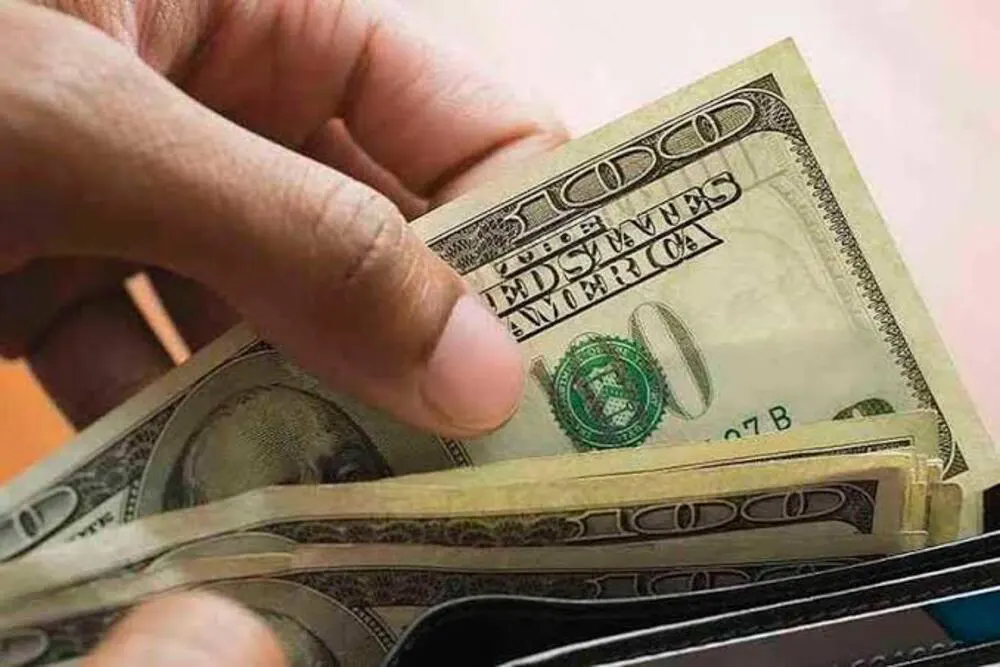
Under the new floating exchange rate system, roadblocks and legal uncertainty are likely to cause the U.S. dollar to appreciate against the boliviano, according to Ramiro Cavero, an economist with Alianza Libre. For that reason, he argues that a climate of social stability is needed to attract capital from foreign investors.
Unlike the former fixed exchange rate system, the new regime will allow for greater fluctuations, which could create uncertainty during the initial stage. People need predictability in order to produce, import, export, and invest.
A variable exchange rate always generates expectations and speculation until the market stabilizes. Cavero considers it essential for the country to secure a significant injection of foreign currency from the International Monetary Fund (IMF) or other sources capable of providing freely available resources to strengthen international reserves and support the new exchange rate framework.
The new official exchange rate, which began at 9.76 bolivianos per dollar, represents recognition of a reality that the market had already been reflecting for several months. He explained that the official adjustment virtually matches the value already prevailing in the parallel market and marks the beginning of a new phase for the Bolivian economy.
One of the first effects, he said, should be that the public will be able to go to financial institutions and purchase dollars at the new official exchange rate, provided that the government guarantees the availability of foreign currency. However, he warned that ensuring such availability will be the first major challenge.
Meanwhile, financial analyst Rodrigo Regalsky noted that the policy known as “Bolivianization,” introduced in 2008 and strengthened by booming revenues from natural gas and mining, enabled an abundant circulation of U.S. dollars throughout the national economy for many years.
However, that situation changed dramatically because those resources were not used to develop highly productive sectors capable of generating new sources of foreign exchange, leaving the country heavily dependent on reserves that are now virtually exhausted.
Regalsky stated that three distinct markets currently coexist: the official market, the parallel market, and the market linked to digital platforms and cryptocurrencies, each with its own exchange rate. Although some banks are still able to obtain dollars through specific operations, access remains very limited, and physical dollar bills command a higher value because of their scarcity.
Por El Diario:
- Los analistas Ramiro Cavero y Rodrigo Regalsky consideran que el nuevo tipo cambiario del dólar requiere de inyección de recursos provenientes del extranjero para poder estabilizarse.
En el nuevo esquema del dólar fluctuante, los bloqueos y la inseguridad jurídica ocasionarán un incremento de la moneda norteamericana respecto al boliviano, según análisis de Ramiro Cavero, economista de la Alianza Libre; por ello se requiere un clima de estabilidad social para atraer capitales de inversionistas extranjeros.
A diferencia del antiguo sistema fijo, ahora existirán mayores variaciones, lo que podría generar incertidumbre en una primera etapa, la gente necesita certidumbre para producir, importar, exportar e invertir.
Un tipo de cambio variable siempre genera expectativas y especulación hasta que el mercado logre estabilizarse, el analista considera imprescindible que el país obtenga una importante inyección de divisas provenientes del Fondo Monetario Internacional (FMI) u otras fuentes que proporcionen recursos de libre disponibilidad que permitan fortalecer las reservas internacionales y sostener el nuevo esquema cambiario.
El nuevo tipo de cambio oficial, que se inició con 9,76 bolivianos por dólar, representa el reconocimiento de una realidad que el mercado ya venía reflejando desde hace varios meses, quien explicó que el ajuste oficial prácticamente iguala el valor que ya se manejaba en el mercado paralelo y marca el inicio de una nueva etapa para la economía boliviana.
Uno de los primeros efectos, sostuvo, debería ser que la población pueda acudir a las entidades financieras y adquirir dólares al nuevo tipo de cambio oficial, siempre y cuando el Gobierno garantice la disponibilidad de divisas; sin embargo, advirtió que ese será precisamente el primer gran reto.
Por su parte, el analista financiero, Rodrigo Regalsky, considera que la denominada «bolivianización», impulsada desde 2008 y fortalecida gracias al auge de los ingresos provenientes del gas y la minería, permitió durante años una abundante circulación de dólares en la economía nacional.
Sin embargo, ese escenario cambió radicalmente, pues esos recursos no fueron aprovechados para desarrollar sectores altamente productivos que generaran nuevas fuentes de divisas, dejando al país con una fuerte dependencia de reservas que hoy prácticamente se encuentran agotadas.
Regalsky sostuvo que hoy conviven tres mercados distintos: el oficial, el paralelo y el vinculado a plataformas digitales y criptomonedas, cada uno con una cotización diferente. Aunque algunos bancos todavía logran conseguir dólares mediante operaciones específicas, el acceso sigue siendo muy limitado y los billetes físicos adquieren un valor mayor debido a su escasez.


Leave a Reply