
By El Diario:
Quinoa Shows Unique Nutritional Qualities Compared with Varieties from Eight Countries
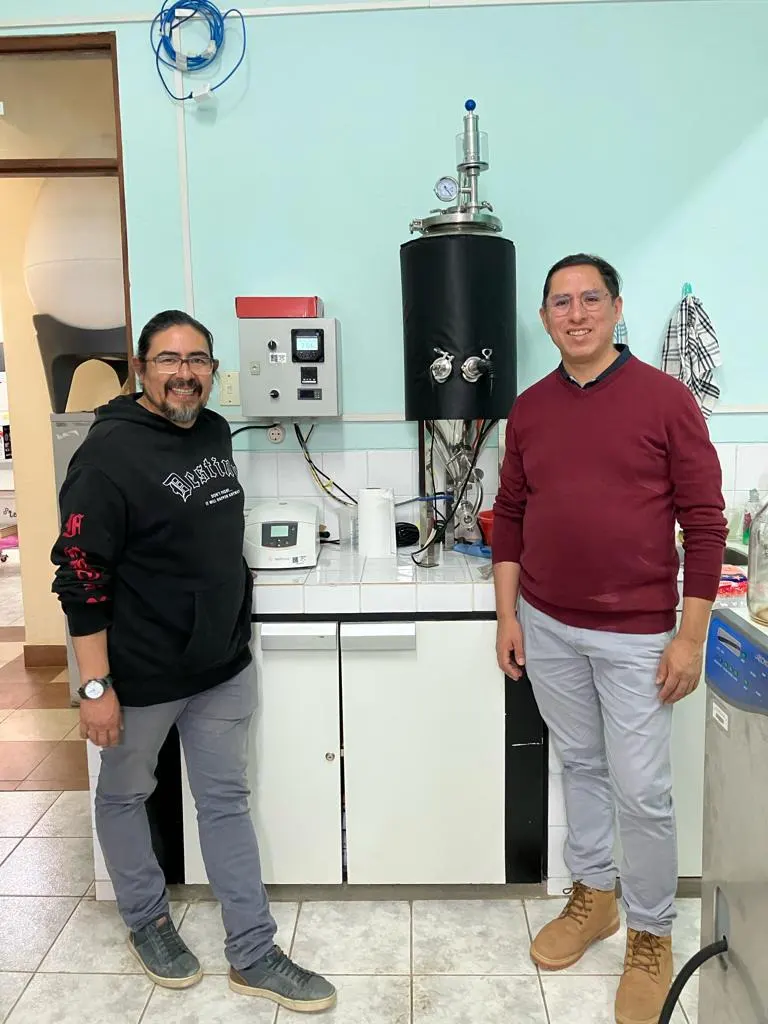
Research led by the Higher University of San Andrés (UMSA), in collaboration with Lund University in Sweden and carried out together with producers, public institutions, and international cooperation partners, found that quinoa realgrown between the Uyuni and Coipasa salt flats stands out for its fiber content, minerals, and unique nutritional profile compared with varieties studied from eight countries.
The study compared quinoa samples from Bolivia, Peru, Ecuador, Colombia, the United States, Spain, India, and China. Among them, Bolivian quinoa real showed higher levels of fiber and minerals such as iron, as well as a fatty acid composition considered more favorable for health and an attractive profile of essential amino acids.
Fiber promotes digestive health, minerals play essential roles in the body, and essential amino acids help build and repair muscles and tissues.
The findings were published in the scientific journal npj Science of Food, part of the Nature group, one of the most respected international platforms for scientific research dissemination. The study and article were developed by Mauricio Peñarrieta, researcher and professor at UMSA’s Institute of Chemical Research; Erick Loayza, associate researcher at UMSA; and Javier Linares, associate professor at Lund University.
“Yes, Bolivian quinoa real has a very interesting nutritional profile, especially regarding minerals, fiber, and fatty acids. This Bolivian variety showed higher levels of these components than the samples compared from other countries,” said Linares, a Bolivian researcher trained at UMSA who is currently part of Lund University.
A QUINOA SHAPED BY EXTREME CONDITIONS
According to the researchers, one key factor behind these characteristics may be the environment in which the crop grows. Quinoa real is cultivated in the inter-salt-flat region between Uyuni and Coipasa, an area characterized by high altitude, arid conditions, saline soils, and strong temperature fluctuations between day and night.
“It is a very unique ecosystem. All of these extreme conditions likely cause quinoa to develop adaptation mechanisms, and those mechanisms are related to the nutritional components it contains,” Linares explained.
For years, producers and consumers have highlighted the qualities of Bolivian quinoa real. However, the researchers noted that scientific evidence was needed to compare its characteristics with those of varieties grown elsewhere in the world.
For Peñarrieta, this work provides scientific support for a strategic national product and advances the concept of scientific sovereignty, understood as Bolivia’s ability to study, value, and scientifically demonstrate the richness of its own resources.
“When we say that our products are good, we need something that scientifically validates that claim and gives it the value of scientific sovereignty. Bolivian quinoa real has an impact because it possesses chemical properties that differ from those of other varieties, and that is what this research has demonstrated,” he said.
He also explained that the study was made possible through a joint effort involving academia, producers, exporters, the government, and international cooperation organizations, including Swisscontact and Swedish development cooperation.
“This type of research means that when we speak tomorrow about the properties of quinoa real, it will no longer be a subjective perception but knowledge supported by scientific evidence. That is the concept of building scientific sovereignty: demonstrating that academia serves society through research,” Peñarrieta said.
Por El Diario:
Quinua posee cualidades nutricionales únicas frente a variedades de 8 países
Una investigación impulsada por la Universidad Mayor de San Andrés (UMSA), en colaboración con la Universidad de Lund, en Suecia, y desarrollada junto a productores, instituciones públicas y aliados de la cooperación internacional, encontró que la quinua real cultivada entre los salares de Uyuni y Coipasa destaca por su contenido de fibra, minerales y un perfil nutricional único frente a variedades estudiadas de ocho países.
El estudio comparó muestras de quinua provenientes de Bolivia, Perú, Ecuador, Colombia, Estados Unidos, España, India y China. Entre ellas, la quinua real boliviana mostró mayores niveles de fibra y minerales, como el hierro, además de una composición de ácidos grasos, considerada más favorable para la salud, y un perfil atractivo de aminoácidos esenciales.
La fibra favorece la salud digestiva, los minerales participan en funciones esenciales del organismo y los aminoácidos esenciales ayudan a formar y reparar músculos y tejidos.
Los resultados fueron publicados en la revista científica npj Science of Food, del grupo Nature, una de las plataformas internacionales más reconocidas para la difusión de investigaciones científicas. El estudio y el artículo fueron desarrollados por el docente investigador del Instituto de Investigaciones Químicas de la UMSA, Mauricio Peñarrieta; el investigador asociado de la UMSA, Erick Loayza; y el profesor asociado de la Universidad de Lund, Javier Linares.
“Sí, la quinua real boliviana tiene un perfil nutricional muy interesante, sobre todo en minerales, fibra y ácidos grasos. Esta variedad boliviana presentó mayores niveles de estos componentes frente a las muestras comparadas de otros países”, informó Linares, el investigador boliviano formado en la UMSA y que actualmente es parte de la Universidad de Lund.
UNA QUINUA MOLDEADA POR CONDICIONES EXTREMAS
Para los investigadores, una de las claves de estas características podría encontrarse en el lugar donde crece este cultivo. La quinua real se desarrolla en la zona intersalar, entre Uyuni y Coipasa, un entorno marcado por la altitud, la aridez, los suelos salinos y fuertes cambios de temperatura entre el día y la noche.
“Es un ecosistema muy peculiar. Todas estas condiciones extremas seguramente hacen que la quinua desarrolle mecanismos de adaptación y esos mecanismos están relacionados con los componentes nutricionales que tiene”, señaló Linares.
Durante años, productores y consumidores destacaron las cualidades de la quinua real boliviana; sin embargo, los investigadores resaltan que hacía falta evidencia científica que permitiera comparar sus características con las de variedades cultivadas en otras partes del mundo.
Para Peñarrieta, este trabajo permite dar soporte científico a un producto estratégico para el país y avanzar hacia una ciencia soberana, entendida como la capacidad de Bolivia de estudiar, valorar y demostrar científicamente la riqueza de sus propios recursos.
“Cuando nosotros decimos que nuestros productos son buenos, necesitamos algo que valore científicamente eso, que le dé ese valor de ciencia soberana. La quinua real boliviana tiene un impacto porque tiene propiedades químicas diferentes a las otras y eso es lo que se ha demostrado en este trabajo”, sostuvo.
Además, detalló que el estudio fue posible gracias a un esfuerzo conjunto entre la academia, productores, exportadores, el Estado y la cooperación internacional, con Swiss Contact y la cooperación sueca.
“Este tipo de investigación permite que mañana, cuando hablemos de las propiedades de la quinua real, no sea una percepción subjetiva, sino un conocimiento con soporte científico. Ese es el concepto de construir ciencia soberana: demostrar que la academia responde a la sociedad a través de la investigación”, sostuvo Peñarrieta.


Leave a Reply