
By Milton Condori, Vision 360:
MAS Government Used International Reserves to Sustain the Fixed Exchange Rate for 15 Years, Analysts Say
That exchange-rate regime dates back to 2011 and remained in force during the time the governments of the blue party were in power. This week, the government of Rodrigo Paz abolished it.
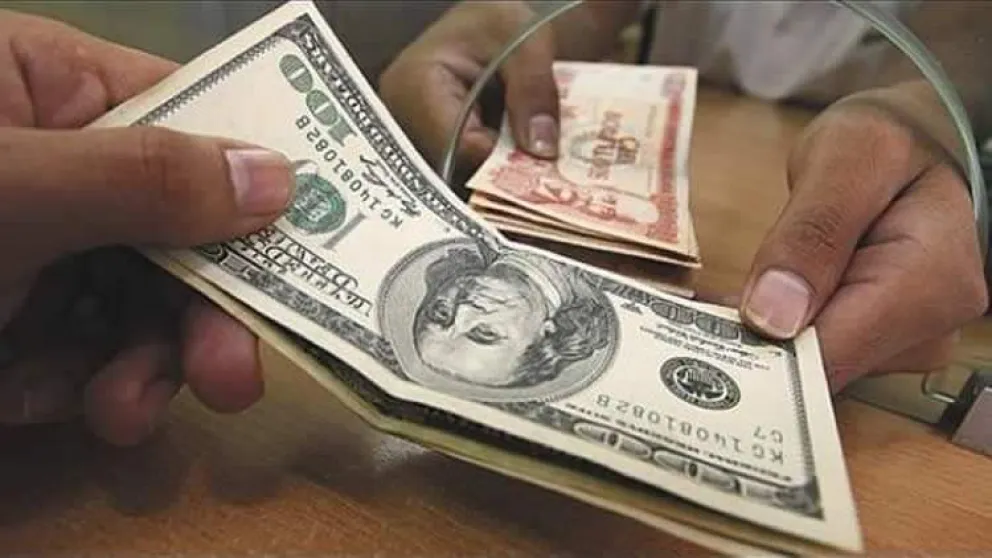
The exchange rate was made more flexible through a resolution issued by the Ministry of Economy. Photo: Archive
The exchange rate shifted from a fixed regime, established during the government of Evo Morales, to a flexible regime implemented by the administration of President Rodrigo Paz. For 15 years, governments of the Movement Toward Socialism (MAS) used international reserves to sustain that exchange-rate regime, according to analysts consulted.
“By spending all the international reserves of the Central Bank of Bolivia, which when this began stood at roughly 15 billion dollars, and that happened throughout all that time. Over 15 years they spent those international reserves. They spent money that had been saved over a very long time,” economist Gonzalo Chávez told Visión 360.
Economist Antonio Saravia argued that MAS governments “maintained that fiction” at the cost of spending international reserves. He told this outlet that when Bolivia entered a crisis, there were no longer reserves available to cover “all those bolivianos that people wanted to exchange for dollars,” and that the Central Bank of Bolivia (BCB) “cannot sustain that fixed exchange rate because there are no dollars left.”
Reserves and a ‘Corralito’?
According to Chávez, MAS governments, led by Evo Morales and Luis Arce, squandered billions of dollars to sustain the exchange rate. He also claimed that they improperly used the “corralito” applied to the dollar-denominated savings that some people held in banks.
“Not satisfied with the 12 or 13 billion dollars they spent from the international reserves, partly to maintain the exchange rate, they also spent another 3 billion dollars from the corralito imposed by the governments of Evo Morales and Luis Arce Catacora on the dollars held by people in banks. It amounted to roughly one billion dollars per year,” Chávez said.
The fixed exchange rate began to apply in 2011, according to the BCB board of directors at the time, within the framework of the so-called “gradual adjustment exchange-rate regime,” under which, as of November 1, “the Bolsín selling exchange rate was modified to Bs 6.96 per U.S. dollar.”
“Spent, Spent, and Spent”
Saravia agreed with Chávez and stated that Morales’s government rapidly spent the international reserves that had been “saved” thanks to hydrocarbon exports.
“Everything was done at the expense of international reserves. In other words, the Morales government spent, spent, and spent at a very rapid pace, and even so it could not maintain that fiction,” he said.
He explained that by 2014 the country had received more than 60 billion dollars from gas sales and that international reserves had reached nearly 15 billion dollars.
“In the early years it was easy to sustain the exchange rate because there were dollars available. The problem came when the government spent more than it should have and asked the BCB to cover the deficit, and the institution printed bolivianos. So, you injected liquidity into the economy by printing bolivianos, and people used those bolivianos to demand dollars. Then, in order to supply dollars to the market, the government dipped into international reserves at a very rapid pace, and by 2021 this had run out. That is why we experienced a shortage of foreign currency in 2022, and it worsened in 2023,” the economist said.
Failure of “Bolivianization”
The implementation of the fixed exchange rate took place in a context in which Morales’s government sought to strengthen the Bolivian currency, a policy known as “bolivianization.” For Chávez, that strategy was a complete failure.
“It was a failure because they did not achieve it fully. In that sense, the famous bolivianization did not work, because they could not sustain it, and those who defended that policy have now become defenders of the dollar. Those who promoted bolivianization squandered around 15 billion dollars in international reserves, both public and private, to maintain an entirely artificial world for 15 years,” Chávez said.
The fixed exchange rate was abolished last Friday, when the Ministry of Economy established a flexible exchange-rate regime through Ministerial Resolution 245, effectively leaving behind the system that had been in force during the MAS governments.
IMF and the Flexible Regime
To sustain the flexible exchange-rate regime, economist Saravia stated that Bolivia needs an agreement with the International Monetary Fund (IMF), because such an agreement would help support the foreign-exchange market; otherwise, he warned, a parallel market could reemerge.
“If the government continues spending with both hands, we will continue facing the same problem because it will once again borrow from the BCB, unless it is announced that an agreement will be made with the International Monetary Fund. In that case, we would have dollars in the reserves, and the BCB would not be asked to print money inorganically. That would allow the exchange rate not to fluctuate excessively, but instead to remain within the flexibility that already exists,” the analyst said.
Por Milton Condori Apaza, Vision 360:
El gobierno del MAS usó reservas internacionales para sostener el tipo de cambio fijo por 15 años, afirman analistas
Ese régimen cambiario data de 2011 e imperó durante el periodo en el poder de los gobiernos del partido azul. Esta semana, el gobierno de Rodrigo Paz lo suprimió.
El tipo de cambio se flexibilizó con una resolución del Ministerio de Economía. Foto: Archivo
El tipo de cambio pasó de ser fijo, instaurado durante el gobierno de Evo Morales, a un régimen flexible, dispuesto por la administración del presidente Rodrigo Paz. Durante 15 años, los gobiernos del Movimiento Al Socialismo (MAS) utilizaron las reservas internacionales para sostener ese régimen cambiario, coincidieron analistas consultados.
“Gastándose todas las reservas internacionales del Banco Central de Bolivia, que cuando comienza esto estaban más o menos en 15 mil millones de dólares, y eso, durante todo ese tiempo. En 15 años han gastado esas reservas internacionales. Se han gastado la plata que habías ahorrado por mucho tiempo”, indicó el economista Gonzalo Chávez a Visión 360.
El economista Antonio Saravia sostuvo que los gobiernos del MAS “mantuvieron esa ficción” a costa del gasto de las reservas internacionales. El experto señaló a este medio que, cuando Bolivia entró en una crisis, ya no hubo reservas para cubrir “todos esos bolivianos que querían para comprar dólares” y el Banco Central de Bolivia (BCB) “no puede sostener ese tipo de cambio fijo porque ya no hay dólares”.
¿Reservas y corralito?
Según Chávez, los gobiernos del MAS, encabezados por Evo Morales y Luis Arce, despilfarraron miles de millones de dólares para sostener el tipo de cambio. Además, afirmó que utilizaron de manera inadecuada el “corralito” aplicado a los ahorros en dólares que tenían algunas personas en los bancos.
“No contentos con esos 12 mil o 13 mil millones de dólares que gastaron de las reservas internacionales, en parte para mantener el tipo de cambio, se gastaban otros 3 mil millones de dólares del corralito que hizo el gobierno de Evo Morales y Luis Arce Catacora a los dólares de las personas que estaban en los bancos. Más o menos, eran mil millones de dólares de manera anual”, manifestó Chávez.
El tipo de cambio fijo comenzó a regir en 2011, según el directorio del BCB de entonces, en el marco del denominado “régimen cambiario de movimientos graduales”, mediante el cual, al 1 de noviembre, “el tipo de cambio de venta del Bolsín se modificó a Bs 6,96 por dólar estadounidense”.
“Gastó, gastó y gastó”
Saravia coincidió con Chávez y manifestó que el gobierno de Morales gastó rápidamente las reservas internacionales que se “estaban ahorrando” gracias a la venta de hidrocarburos.
“Todo se hizo a costa de las reservas internacionales, es decir, el gobierno de Morales gastó, gastó y gastó de manera muy veloz y ni así pudo mantener esa ficción”, afirmó.
Explicó que hasta 2014 el país había recibido por la venta de gas más de 60 mil millones de dólares y que las reservas internacionales habían llegado a cerca de 15 mil millones de dólares.
“Los primeros años fue fácil sostener el tipo de cambio porque había dólares. El problema llegó cuando el Gobierno gastó más de lo que debía y le pedía al BCB cubrir el déficit y el ente imprimía bolivianos. Entonces, le dabas liquidez a la economía con la impresión de bolivianos y la gente iba a demandar dólares con esos bolivianos y, pues, el Gobierno, para abastecer de dólares al mercado, les metía mano a las reservas internacionales a un ritmo muy veloz y, al llegar al 2021, esto se acabó. Por eso tuvimos la escasez de divisas en 2022 y eso empeora en 2023”, manifestó el economista.
Fracaso de la “bolivianización”
La implementación del tipo de cambio fijo se dio en un contexto en el que el gobierno de Morales buscaba darle mayor fortaleza a la moneda boliviana, política que fue denominada “bolivianización”. Para Chávez, esta estrategia fue un completo fracaso.
“Fue un fracaso, porque no lo lograron totalmente. Entonces, en ese sentido, no funcionó la famosa bolivianización, porque no lo pudieron sostener y los que defendía esa política ahora se han vuelto defensores del dólar, los que habían impulsado la bolivianización dilapidaron como 15 mil millones de dólares de las reservas internacionales, públicos y privadas, para mantener un mundo absolutamente artificial por 15 años”, dijo Chávez.
El tipo de cambio fijo quedó suprimido el pasado viernes, cuando el Ministerio de Economía estableció un régimen de tipo de cambio flexible mediante la Resolución Ministerial 245, con la que, en los hechos, se dejó atrás el sistema vigente durante los gobiernos del MAS.
FMI y régimen flexible
Para sostener el régimen de tipo de cambio flexible, el economista Saravia indicó que es necesario un acuerdo entre Bolivia y el Fondo Monetario Internacional (FMI), porque ello permitirá respaldar el mercado de divisas; de lo contrario, advirtió, podría volver a generarse un mercado paralelo.
“Si el Gobierno sigue gastando a manos llenas, vamos a seguir en el mismo problema porque le va a volver a pedir prestado al BCB, esto a menos que se diga que van a hacer un acuerdo con el Fondo Monetario Internacional, porque ahí vamos a tener dólares en las reservas y no se le pedirá al BCB que imprima dinero inorgánicamente y eso permitirá que el tipo de cambio no fluctué, sino que se mantenga en esa flexibilización que ya existe”, manifestó el analista.


Leave a Reply