
By Milton Condori, Vision 360:
Government Says Unifying the Exchange Rate Is Essential: What Are the Advantages and Disadvantages?
According to economist Fernando Romero, one of the favorable changes that exchange-rate unification would bring is having a “single exchange rate,” since the market currently operates with “three: the official, the reference, and the parallel rate.” This would also help “bring greater transparency and realism to the economy.”
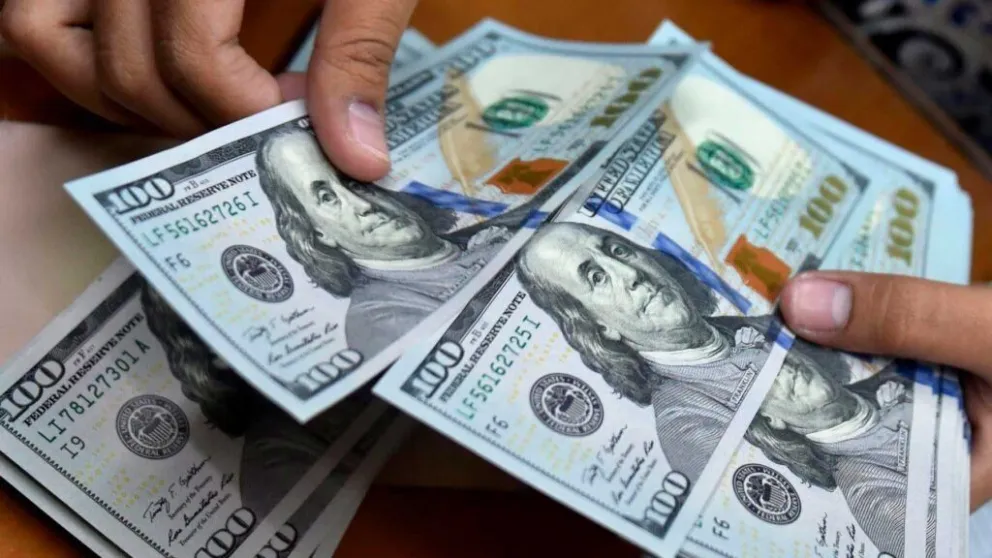
U.S. dollar banknotes. Photo: Social Media
After overcoming the nationwide road blockades that lasted 53 days, the government, through Economy Minister Gabriel Espinoza, stated that unifying the dollar exchange rate is essential. Economist Fernando Romero noted that the measure would gradually improve the functioning of the financial system and allow the country to operate with a single exchange rate instead of three. However, he argued that it would lack sustainability because loans would be needed to support it.
Espinoza emphasized that the measure was part of the government’s roadmap for economic recovery, but that plan was interrupted by the road blockades that began in early May.
“Just a few weeks ago, it was a matter of having to do it because there were very few options on the table. Today, it has become necessary—it is essential,” Espinoza said.
On May 5, Espinoza announced that the government planned to establish a single exchange rate for the dollar in order to implement a “floating system, meaning no more fixed exchange rate.” At the time, he explained: “We are moving toward an exchange-rate system in which the rate fluctuates according to market supply and demand, but always with safeguards to ensure predictability and to avoid the volatility we experienced in the past.”
As of June 24, the official exchange rate stands at Bs 6.86 for buying and Bs 6.96 for selling. The reference rate is Bs 9.97 for buying and Bs 9.96 for selling.
According to Romero, one of the main advantages of unification would be having a “single exchange rate,” since the market currently operates with “three: the official, the reference, and the parallel rate.” This would also help “bring greater realism and transparency to the economy.”
Another positive factor would be balancing Bolivia’s foreign-exchange market with a rate closer to economic reality, which could fluctuate between Bs 9 and Bs 11 per dollar.
Unifying the exchange rate would help eliminate “distortions between different foreign-exchange markets, improve transparency in price formation, and strengthen the confidence of both domestic and international investors.” It could also facilitate exports and imports by reducing uncertainty regarding access to dollars.
In addition, another benefit would be the gradual improvement of the financial system’s functioning by reducing segmentation in the dollar market and increasing transparency in transactions. “Financial institutions could operate with greater predictability, and incentives for parallel markets would diminish. Investment decisions and business planning would also become easier. From the Central Bank’s perspective, the new framework would allow for a more flexible exchange-rate policy adapted to actual market conditions,” Romero stated in a document.
However, according to Romero, one of the disadvantages of the measure would be its inflationary impact on goods and services that are currently priced using the official exchange rate.
“It will have a certain inflationary effect on those goods and services that are traded or produced using the official exchange rate, because they will now have to adjust to a new, higher rate. But realistically, a large part of the economy is already operating with an exchange rate between 9, 10, and 11 bolivianos per dollar,” he said.
He added that this situation could persist until the exchange rate stabilizes in the foreign-exchange market, although he believes that achieving such stability would be “somewhat difficult and unlikely because we do not have the financial backing required for this path.”
According to Romero, exchange-rate unification would also mean that some companies with dollar-denominated obligations would face “higher financial costs.” Therefore, he recommended that the measure be accompanied by complementary policies involving fiscal discipline, monetary stability, and strengthening domestic production.
Another drawback, he said, is the lack of sustainability of the economic policy envisioned by the government, because implementing it would require the state to borrow funds in order to support the measure.
“If you borrow foreign currency to unify the exchange rate so that the new unified rate has sufficient backing, you may only guarantee its stability for six months or perhaps a year. But what do we do after that? We cannot spend our entire lives borrowing. We need to rebuild our economy through fiscal and monetary adjustments that allow us to generate dollars and reduce dependence on external financing to sustain certain policies,” Romero said.
He also stressed that, if unification is implemented, the country must have “a significant financial cushion,” which the current situation does not provide. “At this moment, net international reserves are below $4 billion. We have less than $700 million in foreign currency reserves. Our productive sector has been severely affected, exporters have been hit hard as well, and foreign investment is virtually nonexistent,” Romero stated.
Por Milton Condori Apaza, Vision 360:
Gobierno dice que es imprescindible unificar el tipo de cambio: ¿Cuáles son las ventajas y desventajas?
En consideración del economista Fernando Romero, uno de los cambios favorables que traería la unificación es contar con un “solo tipo de cambio”, ya que en este momento el mercado trabaja con “tres: el oficial, el referencial y el paralelo”, lo que permitiría también “sincerar un poco la economía”.
Billetes de la moneda estadounidense, Foto: RRSS
Luego de superar los bloqueos carreteros en el país, que duraron 53 días, el Gobierno, a través del ministro de Economía, Gabriel Espinoza, señaló que es imprescindible la unificación del tipo de cambio del dólar. El economista Fernando Romero indicó que la medida mejoraría de manera gradual el funcionamiento del sistema financiero y permitiría contar con un solo tipo de cambio en lugar de tres, pero carecería de sostenibilidad porque se tendría que recurrir a préstamos para solventarla.
Espinoza remarcó que esa medida estaba dentro de la hoja de ruta que había trazado el Gobierno para la recuperación de la economía del país; sin embargo, la misma quedó truncada debido al inicio de los bloqueos a comienzos de mayo.
“Si hace algunas semanas era cuestión de tener que hacerlo, porque tenías muy pocas opciones en el menú, hoy día las cosas se han vuelto necesarias, es imprescindible”, afirmó Espinoza.
El 5 de mayo, Espinoza había anunciado que el Gobierno tenía el plan de contar con una sola cotización para el dólar, con el fin de implementar un “sistema de flotación, es decir, ya no más un tipo de cambio fijo”. “Vamos a un sistema de cambio en el cual el tipo de cambio va flotando en función de la oferta y demanda del mercado, pero siempre con las salvaguardas de que esto sea previsible y que no tenga las volatilidades que tuvimos en el pasado”, explicó en ese entonces.
A este 24 de junio, el precio del dólar en su cotización oficial es de Bs 6,86 para la compra y Bs 6,96 para la venta; en el caso del valor referencial, es de Bs 9,97 para la compra y Bs 9,96 para la venta.
En consideración de Romero, uno de los cambios favorables que traería la unificación es contar con un “solo tipo de cambio”, ya que en este momento el mercado trabaja con “tres: el oficial, el referencial y el paralelo”, lo que permitiría también “sincerar un poco la economía”.
Otro factor favorable de la unificación es equilibrar el mercado de divisas en Bolivia con un tipo de cambio más próximo a la realidad, que podría oscilar entre Bs 9 y Bs 11.
Unificar el tipo de cambio contribuiría a eliminar “las distorsiones entre distintos mercados de divisas, mejorar la transparencia en la formación de precios y fortalecer la confianza de inversionistas nacionales e internacionales”. Incluso, ayudaría a facilitar “las exportaciones y las importaciones al reducir incertidumbres sobre el acceso a dólares”.
Además, otro punto a favor sería la mejora gradual del funcionamiento del sistema financiero al reducir la segmentación del mercado de dólares y aumentar la transparencia de las operaciones. “Las entidades financieras podrían operar con mayor previsibilidad y disminuirían los incentivos para mercados paralelos. También se facilitarían las decisiones de inversión y planificación empresarial. Desde el punto de vista del Banco Central, el nuevo esquema permitiría una política cambiaria más flexible y adaptada a las condiciones reales del mercado”, indicó Romero en un documento.
Sin embargo, las desventajas que tendría la aplicación de la medida, según Romero, serían un impacto inflacionario en los bienes y servicios que actualmente se obtienen bajo el tipo de cambio oficial.
“Tendrá un cierto impacto inflacionario en aquellos bienes y servicios que se comercializan o se producen a un tipo de cambio oficial, porque ahora van a tener que ajustarse a un nuevo cambio que, en ese caso, sería más alto, pero gran parte de la economía, siendo realistas, ya trabaja con un tipo de cambio entre 9, 10 u 11 bolivianos”, indicó.
Agregó que esto podría durar hasta que el tipo de cambio se acomode en el mercado cambiario, aunque consideró que ello sería “un poco difícil y poco factible porque no tenemos el respaldo financiero para la ruta”.
La unificación cambiaria, según Romero, ocasionaría que algunas empresas con obligaciones en dólares tengan “mayores costos financieros”; por ello, recomendó que la medida dependa de políticas complementarias de disciplina fiscal, estabilidad monetaria y fortalecimiento de la oferta productiva.
Además de ello, otra desventaja es que se carecería de sostenibilidad para la política económica que tiene en mente el Gobierno, porque para implementarla el Estado tendría que “prestarse para solventar” dicha medida.
“Si para unificar el tipo de cambio te vas a prestar divisas para que este nuevo tipo de cambio o el unificado tenga solvencia, solo tendrás garantizado tal vez seis meses o un plazo de un año, pero ¿qué hacemos con el resto del periodo de tiempo?, porque no toda la vida vamos a tener que estar prestándonos. Necesitamos reconstruir nuestra economía a través de reajustes fiscales y monetarios que te permitan generar dólares y no depender tanto del financiamiento externo para solventar o mantener algunas políticas”, indicó Romero.
Además, señaló que, si se concreta la unificación, el país debe contar con “un colchón financiero importante”, pero que el contexto actual no permite eso. “En este momento las reservas internacionales netas están por debajo de los 4.000 millones de dólares, no tenemos más de 700 millones de dólares en divisas, tenemos un aparato productivo que está duramente golpeado, el exportador también, ni qué hablar de la inversión extranjera”, aseveró.


Leave a Reply