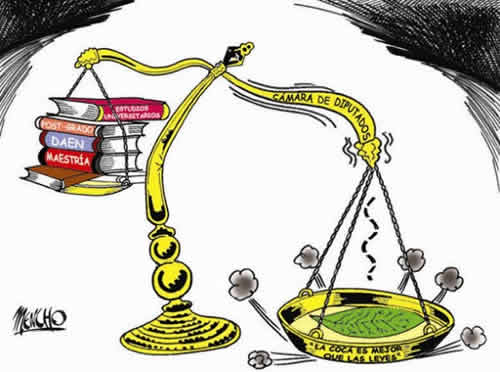
By Enrique Velazco, Vision 360:
Perhaps it is not much for those who earn Bs 45,000 per month, but if instead of 100 lawsuits, 1,000 or more legal cases are initiated against them, it is very likely they would not be very inclined to repeat the attempt in the future.
Walter Guevara (“How to End Road Blockades,” Visión 360) states that the government “will win the battle if it manages to control the financing that encourages road blockades… and they will earn our respect if they identify and arrest the leadership core who are the main responsible parties for the blockades.” He concludes that “those affected by the blockades can help facilitate that difficult task. It is enough that we go out to streets and roads to support our police and military massively and peacefully.”
I share Walter’s indignation regarding the damage that “the small leadership group that plans, organizes, and finances blockades… which includes experienced political strategists and financiers with very deep pockets” is causing to the entire country, but who “never appear on the ground.”
However, precisely because the culprits never appear on the ground, accompanying the security forces in lifting blockades would confront us with people used by the leadership as mere cannon fodder, and would complicate the tasks of the police and armed forces, who would then have the additional responsibility of protecting their civilian companions—well-intentioned volunteers, but unprepared to handle violent confrontations.
Those from whom we must demand compensation and punishment for causing the damage are the leaders who promoted, encouraged, or imposed the blockades and violence against the population.
The practical and direct way to do this is to initiate legal actions for damages individually against each of the leaders of the organizations that call for blockades, and against those individuals who may be identified in acts of violence carried out to enforce them.
For example, a news report that appears while I am writing this note states that more than 20,000 trucks are trapped on the roads; many drivers suffer from pneumonia and require medical attention, face major losses, additional costs and fines, as well as physical and emotional harm due to lack of food, family separation, etc. In general, thousands of people, productive and commercial companies, and even small farmers in Mecapaca, to give one example, have suffered multiple losses due to market and supply disruptions. In sum, different sources estimate economic damage of around 2.5 billion dollars nationwide, in addition to at least a dozen deaths that no amount of money can reverse.
Specifically, between La Paz and El Alto, about 60,000 public transport drivers are affected by loss of daily income for family subsistence, and more than 50,000 people would have lost their jobs. But Mario Argollo will not lose a single cent of his Bs 45,000 monthly salary (plus the “cards and aces” he may be receiving from those who finance these movements).
Ordinary people do not have the conditions or resources to seek justice on their own. Professionals, law faculties, and the National Academy of Legal Sciences, as a service to society, should analyze scenarios and formulate legal strategies so that every driver, company, or in general any natural or legal person affected—including communities such as those in Río Abajo—can file individualized legal actions against the leaders of the COB, Túpac Katari, Chapare, Interculturales, etc., seeking full compensation for damages caused, plus penalties and court costs.
The idea is that the damages were caused both by the people who blocked ambulances or fuel transport, and by the leaders who ordered those actions; only those who explicitly recorded disagreement when the decisions were made could be exempted from responsibility.
With this approach, the goal would be that from now on, no leadership in social organizations hides its political interests or tries to evade responsibility for the consequences of its actions under the worn-out discourse of “mandate of the base”: if the base is the one that commands, then leaders are reduced to opportunists who only protect their privileges, which makes them even more guilty.
The purpose of the proposed actions is to ensure that responsibility for reparations for the damage to thousands (millions) of affected people falls on the leaders.
To illustrate the process, if only 100 “trufistas” in La Paz were to file individual lawsuits against 10 leaders of the COB, Túpac or other organizations, and eventually reach settlement agreements in which each leader agrees to compensate Bs 600 per week of damage, each trufista would receive Bs 36,000 if the blockades end this weekend (Bs 3,600 from each leader over six weeks of blockade); but for the 100 trufistas in total, each leader would have to “pay out” Bs 360,000, plus legal costs.
Perhaps it is not much for those who earn Bs 45,000 per month, but if instead of 100 lawsuits, 1,000 or more cases are initiated, it is very likely they would not be very inclined to repeat the attempt in the future.
Will the justice administration be up to the challenge? It is very likely that there would be cases where leaders would be protected; but if professionals, the legal academy, and universities develop a solid legal framework regarding the relationships and shared responsibilities that are recognized worldwide between those who commit crimes and those who order or commission them, citizens would have the basic tools of judgment needed to apply social pressure that would force justice, from now on, to recover its place within institutional order.
Por Enrique Velazco, Vision 360:
Quizás no es mucho para quienes ganan Bs 45.000 al mes, pero si en lugar de 100 demandas se les inician 1,000 o más procesos, es muy probable que no estarían muy inclinados a repetir el intento en el futuro.
Walter Guevara (Cómo acabar con los bloqueos, Visión 360) afirma que el gobierno “ganará la partida si logra controlar el financiamiento que incita los bloqueos… y merecerán nuestro respeto si identifican y apresan a la cúpula de estrategas que son los máximos responsables de los bloqueos”. Concluye con “los afectados por los bloqueos podemos facilitar esa difícil tarea. Basta que salgamos a calles y caminos para apoyar masiva y pacíficamente a nuestra policía y nuestros militares.”
Comparto la indignación de Walter por los daños que está ocasionando a todo el país “la pequeña cúpula que planifica, organiza y financia bloqueos… que incluye experimentados estrategas políticos y financiadores con bolsillos muy profundos” pero que “jamás aparece sobre el terreno.”
Pero, precisamente porque los culpables jamás aparecen sobre el terreno, acompañar a las fuerzas de seguridad en los desbloqueos nos enfrentaría a personas usadas por la cúpula como simple carne de cañón, y complicaría las tareas de la policía y las FFAA que tendrían la tarea adicional de proteger a sus acompañantes civiles, voluntarios bien intencionados, pero nada preparados para manejarse en situaciones de violencia y de enfrentamientos.
A quienes debemos exigir resarcimiento de daños y castigar por haber generado los daños, son a los dirigentes que promovieron, alientan o imponen los bloqueos y la violencia contra la ciudadanía.
La forma práctica y directa de hacerlo, es iniciar acciones legales por daños y perjuicios dirigidas individualmente a cada uno de los dirigentes de las organizaciones que convocan a los bloqueos, y de las personas que pudieran ser identificadas en las acciones de violencia para imponerlos.
Por ejemplo, una noticia que surge mientras escribo esta nota, señala que más de 20.000 camiones están atrapados en las carreteras; muchos conductores sufren de neumonía y requieren atención médica, enfrentan grandes pérdidas, costos adicionales y multas, además del daño físico y emocional por falta de alimentos, separación familiar, etc. En general, miles de personas, empresas productivas y comerciales, y hasta pequeños agricultores en Mecapaca, por dar un ejemplo, han tenido múltiples pérdidas por temas de mercado y abastecimientos. En suma, diferentes fuentes estiman un daño económico del orden de 2.500 millones de dólares a nivel nacional, a lo que se suman cuando menos una docena de muertes que ningún dinero puede revertir.
Puntualmente, entre La Paz y El Alto, unos 60.000 choferes del transporte público están perjudicados con la pérdida de ingresos diarios de subsistencia familiar y más de 50,000 personas habrían perdido sus empleos. Pero Mario Argollo no perderá ni un centavo de sus ¿Bs 45.000? mensuales (más las “cartas y espadas” que podría estar recibiendo de quienes financian estos movimientos).
Las personas de a pie, no tienen las condiciones ni los recursos para recurrir a la justicia por si solas. Los profesionales, las facultades de derecho, y la Academia Nacional de Ciencias Jurídicas, como servicio a la sociedad, deberían analizar escenarios y formular estrategias jurídicas para que cada trasportista, empresa o, en general, cualquier persona natural o jurídica afectada –incluyendo comunidades como las de Rio Abajo, inicien acciones legales individualizadas contra las personas que conforman las dirigencias de la COB, Tupac Katari, Chapare, Interculturales, etc., buscando el efectivo resarcimiento de daños y perjuicios ocasionados, más las penalidades y las costas judiciales.
La idea de fondo, es que los daños fueron causados, tanto por las personas que impidieron el paso de ambulancias o del combustible para los transportistas, como por los dirigentes que instruyeron esas acciones: sólo podrían eximirse de responsabilidad, quienes dejaron constancia expresa de desacuerdo cuando se decidieron las acciones cuestionadas.
Con este enfoque, se buscaría que, de aquí en más, ninguna dirigencia en las organizaciones sociales oculte sus intereses políticos, ni pretenda deslindar su responsabilidad sobre la consecuencia de sus actos, bajo el trillado discurso del “mandato de las bases”: si las bases son las que mandan, los dirigentes se reducen a vividores que solo cuidan sus privilegios, lo que los hace aún más culpables.
El propósito de las acciones sugeridas, es asegurar que la responsabilidad de reparación de daños a los miles (millones) de afectados, recaiga sobre los dirigentes.
Para ilustrar el proceso, si solo 100 “trufistas” en La Paz iniciaran demandas legales individualizadas a 10 dirigentes de la COB, Tupac u otras organizaciones, y eventualmente llegaran a acuerdos transaccionales para que cada dirigente reconozca compensar con Bs 600 por semana de perjuicio, cada trufista recibiría Bs 36,000 si los bloqueos terminan este fin de semana (Bs 3,600 de cada dirigente por las seis semanas de bloqueo); pero, para los 100 trufistas en total, cada dirigente deberá “soltar” Bs 360.000, más costos legales.
Quizás no es mucho para quienes ganan Bs 45.000 al mes, pero si en lugar de 100 demandas se les inician 1,000 o más procesos, es muy probable que no estarían muy inclinados a repetir el intento en el futuro.
¿Estará la administración de la justicia a la altura del desafío? Es muy probable que habrían casos en los que se trataría de proteger dirigentes; pero si los profesionales, la Academia Jurídica y las universidades hacen un buen planteamiento base sobre las relaciones y corresponsabilidades que se reconocen, a nivel mundial, entre quienes cometen delitos y quienes los ordenan o los encargan, la ciudadanía tendría los elementos de juicio básicos para ejercer la presión social necesaria que obligue, de ahora en más, a que la justicia recupere su sitial dentro la institucionalidad.
https://www.vision360.bo/noticias/2026/06/11/52347-como-aplicar-la-justicia-a-quienes-la-desprecian


Leave a Reply