By The Economist:
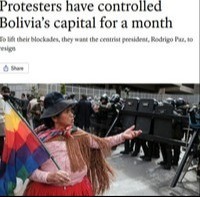
Protesters have controlled Bolivia’s capital for a month
To lift their blockades, they want the centrist president, Rodrigo Paz, to resign

When túpac katari, an indigenous leader, laid siege to La Paz for more than 100 days in 1781, the city folk were reduced to eating cats and dogs. La Paz today is not there yet. But its people are becoming increasingly desperate.
For a month protesters have blocked the roads into Bolivia’s seat of government. They are demanding that President Rodrigo Paz resign. The price of fresh food has doubled. Petrol stations have run dry. Businesses are closing. Hospitals are running out of oxygen. But the blockaders have refused even to sit down with the government. The calls for Mr Paz to impose order are growing.
Mr Paz came to power seven months ago, ending 20 years of almost uninterrupted rule by the Movement to Socialism (mas). Voters ejected that party because of economic mismanagement that led to biting inflation and fuel shortages. Many former mas voters were wooed by Mr Paz’s promise of gradual reform. But the economic problems have persisted. And those voters accuse Mr Paz of ignoring them since he took office.
As The Economist was published there were more than 80 blockades across the country. They are manned by the general workers’ union, peasant federations and followers of Evo Morales, a former president and a founding member of the mas. Blockades are a controversial political tradition in Bolivia. The blockaders inflict pain on everyone to make themselves heard. And they have mechanisms that help them keep going. “They’re experts at cycling people in and out,” says María Teresa Zegada, a political analyst.

If Mr Paz can convince them to talk, he might make concessions. But he has little room for manoeuvre. Offering cabinet posts to their organisations would anger the middle class, who would see it as a return to the old ways of the mas. Wage rises would add to the fiscal deficit, which is set to hit 9% of gdp this year. Bolivians fear a repeat of the 1980s, when the government printed money to meet union demands, triggering hyperinflation. “The dilemma is between inflation and governability,” says Gonzalo Chávez, an economist.
But at least the more radical protesters are refusing to engage in dialogue. At a meeting on June 2nd in El Alto, the largely working-class city adjacent to La Paz, their leaders slammed those suggesting negotiations as “traitors”, saying that the blockades would continue until Mr Paz resigns.
Exasperated citizens are starting to demand that Mr Paz use force. Some have taken it upon themselves to remove blockades, raising the possibility of street battles. Mr Paz sent police to clear the blockades around La Paz two weeks ago, but they were back the following day. The next move could be to declare a state of emergency and send in the army. The defence minister resigned on June 2nd without providing an official statement.
But there are unhappy precedents for breaking blockades with military force. When President Gonzalo Sánchez de Lozada sent soldiers to clear blockades in El Alto in 2003 and dozens of civilians were killed, it sparked a general strike that led to his resignation and exile. That is surely on Mr Paz’s mind. “They must have doubts,” says Gonzalo Colque, an economist. “Because the resistance of the people in the blockades would likely be iron.” ■
Por El Deber:
The Economist advierte que Bolivia enfrenta un dilema entre inflación y gobernabilidad
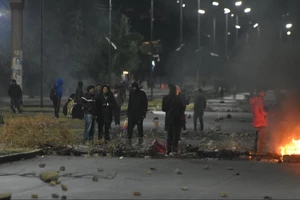
Persisten los bloqueos de rutas en varios departamentos del país /Foto: APG
El semanario británico sostiene que los bloqueos han paralizado La Paz durante un mes, agravando la crisis económica y colocando al presidente Rodrigo Paz ante la disyuntiva de negociar, ceder o recurrir a la fuerza para restablecer el orden.
La crisis política y social que atraviesa Bolivia llegó a las páginas de The Economist, una de las publicaciones más influyentes del mundo en materia económica y política. En un artículo dedicado a los bloqueos que mantienen cercada a La Paz desde hace un mes, el semanario británico describe un país atrapado entre el deterioro económico, la presión de las protestas y los riesgos que implica una eventual intervención estatal para desbloquear las carreteras.
Bajo el título Peasant Power (El poder campesino), la revista sostiene que los manifestantes han logrado controlar los accesos a la sede de gobierno durante semanas y que su principal demanda es la renuncia del presidente Rodrigo Paz.
El artículo retrata una situación de creciente deterioro económico y social. Señala que el precio de los alimentos frescos se ha duplicado, que las estaciones de servicio se quedaron sin combustible, que empresas comenzaron a cerrar y que hospitales enfrentan dificultades para acceder a insumos esenciales como oxígeno.
Para The Economist, el origen de la crisis actual se encuentra en la herencia económica recibida por el nuevo gobierno. La publicación recuerda que Paz llegó al poder hace siete meses tras poner fin a casi dos décadas de predominio del Movimiento Al Socialismo (MAS), una fuerza política que, según el semanario, fue castigada por los votantes debido a la inflación, la escasez de combustibles y el deterioro económico acumulado durante los últimos años.
Sin embargo, la revista observa que muchos de los problemas que impulsaron el cambio político continúan vigentes. Señala que sectores que apoyaron la candidatura de Paz hoy expresan frustración por la falta de resultados y consideran que sus demandas no han sido atendidas.
Uno de los aspectos centrales del análisis es la fortaleza organizativa de los sectores movilizados. El semanario destaca que los bloqueos están impulsados por organizaciones sindicales, federaciones campesinas y grupos afines al expresidente Evo Morales. También subraya que esta forma de protesta constituye una tradición política profundamente arraigada en Bolivia y que sus dirigentes han desarrollado mecanismos que les permiten sostener las medidas de presión durante largos periodos.
La publicación considera que el margen de maniobra del Gobierno es reducido. Advierte que eventuales concesiones políticas o económicas podrían generar rechazo en las clases medias urbanas, mientras que incrementos salariales o mayores gastos públicos podrían profundizar los desequilibrios fiscales y alimentar nuevas presiones inflacionarias.
Por ello, The Economist resume el desafío que enfrenta el Gobierno con una frase contundente atribuida al economista Gonzalo Chávez: “El dilema es entre inflación y gobernabilidad”.
La revista también advierte sobre los riesgos de una salida coercitiva. Recuerda que los intentos de despejar bloqueos mediante el uso de la fuerza tienen antecedentes traumáticos en Bolivia, particularmente los sucesos de octubre de 2003 durante el gobierno de Gonzalo Sánchez de Lozada, que derivaron en decenas de muertos y precipitaron la caída del entonces mandatario.
En ese contexto, el semanario concluye que el presidente enfrenta una decisión extremadamente delicada. Si negocia, corre el riesgo de debilitar su programa de gobierno y profundizar los desequilibrios económicos. Si opta por una acción más contundente para restablecer el tránsito, podría desencadenar una escalada de conflictividad social con consecuencias imprevisibles.
La mirada de The Economist refleja la preocupación internacional por una crisis que ya no se limita al escenario político boliviano. Para la publicación británica, el conflicto actual se ha convertido en una prueba decisiva para la estabilidad económica, la gobernabilidad democrática y la capacidad del Estado para mantener el control territorial en uno de los momentos más complejos de las últimas décadas.


Leave a Reply