By Francesco Zaratti, Vision 360:
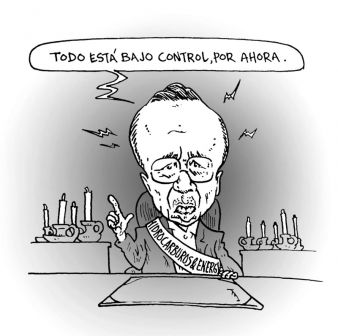
In Bolivia, the conflict between the dominant power of gas and the emerging power of renewables is fueled by the illusion of preserving gas hegemony, without recognizing that this energy cycle has already run its course.
During Donald Trump’s recent visit to Beijing, President Xi Jinping resorted to a learned reference to frame relations between the world’s two largest powers. He invoked the Greek historian Thucydides, author of The Peloponnesian War(5th century BC), who observed that the rise of Athens generated such fear in Sparta, the dominant power, that it chose war — a conflict that ended with Athens’ surrender in 404 BC.
The “Thucydides Trap” questions whether the emergence of a new power inevitably leads to armed conflict or whether it can be managed peacefully. With this allusion, Xi appeared willing to negotiate stability between the two powers.
American political scientist Graham Allison (of Harvard’s Belfer Center) coined the term in his book Destined for War: Can America and China Escape Thucydides’s Trap? (2017). Allison analyzed 16 cases from the last 500 years and found that 75% ended in war. The remaining four cases, Allison notes, were resolved peacefully through:
- Diplomacy (Treaty of Tordesillas), in the rivalry between Portugal and Spain in the 16th century.
- Nuclear deterrence during the Cold War between the United States and the USSR.
- Sensible acceptance (the “Great Rapprochement”) of the new reality, during the transition from British to American imperial dominance at the end of the 19th century.
- Cooperation among like-minded countries (the EU and the euro), when German reunification (1989–1990) altered Europe’s balance of power.
This framework invites speculation as to whether the Thucydides Trap also explains other social and economic phenomena currently unfolding in Bolivia.
The conflict between a democracy that values the individual and social organizations that control the masses contains the trap of resorting to violent solutions from both sides, whenever the government dismisses the influence of those corporations or when those groups attempt to impose conditions of governance that fall outside their authority, as we are witnessing these days. This conflict can only be overcome, without violence, through respectful dialogue regarding each side’s proper role in matters of common interest.
Likewise, we fall into the Thucydides Trap because of the suspicions surrounding the energy transition, understood as the gradual and planned replacement of fossil fuels with renewable sources, especially in electricity generation and transportation.
Hydrocarbons have dominated the global energy matrix for a century due to their efficiency and abundance, but they are finite, contribute to global warming, and generate geopolitical dependence, as we are painfully experiencing these days. Renewable energies, by contrast, are inexhaustible, universally distributed, and have a lower climate impact.
The “trap” appears when the hydrocarbon sector (companies and analysts) perceives a threat of being displaced. Renewables are then attacked for their intermittency (solvable through technology) and costs (which have fallen sharply).
In Bolivia, the conflict between the dominant power of gas and the emerging power of renewables is fueled by the illusion of maintaining gas hegemony, without considering that this energy cycle has already been exhausted.
On the contrary, the emergence of clean energy sources — which in Bolivia are more a necessity than an option — should receive cooperation from the fossil fuel sector (for example, by cutting subsidies for gas used in thermoelectric plants) in order to promote a gradual and orderly transition toward a healthier balance in the energy matrix. It is hoped that the new electricity law will help overcome all suspicion toward the energy transition.
Por Francesco Zaratti, Vision 360:
En Bolivia, el conflicto entre el poder dominante del gas y el emergente de las renovables se nutre de la ilusión de mantener la hegemonía del gas, sin considerar que ese ciclo energético se ha agotado.
Durante la reciente visita de Donald Trump a Beijing, el presidente Xi Jinping recurrió a una cita culta para enmarcar las relaciones entre las dos mayores potencias globales. Invocó al historiador griego Tucídides, autor de la “Guerra del Peloponeso” (siglo V a.C.), quien observó que el ascenso de Atenas generó tal temor en Esparta, la potencia dominante, que optó por la guerra, la cual culminó con la rendición de Atenas en el año 404 a.C.
La “trampa de Tucídides” cuestiona si el surgimiento de una nueva potencia conduce inevitablemente a un conflicto armado o si puede gestionarse pacíficamente. Con esta alusión, Xi pareció mostrar disposición a negociar estabilidad entre las dos potencias.
El politólogo estadounidense Graham Allison (del Belfer Center de Harvard) acuño el término en su libro “Destinados a la guerra: ¿Pueden Estados Unidos y China escapar de la trampa de Tucídides?” (2017). Allison analizó 16 casos de los últimos 500 años y halló que el 75% de los casos terminó en guerra. Los restantes cuatro casos, observa Allison, fueron resueltos pacíficamente mediante:
- La diplomacia (Tratado de Tordesillas), en la rivalidad entre Portugal y España en el siglo XVI.
- La disuasión nuclear, durante la guerra fría entre los EEUU y la URSS.
- La aceptación sensata (el “Gran Acercamiento”) de la nueva realidad, en el relevo del imperialismo británico por el norteamericano a fines del siglo XIX.
- La cooperación entre países afines (UE y euro), cuando la reunificación alemana (1989-1990) alteró los equilibrios de poder en Europa.
Este marco invita a especular si la trampa de Tucídides explica también otros fenómenos sociales y económicos que se están dando en Bolivia en la actualidad.
El conflicto entre la democracia que valora al individuo y las organizaciones sociales que controlan las masas encierra la trampa de acudir a soluciones violentas de un lado y del otro, toda vez que el gobierno desestima el alcance de esas corporaciones o éstas intentan imponer condiciones de gobernabilidad que no les competen, como vemos en estos días. Este conflicto solo puede superarse, sin recurrir a la violencia, mediante el diálogo respetuoso de las funciones propias de cada parte en temas de común interés.
Asimismo, caemos en la trampa de Tucídides por los recelos ante la transición energética, entendida como reemplazo gradual y planificado de fuentes fósiles por fuentes renovables, esencialmente en la generación eléctrica y en el transporte.
Los hidrocarburos dominan la matriz mundial desde hace un siglo por su eficiencia y abundancia, pero son finitos, contribuyen al calentamiento global y generan dependencia geopolítica, como dolorosamente experimentamos en estos días. Las energías renovables, en cambio, son inagotables, distribuidas universalmente y tienen menor impacto en el clima.
La “trampa” aparece cuando el sector de los hidrocarburos (empresas y analistas) percibe una amenaza de ser desplazado. Entonces se atacan a las renovables por su intermitencia (solucionable con tecnología), y costos (que han caído fuertemente).
En Bolivia, el conflicto entre el poder dominante del gas y el emergente de las renovables se nutre de la ilusión de mantener la hegemonía del gas, sin considerar que ese ciclo energético se ha agotado.
Al contrario, la emergencia de las fuentes limpias, que en Bolivia son una necesidad antes que una opción, debería contar con la cooperación del sector fósil (por ejemplo, cortando la subvención al gas usado en las termoeléctricas), para impulsar una transición gradual y ordenada hacia un equilibrio más sano de la matriz energética. Se espera que la nueva ley de electricidad permita superar todo recelo hacia la transición energética.
https://www.vision360.bo/noticias/2026/05/23/49428-la-trampa-de-tucidides-y-la-politica-boliviana
 Bolivian Thoughts | Pensamientos Bolivianos (Bilingual/Bilingüe)
Leave a comment