Editorial, Bolivian Thoughts:
Blockades Grow as Bolivia’s Government Hesitates
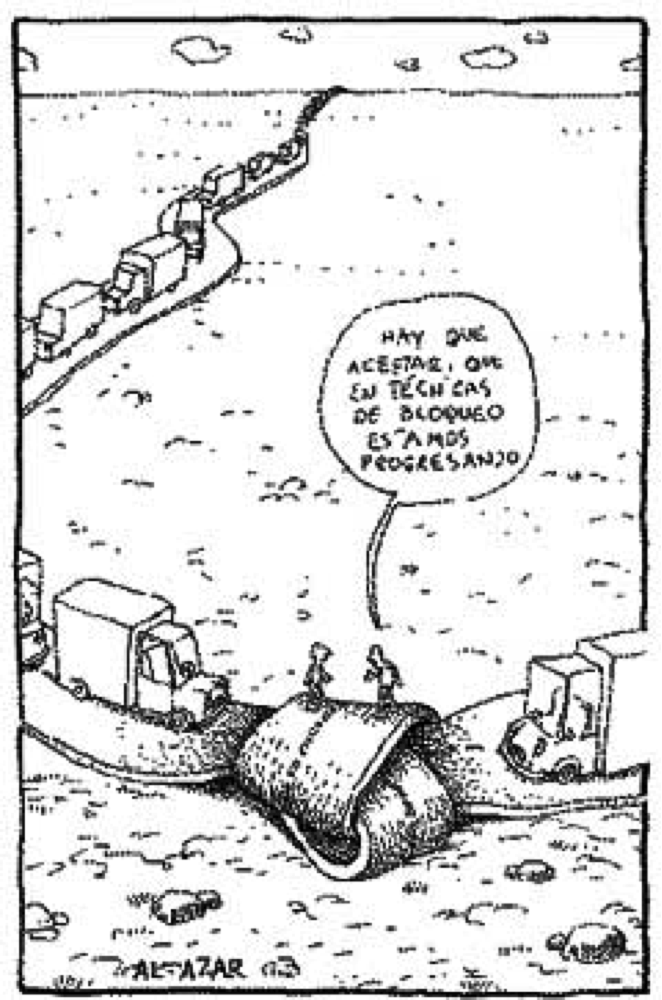
Bolivia is once again being dragged into the politics of permanent blockades. Highways are closing, strikes are being threatened and organized groups are increasing pressure across multiple regions while the government of Rodrigo Paz responds with extreme caution, projecting a dangerous image of state weakness.
The clearest signal came from the police themselves. Authorities publicly admitted they still had no direct order to clear blocked roads and instead appealed for “humanity” from protesters. Whatever the intention behind those words, the message revealed something larger: the state appears afraid to fully exercise authority against groups that use street pressure as a political weapon.
Every day of blockades damages commerce, transportation and food distribution. Travelers are stranded, small businesses lose income and Bolivia’s fragile economy suffers another blow amid inflation, dollar shortages and institutional deterioration.
But describing this crisis merely as “social unrest” ignores how Bolivian politics has operated for nearly two decades.
Evo Morales and the MAS built a system of power based not only on elections, but also on the ability to paralyze the country whenever political or judicial interests are threatened. Roadblocks stopped being spontaneous protests long ago. They evolved into an organized mechanism of political coercion.
The simultaneous conflicts seen across Bolivia during the past week reveal exactly that pattern. Transport unions, labor sectors, peasant organizations and groups linked to Evo Morales began applying pressure at the same time, multiplying instability and creating a national atmosphere of governability crisis. Each sector presents its own demands, but the political result is identical: weaken the government and pressure state institutions.
Samuel Doria Medina criticized COB leader Mario Argollo and warned that pushing workers into politically driven confrontations would ultimately harm them. But the problem goes far beyond one union leader. Bolivia’s democratic opposition continues to react in fragmented and defensive ways against a mobilization machine the MAS spent years perfecting.
Many still refuse to recognize that a large portion of these blockades are not simply social protests.
They are political operations.
And behind them lies financing.
Sustained blockades require transportation, fuel, food, communications and territorial coordination. Over many years, the MAS built union networks, patronage systems and alliances with Bolivia’s vast informal economy capable of sustaining prolonged political pressure.
The Chapare remains the operational center of Evo Morales’ movement. Even while facing serious judicial accusations involving human trafficking and abuse scandals tied to minors, Morales still maintains loyal cocalero structures capable of mobilizing rapidly and protecting his political influence.
Another issue rarely discussed openly is the connection between illegal economies and political pressure capacity. Contraband networks, excess coca production, massive informal markets and unregulated cash economies have long helped finance the corporate structures that later reappear as “social movements” whenever the MAS needs coordinated street pressure.
That is why the current crisis is not simply a policing issue.
It is structural.
Rodrigo Paz appears determined to avoid violence or accusations of repression. But Bolivia’s recent history shows that perceived weakness often encourages further escalation. Every highway that remains blocked without consequences reinforces the belief that the state only negotiates under coercion.
While the government hesitates, those who dominate blockade politics continue advancing.
Editorial, Pensamientos Bolivianos:
Crecen los bloqueos y el gobierno titubea
Bolivia vuelve a quedar atrapada en la política del bloqueo permanente. Carreteras cerradas, amenazas de paro y grupos movilizados generan desgaste nacional mientras el gobierno de Rodrigo Paz responde con extrema cautela, evitando confrontaciones directas y transmitiendo una peligrosa sensación de debilidad estatal.
La señal más clara llegó desde la propia Policía. Autoridades admitieron públicamente que aún no existía una instrucción concreta para desbloquear rutas y pidieron “humanidad” a los movilizados. Más allá de la intención conciliadora, el mensaje refleja un problema mayor: el Estado parece actuar con miedo frente a sectores organizados que utilizan la presión callejera como arma política.
Cada día de bloqueo paraliza comercio, transporte y abastecimiento. Miles de ciudadanos quedan atrapados, pequeños negocios pierden ingresos y la economía informal —de la que dependen millones de bolivianos— recibe otro golpe más en un país ya agotado por inflación, escasez de dólares y deterioro institucional.
Pero reducir esta crisis a simples “demandas sociales” sería ignorar cómo funciona realmente la política boliviana desde hace casi dos décadas.
Evo Morales y el MAS construyeron un modelo de poder basado no solamente en elecciones, sino también en la capacidad de paralizar el país cuando sus intereses políticos o judiciales se ven amenazados. Los bloqueos dejaron hace tiempo de ser herramientas espontáneas de protesta. Hoy forman parte de una estructura organizada de coerción política.
La coordinación simultánea de conflictos durante la última semana revela precisamente ese patrón. Transportistas, sindicatos, grupos campesinos y organizaciones afines al evismo comenzaron a presionar al mismo tiempo, multiplicando focos de tensión y creando sensación de ingobernabilidad. Aunque cada sector presenta reclamos propios, el resultado político es uno solo: desgaste del gobierno y presión sobre las instituciones.
Samuel Doria Medina criticó al dirigente cobista Mario Argollo y advirtió que empujar a los trabajadores hacia conflictos políticos terminará perjudicándolos. Pero el problema va mucho más allá de un dirigente sindical específico. La oposición democrática boliviana continúa reaccionando de manera fragmentada y defensiva frente a una maquinaria de movilización que el masismo perfeccionó durante años.
Muchos todavía se resisten a reconocer que gran parte de estos bloqueos no son únicamente protestas sociales.
Son operaciones políticas.
Y detrás de ellas existe financiamiento.
Mantener bloqueos durante varios días requiere transporte, combustible, alimentos, comunicación y coordinación territorial. Durante años, el MAS construyó redes sindicales, sistemas clientelares y vínculos con economías informales capaces de sostener movilizaciones prolongadas.
El Chapare sigue siendo el núcleo operativo más importante de Evo Morales. Incluso mientras enfrenta graves acusaciones judiciales relacionadas con trata de personas y abuso de menores, Morales mantiene estructuras cocaleras capaces de movilizar rápidamente y proteger su influencia política.
A eso se suma otro elemento raramente discutido con claridad: la relación entre economías ilegales y capacidad de presión política. Contrabando, coca excedentaria, mercados informales gigantescos y dinero no fiscalizado han alimentado durante años estructuras corporativas que luego reaparecen como “movimientos sociales” cuando el masismo necesita presión callejera.
Por eso el problema actual no es solamente policial.
Es estructural.
El gobierno de Rodrigo Paz parece decidido a evitar cualquier escenario de violencia o represión. Pero la historia reciente demuestra que la debilidad percibida suele incentivar nuevas medidas de presión. Cada carretera bloqueada sin consecuencias fortalece la idea de que el Estado negocia únicamente bajo chantaje.
Mientras el gobierno duda, quienes dominan la política del bloqueo siguen avanzando.


Leave a Reply