By German Huanca, Urgente.bo:
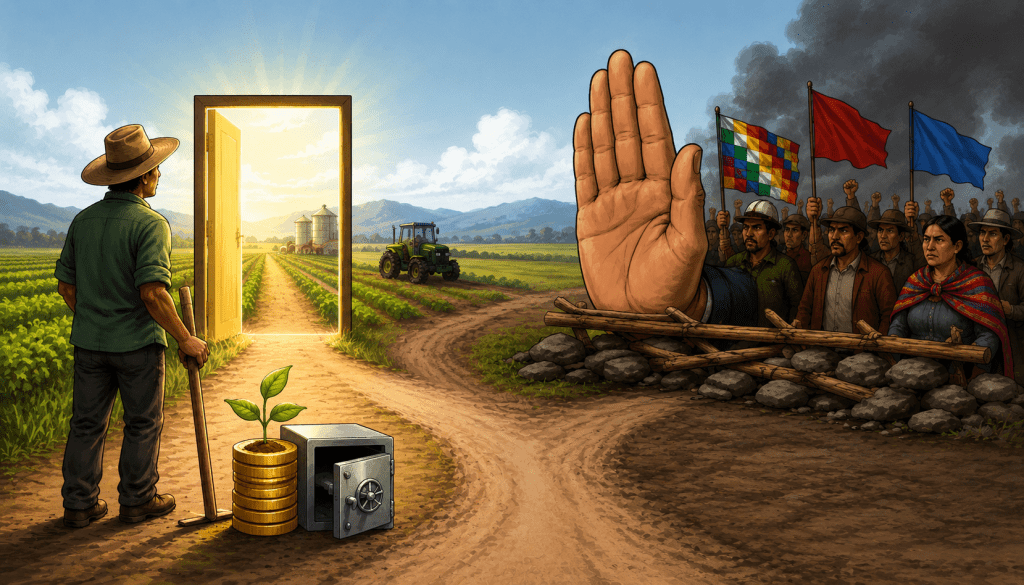
The repeal of Law 1720 is not an act of justice toward peasants or indigenous people: it is a political operation. Behind the chorus of voices clamoring against this law hide three interests that have little to do with the well-being of the rural sector — leaders of the CSUTCB and CIDOB who do not want to lose their union control over their grassroots bases, leftist intellectuals and academics who maintain their clientelist relationships through NGOs and institutions they themselves control, and a government rehearsing its balancing act in order to reach 2030 with electoral options.
The original sin of Law 1720 was political, not technical. Having been promoted by Santa Cruz businessman Branco Marinkovich — who carried a highly publicized conflict over land titling — gave its detractors an easy target. But above all, this reveals the government’s tactical clumsiness: the land issue, beyond being a vital matter for the peasant and indigenous economy, is delicate terrain that requires strategic handling. Leaving it in the hands of such a media-exposed actor was a miscalculation that its opponents knew how to exploit, even incorporating racist undertones into their criticisms.
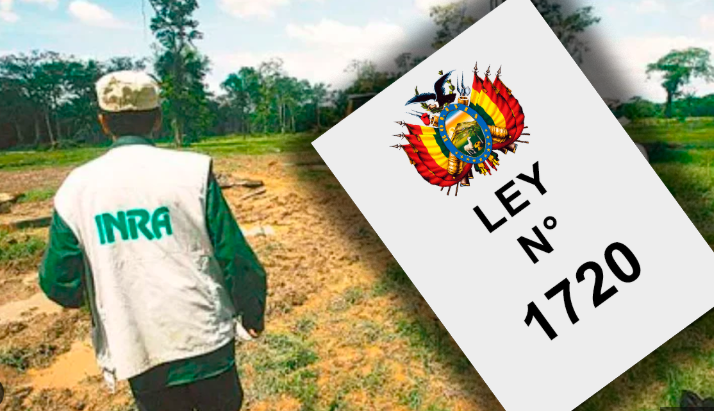
However, a question arises that no one wants to answer: where were the CSUTCB, CIDOB, the COB, and the other actors during the twenty years of government under Evo Morales and Luis Arce? Was it not during that period that the new 2009 Constitution was approved? The INRA Law dates back to 1996, and the Community Redirection Law to 2006, with all their mistakes — such as the fragmentation of medium and large properties that today appear registered as small properties. Where were the intellectuals and academics then, demanding that those mistakes be corrected?
Now those who were incapable of stopping Evo Morales or Luis Arce — and who instead allowed the country to collapse in silence — come out crying to the heavens over Law 1720. The uncomfortable truth is this: all of them are co-responsible for peasants and indigenous people remaining trapped in poverty since 1953, because they have always treated us as second-class citizens.
The problem goes back a long way. In 1953, those who truly benefited from agrarian reform were the large landowners, those who already had delimited and titled properties. When the INRA Law arrived, although indigenous territories and communal lands were a legitimate achievement against encroachment by third parties, the treatment of small properties and peasant homesteads was inadequate: it placed peasants and indigenous people under the tutelage of the State and later under the same organizations created by their own members, without giving them room for economic action — a condition that remained in later regulations.
Law 1720 does not force anyone to convert their land from one category to another. The fear that has spread among the grassroots is an induced fear, politically motivated, because the law attacks precisely the patronage relationship between the leadership of social organizations and their members. Forcing people to march and blockade roads under threats of losing their land is a reality that should not be ignored. Claiming that the law’s enforcement would favor those who fragmented landholdings is true, but it is as inconsistent as claiming that smuggled cars are not linked to crime, or that teachers without an academic vocation should be teaching. The real question should be this: why not improve the law instead of harming peasants and indigenous people who want to use land as an economic asset, under equal conditions with any other Bolivian?
To reverse Law 1720 without consulting those of us who want to move the rural economy forward — with access to credit, agricultural projects, and investments in community tourism — is to misunderstand the needs of the rural sector and to continue treating peasants and indigenous people as servile fools. The government’s hesitant actions simultaneously reveal a balancing government that will do whatever is politically convenient. From the outside, the rural world may look picturesque to tourists, intellectuals, and academics. But they do not know the life lived within it. And as long as we continue being objects of study instead of subjects of economic policy, the countryside will remain sunk in misery.
(*) Economist, former Vice Minister of Strategic State Planning.
Por Germán Huanca Luna, Urgente.bo:
La abrogación de la Ley 1720 no es un acto de justicia hacia el campesino ni al indígena: es una operación política. Detrás del coro de voces que claman contra esta norma se esconden tres intereses que poco tienen que ver con el bienestar del área rural — dirigentes de la CSUTCB y la CIDOB que no quieren perder el control gremial sobre sus bases, intelectuales y académicos de izquierda que mantienen su relación clientelar a través de ONGs y entidades que ellos mismos controlan y un gobierno que va ensayándose como equilibrista para llegar al 2030 con opciones electorales,
El pecado original de la Ley 1720 fue político, no técnico. Haber sido impulsada por el empresario cruceño Branco Marinkovich — que arrastraba un conflicto altamente mediatizado sobre titulación de tierras — le dio a sus detractores un blanco fácil. Pero eso revela, ante todo, una torpeza táctica del gobierno: el tema tierra, más allá de ser un asunto vital para la economía campesina e indígena, es un terreno delicado que exige manejo estratégico. Dejarlo en manos de un actor tan expuesto mediáticamente fue un error de cálculo que sus adversarios supieron aprovechar que incluso incorporaron aspectos de índole racista en sus cuestionamientos.
Surge, sin embargo, una pregunta que nadie quiere responder: ¿dónde estaban la CSUTCB, la CIDOB, la COB y los demás actores, durante los veinte años de gobierno de Evo Morales y Luis Arce? ¿Acaso no fue en ese período que se aprobó la nueva Constitución del 2009? La Ley INRA viene desde 1996, y la Ley de reconducción comunitaria desde el 2006, con todos sus errores: como ser el fraccionamiento de propiedades medianas y grandes que hoy aparecen registradas como pequeñas propiedades. ¿Dónde estaban entonces los intelectuales y académicos para exigir que esos errores se corrijan?
Ahora salen a gritar al cielo con la Ley 1720, quienes no fueron capaces de frenar a Evo Morales ni a Luis Arce, y que más bien permitieron que el país se derrumbara en silencio. La verdad incómoda es esta: todos ellos son corresponsables de que el campesino y el indígena sigamos postrados en la pobreza desde 1953, porque siempre nos han tratado como ciudadanos de segunda categoría.
El problema viene de lejos. En 1953, quienes se beneficiaron realmente de la reforma agraria fueron los latifundistas, los que ya tenían propiedades delimitadas y tituladas. Cuando llegó la Ley INRA, si bien los territorios indígenas y las tierras comunitarias fueron una conquista legítima frente al avasallamiento de terceros, el tratamiento a la pequeña propiedad y el solar campesino fue inadecuado: puso al campesino y al indígena bajo la tutela del Estado y luego de las mismas organizaciones creadas por sus miembros, sin que tenga un margen de acción en lo económico, misma que permaneció en las normas posteriores.
La Ley 1720 no obliga a nadie a convertir su tierra de un tipo a otro. El temor que se ha instalado en las bases es un temor inducido, con tinte político, porque la norma ataca precisamente la relación prebendal entre la dirigencia de las organizaciones sociales y sus miembros. Obligar a marchar y bloquear a título de amenazar con el despojó de la tierra es una realidad que no se debe ignorar. Sostener que su vigencia favorecería a quienes fragmentaron tierras es una realidad, pero es tan inconsistente como afirmar que los autos chutos no están ligados a delitos, o que tengamos maestros enseñando sin tener vocación académica. La pregunta que habría que hacerse es otra: ¿por qué no perfeccionar la norma en lugar de perjudicar a los campesinos e indígenas que queremos usar la tierra como un activo económico, en igualdad de condiciones con cualquier boliviano?
Dar marcha atrás con la Ley 1720 sin haber consultado a quienes queremos mover la economía rural — con acceso a crédito, con proyectos agrícolas, con inversiones en turismo comunitario — es no entender las necesidades del área rural y seguir considerando a campesinos e indígenas como tontos serviles. La acción dubitativa del gobierno muestra al mismo tiempo a gobierno equilibrista que hará lo que le convenga políticamente. Desde afuera, el área rural luce pintoresca para el turista, el intelectual y el académico. Pero ellos no conocen la vida que se vive adentro. Y mientras sigamos siendo objetos de estudio en lugar de sujetos de política económica, el campo seguirá postrado en la miseria.
(*) Economista, ex Viceministro de Planificación Estratégica del Estado.
https://www.urgente.bo/noticia/la-otra-cara-del-enojo-con-la-ley-1720


Leave a Reply