By Oscar Antezana:
Cheap Gasoline That Could End Up Being Very Expensive
The global energy crisis has entered a critical phase. What is happening today in the Persian Gulf is not just another conflict: it is the epicenter of a historic disruption in oil supply. And Bolivia, although geographically distant, is dangerously exposed.
The trigger is clear. The Strait of Hormuz—through which nearly 20% of the world’s oil normally passes. Around 1,800 ships have become trapped in the area, reflecting the level of disruption. The immediate impact has been a sharp increase in oil prices. But the real problem is not only the price: it is availability. The world is facing the largest disruption in energy supply in decades, comparable to the oil crises of the 1970s.
For weeks, the global system has held up thanks to accumulated reserves. However, that margin is running out. Inventories are falling rapidly, and analysts agree that the market has still not fully absorbed the shock. In other words, the worst has not yet arrived.
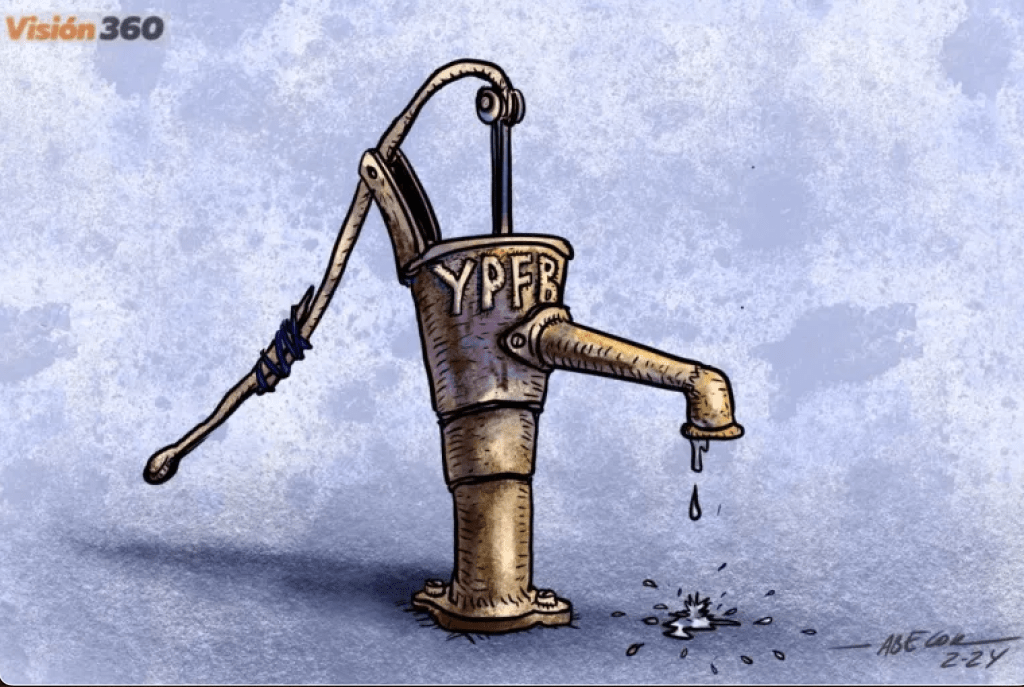
While the world faces growing shortages, Bolivia maintains a pricing system completely disconnected from international reality. Gasoline and diesel remain heavily subsidized—between 40% and 50% below their real cost—creating an illusion of stability. But that stability is fragile and expensive. The country is no longer self-sufficient in hydrocarbons. It depends on growing imports, especially diesel. And those imports require dollars—a resource that is becoming increasingly scarce in the Bolivian economy. In a global market where cargoes are assigned to the highest bidder, the lack of foreign currency becomes a critical barrier.
Here a dangerous paradox emerges. While the world prepares to reduce fuel consumption because of shortages, Bolivia encourages it through artificially low prices. This increases domestic demand precisely when access to external supply becomes more difficult. It is a disconnect that amplifies vulnerability. Furthermore, as we know, the subsidy carries a growing fiscal cost. Every increase in the international price translates into greater spending by the State. In other words, Bolivia not only pays more expensive fuel prices: it subsidizes those higher costs. This pressures public finances and accelerates the depletion of foreign currency reserves. The result is a vicious circle: more subsidy → more demand → more imports → greater need for dollars → greater scarcity. And when dollars run short, the adjustment does not occur through prices… but through shortages.
That is exactly what is beginning to happen. If the global crisis intensifies—as the data suggest—Bolivia will face a much more complex scenario. It will not only be a matter of paying more for fuel, but of obtaining it. (The 2026 budget was prepared assuming an oil price of $64 per barrel. It is clear that this price will be much higher due to the conflict in the Middle East, with the consequent increase in public spending to import diesel and gasoline). In a strained market, countries with greater liquidity will secure supply. Bolivia will be left at the back of the line. The economic consequences would be immediate. Diesel is the engine of the economy: transportation, agribusiness, mining, and logistics all depend on it. Without diesel, the productive chain comes to a halt. This means lower production, disruptions in food supply, and inflationary pressures.
But the greatest risk is political. The government faces a delicate situation: it is fragile and fears a social reaction to any price adjustment. However, avoiding decisions does not eliminate the problem. It only postpones and worsens it. International experience is clear. When governments fail to adjust in time, the market does it for them—in a harsher way. In many countries, emergency measures are already appearing: fuel rationing, consumption restrictions, and export limitations. These decisions reflect one reality: shortages are real and growing.
Bolivia still has a window for action, but it is closing rapidly. The first measure is to recognize the problem. Without a clear diagnosis, any policy will be insufficient. The population must understand that this is not an isolated domestic crisis, but a global shock without recent precedent.
The second is to begin a gradual price adjustment. Failing to do so means continuing to finance a demand the country cannot sustain. This process must be accompanied by compensation mechanisms for the most vulnerable sectors, but it is unavoidable. The third is to secure access to foreign currency and external financing. In the current context, liquidity determines who gains access to fuel. Finally, measures must be implemented to reduce consumption: transportation optimization, anti-smuggling controls, and more efficient energy use.
The message is forceful. Bolivia is not on the sidelines of the global crisis; it is in an especially vulnerable position within it. Today’s cheap gasoline can become tomorrow’s shortage.
And when that happens, the social and political cost will be far greater than any preventive adjustment.
Maintaining stability is expensive, but instability is even more expensive.
Por Oscar Antezana Malpartida:
La gasolina barata que puede salir demasiado cara
La crisis energética mundial ha entrado en una fase crítica. Lo que ocurre hoy en el Golfo Pérsico no es un conflicto más: es el epicentro de una disrupción histórica en el suministro de petróleo. Y Bolivia, aunque geográficamente distante, está peligrosamente expuesta.
El detonante es claro. El estrecho de Ormuz—por donde normalmente circula cerca del 20% del petróleo mundial. Alrededor de 1.000 barcos han quedado atrapados en la zona, reflejando el nivel de disrupción. El impacto inmediato ha sido un aumento brusco de los precios del petróleo. Pero el verdadero problema no es solo el precio: es la disponibilidad. El mundo enfrenta la mayor interrupción de oferta energética en décadas, comparable a las crisis petroleras de los años 70.
Durante semanas, el sistema global ha resistido gracias a reservas acumuladas. Sin embargo, ese margen se está agotando. Los inventarios están cayendo rápidamente y los analistas coinciden en que el mercado aún no ha absorbido completamente el shock. Lo peor, en otras palabras, aún no ha llegado.
Mientras el mundo enfrenta escasez creciente, Bolivia mantiene un sistema de precios completamente desconectado de la realidad internacional. La gasolina y el diésel siguen fuertemente subsidiados—entre 40% y 50% por debajo de su costo real—lo que crea una ilusión de estabilidad. Pero esa estabilidad es frágil y costosa. El país ya no es autosuficiente en hidrocarburos. Depende de importaciones crecientes, especialmente de diésel. Y esas importaciones requieren dólares—un recurso cada vez más escaso en la economía boliviana. En un mercado global donde los cargamentos se asignan al mejor postor, la falta de divisas se convierte en una barrera crítica.
Aquí surge una paradoja peligrosa. Mientras el mundo se prepara para reducir el consumo de combustibles por escasez, Bolivia lo incentiva con precios artificialmente bajos. Esto aumenta la demanda interna justo cuando el acceso al suministro externo se vuelve más difícil. Es un desacople que amplifica la vulnerabilidad. Además, como sabemos, el subsidio tiene un costo fiscal creciente. Cada aumento del precio internacional se traduce en un mayor gasto para el Estado. En otras palabras, Bolivia no solo paga combustibles más caros: subsidia ese encarecimiento. Esto presiona las finanzas públicas y acelera el agotamiento de divisas. El resultado es un círculo vicioso: más subsidio → más demanda → más importaciones → más necesidad de dólares → mayor escasez. Y cuando los dólares no alcanzan, el ajuste no se produce vía precios… sino vía escasez.
Eso es exactamente lo que comienza a ocurrir. Si la crisis global se intensifica—como sugieren los datos—Bolivia enfrentará un escenario mucho más complejo. No será solo cuestión de pagar más por combustible, sino de conseguirlo. (El presupuesto para 2026 se elaboró suponiendo un precio de $64/barril de petróleo. Está claro que este precio será mucho mayor debido a conflicto en Medio Oriente con el consecuente aumento del gasto público para importar diesel y gasolina). En un mercado tensionado, países con mayor liquidez asegurarán el suministro. Bolivia quedará en la cola. Las consecuencias económicas serían inmediatas. El diésel es el motor de la economía: transporte, agroindustria, minería y logística dependen de él. Sin diésel, la cadena productiva se detiene. Esto implica menor producción, interrupciones en el abastecimiento de alimentos y presiones inflacionarias.
Pero el riesgo mayor es político. El gobierno enfrenta una situación delicada: es frágil y teme una reacción social ante cualquier ajuste de precios. Sin embargo, evitar decisiones no elimina el problema. Solo lo posterga y lo agrava. La experiencia internacional es clara. Cuando los gobiernos no ajustan a tiempo, el mercado lo hace por ellos—de forma más dura. En muchos países ya se observan medidas de emergencia: racionamiento de combustible, restricciones de consumo y limitaciones a exportaciones. Estas decisiones reflejan una realidad: la escasez es real y creciente.
Bolivia aún tiene una ventana de acción, pero se está cerrando rápidamente. La primera medida es reconocer el problema. Sin un diagnóstico claro, cualquier política será insuficiente. La población debe entender que no se trata de una crisis interna aislada, sino de un shock global sin precedentes recientes.
La segunda es iniciar un ajuste gradual de precios. No hacerlo implica seguir financiando una demanda que el país no puede sostener. Este proceso debe ser acompañado por mecanismos de compensación para los sectores más vulnerables, pero es inevitable. La tercera es asegurar el acceso a divisas y financiamiento externo. En el contexto actual, la liquidez determina quién accede al combustible.Finalmente, se deben implementar medidas para reducir el consumo: optimización del transporte, control del contrabando y uso más eficiente de la energía.
El mensaje es contundente. Bolivia no está al margen de la crisis global; está en una posición especialmente vulnerable dentro de ella. La gasolina barata de hoy puede convertirse en escasez mañana.
Y cuando eso ocurra, el costo social y político será mucho mayor que cualquier ajuste preventivo.
Mantener la estabilidad es cara, pero más cara es la inestabilidad.


Leave a comment