Editorial Pensamientos Bolivianos:
Bolivia ya no enfrenta solo una crisis económica. Enfrenta algo más inquietante: un país donde la violencia, la impunidad y el crimen comienzan a sentirse normales.
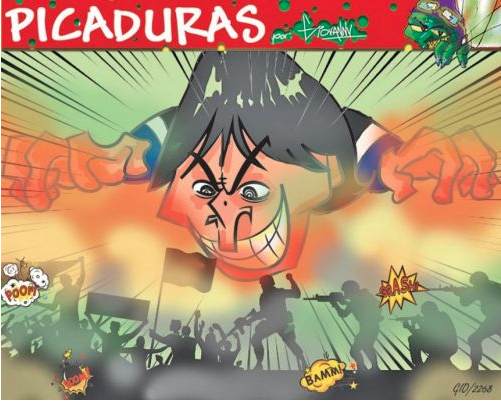
En apenas los últimos meses se han multiplicado asesinatos, ajustes de cuentas ligados al narcotráfico, sicariato, zonas tomadas por economías ilegales y una creciente sensación de que la justicia llega tarde o simplemente no llega. A esto se suma la anarquía permanente de grupos de presión que siguen marcando la agenda nacional: la COB, los interculturales, cooperativas mineras, sindicatos cocaleros y toda una maquinaria acostumbrada a bloquear, amenazar o cercar ciudades cuando el poder político lo necesita.
Ese no es un fenómeno aislado.
Es el saldo de casi veinte años de masismo.
Durante ese largo ciclo Bolivia dejó de fortalecer instituciones y comenzó a fortalecer corporaciones. La ley fue reemplazada por la presión callejera, la justicia por el cálculo político y la autoridad por el miedo a desatar conflicto. Poco a poco el país aprendió una lección perversa: aquí manda más el grupo organizado que el Estado.
Por eso hoy el nuevo gobierno vuelve a buscar cooperación internacional, incluyendo a Estados Unidos, para identificar y destruir redes de narcotráfico, corrupción y protección política que durante años operaron con impunidad. Bolivia perdió la capacidad de hacerlo sola. La Policía aprendió a no mirar, fiscales a no tocar y demasiados jueces a retroceder cuando el caso rozaba intereses poderosos.
Mientras se hablaba de soberanía y dignidad, el masismo expulsó toda vigilancia incómoda y abrió espacio a socios externos interesados no en fortalecer la República, sino en aprovechar su debilidad. Pero el daño mayor no vino de afuera. Vino de haber consolidado adentro una cultura donde sindicatos, cooperativas, operadores judiciales y economías oscuras descubrieron que podían actuar por encima de la ley.
Por eso no sorprende que existan territorios donde la justicia entra con miedo, que dirigentes violentos sigan creyéndose intocables o que el narcotráfico haya encontrado demasiados espacios de protección.
Ni siquiera el discurso ecológico escapó a la mentira. Mientras se hablaba de Pachamama, crecían cooperativas que envenenan ríos con mercurio, contaminan comunidades indígenas y avanzan sobre reservas nacionales sin mayor resistencia estatal.
Se habló de justicia social mientras crecía la impunidad.
Se habló de soberanía mientras se vaciaba al Estado.
Se habló de orden mientras se sembraba anarquía.
Ese es el verdadero legado.
Bolivia no solo está quebrada en sus finanzas. Está erosionada en su autoridad, en su seguridad y en su fe en la ley.
Pero a casi seis meses del nuevo gobierno, la paciencia ciudadana también empieza a agotarse. El dólar paralelo se dispara, la desconfianza persiste, la inseguridad crece y los mismos grupos violentos que ayudaron a deformar el país —COB, interculturales, cooperativistas y sindicatos radicales— comienzan a actuar como si estuvieran ganando nuevamente la pulseta en las calles.
El pedido de apoyo a Estados Unidos confirma que la magnitud del desastre heredado es enorme. Sin embargo, la cooperación externa no reemplaza decisiones internas. Bolivia necesita leyes, autoridad y señales firmes de que esta vez el Estado piensa recuperar el terreno perdido.
Porque si el gobierno sigue avanzando con tibieza mientras los grupos de presión miden fuerzas y el narcotráfico conserva sus refugios, el país puede perder una oportunidad histórica y comprobar que las ruinas heredadas también terminan tragándose a quienes no actúan con firmeza.
Editorial Bolivian Thoughts:
Bolivia is no longer facing only an economic crisis. It is facing something far more troubling: a country where violence, impunity, and crime are beginning to feel normal.
In just the last few months, murders, narco-related executions, contract killings, territories overtaken by illegal economies, and a growing sense that justice arrives too late—or does not arrive at all—have multiplied. Added to this is the permanent anarchy imposed by pressure groups that continue to shape the national agenda: the COB, the interculturales, mining cooperatives, coca unions, and an entire machinery accustomed to blocking highways, threatening cities, and laying siege whenever political interests require it.
This is not an isolated phenomenon.
It is the result of nearly twenty years of masismo.
Throughout that long cycle, Bolivia stopped strengthening institutions and began strengthening corporations of power. The rule of law was replaced by street pressure, justice by political calculation, and authority by fear of unleashing conflict. Little by little, the country learned a perverse lesson: in Bolivia, organized groups command more power than the State itself.
That is why the new government has once again turned to international cooperation, including the United States, to identify and dismantle the networks of narcotrafficking, corruption, and political protection that operated with impunity for years. Bolivia lost the ability to do it alone. The Police learned where not to look, prosecutors whom not to touch, and too many judges when to step back whenever a case brushed against powerful interests.
While masismo spoke of sovereignty and dignity, it expelled every form of uncomfortable oversight and opened the door to outside actors interested not in strengthening the Republic, but in exploiting its weakness. Yet the deepest damage did not come from abroad. It came from having consolidated, inside Bolivia, a culture in which unions, cooperatives, judicial operators, and shadow economies discovered that they could act above the law.
That is why it no longer surprises Bolivians that there are territories where justice enters in fear, that violent leaders still behave as if untouchable, or that narcotrafficking has found so many layers of protection.
Not even the ecological discourse escaped the lie. While Pachamama was endlessly invoked, mining cooperatives poisoned rivers with mercury, contaminated indigenous communities, and pushed deeper into national reserves with almost no state resistance.
They spoke of social justice while impunity expanded.
They spoke of sovereignty while hollowing out the State.
They spoke of order while planting anarchy.
That is the real legacy.
Bolivia is not only financially broken. It is eroded in authority, in security, and in public faith in the law.
But nearly six months into the new government, public patience is also beginning to wear thin. The parallel dollar keeps climbing, distrust persists, insecurity grows, and the same violent groups that helped deform the country—COB, interculturales, mining cooperativists, and radical unions—are beginning to act as if they are once again winning the street battle.
The renewed request for U.S. support confirms how enormous the inherited disaster truly is. Yet outside cooperation cannot replace internal decisions. Bolivia needs laws, authority, and firm signals that the State truly intends to recover the ground it lost.
Because if the government continues to move timidly while pressure groups test its limits and narcotrafficking keeps its sanctuaries, the country may lose a historic opportunity and discover that inherited ruins also end up swallowing those who fail to confront them with resolve.


Leave a comment