ByRed UNO:
After 20 Years of Study, Details of the Enigmatic “Ghost Dog” Revealed
A study spanning more than two decades managed to gather thousands of records of the elusive short-eared dog, a key species that depends on intact forests to survive.
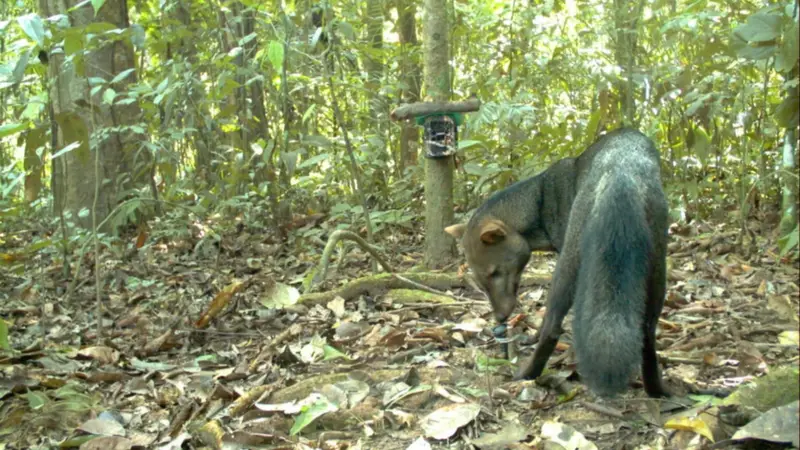
Bolivia reveals the secrets of the “ghost dog” after 20 years of study. Photo: courtesy of Guido Ayala & María Viscarra/WCS Bolivia.
For years it was almost a myth. Today, the so-called “ghost dog” is beginning to reveal its secrets. A study of more than two decades managed to gather more than 4,600 images of this enigmatic Amazonian canid, considered one of the most difficult carnivores to observe in Latin America.
It is Atelocynus microtis, also known as the short-eared dog or Amazon dog, a species unique for its elusive behavior and its adaptations to the tropical forest.
An Inhabitant of the Deep Forest
The research, published by Mongabay and led by experts such as Robert Wallace, confirms that this animal depends almost exclusively on intact Amazonian forests, avoiding open or transitional areas.
In Bolivia, its presence is concentrated in regions of northern La Paz, Pando, Beni, and northern Santa Cruz, mainly in zones below 750 meters in altitude.
“It is a forest species. What it seeks most is continuous cover and it avoids open spaces,” Wallace explained.
20 Years of Silent Monitoring
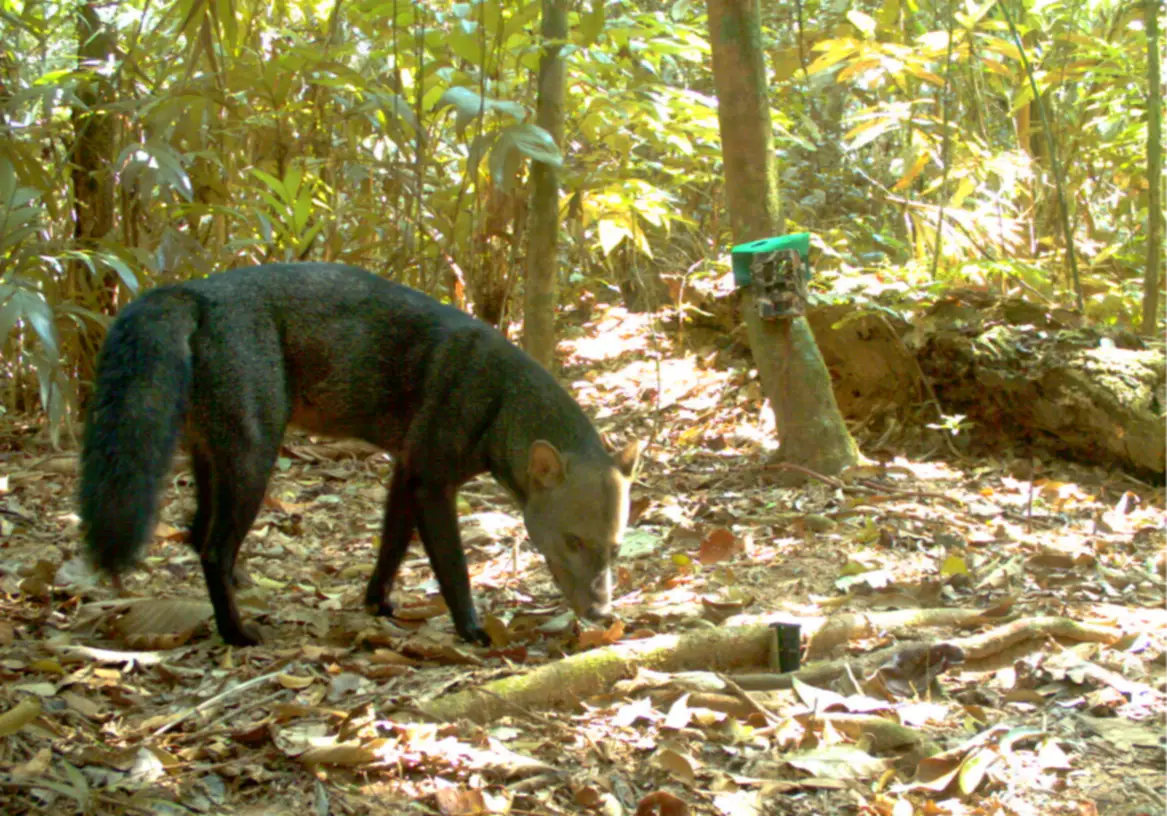
Between 2001 and 2024, researchers carried out 34 camera-trap samplings, obtaining 594 independent records that made it possible to better understand its behavior.
The images reveal an animal with a low profile, short legs, small ears, and dark fur, with one unique characteristic: partially webbed feet, similar to those of a duck, a rarity among canids.
Although it can move at night, most records show that it is active during the day and at dawn or dusk.
An Animal Difficult to See
Despite technological advances, observing it directly remains a challenge.
“It is very nervous, has a highly developed sense of smell, and avoids people,” Wallace explained.
Other specialists, such as researcher Renata Leite Pitman, agree that it is an extremely shy and little-studied species.
Key to Conservation
The study also leaves a clear message: the survival of the ghost dog depends on the conservation of large expanses of forest.
The data show that its presence is greater in protected areas and indigenous territories, reinforcing the importance of these spaces for biodiversity.
A Unique Predator
This canid can measure between 70 and 100 centimeters, weigh up to 10 kilos, and feed on amphibians, fish, reptiles, and even fruits. In addition, it is the only species of its genus, which makes it an even more special animal.
A Mystery Beginning to Be Revealed
What was once barely a rumor in the jungle is now beginning to take shape thanks to science.
The “ghost dog” remains elusive… but no longer invisible.
Por Red UNO:
Tras 20 años de estudio, revelan detalles del enigmático “perro fantasma”
Un estudio de más de dos décadas logró reunir miles de registros del esquivo perro de orejas cortas, una especie clave que depende de bosques intactos para sobrevivir.
Bolivia revela los secretos del “perro fantasma” tras 20 años de estudio. Foto: cortesía Guido Ayala & María Viscarra/WCS Bolivia.
Durante años fue casi un mito. Hoy, el llamado “perro fantasma” comienza a revelar sus secretos. Un estudio de más de dos décadas logró reunir más de 4.600 imágenes de este enigmático cánido amazónico, considerado uno de los carnívoros más difíciles de observar en Latinoamérica.
Se trata del Atelocynus microtis, también conocido como perro de orejas cortas o perro del Amazonas, una especie única por su comportamiento esquivo y sus adaptaciones al bosque tropical.
Un habitante del bosque profundo
La investigación, difundida por Mongabay y liderada por expertos como Robert Wallace, confirma que este animal depende casi exclusivamente de bosques amazónicos intactos, evitando áreas abiertas o de transición.
En Bolivia, su presencia se concentra en regiones del norte de La Paz, Pando, Beni y el norte de Santa Cruz, principalmente en zonas por debajo de los 750 metros de altitud.
“Es una especie de bosque. Lo que más busca es cobertura continua y evita espacios abiertos”, explicó Wallace.
20 años de seguimiento silencioso
Entre 2001 y 2024, investigadores realizaron 34 muestreos con cámaras trampa, obteniendo 594 registros independientes que permitieron conocer mejor su comportamiento.
Las imágenes revelan a un animal de perfil bajo, patas cortas, orejas pequeñas y pelaje oscuro, con una característica única: patas parcialmente palmeadas, similares a las de un pato, una rareza entre los cánidos.
Aunque puede moverse de noche, la mayoría de registros muestran que es activo durante el día y al amanecer o atardecer.
Un animal difícil de ver
A pesar de los avances tecnológicos, observarlo directamente sigue siendo un desafío.
“Es muy nervioso, tiene un olfato muy desarrollado y evita a las personas”, explicó Wallace.
Otros especialistas, como la investigadora Renata Leite Pitman, coinciden en que se trata de una especie extremadamente tímida y poco estudiada.
Clave para la conservación
El estudio también deja un mensaje claro: la supervivencia del perro fantasma depende de la conservación de grandes extensiones de bosque.
Los datos muestran que su presencia es mayor en áreas protegidas y territorios indígenas, lo que refuerza la importancia de estos espacios para la biodiversidad.
Un depredador único
Este cánido puede medir entre 70 y 100 centímetros, pesar hasta 10 kilos y alimentarse de anfibios, peces, reptiles e incluso frutas. Además, es la única especie de su género, lo que lo convierte en un animal aún más especial.
Un misterio que empieza a revelarse
Lo que antes era apenas un rumor en la selva, hoy comienza a tomar forma gracias a la ciencia.
El “perro fantasma” sigue siendo esquivo… pero ya no invisible.


Leave a comment