Editorial, El Dia:
There Is a Need to Save the Country
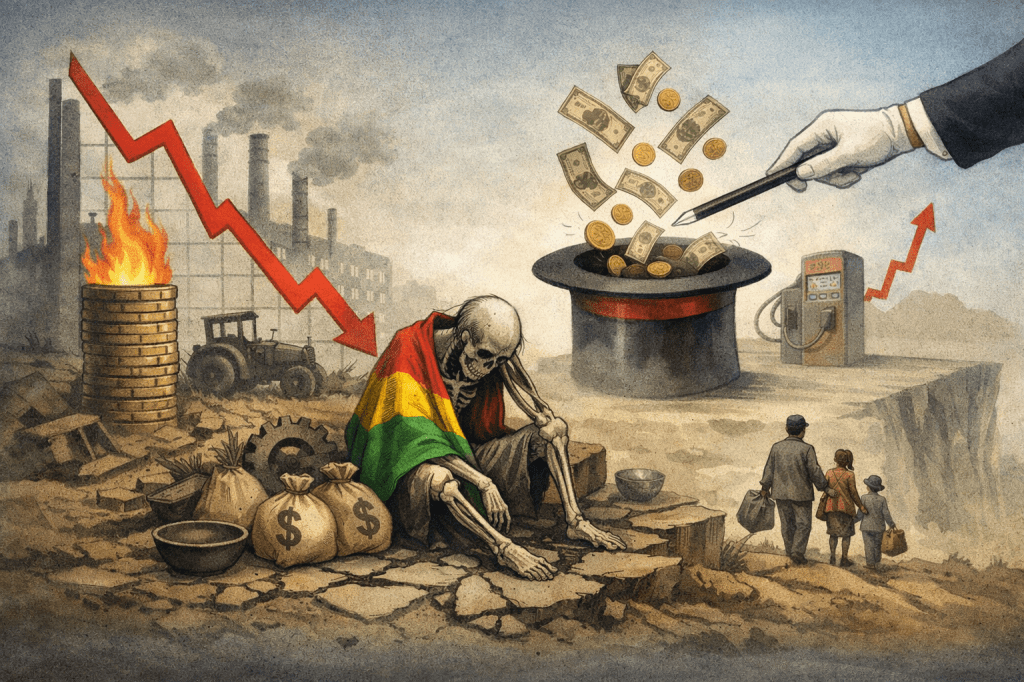
Bolivia is on the brink, and the worst part is that it continues moving toward the abyss. This is neither rhetoric nor catastrophism: it is a diagnosis confirmed by the numbers, the conflicts, and recent history. The current government inherited a country in ruins—hollowed out by two decades of MAS rule that squandered reserves, suffocated production, and handed the State over to corporate interests—and today it faces a storm that allows neither improvisation nor complacency. Paz says he does not fear conflicts. Hopefully that were true. But the reality is that we all fear them, because if this government falls, the consequences will be worse than anything we have lived through.
The first quarter of 2026 recorded 176 social conflicts: almost double the historical monthly average. Road blockades are multiplying, strikes are spreading, and social unrest is advancing. We stand at the gates of a new breakdown. And in that context, the urgency of a major national agreement among all the forces that defend democracy becomes a matter of survival.
That agreement cannot be made with the unions and social movements that still aspire to the return of the old regime. They do not want to save the country: they want to recover the spoils. They are the fullest expression of the corporatism that for sixty years subordinated the citizen’s interest to the power of intermediaries. Negotiating with them is capitulating before those who destroyed what remains to be saved.
The democratic agreement Bolivia needs must have a concrete agenda. Political will is not enough; structural reforms are required that attack the roots of the problem.
The priorities are evident. The first is a profound electoral reform. Superficial adjustments are not enough; it is necessary to rebuild confidence in the democratic system from its foundations. The second is constitutional reform. Bolivia needs clear rules, legal stability, and an institutional framework capable of attracting investment, generating employment, and guaranteeing rights. Without legal certainty, no development is possible.
None of these reforms will be viable if the deepest structural problem is not confronted: the corporatist system. For decades, the country has been hostage to groups that have replaced the citizen as the political subject. Unions, guilds, and corporations have captured the State, turning it into spoils for distribution. This model has not only distorted the economy—based on unsustainable rents and subsidies—but has also suffocated democracy, subordinating the general interest to sectoral pressures.
Blowing up this system is not an act of capricious confrontation, but a historical necessity. Bolivia must move toward a State of citizens, where rights do not depend on belonging to a group, and where individual effort, innovation, and work are the engines of progress.
Added to this is an economic crisis that no longer allows denial. A high fiscal deficit, exhausted reserves, regressive subsidies, and a lack of foreign currency shape an extremely fragile scenario. The country lives on expectations, not certainties. And expectations, when they break, accelerate crises.
The only responsible way out is a great national agreement. A pact among all democratic forces that understand that, if Bolivia sinks, we all sink. This agreement cannot be conditioned by those who seek to restore an exhausted and destructive model. It must be a clear commitment to democracy, institutionality, and the future.
Editorial El Dia:
Hay que salvar al país
Bolivia está al borde y lo peor es que sigue avanzando hacia el abismo. No es retórica ni catastrofismo: es un diagnóstico que confirman los números, los conflictos y la historia reciente. El actual gobierno heredó un país en ruinas —vaciado por dos décadas de gestión masista que dilapidó las reservas, ahogó la producción y entregó el Estado a las corporaciones— y hoy enfrenta una tormenta que no admite improvisación ni complacencia. Paz dice que no le teme a los conflictos. Ojalá fuera cierto. Pero la realidad es que todos le tememos, porque si este gobierno cae, las consecuencias serán peores que todo lo que hemos vivido.
El primer trimestre de 2026 registró 176 conflictos sociales: casi el doble del promedio histórico mensual. Los bloqueos se multiplican, los paros se extienden y la conflictividad avanza. Estamos ante las puertas de un nuevo desborde. Y en ese contexto, la urgencia de un gran acuerdo nacional entre todas las fuerzas que defienden la democracia se vuelve una cuestión de supervivencia.
Ese acuerdo no puede hacerse con los sindicatos y movimientos sociales que todavía aspiran al retorno del viejo régimen. Ellos no quieren salvar al país: quieren recuperar el botín. Son la expresión más acabada del corporativismo que durante sesenta años subordinó el interés ciudadano al poder de los intermediarios. Negociar con ellos es capitular ante quienes destruyeron lo que queda por salvar.
El acuerdo democrático que Bolivia necesita debe tener agenda concreta. No basta con la voluntad política; hacen falta reformas estructurales que ataquen las raíces del problema.
Las prioridades son evidentes. La primera es una reforma electoral profunda. No basta con ajustes superficiales; se requiere reconstruir la confianza en el sistema democrático desde sus cimientos. La segunda es la reforma constitucional. Bolivia necesita reglas claras, estabilidad jurídica y un marco institucional que permita atraer inversión, generar empleo y garantizar derechos. Sin seguridad jurídica no hay desarrollo posible.
Ninguna de estas reformas será viable si no se enfrenta el problema estructural más profundo: el sistema corporativista. Durante décadas, el país ha sido rehén de grupos que han sustituido al ciudadano como sujeto político. Sindicatos, gremios y corporaciones han capturado el Estado, convirtiéndolo en un botín de reparto. Este modelo no solo ha distorsionado la economía —basada en rentas y subsidios insostenibles— sino que ha asfixiado la democracia, subordinando el interés general a presiones sectoriales.
Dinamitar este sistema no es un acto de confrontación caprichosa, sino una necesidad histórica. Bolivia debe transitar hacia un Estado de ciudadanos, donde los derechos no dependan de la pertenencia a un grupo, y donde el esfuerzo individual, la innovación y el trabajo sean los motores del progreso.
A esto se suma una crisis económica que ya no admite negaciones. Déficit fiscal elevado, agotamiento de reservas, subsidios regresivos y falta de divisas configuran un escenario extremadamente frágil. El país vive de expectativas, no de certezas. Y las expectativas, cuando se rompen, aceleran las crisis.
La única salida responsable es un gran acuerdo nacional. Un pacto entre todas las fuerzas democráticas que entienden que, si Bolivia se hunde, nos hundimos todos. Este acuerdo no puede estar condicionado por quienes buscan restaurar un modelo agotado y destructivo. Debe ser un compromiso claro con la democracia, la institucionalidad y el futuro.
https://eldia.com.bo/2026-05-02/editorial/hay-que-salvar-al-pais.html


Leave a Reply