Pensamientos Bolivianos:
Hércules FAB-81: el accidente que expuso una cadena de negligencias y el derrumbe de todas las defensas
La tragedia del 27 de febrero en El Alto dejó 24 muertos, más de 40 heridos y un cargamento de 17,1 millones de billetes nuevos disperso entre cadáveres y turbas; dos meses después, las investigaciones confirman que el siniestro pudo evitarse y que lo que colapsó no fue sólo un avión, sino cada instancia de control estatal.
Un aterrizaje que nunca debió terminar así
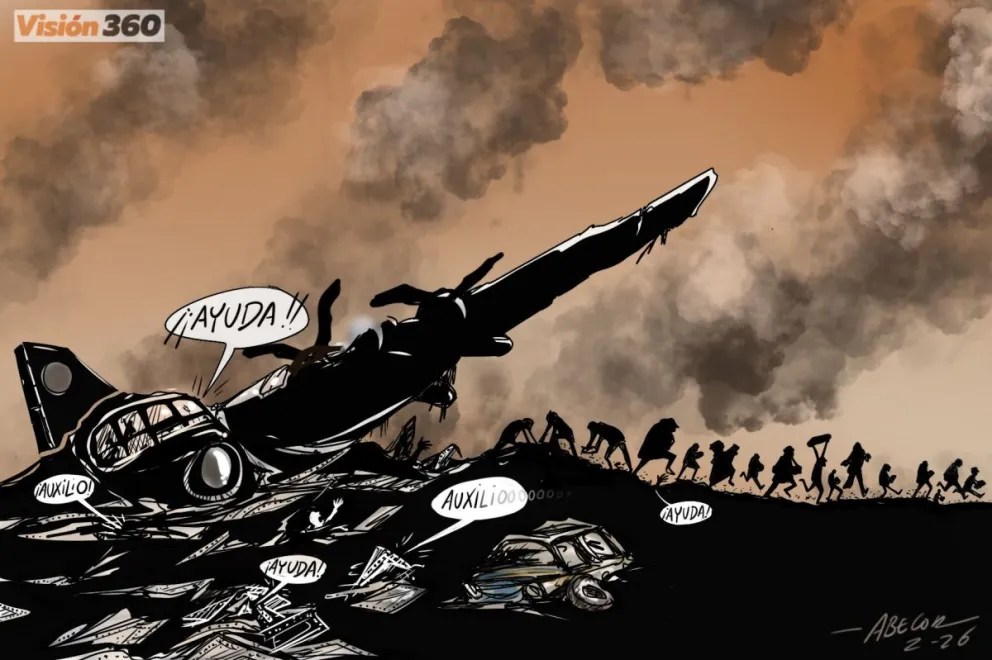
El 27 de febrero no se accidentó solamente un avión militar en El Alto: se desplomó, en cuestión de minutos, toda la ficción de control que el Estado boliviano pretende exhibir sobre sus instituciones. El Hércules FAB-81, cargado con remesas de billetes nuevos para el Banco Central de Bolivia (BCB), aterrizó sin poder detenerse, atravesó la malla perimetral del aeropuerto y aplastó una hilera de vehículos sobre la avenida Costanera en plena hora pico. Detrás dejó 24 muertos —23 civiles y un tripulante—, más de 40 heridos de extrema gravedad y una escena que mutó del desastre aéreo al saqueo multitudinario. (1)(2)
Durante las primeras horas, la Dirección General de Aeronáutica Civil intentó encapsular el episodio dentro de la asepsia verbal de una “excursión de pista”, como si el lenguaje técnico pudiera amortiguar la magnitud de la catástrofe. Pero el informe final de la Junta Investigadora de la FAB, difundido esta semana, demolió esa coartada burocrática: el accidente pudo haberse evitado. Hubo granizada previa, agua y hielo sobre la pista, una aproximación no estabilizada, velocidad excesiva, toque de ruedas demasiado largo, sobrepeso operativo y, por encima de todo, información meteorológica incompleta suministrada a la tripulación. La aeronave todavía tenía combustible suficiente para abortar y desviarse. Lo que ocurrió, por tanto, no fue una fatalidad sino una sucesión perfectamente humana de decisiones deficientes y controles insuficientes. (3)
La cadena de decisiones que falló en tierra y en el aire
Por eso la responsabilidad no puede quedar cómodamente confinada a los dos hombres sentados en la cabina. Aunque la Fiscalía decidió esta semana aprehender formalmente al mayor Erick Rojas Zambrana y mantener imputado al copiloto Jared Ramírez Espinoza por homicidio y lesiones culposas, la propia documentación técnica compromete también a quienes administraban la pista, transmitían la información meteorológica, autorizaban el aterrizaje y supervisaban la operación desde tierra. El aterrizaje se permitió sin un reporte confiable de adherencia ni de frenado, mientras alrededor del caso se levantó desde el primer día una espesa cortina de versiones incompletas, silencios oficiales y explicaciones tardías. La negligencia no estuvo sólo en la maniobra final: estuvo distribuida a lo largo de toda la cadena de decisión que debía impedirla. (4)(5)
La catástrofe dejó expuesta, además, otra verdad que las autoridades habrían preferido mantener dentro de hangares cerrados: la precariedad de la infraestructura y de los sistemas de respuesta encargados de sostener operaciones críticas. La antigüedad de la flota aérea, las limitaciones de mantenimiento, la deficiente coordinación aeroportuaria y la incapacidad de aislar inmediatamente el perímetro terminaron convergiendo en una misma postal de vulnerabilidad estatal. El FAB-81 no sólo se salió de pista; sacó a la luz el deterioro silencioso de varias instituciones a la vez. (6)
Del rescate al pillaje
Sin embargo, el fracaso técnico fue apenas el preludio del derrumbe moral. Cuando la panza del Hércules se abrió, el enorme cargamento de billetes nuevos —aún no incorporados formalmente a circulación— quedó esparcido entre barro, granizo, restos metálicos, automóviles aplastados y cuerpos mutilados. En cualquier estructura estatal funcional, el área habría sido cerrada en segundos. En Bolivia ocurrió exactamente lo contrario. Centenares y luego miles de personas irrumpieron para recoger fajos de dinero, empujaron a uniformados, arrojaron piedras, bloquearon ambulancias y obligaron a bomberos y paramédicos a trabajar bajo agresión constante. Durante horas, el lugar dejó de ser una escena de rescate para convertirse en una estampida de rapiña sobre un cementerio improvisado. Incluso después del repliegue policial, grupos enteros regresaron a remover escombros buscando más billetes. (5)(7)
El costo económico quedó a la altura de la vergüenza pública. El propio Gobierno terminó admitiendo que aproximadamente el 30% del cargamento, es decir más de cinco millones de piezas, fue sustraído en medio del caos. El Banco Central invalidó series completas, activó filtros junto a la banca privada para impedir que ese dinero ingrese al sistema financiero y destruyó públicamente parte del material recuperado. Pero ni siquiera dos meses después existe una cifra oficial cerrada sobre cuánto volvió realmente a custodia estatal. A la tragedia humana se añadió así una incógnita financiera que el Gobierno ha preferido administrar con opacidad antes que con transparencia. (8)
Lo que realmente cayó ese día
Tampoco la respuesta posterior ofreció algo distinto al reflejo defensivo habitual. Bomberos y paramédicos denunciaron que fueron insultados y golpeados mientras intentaban rescatar sobrevivientes; la Policía reconoció que perdió el cordón de seguridad; y el Gobierno pasó de pedir que no hubiera “especulación” a tratar de encapsular toda la culpa en los pilotos. Esa secuencia produjo la imagen más nítida de la jornada: un Estado que fracasa al aterrizar un avión, fracasa al custodiar una escena de desastre y fracasa después al narrar con honestidad lo sucedido.
Lo de El Alto no fue simplemente un accidente aéreo, sino una radiografía brutal de la Bolivia contemporánea: una cadena de negligencias oficiales, una multitud transformando cadáveres en telón de fondo para el robo y una administración pública más preocupada por contener el costo político que por transparentar responsabilidades. Hoy las familias de los 24 fallecidos y de los más de 40 heridos siguen atrapadas entre hospitales, entierros y demandas civiles; los dos pilotos enfrentan detención e imputaciones penales mientras el resto de la cadena operativa y administrativa intenta diluir sus responsabilidades; cerca de un tercio del cargamento monetario continúa sin recuperarse pese a la anulación de series y a los filtros bancarios; bomberos y rescatistas cargan con una operación violentamente saboteada; el Gobierno intenta administrar el descrédito de haber exhibido una seguridad inexistente; y de los 49 aprehendidos inicialmente por saqueo, sólo unos pocos afrontan procesos menores mientras la inmensa mayoría del pillaje sigue perdida dentro de la misma impunidad social que convirtió una catástrofe nacional en oportunidad de robo.
Referencias periodísticas
(1) Visión 360, reconstrucción inicial del siniestro y consolidado de víctimas, 28/02/2026.
(2) Cobertura complementaria sobre impacto en avenida Costanera y víctimas civiles.
(3) Visión 360, informe técnico final de la Junta Investigadora FAB: “pudo haberse evitado”, 30/04/2026.
(4) Brújula Digital, aprehensión judicial e imputación de tripulantes, 01/05/2026.
(5) El Deber, “muerte, violencia y falta de información rodean caída del FAB-81”, 01/03/2026.
(6) El Deber y reportes legislativos sobre precariedad operativa y respuesta institucional, abril 2026.
(7) Visión 360, retorno de grupos al área del accidente para buscar billetes tras repliegue policial, 01/03/2026.
(8) Visión 360, BCB y reportes económicos sobre más de cinco millones de piezas sustraídas, series anuladas y control financiero.
Bolivian Thoughts:
Hercules FAB-81: the crash that exposed a chain of negligence and the collapse of every safeguard
The February 27 tragedy in El Alto left 24 dead, more than 40 injured, and a cargo of 17.1 million newly printed banknotes scattered among corpses and looting crowds; two months later, the investigations confirm that the disaster could have been avoided and that what collapsed was not only an aircraft, but every layer of state control.
A landing that should never have ended this way
On February 27, it was not only a military aircraft that crashed in El Alto: within minutes, the entire fiction of control that the Bolivian state claims to exercise over its institutions also came crashing down. The Hercules FAB-81, loaded with shipments of newly printed banknotes for the Central Bank of Bolivia (BCB), landed without being able to stop, tore through the airport’s perimeter fence, and crushed a line of vehicles on Costanera Avenue during rush hour. It left behind 24 dead —23 civilians and one crew member— more than 40 critically injured, and a scene that shifted from air disaster to mass looting. (1)(2)
During the first hours, the General Directorate of Civil Aeronautics tried to encapsulate the episode within the sterile wording of a “runway excursion,” as if technical language could soften the scale of the catastrophe. But the final report of the FAB Investigative Board, released this week, demolished that bureaucratic alibi: the accident could have been avoided. There had been hail beforehand, water and ice on the runway, an unstable approach, excessive speed, touchdown too far down the strip, operational overweight, and, above all, incomplete weather information supplied to the crew. The aircraft still had enough fuel to abort and divert. What happened, therefore, was not fate but a thoroughly human succession of deficient decisions and insufficient controls. (3)
The chain of decisions that failed on the ground and in the air
For that reason, responsibility cannot be comfortably confined to the two men seated in the cockpit. Although prosecutors this week formally arrested Major Erick Rojas Zambrana and kept co-pilot Jared Ramírez Espinoza under indictment for homicide and negligent injury, the technical documentation also implicates those who managed the runway, transmitted meteorological information, authorized the landing, and supervised the operation from the ground. The landing was allowed without a reliable report on runway adherence or braking conditions, while from the very first day the case was surrounded by a thick curtain of incomplete versions, official silences, and delayed explanations. Negligence was not limited to the final maneuver: it was spread throughout the entire decision-making chain that should have prevented it. (4)(5)
The catastrophe also exposed another truth authorities would have preferred to keep hidden behind hangar doors: the precariousness of the infrastructure and response systems charged with sustaining critical operations. The age of the air fleet, maintenance limitations, deficient airport coordination, and the inability to immediately seal off the perimeter all converged into the same picture of state vulnerability. FAB-81 did not merely run off the runway; it brought to light the silent deterioration of several institutions at once. (6)
From rescue to pillage
Yet the technical failure was only the prelude to a moral collapse. When the belly of the Hercules split open, the enormous cargo of newly printed banknotes —not yet formally placed into circulation— was scattered across mud, hail, twisted metal, crushed automobiles, and mutilated bodies. In any functioning state structure, the area would have been sealed within seconds. In Bolivia, exactly the opposite happened. Hundreds and then thousands of people stormed in to gather bundles of cash, shoved uniformed personnel aside, hurled stones, blocked ambulances, and forced firefighters and paramedics to work under constant assault. For hours, the site ceased to be a rescue scene and became a stampede of plunder over an improvised graveyard. Even after the police withdrew, entire groups returned to sift through the wreckage searching for more money. (5)(7)
The economic cost matched the public disgrace. The government itself eventually admitted that approximately 30 percent of the cargo —more than five million banknote pieces— was stolen amid the chaos. The Central Bank invalidated entire serial ranges, activated filters with private banks to prevent the money from entering the financial system, and publicly destroyed part of the material recovered. Yet not even two months later is there an official closed figure on how much actually returned to state custody. Thus, a financial unknown was added to the human tragedy, one the government has preferred to manage with opacity rather than transparency. (8)
What really fell that day
The response afterward offered nothing different from the usual defensive reflex. Firefighters and paramedics reported being insulted and beaten while trying to rescue survivors; the police acknowledged that they lost the security cordon; and the government shifted from asking that there be “no speculation” to trying to encapsulate all blame within the pilots. That sequence produced the clearest image of the day: a state that fails to land an airplane safely, fails to secure a disaster scene, and then fails to narrate honestly what happened.
What occurred in El Alto was not simply an air accident, but a brutal X-ray of contemporary Bolivia: a chain of official negligence, a crowd turning corpses into a backdrop for theft, and a public administration more concerned with containing political cost than clarifying responsibility. Today the families of the 24 dead and the more than 40 injured remain trapped between hospitals, funerals, and civil claims; the two pilots face detention and criminal indictments while the rest of the operational and administrative chain tries to dilute its own responsibilities; nearly a third of the monetary cargo remains unrecovered despite invalidated serials and banking filters; firefighters and rescuers carry the burden of an operation violently sabotaged; the government tries to manage the discredit of having displayed nonexistent security; and of the 49 people initially arrested for looting, only a few face minor charges while the overwhelming bulk of the pillage remains lost inside the same social impunity that turned a national catastrophe into an opportunity for theft.
Press References
(1) Visión 360, initial reconstruction of the disaster and consolidated casualty count, 02/28/2026.
(2) Complementary coverage on the impact along Costanera Avenue and civilian victims.
(3) Visión 360, final report of the FAB Investigative Board: “it could have been avoided,” 04/30/2026.
(4) Brújula Digital, judicial arrest and indictment of crew members, 05/01/2026.
(5) El Deber, “death, violence and lack of information surround the fall of FAB-81,” 03/01/2026.
(6) El Deber and legislative reports on operational precariousness and institutional response, April 2026.
(7) Visión 360, groups return to the crash site searching for banknotes after police withdrawal, 03/01/2026.
(8) Visión 360, BCB and economic reports on more than five million pieces stolen, invalidated serials, and financial controls.


Leave a comment