
By Germaine Barriga, Vision 360:
Laserna: Social unrest may be due to expectations surrounding Paz’s arrival in government, the heavy burden inherited, and the economic crisis
However, he does not rule out that behind the conflicts taking place in the country there may be actors interested in weakening him and, in that way, aspiring to have an opportunity to win power.
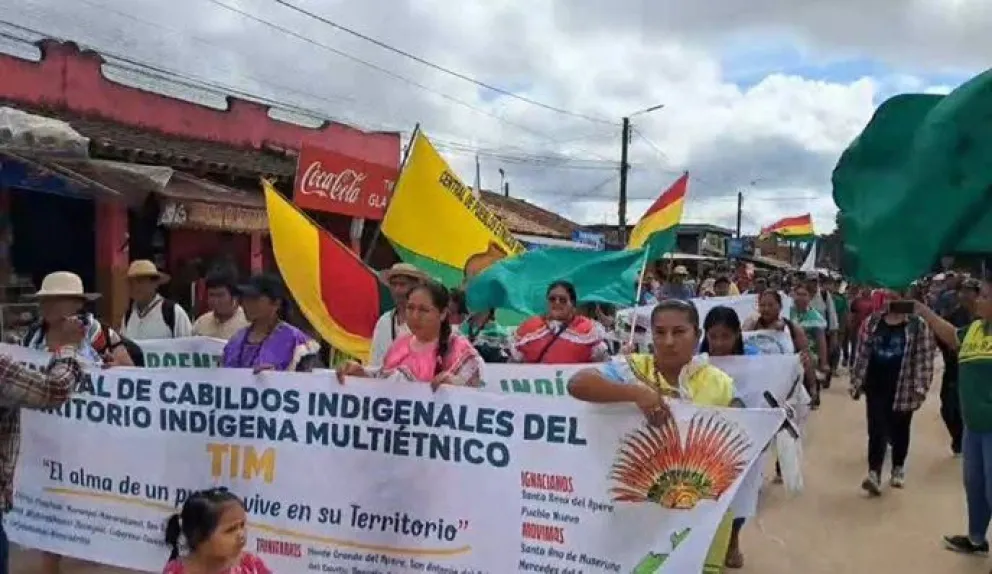
The climate of unrest is worsening in the country, with different social sectors and labor organizations mobilizing over various demands on the Government. Photo: Erbol
Social unrest may be due to several reasons, among them the expectations generated by President Rodrigo Paz’s arrival to power; the heavy burden he inherited from his predecessors; and the economic and institutional crisis the country is experiencing. However, there may also be interests behind it seeking to weaken him and, in that way, aspire to an opportunity to gain power, political analyst Roberto Laserna told Visión 360.
For several weeks now, the country has once again entered a new wave of social conflicts, which began with the permanent mobilizations by drivers demanding good-quality fuel, considering that the Government lifted the subsidy and prices went up.
Added to that situation is the distribution of poor-quality gasoline, which caused damage to vehicles in that sector, which is demanding compensation and, faced with the authorities’ failure to comply, generated a series of protests that have remained active for almost four months.
In addition, protests began against Law 1720, which authorizes the National Institute of Agrarian Reform (INRA) to convert small property into medium-sized property, a measure considered a risk for small peasant producers, who from different parts of the country began their demonstrations.
For Laserna, every public gesture is a political act. Every social conflict is also political. Now then, social conflicts usually have several motivations at the same time. Some are explicit but others are not, and that is why it is always very difficult to interpret them and even more so to “manage” them.
In his analysis, the Government headed by Rodrigo Paz is in its first months and has received a very heavy burden of economic and institutional crisis, but it has also raised many expectations.
Although he considered that “many responsibilities or blame could not be attributed to him for what we are currently experiencing, it is very likely that, behind every conflict, there are those interested in seeing him weakened, surely thinking that this could give them an opportunity to gain power. The vice president, immediate replacement, will always be a suspect,” he said in reference to allegations of an attempt to supplant Paz by the second in command, Edmand Lara, and open the possibility of a return by former president Evo Morales.
Past experience points that way. Evo Morales as well, because he has shown signs of uncontrollable ambition. But I do not believe that either has enough support to occupy the presidency, he explained.
Those defeated in the elections may also be interested in his downfall, surely hoping that the votes they obtained will be their support base, which is doubtful. In short, none has strength but, as an old English saying goes, “politics make strange bedfellows,” he stated.
Regarding the mobilizations by peasants and indigenous groups demanding the repeal of Law 1720, Laserna stated that Law 1720 does not force anyone to do anything, “but it seems that opening opportunities to peasants has irritated their organizations, whose attitude is certainly political: they demand notoriety and recognition.”
He also referred to the drivers’ demands and considered that: “The highways need maintenance, without a doubt, and I am sure that the issue is in the Government’s basic plans. And while the gasoline has caused enormous damage, which the Government has committed to repair, it seems rather a pretext to obtain more resources. And it is understandable that transport workers want to obtain them, given that their fares have remained controlled for a very long time,” he said.
For the analyst, organizations such as the Bolivian Workers’ Central (COB), the Mine Workers’ Trade Union Federation of Bolivia (FSTMB), and the Unified Trade Union Confederation of Peasant Workers of Bolivia (CSUTCB), which are at the forefront of the protests announced for the coming days, have been debased and their leaders are trying to maintain their relevance before their rank and file.
“These organizations have been painfully debased by patronage and corruption. Their leaders received gifts and enjoyed privileges during the MAS administrations, manipulated their bases with promises, and eliminated the union independence and political autonomy that allowed them to be respected by all citizens. Their leaders are trying to maintain relevance through conflicts, so they will take advantage of any sign of unrest to join the mobilizations and present themselves as protagonists,” he stated.
Within this entire situation, and when asked whether the Government has an adequate handling of social unrest, he considered that: “The Government was formed in a runoff, that is, it is the product of a majority forced by electoral rules.”
It did not have a strong party or coalition, and differences surfaced very quickly, with Lara and with the Christian Democratic Party (PDC). It received the support of the National Unity alliance, but that did not translate into a cohesive organization either, he maintained.
The Government knows that rejection of Evo and of “masismo,” and distrust of Tuto Quiroga, gave it victory, but it has not managed to articulate that double rejection into a constructive project that gives it the momentum to govern, he reflected.
Seeking the center is not a program. Therefore, that lack causes it to be perceived as weak and indecisive, an image that invites pressure and conflict, since this is necessary for those who were left outside the institutional system and lost credibility because of the failure of their policies in previous years, he stated.
Por Germaine Barriga Velarde, Vision 360:
Laserna: la conflictividad social puede deberse a las expectativas por la llegada de Paz al Gobierno, la carga pesada heredada y la crisis económica
Sin embargo, no descarta que detrás de los conflictos que se registran en el país puedan estar interesados en que se debilite y, de esa forma, aspirar a tener una oportunidad para ganar el poder.
La situación de conflictividad se agudiza en el país, diferentes sectores sociales y organizaciones sindicales se movilizan por diferentes demandas al Gobierno. Foto: Erbol
La conflictividad social puede deberse a varias razones, entre ellas a las expectativas generadas por la llegada del presidente Rodrigo Paz al poder; a la carga pesada que heredó de sus antecesores; y a la crisis económica e institucional que se vive en el país. Sin embargo, pueden estar detrás interesados en que se debilite y, de esa forma, aspirar a tener una oportunidad para ganar el poder, afirmó a Visión 360 el analista político Roberto Laserna.
Desde hace algunas semanas, el país volvió a ingresar en una nueva ola de conflictos sociales, que comenzaron con las permanentes movilizaciones de los choferes, en demanda de combustible de buena calidad, considerando que el Gobierno levantó la subvención y los precios sufrieron un alza.
A esa situación se suma la distribución de gasolina de mala calidad, que provocó daños a los vehículos de ese sector, que demanda resarcimiento y, ante el incumplimiento de las autoridades, generó una serie de protestas que se mantienen activas desde hace casi cuatro meses.
Además, se iniciaron las protestas en contra de la Ley 1720, que autoriza al Instituto Nacional de Reforma Agraria (INRA) la conversión de la pequeña propiedad en mediana propiedad, medida que es considerada un riesgo para los pequeños productores campesinos, quienes desde diferentes lugares del país iniciaron sus protestas.
Para Laserna, todo gesto público es un acto político. Todo conflicto social es también político. Ahora bien, los conflictos sociales suelen tener varias motivaciones al mismo tiempo. Algunas son explícitas pero otras no, y por eso siempre resulta muy difícil interpretarlos y más aún “administrarlos”.
Desde su análisis, el Gobierno que preside Rodrigo Paz está en sus primeros meses y ha recibido una carga muy pesada, de crisis económica e institucional, pero también ha levantado muchas expectativas.
Aunque consideró que, “no se le podrían atribuir muchas responsabilidades o culpas por lo que actualmente vivimos, pero es muy probable que, detrás de cada conflicto, haya quienes estén interesados en que se debilite, seguramente pensando que eso puede darles una oportunidad para ganar poder. El vicepresidente, reemplazante inmediato, será siempre un sospechoso”, manifestó en relación a las denuncias de un intento por suplantar a Paz por el segundo mandatario, Edmand Lara, y abrir la posibilidad de un retorno del expresidente, Evo Morales.
La experiencia del pasado así lo señala. Evo Morales también, porque ha dado muestras de una ambición incontrolable. Pero no creo que ninguno tenga el apoyo suficiente para ocupar la presidencia, explicó.
También pueden estar interesados en su caída los derrotados en las elecciones, que seguramente esperan que los votos que lograron sean su base de apoyo, lo cual es dudoso. En síntesis, ninguno tiene fuerza pero, como dice un viejo refrán en inglés, “politics make strange bedfellows” [“La política crea alianzas inesperadas”], afirmó.
Con relación a las movilizaciones de campesinos e indígenas en demanda de la abrogación de la Ley 1720, Laserna afirmó que la Ley 1720 no obliga nada a nadie, “pero parece que abrir oportunidades a los campesinos ha irritado a sus organizaciones, cuya actitud ciertamente es política: demandan notoriedad y reconocimiento”.
También se refirió a las demandas de los choferes y consideró que: “Las carreteras necesitan mantenimiento, sin duda, y estoy seguro de que el tema está en los planes básicos del Gobierno. Y si bien la gasolina ha causado enormes daños, que el Gobierno se ha comprometido a reparar, parece más bien un pretexto para conseguir más recursos. Y es comprensible que los transportistas los quieran obtener, dado que sus tarifas se mantienen controladas desde hace muchísimo tiempo”, manifestó.
Para el analista, organizaciones como la Central Obrera Boliviana (COB), la Federación Sindical de Trabajadores Mineros de Bolivia (FSTMB) y la Confederación Sindical Única de Trabajadores Campesinos de Bolivia (CSUTCB), que se encuentran al frente de las protestas anunciadas para los próximos días, han sido envilecidas y sus dirigentes intentan mantener su vigencia ante sus bases.
“Esas organizaciones han sido penosamente envilecidas por la prebenda y la corrupción. Sus dirigentes recibieron regalos y disfrutaron de privilegios durante las gestiones del MAS, manipularon a sus bases con promesas y eliminaron la independencia sindical y la autonomía política que les permitía ser respetadas por toda la ciudadanía. Sus dirigentes tratan de mantener vigencia en los conflictos, por lo que aprovecharán cualquier signo de inquietud para sumarse a las movilizaciones y mostrarse como protagonistas”, afirmó.
En toda esta coyuntura, y consultado sobre si el Gobierno tiene un adecuado manejo de la conflictividad, consideró que: “El Gobierno se conformó en segunda vuelta, es decir, es el fruto de una mayoría forzada por las reglas electorales”.
No contaba con un partido o una coalición fuertes y las diferencias afloraron muy rápidamente, con Lara y con el Partido Demócrata Cristiano (PDC.) Recibió el apoyo de la alianza de Unidad Nacional, pero eso tampoco se tradujo en una organización cohesionada, sostuvo,
El Gobierno sabe que el rechazo a Evo y al “masismo” y la desconfianza a Tuto Quiroga le dieron el triunfo, pero no ha logrado articular ese doble rechazo en un proyecto propositivo que le dé el impulso para gobernar, reflexionó.
Buscar el centro no es un programa. Por eso, la carencia hace que lo perciban débil e indeciso, una imagen que invita a la presión y al conflicto, ya que éste es necesario para quienes quedaron al margen del sistema institucional y perdieron credibilidad por el fracaso de sus políticas en los años previos, afirmó.


Leave a Reply