
By Germaine Barriga, Vision 360:
During the administration of Arce, prominent figures were imprisoned without their complaints of injustice and mistreatment being heard.
Among the former authorities who remained in prison for several years are former president Jeanine Áñez; the governor of Santa Cruz, Luis Fernando Camacho; former Ministers of Justice Álvaro Coimbra and of Energy Rodrigo Guzmán; as well as the former president of Comcipo, Marco Antonio Pumari, among many others.
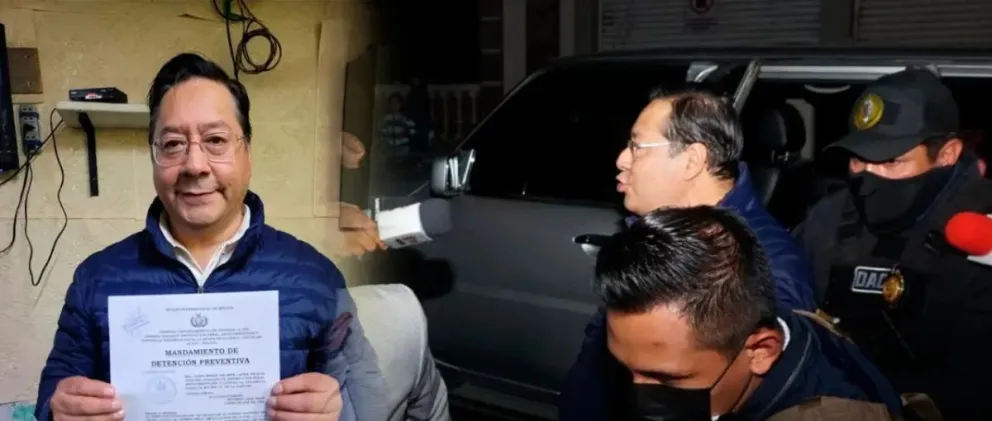
Former president Luis Arce released today a letter in which he complains that “all the requests submitted by his defense were rejected, as were the petitions to undergo medical examinations.” Photo: Unitel
During the five years of the administration of now former president Luis Arce, who is currently detained in San Pedro prison, former president Jeanine Áñez; former Ministers of Justice Álvaro Coimbra and of Energy Rodrigo Guzmán; the governor of Santa Cruz, Luis Fernando Camacho; and the former president of the Potosí Civic Committee (Comcipo), Marco Antonio Pumari, were detained, all accused of participating in the “coup d’état” following the resignation of former president Evo Morales.
Other leaders who suffered the same fate, under different accusations, were: the representative of the Resistencia Juvenil Cochala, Yassir Molina; the president of Comcipo, Juan Carlos Manuel, who lost his life while in hiding; the president of the Comcipo Mobilizations Committee, Marco Subía; and the president of the Departmental Association of Coca Producers (Adepcoca), César Apaza. One of the most emblematic cases was that of the former president of the Indigenous Fund, Marco Antonio Aramayo, who denounced acts of corruption in that institution.
Aramayo died on April 18, 2022, while deprived of liberty. He faced 126 criminal proceedings opened against him by the government of Evo Morales, which continued during Arce’s administration.
Relatives, lawyers, and associates of these former authorities and leaders denounced acts of violence, arbitrariness by the Public Prosecutor’s Office, the Judiciary, and the Ministry of Government, through the Penitentiary Regime Directorate, which were not taken into account by the authorities of that government.
Currently, former president Arce, who was arrested on December 10 of last year and sent to San Pedro prison, is accused of alleged acts of embezzlement of resources from the former Indigenous Fund, in his capacity as Minister of Economy and Public Finance.
A few days before reaching four months of preventive detention, Arce released a letter addressed to the population, in which he complains that: “all the requests submitted by my defense have been rejected, including the recent request to undergo the medical examinations required by a cardiologist, putting my health and physical integrity at risk.”
On March 13, 2021, after four months in office, the Ministry of Government carried out an operation in the department of Beni to arrest former president Áñez, who was transferred to La Paz. The complaint was filed by former MAS deputy Lidia Patty.
The Minister of Government at that time, Eduardo del Castillo, reported that the former president was arrested for the alleged crimes of sedition and terrorism in November 2019, following the resignation of Evo Morales from the presidency, amid allegations of electoral fraud in that year’s general elections.
Reports about that event indicated that Áñez was seen deeply affected by her arrest. According to Arce’s government, she was being investigated for the deaths in Senkata and Sacaba. One day earlier, on March 12, former Ministers of Energy Guzmán and of Justice Coimbra were also arrested. They were transferred from Beni to La Paz and, after giving their statements, the judge in the case ordered their preventive detention for six months.
Both former authorities, after spending three years in San Pedro prison, underwent an abbreviated procedure and admitted guilt for the crimes of concealment and criminal association in the case “Coup d’État I.” They were sentenced to two years in prison in December 2023, seeking their release after nearly three years of preventive detention.
Del Castillo, through his social media, expressed congratulations to the Bolivian Police, the National Intelligence Directorate (DNI), and the Special Force to Fight Drug Trafficking (Felcn) for “this historic task of delivering justice to the Bolivian people,” reported the newspaper Opinión.
In the early hours of March 14, Áñez denounced through her social media that: “in an act of abuse and political persecution, the MAS government has ordered my arrest. It accuses me of having participated in a coup d’état that never occurred. My prayers for Bolivia and for all Bolivians.”
The former president attempted suicide in the early hours of August 21, 2021, while imprisoned in the Miraflores prison in La Paz. She suffered superficial injuries to her wrists and forearms, after which she was treated and declared out of danger.
She was sentenced to 10 years in prison in June 2022 for the case “Coup d’État II.” However, in November 2025, the Supreme Court of Justice annulled this sentence and ordered her immediate release upon recognizing violations of due process.
On December 10, 2022, in an operation carried out in the city of Potosí, 2,000 police officers were deployed to arrest former civic leader and vice-presidential candidate for Creemos, Marco Antonio Pumari. Previously, police had raided Comcipo facilities to arrest the president of that civic entity, Juan Carlos Manuel.
Pumari was accused of burning the Departmental Electoral Tribunal and invoked his right to remain silent. Edwin Quispe, secretary general of the Attorney General’s Office, confirmed that the former civic leader was arrested Thursday night and transferred to the municipality of Betanzos, on the border with the department of Chuquisaca, according to Unitel.
The official reported that Pumari would be charged with four crimes: trespassing, aggravated robbery, damage to state property, and electoral obstruction. Quispe stated that preventive detention would be requested. In August 2025, he was released after being imprisoned for three years and eight months.
Later, it was the governor of Santa Cruz, Luis Fernando Camacho, who was arrested on December 28, 2022, by police officers, as confirmed by Del Castillo. “We inform the Bolivian people that the Bolivian Police has executed the arrest warrant against Mr. Luis Fernando Camacho,” he wrote on social media, according to Erbol.
The Santa Cruz Governor’s Office issued a statement denouncing that the departmental authority was kidnapped in an “absolutely irregular operation carried out to an unknown destination.” On August 26, 2025, the courts ordered house arrest for the authority, who had remained imprisoned for nearly three years in the Chonchocoro prison.
Juan Carlos Manuel, president of Comcipo, went into hiding. The Public Prosecutor’s Office accused him of participating in the burning of the TED infrastructure. On January 23, 2023, his death was reported. The National Committee for the Defense of Democracy (Conade) denounced that Manuel was the first fatality during Arce’s administration.
Conade representative Manuel Morales denounced that the civic leader was “a political persecuted individual” and warned that he would not survive away from his family, especially with his underlying illnesses such as diabetes and high blood pressure, worsened by the neglect of the population of Potosí, he told Erbol.
Under these circumstances, the Minister of Justice, Iván Lima, stated that the categories of “hiding” and “politically persecuted” are not recognized by Bolivian legislation and that they are intended to seek impunity to avoid accountability before justice.
Another leader who faced a similar situation was Marco Subía, president of the Comcipo Mobilizations Committee, for the alleged crime of obstructing the exercise of functions. The complaint was filed by the then Ombudsman, Nadia Cruz, as a result of pressure measures taken in 2019 amid social conflict over allegations of fraud in the general elections, when Subía allegedly exercised violence in the offices of the Ombudsman’s Delegation in Potosí.
His brother, Remberto Subía, denounced that he faced several proceedings, including: one for the burning of the house of the former president of the Chamber of Deputies, Víctor Borda; another for alleged participation in the burning of the TED building; and a third case filed by Borda for alleged slander and insults.
The representative of the Resistencia Juvenil Cochala, Yassir Molina, was also arrested on two occasions: on March 13, 2021, while visiting Quillacollo, and on the 17th of the same month, accused of crimes including criminal organization, possession of weapons, abuse, torture, and causing damage to the building of the Attorney General’s Office in Sucre, among others. Molina was sentenced to eight years in prison. In September 2025, Molina obtained conditional release in the case of damage to the Prosecutor’s Office.
A judge in Oruro granted conditional release to Yassir Molina, who had been serving a six-year prison sentence for the case involving damage to the Attorney General’s Office in October 2020, reported Correo del Sur.
In addition to these leaders, the Bolivian Police arrested the president of Adepcoca, César Apaza, on September 22, 2022, for protests that led to the destruction of a parallel market opened by a pro-government faction for the sale of coca leaves in La Paz.
The Police confirmed that Apaza was arrested in the La Paz neighborhood of Villa Fátima, in compliance with a prosecutorial order, accused of committing several crimes under investigation by the Public Prosecutor’s Office, including public incitement to commit crimes, criminal organization, arson, kidnapping, minor, serious, and very serious injuries, aggravated robbery, and preventing or obstructing the exercise of functions. After undergoing an abbreviated procedure, he was released after remaining in prison.
Por Germaine Barriga Velarde, Vision 360:
En la gestión de Arce, personalidades fueron encarceladas sin que se escuchen sus denuncias de injusticias y maltratos
Entre las exautoridades que permanecieron varios años en la cárcel se encuentran: la expresidenta Jeanine Añez; el gobernador de Santa Cruz, Luis Fernando Camacho; los exministros de Justicia, Álvaro Coimbra, y de Energías, Rodrigo Guzmán; además del expresidente de Comcipo, Marco Antonio Pumari, entre muchos otros.
El expresidente Luis Arce hizo conocer hoy una carta en la que se queja porque “todas las solicitudes presentadas por su defensa fueron rechazadas, así como las peticiones de realizarse exámenes médicos. Foto: Unitel
En los cinco años de gestión del ahora expresidente Luis Arce, ahora detenido en la cárcel de San Pedro, fueron detenidos la expresidenta Jeanine Áñez; los exministros de Justicia, Álvaro Coimbra, y de Energías, Rodrigo Guzmán; el gobernador de Santa Cruz, Luis Fernando Camacho; y el expresidente del Comité Cívico Potosinista (Comcipo), Marco Antonio Pumari, todos ellos acusados de participar en el Golpe de Estado, después de la renuncia del exmandatario Evo Morales.
Otros dirigentes que corrieron la misma suerte, por diferentes acusaciones, fueron: el representante de la Resistencia Juvenil Cochala, Yassir Molina; el presidente de Comcipo, Juan Carlos Manuel, quien perdió la vida en la clandestinidad; el presidente del Comité de Movilizaciones de Comcipo, Marco Subía; y el presidente de la Asociación Departamental de Productores de Coca (Adepcoca), César Apaza. Uno de los casos más emblemáticos fue el del expresidente del Fondo Indígena, Marco Antonio Aramayo, quien denunció hechos de corrupción en esa institución.
Aramayo falleció el 18 de abril de 2022 mientras permanecía privado de libertad. Enfrentaba 126 procesos penales abiertos en su contra por el gobierno de Evo Morales, que continuaron durante la gestión de Arce.
Los familiares, abogados y allegados a estas exautoridades y exdirigentes denunciaron hechos de violencia, arbitrariedades del Ministerio Público, del Poder Judicial y del Ministerio de Gobierno, a través de la Dirección de Régimen Penitenciario, que no fueron consideradas por las autoridades de ese Gobierno.
En la actualidad, el expresidente Arce, quien fue aprehendido el 10 de diciembre del pasado año y remitido al penal de San Pedro, está acusado de presuntos actos de malversación de recursos del ex Fondo Indígena, en su calidad de ministro de Economía y Finanzas Públicas.
A pocos días de cumplirse los cuatro meses de su detención preventiva, Arce difundió una carta dirigida a la población, en la que se queja de que: “todas las solicitudes presentadas por mi defensa han sido rechazadas, incluso la petición reciente para realizarme los exámenes médicos requeridos por un cardiólogo, poniendo en riesgo mi salud y mi integridad física”.
El 13 de marzo de 2021, después de cuatro meses de asumir la presidencia del país, el Ministerio de Gobierno realizó un operativo en el departamento de Beni para aprehender a la expresidenta Añez, quien fue trasladada a La Paz. La denuncia fue presentada por la exdiputada por el Movimiento al Socialismo (MAS), Lidia Patty.
El ministro de Gobierno de esa gestión, Eduardo del Castillo, informó que la exmandataria fue aprehendida por los presuntos delitos de sedición y terrorismo en noviembre de 2019, después de la renuncia de Evo Morales a la presidencia, en medio de denuncias de haber cometido fraude en las elecciones generales de ese año.
Las informaciones difundidas sobre ese hecho mencionaban que Añez fue vista muy afectada por su aprehensión. Según el Gobierno de Arce, era investigada por las muertes en Senkata y Sacaba. Un día antes, el 12 de marzo, también fueron aprehendidos los exministros de Energías, Guzmán, y de Justicia, Coimbra, quienes fueron trasladados desde Beni a La Paz y, después de prestar sus declaraciones informativas, el juez de la causa determinó su detención preventiva por seis meses.
Ambas exautoridades, después de permanecer tres años en el penal de San Pedro, se sometieron a un procedimiento abreviado y admitieron su culpabilidad por los delitos de encubrimiento y asociación delictuosa en el caso “Golpe de Estado I”. Fueron sentenciados a dos años de cárcel en diciembre de 2023, buscando su liberación tras casi tres años de detención preventiva.
Del Castillo, a través de sus redes sociales, expresó su felicitación al trabajo de la Policía Boliviana, a la Dirección Nacional de Inteligencia (DNI) y a la Fuerza Especial de Lucha Contra el Narcotráfico (Felcn), por “esta histórica tarea de dar justicia al pueblo boliviano”, informó el diario Opinión.
En la madrugada del 14 de marzo, Añez denunció a través de sus redes sociales que: “en un acto de abuso y persecución política el Gobierno del MAS me ha mandado arrestar. Me acusa de haber participado en un golpe de Estado que nunca ocurrió. Mis oraciones por Bolivia y por todos los bolivianos”.
La exmandataria intentó suicidarse en la madrugada del 21 de agosto de 2021 mientras estaba encarcelada en el penal de Miraflores, en La Paz. Sufrió heridas superficiales en las muñecas y antebrazos, tras lo cual fue atendida y declarada fuera de peligro.
Fue condenada a 10 años de prisión en junio de 2022 por el caso “Golpe de Estado II”. Sin embargo, en noviembre de 2025, el Tribunal Supremo de Justicia anuló esta sentencia y ordenó su liberación inmediata al reconocer vulneraciones al debido proceso.
El 10 de diciembre de 2022, en un operativo realizado en la ciudad de Potosí, 2.000 policías fueron desplegados para aprehender al exdirigente cívico y excandidato a la vicepresidencia por Creemos, Marco Antonio Pumari. Previamente, la Policía realizó el allanamiento de las instalaciones de Comcipo para aprehender al presidente de esa entidad cívica, Juan Carlos Manuel.
Pumari fue acusado de la quema del Tribunal Departamental Electoral y se acogió al derecho al silencio. Edwin Quispe, secretario general de la Fiscalía General del Estado, confirmó que el excívico fue aprehendido la noche del jueves y trasladado al municipio de Betanzos, en el límite con el departamento de Chuquisaca, según Unitel.
El funcionario informó que Pumari será imputado por cuatro delitos: allanamiento, robo agravado, deterioro de bienes del Estado y obstrucción electoral. Quispe adelantó que se pedirá su detención preventiva. En agosto de 2025 fue liberado, después de estar preso por tres años y ocho meses.
Después, fue el gobernador de Santa Cruz, Luis Fernando Camacho, quien fue aprehendido el 28 de diciembre de 2022 por efectivos de la Policía, según confirmó Del Castillo. “Informamos al pueblo boliviano que la Policía Boliviana dio cumplimiento a la orden de aprehensión en contra del señor Luis Fernando Camacho”, escribió en sus redes sociales, según Erbol.
La Gobernación de Santa Cruz emitió un comunicado donde denunció que la autoridad departamental fue secuestrada en un operativo policial “absolutamente irregular y llevado con rumbo desconocido”. El 26 de agosto de 2025, la justicia dispuso la detención domiciliaria para la autoridad, quien permaneció encarcelado por casi tres años en el penal de Chonchocoro.
Juan Carlos Manuel, presidente de Comcipo, se declaró en la clandestinidad. El Ministerio Público lo acusó de haber participado en la quema de la infraestructura del TED. El 23 de enero de 2023 se informó de su fallecimiento. El Comité Nacional de Defensa de la Democracia (Conade) denunció que Manuel fue el primer fallecido durante la gestión de Arce.
El representante del Conade, Manuel Morales, denunció que el dirigente cívico era “un perseguido político” y advirtió que no iba a sobrevivir lejos de su familia y peor con sus enfermedades de base, como la diabetes y la presión alta, agravado por el olvido de la población potosina, dijo a Erbol.
En esas circunstancias, el ministro de Justicia, Iván Lima, afirmó que las categorías de “clandestinidad” y “perseguido político” no son admitidas por la legislación boliviana y que tendrían el fin de buscar impunidad para no rendir cuentas ante la justicia.
Otro de los dirigentes que sufrió una situación parecida fue Marco Subía, presidente del Comité de Movilizaciones de Comcipo, por el presunto delito de estorbar el ejercicio de funciones. La denuncia fue presentada por la entonces defensora del Pueblo, Nadia Cruz, a raíz de las medidas de presión asumidas en 2019, en medio del conflicto social por las denuncias de fraude en las elecciones generales, cuando Subía habría ejercido violencia en las oficinas de la Delegación Defensorial en Potosí.
Su hermano, Remberto Subía, denunció que enfrentaba varios procesos, entre ellos: por la quema de la casa del expresidente de la Cámara de Diputados, Víctor Borda; otro por la supuesta participación en la quema del edificio del TED; y un tercer proceso por Borda, por presuntas calumnias e injurias.
El representante de la Resistencia Juvenil Cochala, Yassir Molina, también fue aprehendido en dos oportunidades: el 13 de marzo de 2021, cuando se encontraba de visita en Quillacollo, y el 17 del mismo mes, acusado por los delitos de organización criminal, portación de armas, vejaciones, torturas, además de haber provocado daños al edificio de la Fiscalía General del Estado, en Sucre, entre otros delitos. Molina fue sentenciado a ocho años de cárcel. En septiembre de 2025, Molina logró libertad condicional por el caso destrozos en la Fiscalía.
Un juez de Oruro determinó la libertad condicional para Yassir Molina, quien se encontraba cumpliendo una condena de seis años de cárcel por el caso de daños en la Fiscalía General del Estado, ocurrido en octubre de 2020, informó Correo del Sur.
Además de estos dirigentes, la Policía Boliviana aprehendió el 22 de septiembre de 2022 al presidente de Adepcoca, César Apaza, por la protesta que derivó en la destrucción de un mercado paralelo abierto por un sector afín al oficialismo para la venta de la hoja de coca en La Paz.
La Policía confirmó que Apaza fue aprehendido en el barrio paceño de Villa Fátima, en cumplimiento de una orden fiscal, acusado de haber cometido varios delitos que eran investigados por el Ministerio Público, entre ellos: instigación pública a delinquir, organización criminal, incendios, secuestro, lesiones leves, graves y gravísimas, robo agravado e impedir o estorbar el ejercicio de funciones. Después de someterse a un proceso abreviado, fue liberado, tras permanecer en la cárcel.

 Bolivian Thoughts | Pensamientos Bolivianos (Bilingual/Bilingüe)