
By ANF, Eju.tv:
What will the next government find? On November 8, the MAS cycle and its economic model will come to an end. The country is experiencing the worst economic crisis in 40 years, reflected in fuel shortages, rising inflation, and a black market for foreign currency, where the U.S. dollar trades at nearly twice the official rate.

Fuente: ANF
Dollars are scarce: only 6% of the Net International Reserves (NIR) are in cash. Banks no longer accept deposits or transactions in dollars, unless high transfer fees are paid. The truth is, the country has run out of money to import gasoline and diesel and has failed to gather enough foreign currency to service its external debt.
For this reason, Luis Arce’s government decided to pawn the country’s gold in international banks. In practice, this means it made an advance sale, committing the reserves that should serve as a “safety cushion” in the face of severe economic problems.
Ramiro Cavero, chief economist of the Alianza Libre that backs Jorge Quiroga’s presidential bid, explained that reserves are a crucial safeguard for any country, allowing access to immediate funds in emergencies such as a pandemic or to guarantee fuel purchases. “If Arce’s government doesn’t ensure the supply of gasoline and diesel after the new president takes office, a serious problem will arise,” he warned.
The NIR, which in 2014 reached 15 billion dollars thanks to the natural gas boom, have now fallen to 3.275 billion. Of that total, 3.1137 billion correspond to gold, and only 102.5 million dollars—just 3.1%—are in liquid foreign currency. The gold, often called “grandma’s jewels,” is now the state’s last resort to face the crisis.
The guardian of that gold is the Central Bank of Bolivia (BCB). This institution reported that, so far this year, 8.4 tons of gold have been sold in futures contracts; in other words, the metal was pawned to obtain cash dollars. In the first four months, three tons were converted into money, while another 5.4 tons were pledged in the second quarter. Thanks to this “pawn” of “grandma’s jewels,” Arce’s government obtained 828 million dollars, which were used to pay part of the external debt and to import fuels.
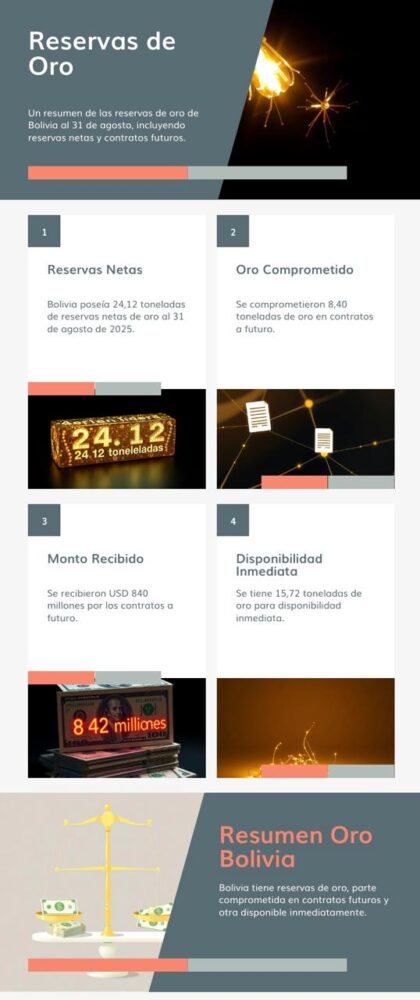
According to the BCB report, the gold was pawned for one year: “The issuing entity carried out two financial operations of futures contracts that will be completed in no more than 12 months each,” says the document. This means that within that time frame, the 828 million dollars must be repaid; otherwise, the gold will become the property of the international banks that provided the funds, along with interest, fees, and other contractual obligations.
Transactions Under Suspicion
The use of gold reserves also raises doubts about the legality of these operations. In 2023, the Legislative Assembly approved the so-called “Gold Law,” which authorizes the BCB to purchase the metal on the domestic market to strengthen international reserves. It also allows foreign operations, including pledging (pawning). However, the law stipulates that the Central Bank must have congressional authorization for such actions—something that did not happen in these cases.
Economist Gonzalo Colque explains that “BCB authorities claim to have a supposed legal power derived from an article included in the 2025 General State Budget (PGE) Law. However, a Constitutional Court ruling states that a budget law cannot modify a permanent law.”
It’s important to note that the ruling party no longer has a majority in the Senate and barely holds enough votes in the Chamber of Deputies. Therefore, the government tried to include in the 2025 PGE a clause that would allow it to perform such operations without congressional approval, but failed. The General Budget Law was presented to the Legislative Assembly, but there was no quorum for its approval. Under Bolivian law, if a certain period passes without congressional approval, the law is considered enacted so that the budget can be executed. That’s what happened in this case.
Furthermore, the Gold Law states that the NIR must not fall below 22 tons of gold. However, that requirement is currently not being met.
According to the BCB report, as of August 31 there were 24.12 tons of gold: 21.85 deposited in international banks and 2.27 in national vaults. Of those held abroad, 8.4 tons are pawned and unavailable. Those inside the country, meanwhile, are unrefined and uncertified as “good delivery” bars, meaning they cannot be immediately used.
If the 8.4 pawned tons are discounted, the state effectively has only 15.72 tons available—thus violating the law.
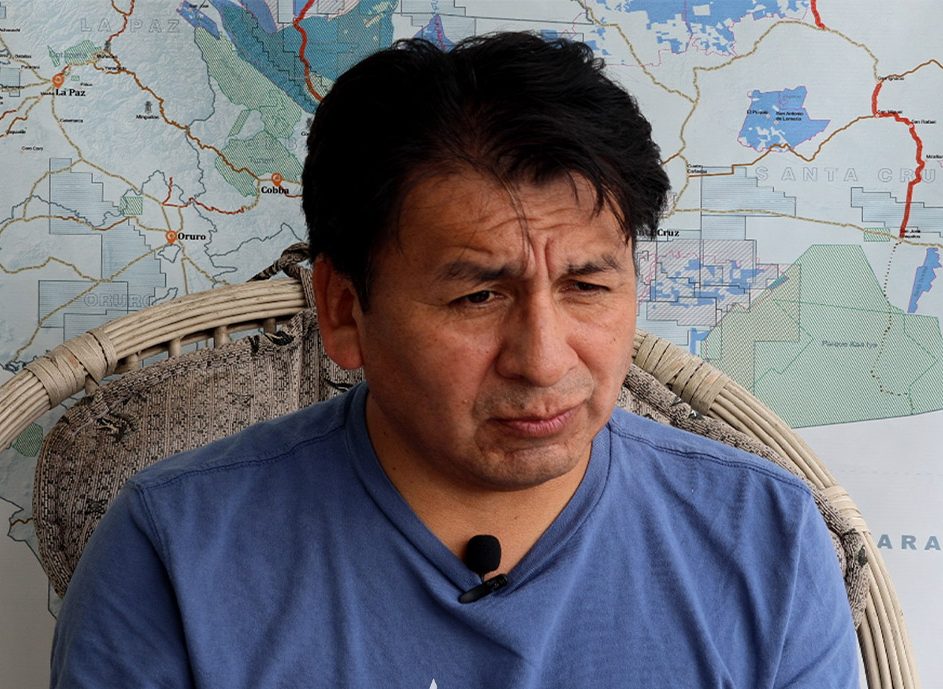
Gonzalo Colque is an economist with Fundación Tierra and has studied the gold-related operations (Source: Revista Nómadas)
Why Should This Be a Concern?
Colque warns that there are no conditions to repay the money obtained in exchange for the gold within 12 months—a term that will expire between April and July 2026. This implies a violation of the Gold Law, which requires maintaining at least 22 tons. “The net international reserves could bottom out or even turn negative in 2026, putting the national economy in a critical situation. Gold is being sold under unfavorable conditions, precisely when international prices are rising and central banks worldwide are buying gold instead of selling it.”
Meanwhile, Carlos Aranda, economist with the Populi Foundation, adds: “Although the BCB may have the authority to pledge gold, it should be limited to any surplus above the minimum 22 tons. Therefore, the legality of the operation is questionable, and one must ask whether the BCB sought the necessary legal advice to avoid a possible violation of the law.”

Carlos Aranda is an economist with the Public Policies for Freedom Foundation (Populi)
Aranda also notes that the BCB justified the operation as a way to prevent a default by the National Treasury. “The BCB’s mandate is to ensure monetary stability, not to seek funds for the Treasury to pay its debts. By admitting that it acted to avoid a default, the BCB acknowledges its lack of independence and subordination to the Executive Branch. This undermines the credibility of an institution that should be solid enough to guarantee the country’s monetary stability,” he concludes.
A Challenge for the Next Government
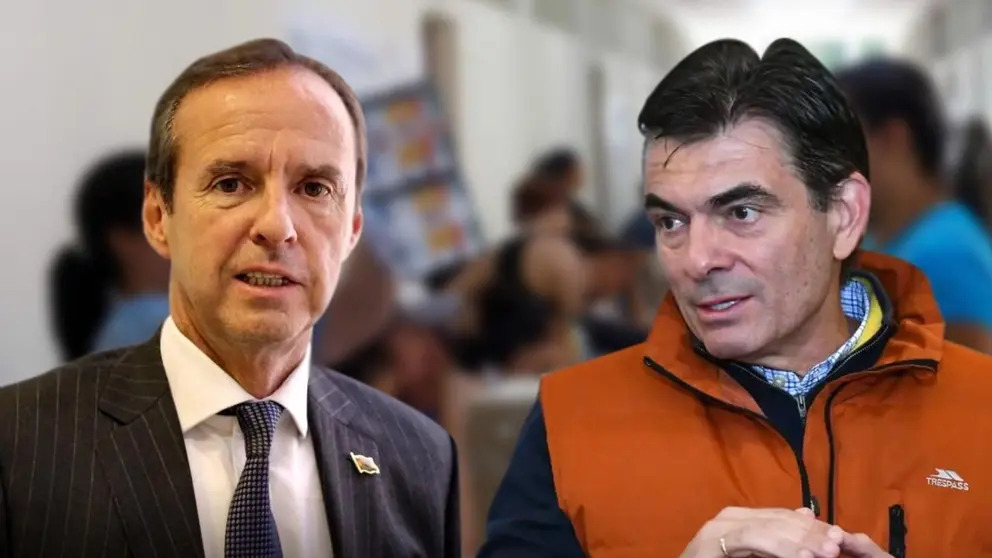
Jorge Quiroga and Rodrigo Paz—one of them will govern Bolivia starting November 8. (Source: Opinión)
José Gabriel Espinoza is the head of the economic team of Rodrigo Paz, the Christian Democratic Party (PDC)candidate, who will face Jorge Quiroga of Alianza Libre in the runoff election. Quiroga’s chief economist is Ramiro Cavero. Both agree that the economic outlook awaiting the next government will be highly challenging.
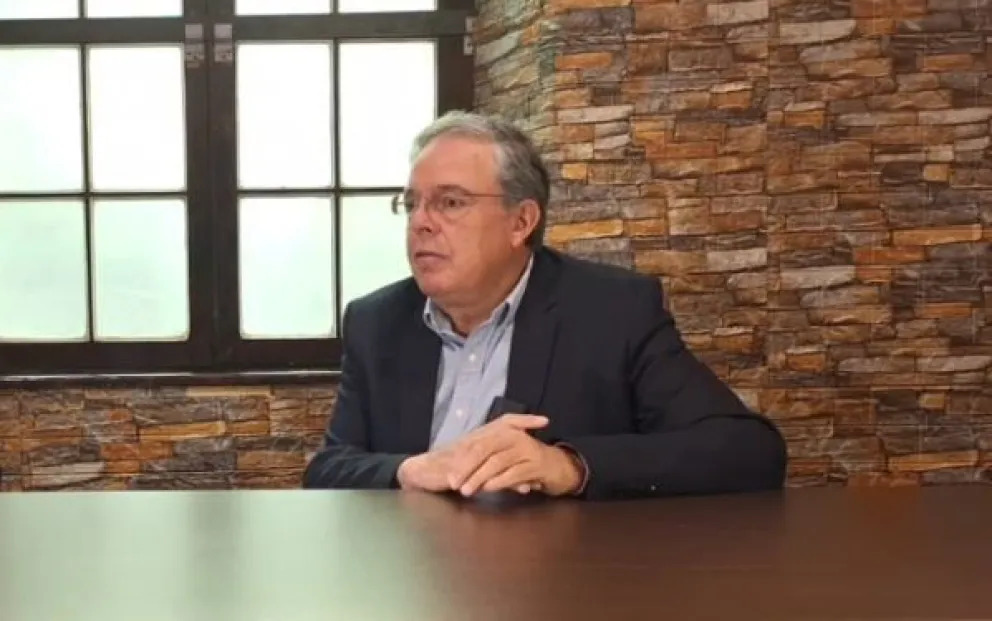
Ramiro Cavero is the lead economist for Jorge Quiroga’s candidacy. (Source: Visión 360)
Ramiro Cavero, on the radio program La Hora Pico, warned that if Luis Arce’s government fails to deliver the minimum 22 tons of gold in Net International Reserves (NIR), it will face legal consequences because the law mandates that this amount must be maintained at all times.
Candidate Quiroga proposes the need to launch an international financing plan, although his economist acknowledges that such resources will not arrive immediately.
Meanwhile, José Gabriel Espinoza of the PDC criticizes the Central Bank of Bolivia (BCB) for violating the law that defines its essential role: to maintain the stability of the national currency and preserve exchange rate and monetary stability. For Espinoza, the BCB acted illegally by using funds obtained from gold operations to finance the central government’s current spending, such as debt payments and fuel purchases.
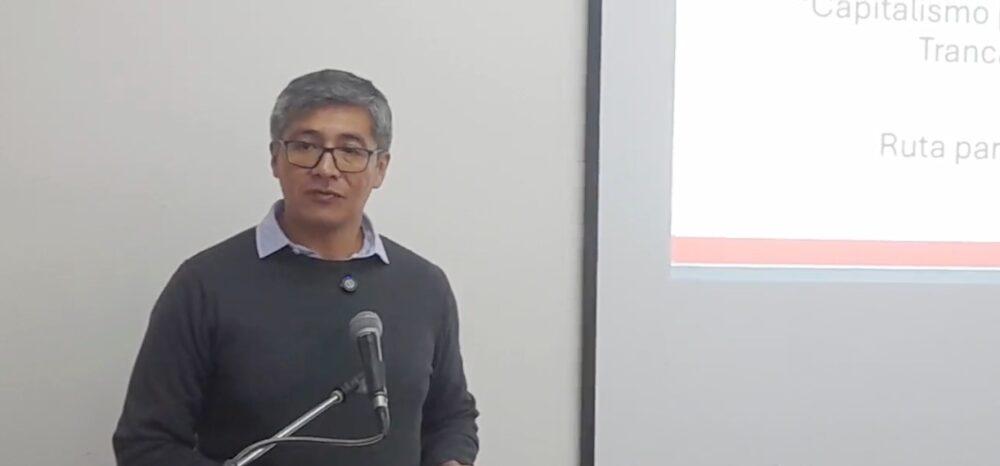
José Gabriel is the main economic advisor to candidate Rodrigo Paz. (Source: PDC)
Asked how to address this situation, Espinoza admitted it is “a demanding scenario” that will require boosting exports to bring in more dollars, attracting investment, and encouraging remittances to strengthen reserves. He also mentioned the use of about 3 billion dollars in already-approved but not yet disbursed loans, as well as the negotiation of new ones that require congressional authorization, which could reinforce the NIR.
He further warned of the urgent need to reduce the state’s current spending, which equals 10% of the Gross Domestic Product and is concentrated in fuel imports. From the PDC’s perspective, that burden should first be borne by state-owned enterprises and later through a new pricing scheme. It’s worth remembering that gasoline and diesel in Bolivia are heavily subsidized, costing over 2 billion dollars annually.
Espinoza stressed the importance of restoring sound management at the Central Bank of Bolivia so that it stops financing government expenses and returns to its core mission: ensuring the stability of the currency and the exchange rate.
The Shrinking Gold
Economist Gonzalo Colque explains that between 2023 and August 2025, the Arce administration monetized 57.4 tons of gold—at a pace of 19 tons per year. In addition to the 21 tons sold and 8.4 pawned, it converted into currency another 28 tons purchased from small-scale mining cooperatives under the pretext of “strengthening” international reserves.
These operations were financed through monetary issuance by the BCB, which increased inflation and eroded the purchasing power of the national currency. It is, so far, the government that has sold the most gold in Bolivia’s history.
After 20 years of Movimiento al Socialismo rule, Bolivia has gone from an economic boom that generated 60 billion dollars in gas revenues to having to sell and pawn much of its so-called “grandma’s jewels.” The result is a financial hole that the next president will have to face in an attempt to rebuild the national economy.
By Mónica Salvatierra for #LaHoraDeBolivia
/ANF/
Por ANF, Eju.tv:
¿Con qué se encontrará el próximo gobierno? El 8 de noviembre concluirá el ciclo del MAS y de su modelo económico. El país atraviesa la peor crisis económica de los últimos 40 años, reflejada en la escasez de combustible, la inflación creciente y el mercado negro de divisas, donde el dólar se cotiza casi al doble del valor oficial.
Fuente: ANF
Los dólares escasean: solo el 6 % de las Reservas Internacionales Netas (RIN) están en efectivo. En los bancos ya no se aceptan depósitos ni transacciones en dólares, salvo pagando altas comisiones por transferencia. Lo cierto es que el país se quedó sin dinero para importar gasolina y diésel, y tampoco logró reunir las divisas necesarias para amortizar la deuda externa.
Por esta razón, el gobierno de Luis Arce decidió empeñar el oro en bancos internacionales. En la práctica, esto significa que hizo una venta anticipada, comprometiendo las reservas que deberían ser el “colchón de seguridad” frente a los problemas más graves de la economía.
Ramiro Cavero, economista principal de la Alianza Libre que postula a Jorge Quiroga a la Presidencia, explicó que las reservas son un respaldo crucial para cualquier país, ya que permiten disponer de dinero de manera inmediata en situaciones de emergencia, como una pandemia, o para garantizar la compra de combustibles. “Si el Gobierno de Arce no asegura el abastecimiento de gasolina y diésel después de la posesión del nuevo mandatario, se generará un serio problema”, señaló.
Las RIN, que en 2014 llegaron a 15.000 millones de dólares gracias al auge del gas natural, hoy cayeron a 3.275 millones. De ese total, 3.113,7 millones corresponden a oro y apenas 102,5 millones de dólares, es decir, solo un 3,1 % está en divisas líquidas. El oro, al que se suele llamar “las joyas de la abuela”, es ahora el último recurso con que cuenta el Estado para enfrentar la crisis.
El guardián de ese oro es el Banco Central de Bolivia (BCB). Esta entidad informó que en lo que va del año se vendieron a futuro 8,4 toneladas de oro; en otras palabras, se empeñó el metal para obtener dólares en efectivo. En el primer cuatrimestre se transformaron en dinero tres toneladas, mientras que en el segundo se comprometieron otras 5,4 toneladas. Gracias a este “empeño” de las “joyas de la abuela”, el gobierno de Arce consiguió 828 millones de dólares, que se destinaron a pagar parte de la deuda externa y a importar combustibles.
Según el informe del BCB, el oro fue empeñado por un año: “El ente emisor realizó dos operaciones financieras de contratos a futuro que serán perfeccionadas en un plazo no mayor a 12 meses cada una”, señala el documento. Esto significa que en ese tiempo deben devolverse los 828 millones de dólares; de lo contrario, el oro pasará a ser propiedad de los bancos internacionales que entregaron el dinero, además de intereses, comisiones y otras obligaciones pactadas en los contratos.
Transacciones bajo sospecha
El uso del oro de las reservas también despierta dudas sobre la legalidad de las operaciones. En 2023, la Asamblea Legislativa aprobó la llamada “Ley del Oro”, que autoriza al BCB a comprar este metal en el mercado interno para fortalecer las reservas internacionales. También permite hacer operaciones en el exterior, incluida la pignoración (empeño). Pero la norma establece que para ello el Banco Central debe contar con la autorización del Legislativo, lo que no ocurrió en estos casos.
El economista Gonzalo Colque explica que “las autoridades del BCB alegan que cuentan con una supuesta facultad legal derivada de un artículo incluido en la Ley del Presupuesto General del Estado (PGE) 2025. Sin embargo, existe una Sentencia Constitucional que señala que una ley presupuestaria no puede modificar una ley permanente”.
En este contexto, es clave recordar que el oficialismo ya no tiene mayoría en el Senado y que en Diputados apenas alcanza los votos necesarios. Por ello, el Gobierno intentó incluir en el PGE 2025 una facultad que le permitiera acceder a estas operaciones sin pasar por el Congreso, pero no lo logró. La Ley del Presupuesto General fue presentada a la Asamblea Legislativa, pero no hubo quórum para su aprobación. En el marco de las normas bolivianas, si pasa un tiempo sin la luz verde del Congreso, la ley se da por aprobada para que el Presupuesto pueda ejecutarse. Eso fue lo que ocurrió en este caso.
Además, la Ley del Oro señala que las RIN no pueden tener menos de 22 toneladas de oro. Sin embargo, esa condición hoy no se cumple.
De acuerdo con el informe del BCB, al 31 de agosto había 24,12 toneladas de oro: 21,85 depositadas en bancos internacionales y 2,27 en las bóvedas nacionales. De las que están fuera del país, 8,4 toneladas están empeñadas y no son de libre disponibilidad. Las que están dentro del país, en cambio, no están refinadas ni certificadas como barras de buena entrega, sino en bruto, lo que tampoco las hace disponibles para usar de inmediato.
Si se descuentan las 8,4 toneladas pignoradas, el Estado tendría en realidad solo 15,72 toneladas disponibles, por lo que se estaría incumpliendo la ley.
Gonzalo Colque es economista de Fundación Tierra y ha estudiado las operaciones vinculadas al oro (Fuente: Revista Nómadas)
¿Por qué debería preocupar?
Colque advierte que no hay condiciones para devolver el dinero obtenido a cambio del oro en 12 meses, plazo que vencerá entre abril y julio de 2026. Esto implica incumplir la Ley del Oro, que exige mantener al menos 22 toneladas. “Las reservas internacionales netas podrían tocar fondo e incluso volverse negativas en 2026, lo que pondría a la economía nacional en una situación crítica. Se está vendiendo oro en condiciones desventajosas, justo en un momento en que el precio internacional sube y los bancos centrales del mundo compran oro en lugar de vender”.
Por su parte, Carlos Aranda, economista de la Fundación Populi, añade: “Si bien el BCB podría tener la facultad de empeñar oro, esta debería limitarse al excedente por encima de las 22 toneladas mínimas. Por lo tanto, la legalidad de la operación queda en entredicho y cabe preguntarse si el BCB hizo la consulta jurídica necesaria para evitar una posible violación de la ley”.
Carlos Aranda es economista de la Fundación Políticas Públicas para la Libertad (Populi)
Aranda observa además que el BCB justificó la operación como una forma de evitar el default del Tesoro General de la Nación. “El mandato del BCB es velar por la estabilidad monetaria, no buscar fondos para que el Tesoro pague sus deudas. Al admitir que actuó para evitar un default, el BCB reconoce su falta de independencia y su sometimiento al Poder Ejecutivo. Esto le resta credibilidad a una institución que debería ser sólida para garantizar la estabilidad monetaria del país”, concluye.
Un desafío para el próximo gobierno
Jorge Quiroga y Rodrigo Paz, uno de los dos presidirá Bolivia desde el 8 de noviembre. (Fuente: Opinión)
José Gabriel Espinoza es el responsable del equipo económico de Rodrigo Paz, candidato del Partido Demócrata Cristiano (PDC), que se enfrentará a Jorge Quiroga de la Alianza Libre en la segunda vuelta electoral. El economista principal de Quiroga es Ramiro Cavero. Ambos coinciden en que el panorama económico que recibirá el próximo gobierno será altamente desafiante.
Ramiro Cavero es el economista principal de la candidatura de Jorge Quiroga. (Fuente: Visión 360)
Ramiro Cavero, en el programa radial La Hora Pico, advirtió que si el Gobierno de Luis Arce no entrega el mínimo de 22 toneladas de oro en las Reservas Internacionales Netas (RIN), tendrá que enfrentar consecuencias legales, porque la norma establece que esa cantidad debe mantenerse en todo momento.
El candidato Quiroga plantea la necesidad de impulsar un plan internacional de financiamiento externo, aunque su economista reconoce que esos recursos no llegarán de forma inmediata.
Por su parte, José Gabriel Espinoza, del PDC, cuestiona que el Banco Central de Bolivia (BCB) haya incumplido la norma que define su esencia: mantener la estabilidad de la moneda nacional y preservar la estabilidad cambiaria y monetaria. Para Espinoza, el BCB cometió una ilegalidad al destinar el dinero obtenido de las operaciones con oro a financiar el gasto corriente del gobierno central, como el pago de la deuda externa y la compra de combustibles.
José Gabriel es el principal asesor en materia económica del candidato Rodrigo Paz. (Fuente: PDC)
Consultado sobre cómo enfrentar esta situación, Espinoza reconoció que “es una situación demandante”, que obligará a fomentar exportaciones para que ingresen más dólares al país, atraer inversiones y promover la llegada de remesas, con el fin de fortalecer las reservas. También mencionó que contemplan usar unos 3.000 millones de dólares de créditos ya aprobados pero aún no desembolsados, así como gestionar otros nuevos que requieren autorización del Poder Legislativo, lo cual podría reforzar las RIN.
Asimismo, advirtió sobre la necesidad imperiosa de reducir el gasto corriente del Estado, que equivale al 10 % del Producto Interno Bruto y se concentra en la importación de combustibles. Desde la visión del PDC, ese costo debería ser asumido primero por las empresas estatales y luego por un nuevo esquema de precios. Cabe recordar que en Bolivia la gasolina y el diésel están fuertemente subvencionados, con un costo que supera los 2.000 millones de dólares anuales.
Espinoza insistió en que es fundamental recuperar la buena gestión del Banco Central de Bolivia, para que deje de financiar los gastos del gobierno y vuelva a cumplir su rol esencial: garantizar la estabilidad de la moneda y del tipo de cambio.
La merma del oro
El economista Gonzalo Colque explica que, entre 2023 y agosto de 2025, el Gobierno de Arce monetizó 57,4 toneladas de oro, a un ritmo de 19 toneladas por año. Además de las 21 toneladas vendidas y 8,4 empeñadas, convirtió en divisas otras 28 toneladas compradas a los cooperativistas auríferos, bajo el argumento de “fortalecer” las reservas internacionales.
Estas operaciones fueron financiadas con emisión monetaria del BCB, lo que incrementó la inflación y redujo el poder adquisitivo de la moneda nacional. Es, hasta ahora, el gobierno que más oro vendió en toda la historia de Bolivia.
Después de 20 años de gestión del Movimiento Al Socialismo, Bolivia pasó de un boom económico que le generó 60.000 millones de dólares en renta petrolera a tener que vender y empeñar gran parte de las llamadas “joyas de la abuela”. El resultado es un hueco financiero que el próximo presidente deberá enfrentar para intentar recuperar la economía nacional.
Por Mónica Salvatierra para #LaHoraDeBolivia
/ANF/
https://eju.tv/2025/10/las-joyas-de-la-abuela-estan-empenadas-y-el-futuro-de-la-economia-tambien/

 Bolivian Thoughts | Pensamientos Bolivianos (Bilingual/Bilingüe)