
By El Diario:
Economic Analysts
- The fall in natural gas exports, coupled with the loss of the Argentine market, reduced foreign currency inflows to the national market, causing shortages, while BCB measures created a parallel market.
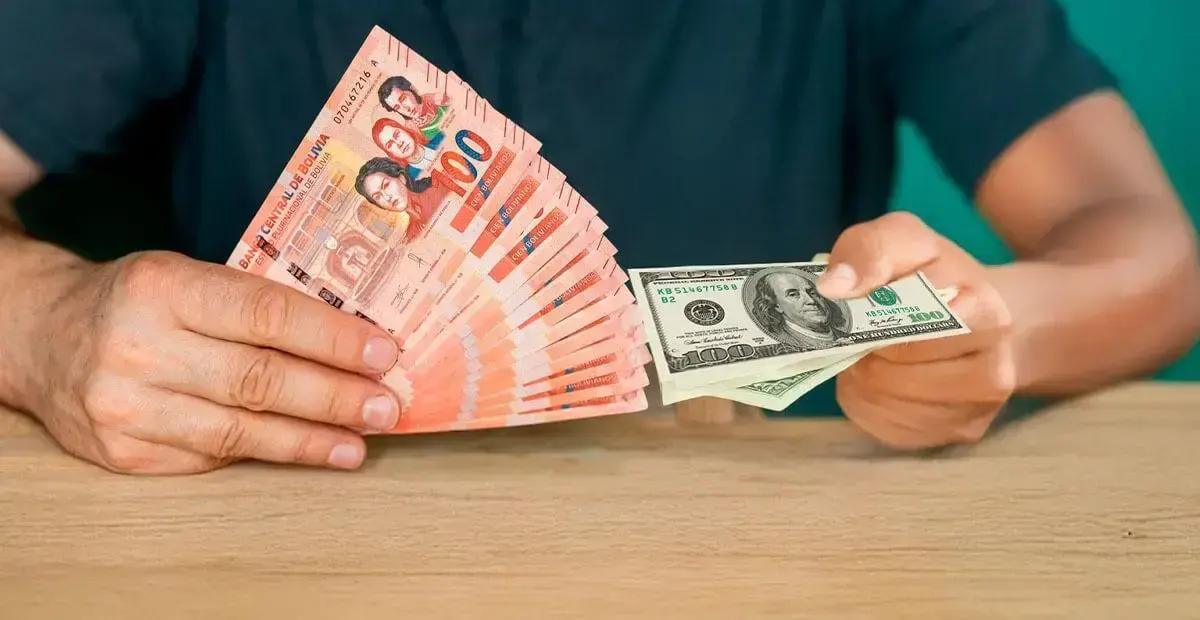
The current administration is leaving behind a dollar “corralito (withdrawal restrictions),” and the new administration taking office in November will have to reverse this situation, said Fernando Romero, president of the Departmental College of Economists of Tarija, in his assessment of the drop in the parallel market dollar rate.
Meanwhile, economic analyst Darío Monasterio stated that the “corralito” implemented by financial institutions is not their responsibility but rather the result of misguided government policies.
The dollar “corralito” has driven up the currency’s price in the parallel market, which a few months ago climbed to 20 bolivianos. Yesterday, the rate dropped to nearly 12 bolivianos.
Regarding this decline, Romero noted that Bolivia’s dollar market is highly speculative and volatile, but something happened that caused the value to fall. One cause could be a relative increase in dollar supply, with inflows both formal and informal—exports, remittances, and contraband.
On the other hand, Monasterio explained that when preparing the 2025 budget in October and November of last year, inconsistencies and fantasies were already evident. The budget was approved by the president, not by the Legislative Assembly.
For economic analyst Joshua Bellott, the country’s situation is worse than it appears, with the national economy facing high inflation, a shortage of foreign currency and fuel, and a devaluation of the boliviano.
Por El Diario:
Analistas económicos
- La caída de las exportaciones de gas natural, sumado la pérdida del mercado argentino, incidieron en menos ingreso de divisas al mercado nacional, provocando escasez y las medidas del BCB generaron la creación del mercado paralelo.
El Gobierno se va dejando un corralito en dólares y la nueva administración que asuma en noviembre deberá revertir tal situación, sostuvo el presidente del Colegio Departamental de Economistas de Tarija Fernando Romero, en su evaluación sobre la reducción de la cotización del dólar en el mercado paralelo.
Entretanto, el analista económico Darío Monasterio manifestó que el corralito implementado por las entidades financieras no es responsabilidad de las mismas, sino por la aplicación de las políticas erróneas por parte de las autoridades gubernamentales.
El corralito de dólares ha provocado que la divisa en el mercado paralelo incremente de precio, y hace unos meses, llegó hasta 20 bolivianos, ayer el valor bajó a casi 12 bolivianos.
Con relación a la caída de la cotización en el mercado paralelo, Romero indicó que el mercado del dólar en Bolivia es altamente especulativo y volátil, pero algo sucedió para que el valor baje.
Una de las causas se debería a un incremento relativo en la oferta de dólares, ingresaron divisas de manera formal e informal, es decir exportaciones y remesas, así como por el contrabando.
Por otro lado, Monasterio explicó que en la elaboración del presupuesto 2025, en octubre y noviembre del año pasado, ya se observaba incoherencias y mucha fantasía, que fue aprobado por el presidente y no por la Asamblea Legislativa.
Para el analista económico Joshua Bellott, la situación del país está peor de lo que parece, con referencia a la economía nacional, que registra alta inflación, escasez de divisas, de combustible y una devaluación de la moneda boliviana.
https://www.eldiario.net/portal/2025/08/29/gobierno-deja-en-crisis-al-pais-con-corralito-en-dolares/

 Bolivian Thoughts | Pensamientos Bolivianos (Bilingual/Bilingüe)