
By Raúl Domínguez, El Deber; Eju.tv:
The widespread crisis caused by the shortage of U.S. dollars in Bolivia has given rise to a generation of young social media figures offering financial advice. But can they be trusted?
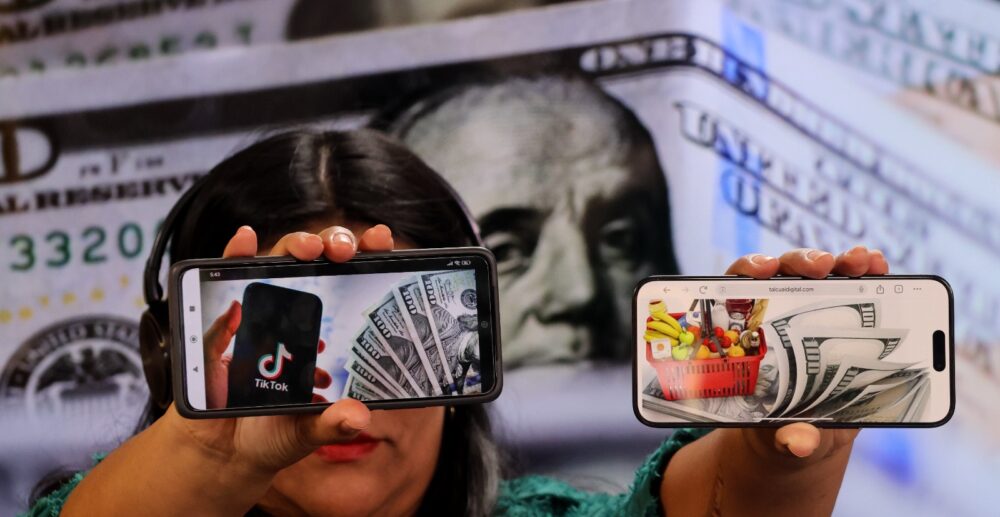
The number of people earning money on social media is growing, driven by the shortage of U.S. dollars in Bolivia / Photo: Fuad Landívar
The arrest of TikToker Juan Carlos Villafuerte two weeks ago—accused by the Financial System Supervisory Authority (ASFI) of committing an alleged financial crime—was yet another symptom of the currency crisis, or “dollar crisis,” which has been evident since February 2023.
This arrest, almost unanimously rejected by public opinion, was nonetheless the manifestation of a phenomenon that has gone viral on social media since the Central Bank of Bolivia (BCB) lifted restrictions on electronic payment channels and instruments for buying and selling virtual assets.
Analysts, digital investment specialists, influencers, YouTubers, TikTokers, and others have found a vein of opportunity for generating income through explanatory and guidance videos—though others engage with darker intentions.
Rolando Mendoza, author of the recent book Earn Dollars with Cryptocurrencies, described the oversupply of information on the dollar shortage and alternative assets as a “phenomenon” that breeds confusion, uncertainty, and even fear.
“In September 2024, many influencers with good diction, good language, and good ideas appeared, speaking and teaching (…). It was like an awakening for people who already knew about digital investments but didn’t share it publicly—they refined themselves and learned,” he said, noting there is no registry or association for people working in this field.
However, the expert warned that there is a very fine line between opinion and factual information, as it can lead to losses in the millions. “In the case of crypto, there’s a rule: you never lose if you sell when you should. There was a case where a YouTuber or influencer was paid $200,000 to say a cryptocurrency was the currency of the future, and a week later more than $1 million had moved and that coin disappeared. I could tell you several such cases,” Mendoza stated.
Learning from mistakes
Juan Carlos Villafuerte, the TikToker accused by ASFI of spreading false and misleading information—claiming that banks “were in danger” due to the dollar crisis and thus jeopardizing confidence in the National Financial System (SFN)—told EL DEBER that after his release he feels more strengthened and believes his arrest was actually “financed” by people linked to the Santa Cruz de la Sierra municipal government.
“Since I was 16 years old, I have worked in digital marketing, AI (artificial intelligence) creation, virtual assistants, and I’ve been researching digital finance for a very long time,” said the 22-year-old, asserting that his videos are backed by his own experience.
He explained that his skills in digital business as a freelancer allowed him to amass a small fortune by age 18. “In 2022 this all began—I would go to the bank and they wouldn’t give me my dollars. First they gave me a thousand, then 200, and eventually they cut it to 100. Outside, the parallel dollar was already more expensive. So I learned to use digital wallets like Airtm, Binance, and Payoneer to deposit dollars and exchange them for their real value,” Villafuerte recounted.
In that regard, he warned that “there is no easy money” and that scams abound on social media. “I’m very careful about that in my content—what I do is simply teach people to create a Binance account, to buy USDT legitimately, never to pay third parties, because you can fall into a scam. People must understand that cryptocurrencies are a risky topic,” he emphasized.
Villafuerte admitted he does not have a university degree, but said that in the realm of digital assets one learns by practicing and making mistakes. “What I recommend is first researching long-term investments in American stocks and in cryptocurrencies (…). But it’s best to train for at least a year, and then start—whether with a large, medium, or small amount of capital,” he added.
“Doing trading”
Trading is the act of buying and selling financial assets—such as stocks, bonds, currencies, or cryptocurrencies—with the goal of making a profit from price fluctuations over short or long periods. The difference from investing is that investing focuses on long-term gains based on a fundamental analysis of the company or asset.
According to financial analyst Mauricio Obe, trading arrived in Bolivia around 2018 via networking companies. “These companies, through memberships, taught members, and then they had to invite others. You could say this was the first generation, which began selling courses as another form of income. From there, the movement expanded to what we see today,” he commented.
He argued that the government should not regulate this activity, because as in other countries, speculation is part of the stock market and generates liquidity in the secondary market. “Without speculators, there would be no liquidity in stock exchange transactions,” he said.
Obe also referred to Villafuerte’s case as an example of free expression—where someone simply voices what many people think. “Pretending that the stability of the Bolivian currency is fine would be lying to ourselves,” he added.
He stressed that any investment or expense is a personal decision and that ethical financial advisors should always clarify that investment choices are entirely personal.
On expectations for the next government, Obe said: “Most investors are well-advised; it’s understood that measures to correct Bolivia’s economic model will not be short-term, so we expect about five years of stabilization—something investors must weigh as a risk-benefit to stay in Bolivia.”
A de-dollarized banking sector
Economist and former president of the Bolivian Banking Association (Asoban) Juan Carlos Salaues stated that the currency crisis stems from a break in the country’s economic structure—shifting from a major exporter of hydrocarbons to an importer, with foreign currency-generating exports severely hit.
He believes Bolivia is late to the cryptoasset world, though not much has been lost since they “won’t save us” from the economic, financial, currency, or fiscal crisis, even if they help boost imports.
“I think the problem has been so severe that it has unfairly harmed banks in terms of transparency. The banking sector is practically de-dollarized; more than 20% of deposits are in local currency and their loan portfolios are very small. There’s about $2.5 to $3 billion that needs to be settled with the BCB,” he said.
Salaues noted that the harm is more “reputational” due to the central bank not returning banks’ legal reserves or their foreign currency accounts. “The drought is so severe in state, fiscal, and monetary management that they’ve used up all the dollars that could exist, to the point that banks have even had to restrict small dollar transactions with debit and credit cards,” he explained.
Regarding the next government’s approach to the currency crisis, he said it must be “decisive.” “Unfortunately, it’s like a patient in intensive care—there are very few hours to solve the crisis. I believe there will be significant progress in the short term, because if it doesn’t work in the medium term it will cost more, and in the long term it will be very difficult. But I’m convinced the new government will take much more responsible positions.”
He said incoming leaders will need to apply “shock” measures, though he didn’t specify which. “Yes, there will be a shock—a shock to wallets and a shock to expectations—but I think things will improve as necessary adjustments are made. Whoever comes into government must bring money, and that money is dollars. The country is rich, the country is strong. I believe we have the borrowing capacity for real and productive financial balance,” he added.
Finally, Salaues said Bolivia will need to turn to multilateral organizations like the World Bank or IMF. “The extent will depend on policy, but without an economic shock—injecting a good amount of dollars—there will be no stabilization fund to provide the oxygen and time needed to change our export structure,” he stated.
Connecting people and needs
Financial expert Rolando Mendoza noted that not everything on social media is about cryptocurrencies or trading—there are also ventures that focus on connecting people with needs.
“I have no money but I have skills—what do I do? I connect. For example, someone has an item they can’t sell, but I have the skill and contacts, so I take that item from person X and sell it to person Y, and I’ve earned a commission,” he suggested.
He pointed out that TikTok is no longer just a platform for watching entertaining videos—it’s now used to sell products and services worldwide. “Now that TikTok has everyone’s attention, with a live stream people are selling used clothes, toys, and others are buying—selecting, paying via QR. Many people are adapting to cryptocurrencies in restaurants, in different businesses, understanding USDC or USDT—there are many changes on social media,” he said.
Mendoza also praised the innovation and search for new income tools driven by the crisis. “This is key—crisis equals opportunity. In financial winters is when the most money is made, because in winter nobody wants to leave the house, but the people who do are the ones who get big results,” he reflected.
Opportunities identified:
- Cryptocurrencies: Circumvent currency restrictions.
- Local e-commerce: Connect producers and consumers to reduce imports.
- Marketing: Web development, graphic design, consulting in local currency.
- Remote work: Programming, design, writing, and virtual assistance for foreign companies.
By Luz Mendoza
Por Raúl Domínguez, El Deber; Eju.tv:
La crisis generalizada a raíz de la escasez de dólares creó una generación de jóvenes en redes sociales dedicados a la orientación financiera. ¿Se debe confiar?
Crece el número de personas que ganan dinero en redes sociales, a raíz de la escasez de dólares en Bolivia/Foto: Fuad Landívar
La aprehensión del ‘tiktoker’ Juan Carlos Villafuerte, hace dos semanas, acusado por la Autoridad de Supervisión del Sistema Financiero (ASFI) por cometer supuesto delito financiero, fue un síntoma más de la crisis cambiaria o ‘crisis de dólares’ que se puso en evidencia desde febrero de 2023.
Esta aprehensión, rechazada casi al unísono por la opinión pública fue, sin embargo, la manifestación de un fenómeno que se ha hecho viral en redes sociales, desde el levantamiento de las restricciones —por parte del Banco Central de Bolivia (BCB)— que tenían los canales e instrumentos electrónicos de pago para operaciones de compra y venta de activos virtuales.
Analistas, especialistas en inversiones digitales, ‘influencers’, ‘youtubers’, ‘tiktokers’ y otros, han encontrado una veta para la generación de ingresos con videos explicativos y de orientación, pero otros lo hacen con fines oscuros.
Rolando Mendoza, autor del reciente libro Gana dólares con criptomonedas, calificó como un “fenómeno” el exceso de información sobre la escasez de dólares y las opciones para encontrar activos que lo remplacen, lo cual genera confusión, incertidumbre y hasta temor.
“En septiembre de 2024 ya aparecieron muchos influencers con buen léxico, buen lenguaje, con buenas ideas, hablando y enseñando (…). Todo eso fue como que un despertar de la gente que sabía (de inversiones digitales), pero que no lo publicaba, pero se fue ‘puliendo’ y aprendiendo”, indicó, al mencionar que no existe un registro o asociación de personas que se dedican a este rubro.
Sin embargo, el experto advirtió que existe una línea muy delgada entre las opiniones y la veracidad de la información, ya que se pueden ocasionar pérdidas hasta millonarias de dinero. “En el caso de las criptos, hay una regla: nunca se pierde si vendes cuando hay que vender. Hubo un caso que a un youtuber o influencer le pagaron 200 mil dólares para que diga que una criptomoneda era la moneda del futuro y, a la semana se movió más de un millón de dólares y esa moneda desapareció. Así le puedo hablar de varios casos”, afirmó Mendoza.
Aprender de los errores
Juan Carlos Villafuerte, el ‘tiktoker’ que fue acusado por la ASFI por difundir información falsa y tendenciosa, al manifestar que los bancos “estaban en peligro” a raíz de la crisis de dólares y que ponía en riesgo la confianza en el Sistema Financiero Nacional (SFN), dijo a EL DEBER que luego de su liberación se siente más fortalecido y que su aprehensión más bien habría sido “financiada” por personas afines a la Alcaldía de Santa Cruz de la Sierra.
“Yo, desde que tengo 16 años, me dedico al marketing digital, a la creación de IA (inteligencia artificial), asistentes virtuales, y vengo investigando eso (finanzas digitales) hace muchísimo tiempo”, resaltó el joven de 22 años, al afirmar que sus videos tienen sustento en su experiencia.
Precisó que su habilidad para los negocios digitales como ‘freelancer’ le permitió amasar una pequeña fortuna con apenas 18 años de edad. “En 2022 empezó todo esto, iba al banco y no me daban mis dólares. Primero me daban mil, después me daban 200 y llegó un punto que redujeron a 100 y por afuera (el dólar paralelo) ya estaba más caro. Entonces aprendí a utilizar (las billeteras digitales) Airtm, Binance, Payoneer, para poder meter los dólares y cambiarlo a lo que estaba realmente”, relató Villafuerte.
En ese sentido, advirtió que “no existe dinero fácil” y que las estafas abundan en redes sociales. “Yo eso cuido muchísimo en mi contenido, simplemente lo que hago es enseñar a crear su cuenta de Binance, a comprar USDT de manera verídica, nunca pagos a terceros, porque puede caer en estafa. Las personas tienen que tomar en cuenta de que el tema de las criptomonedas es un tema riesgoso”, subrayó.
Villafuerte reconoció que no tiene una carrera universitaria, pero en materia de activos digitales se aprende con la práctica y cometiendo errores. “Yo a las personas lo que les puedo recomendar es que primero averigüen acerca de las inversiones a largo plazo en acciones americanas (EEUU) y en criptomonedas (…). Pero lo mejor es que primero se capacite, por lo menos durante un año y ahí se lanza, ya sea con un capital fuerte, un capital mediano, un capital pequeño”, agregó.
“Hacer trading”
El trading es la acción de comprar y vender activos financieros, como acciones, bonos, divisas o criptomonedas, con el objetivo de obtener un beneficio de la fluctuación de sus precios en un periodo de tiempo corto o largo. Su diferencia con la inversión es que esta última se enfoca en obtener ganancias a largo plazo y las decisiones se basan en el análisis fundamental de la compañía o del activo.
Para el analista financiero Mauricio Obe, la generación del trading llegó a Bolivia, aproximadamente en el año 2018, con las redes de networking. “Estas empresas, a través de membresías, enseñaban a los miembros y luego estos tenían que invitar a otros. Esa se podría decir que fue la primera generación la cual empezaron a vender cursos como otra forma de ingresos, de ahí el movimiento se fue expandiendo hasta hoy en día”, comentó.
Consideró que el Gobierno no debería regular esta actividad, porque como en otros países, la especulación es parte del mercado de valores y genera liquidez en el mercado secundario de éstos. “Sin especuladores no habría liquidez en las transacciones de las Bolsas de Valores”, afirmó.
Al mismo tiempo, se refirió al caso de Juan Carlos Villafuerte como un ejemplo de libre expresión, donde una persona solo expresa lo que muchas personas opinan. “Fingir que la estabilidad de la moneda boliviana está bien, sería mentirnos”, añadió Obe.
En ese sentido, remarcó que cualquier inversión o gasto es una decisión personal y los financieros con ética, siempre antes de dar una recomendación, deben aclarar que las decisiones de inversión son totalmente personales.
Se refirió también sobre las expectativas del sector financiero sobre el próximo gobierno: “Los inversionistas en su mayoría son personas que están bien asesoradas, se sabe que las medidas para corregir el modelo económico de Bolivia no serán en el corto plazo, por tanto se espera unos cinco años de estabilización lo cual será un riesgo-beneficio que debe asumir el inversor para quedarse en Bolivia”, acotó.
Banca desdolarizada
El economista y expresidente de la Asociación de Bancos de Bolivia (Asoban), Juan Carlos Salaues, aseguró que la crisis cambiaria se da por un quiebre en la estructura estructura económica del país, al pasar de un país mayormente exportador de hidrocarburos, a importador, donde las fuentes generadoras de divisas, las exportaciones, fueron seriamente afectadas.
En ese sentido, consideró que Bolivia llega tarde al mundo de los criptoactivos, pero no se han perdido grandes oportunidades, porque “no nos van a salvar” de la crisis económica, financiera, cambiaria o fiscal, aunque ayuda a contar con más importaciones.
“Yo creo que el problema ha sido tan agudo que ha perjudicado injustamente a los bancos, en lo que es su transparencia. Quiero decir que la banca prácticamente está desdolarizada; más del 20% de sus depósitos son en moneda nacional y sus carteras son muy chicas. Queda un monto de 2.500 o 3.000 millones de dólares que arreglar (con el BCB)”, opinó.
Resaltó que el perjuicio es un poco más “reputacional” por la no devolución del dinero del encaje legal o de sus cuentas en moneda extranjera a los bancos. “Es la sequía tan grande en la administración del Estado, en la administración fiscal y monetaria, que han dispuesto de todos los dólares que podrían existir, al extremo de que los bancos inclusive han tenido que restringir transacciones pequeñas en dólares con tarjetas de débito y de crédito”, precisó Salaues.
Al referirse a la actitud del nuevo gobierno para afrontar la crisis cambiaria, el experto en finanzas consideró que deben ser “decisivas”. “Lamentablemente es como con un enfermo en terapia intensiva, hay muy pocas horas para ir solucionando la crisis. Yo creo que realmente va a haber importantes avances en el corto plazo, porque si no funciona en el mediano plazo va a costar más y en el largo plazo va a ser muy difícil. Pero yo soy un creído de que el nuevo gobierno va a tomar posiciones mucho más responsables”.
Apuntó que los nuevos administradores deberán aplicar medidas de “shock”, aunque no especificó cuales. “Sí va a haber un shock, un shock en los bolsillos y un shock en las expectativas, pero creo que esto va a ir mejorando conforme se vayan haciendo los ajustes necesarios. Quien entre (en el gobierno) tiene que venir con plata y plata es dólares. El país es muy rico, el país es muy fuerte. Creo que sí tenemos una capacidad de endeudamiento para un equilibrio financiero real y productivo”, añadió.
Por último, Salaues sostuvo que Bolivia deberá recurrir a organismos multilaterales como el Banco Mundial o el FMI. “El grado va a depender de la política de cada uno, pero yo creo que sin un shock en la economía, de una buena cantidad de dólares, no se va a lograr un fondo de estabilización que permita dar el oxígeno y el tiempo para cambiar nuestra estructura exportadora”, precisó.
Conectar personas y necesidades
El experto financiero Rolando Mendoza, observó que no todo es criptomonedas o trading en redes sociales, sino que existen emprendimientos que tienen que ver con la conexión de personas y sus necesidades.
“No tengo dinero, pero tengo habilidades, ¿qué hago?, conecto. Por ejemplo, una persona tiene un artículo que no puede vender, pero yo sí tengo la habilidad, tengo contactos y agarro ese artículo de la persona X y se lo vendo a la persona Y, y ya me gané una comisión”, sugirió.
Apunto, por ejemplo, que TikTok ya no es una mera red social para distraerse viendo videos, sino para vender productos y servicios en todas partes del mundo. “Ahora que TikTok tiene la atención de todos, hizo que con “un live” (en vivo), mucha la gente está vendiendo ropa usada, juguetes, y otra gente compra, selecciona, paga con QR; mucha gente adaptándose a las criptomonedas en los restaurantes, en diferentes negocios, entendiendo el concepto de USDC o USDT, hay muchos cambios en las redes sociales”, ponderó.
Otra virtud que resaltó Mendoza es la innovación y la búsqueda de nuevas herramientas para generar ingresos por la crisis. “Esto es clave, crisis es igual a oportunidad. En los inviernos financieros, es cuando más dinero se hace, porque en invierno nadie quiere salir de casa, pero la gente que sale a la calle es la que tiene resultados grandes”, consideró.
Oportunidades
- Criptos. Permite a los emprendedores sortear las restricciones cambiarias.
- E-commerce local. Plataformas que conecten a productores y consumidores, minimizando la necesidad de importar.
- Marketing. Desarrollo web, diseño gráfico y consultoría en bolivianos. Desarrollo de contenidos.
- Trabajo remoto. Programación, diseño, redacción y asistencia para empresas extranjeras.
por Luz Mendoza

 Bolivian Thoughts | Pensamientos Bolivianos (Bilingual/Bilingüe)