
By Ronald MacLean, Brújula Digital:
Ronald MacLean presents short film with a message of national reconciliation
In the video [to watch it go to the end of this column], the former mayor emphasizes that the country needs a candidacy of “unity, of bridge-building, of reconciliation and stability.”
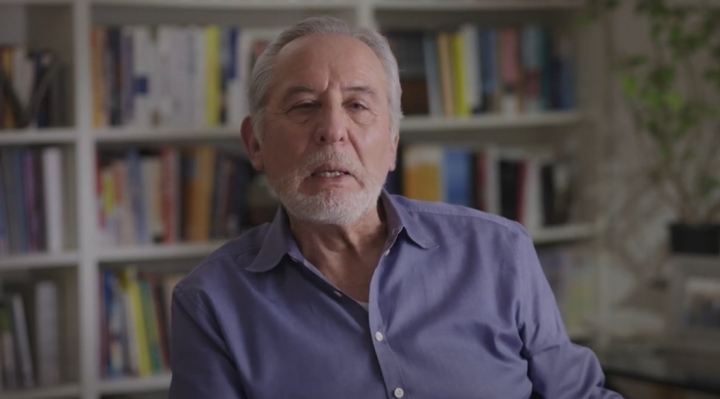
Former mayor of La Paz and former minister Ronald MacLean. Photo: Courtesy
The former mayor of La Paz and former minister Ronald MacLean Abaroa presented the short film “Bridges of Peace,” which makes a call for national reconciliation. The production is released in a politically polarized context ahead of the general elections on August 17.
“We are in a very difficult moment… we need to come together,” says MacLean in the video. “During this election period, what is being exacerbated are our differences. And what we must recover are our similarities, to understand each other and stop fighting so we can find a solution together,” he adds.
The video, directed by renowned British-American documentarian Graham Townsley, is being released this week as a symbolic and concrete contribution to citizen debate at a critical time for the country, ahead of this year’s August presidential elections.
“Bridges of Peace” is not the launch of a candidacy or a political proclamation, but rather a personal and thought-provoking reflection, MacLean explained. The former mayor, now distanced from partisan politics, invites Bolivians to recognize one another in their diversity, to move beyond the logic of confrontation, and to rebuild the social fabric damaged by years of political, racial, and cultural tensions.
With images ranging from the Andes to the Amazon, including scenes of everyday life and social mobilizations, the documentary offers a calm yet critical look at the country’s current state. Linithd Aparicio Blackburns, the project’s producer, describes it as “a deeply human short documentary that conveys an urgent call for unity in Bolivia, a country marked by both its diversity and its divisions.” In the video’s synopsis, Aparicio adds that the film “explores the pain of a nation fractured by political, ethnic, and social polarization, and proposes a path toward reconciliation.”
The narrative is built around MacLean’s voice, as he takes on the role of a “bridge builder,” both literally and symbolically. “I built the first bridge in La Paz that connected two separated neighborhoods: the prosperous and the not-so-prosperous,” he recalls in the short film. “Then I conceived the cable cars, which were later built by Evo Morales,” he explains.
For MacLean, Bolivia faces a historic crossroads: it will either deepen its fractures or find new ways to understand difference as a source of richness rather than a threat. “We can have a great country, but we’ve lacked consensus… We must rebuild our social fabric, recognize each other as brothers, as Bolivians. We can disagree, but we must not be enemies,” he affirms.
Graham Townsley, a two-time Emmy nominee for his productions for National Geographic and PBS, with a distinguished international career filming in more than 20 countries, explained his motivation for getting involved in this project: “While making this short film, I was deeply moved not only by the stunning beauty of Bolivia but also by Ronald’s vision: a generous, open, and deeply human politics for his people. In these times marked by division and polarization, his words resonate with an urgency and hope that the whole world needs.”
Beyond its testimonial value, “Bridges of Peace” is also an invitation to reclaim idealism, empathy, and collective responsibility. According to producer Aparicio, “it is an audiovisual memory that celebrates the multicultural richness of the country, while also denouncing the open wounds left by years of internal conflict. An invitation to imagine a Bolivia where differences do not divide, but instead strengthen a shared identity, woven with inclusion, purpose, and a will to heal.”
The video seeks to open a space for reflection. As MacLean states toward the end of the short film: “I would like to be remembered as a builder, a reformer, someone who brings new ideas… or supports those who have good ideas and tries to move things forward. We need a candidacy of unity, of bridge-building, of reconciliation, of stability. And as new people embrace that mission and purpose, Bolivia has hope.”
BD/AGT/JA
Por Ronald MacLean, Brújula Digital:
Ronald MacLean presenta cortometraje con un mensaje de reconciliación nacional
En el video [para verlo, vaya al final de esta columna] el exalcalde resalta que el país necesita una candidatura de “unión, de puente, de conciliación y estabilidad”.
El exalcalde de La Paz y exministro Ronald MacLean. Foto: Gentileza
El exalcalde de La Paz y exministro Ronald MacLean Abaroa presentó el cortometraje “Puentes de paz”, que plantea un llamado a la reconciliación nacional. La producción se lanza en un contexto político de polarización de cara a las elecciones generales del 17 de agosto.
“Estamos en un momento muy difícil …, necesitamos unirnos”, dice MacLean en el video. “En este momento de elecciones, lo que se está exacerbando son las diferencias. Y lo que tenemos que rescatar son las similitudes, entendernos y parar la pelea para encontrar una solución en conjunto”, agrega.
El video, dirigido por el renombrado documentalista británico-estadounidense Graham Townsley, se lanza esta semana como un aporte simbólico y concreto al debate ciudadano en un momento crítico para el país, previo a las elecciones presidenciales de agosto de este año.
“Puentes de paz” no es el lanzamiento de una candidatura ni una proclama política, sino una reflexión personal e interpeladora, explicó MacLean. El exalcalde, ahora alejado de la política partidaria, invita a los bolivianos a reconocerse en su diversidad, a dejar de lado la lógica de confrontación, y a reconstruir el tejido social dañado por años de tensiones políticas, raciales y culturales.
Con imágenes que recorren desde los Andes hasta el Amazonas, pasando por escenas de la vida cotidiana y movilizaciones sociales, el documental propone una mirada serena pero crítica al estado actual del país. Linithd Aparicio Blackburns, responsable de la producción del proyecto, lo describe como “un cortometraje documental profundamente humano que retrata el llamado urgente a la unidad en Bolivia, un país marcado por su diversidad y también por sus divisiones” En la sinopsis del video, Aparicio añade que la película “explora el dolor de una nación fracturada por la polarización política, étnica y social, y propone un camino hacia la reconciliación”.
La narrativa se construye desde la voz de MacLean quien asume el rol de “constructor de puentes” tanto literal como simbólicamente. “Yo hice el primer puente de La Paz que unió dos barrios separados: los prósperos y los no prósperos”, recuerda en el cortometraje. “Luego concebí los teleféricos, que después los construyó Evo Morales”, explica.
Para MacLean, Bolivia enfrenta una encrucijada histórica: o profundiza sus fracturas, o encuentra nuevas formas de entender la diferencia como riqueza y no como amenaza. “Podemos tener un gran país, pero nos ha faltado el consenso… Tenemos que reconstruir nuestro tejido social, reconocernos como hermanos, como bolivianos. Podemos diferir, pero no ser enemigos”, sostiene.
Graham Townsley, dos veces nominado al Emmy por sus producciones para National Geographic y PBS, y con una reconocida trayectoria internacional filmando en más de 20 países, explicó su motivación para involucrarse en este proyecto: “Al realizar este cortometraje, me conmovió profundamente no solo la deslumbrante belleza de Bolivia, sino también la visión de Ronald: una política generosa, abierta y profundamente humana para su pueblo. En estos tiempos marcados por la división y la polarización, sus palabras resuenan con una urgencia y esperanza que el mundo entero necesita”.
Más allá de su valor testimonial, “Puentes de paz” es también una invitación a recuperar el idealismo, la empatía y la responsabilidad colectiva. Según la productora Aparicio, “es una memoria audiovisual que celebra la riqueza multicultural del país, al tiempo que denuncia las heridas abiertas por años de conflicto interno. Una invitación a imaginar una Bolivia donde las diferencias no dividan, sino que fortalezcan una identidad compartida, tejida con inclusión, propósito y voluntad de sanar”.
Este video busca abrir un espacio de reflexión. Como afirma MacLean hacia el final del cortometraje: “Yo quisiera ser recordado como un constructor, un reformador, alguien que trae nuevas ideas… o apoya a los que tienen las buenas ideas y trata de avanzar. Necesitamos una candidatura de unión, de puente, de conciliación, de estabilidad. Y en la medida que la nueva gente absorba esa misión y propósito, Bolivia tiene esperanza”.
BD/AGT/JA

 Bolivian Thoughts | Pensamientos Bolivianos (Bilingual/Bilingüe)