
By René Martínez / Fundación Jubileo, Erbol:
Economic indicators show a very complicated outlook, the result of a crisis that began to take shape more than a decade ago. Solutions will not be immediate, and the population must be prepared to endure tough adjustment measures that will help stabilize the economy while seeking to reduce the impact on the most vulnerable in society.
In the context of an electoral race, the presidential candidates have the responsibility to propose realistic plans that correct persistent imbalances, with measures such as a reduction in public spending, including fuel subsidies; greater exchange rate flexibility; and policies to promote national producers, among other structural measures.
Political parties and/or alliances are preparing their government programs for the next term. The option that wins the election and takes office will have to implement these measures in its Economic and Social Development Plan for the next period; however, the country is going through an economic crisis.
We are facing a situation of economic instability with a deep fiscal deficit, shortage of foreign currency, higher inflation, and other issues that, in perspective, tend to worsen, suggesting a deep and prolonged crisis that would primarily affect the poorest sectors.
Economic stability is the minimum condition to generate a level of confidence and certainty for entrepreneurship and investment, so that different actors can carry out their economic activities with opportunities to generate income and employment. Consequently, more than just a traditional government program filled with electoral promises and development proposals, the current moment demands an adjustment plan to stabilize the economy.
Main imbalances and economic problems
There are three main problems facing the economy:
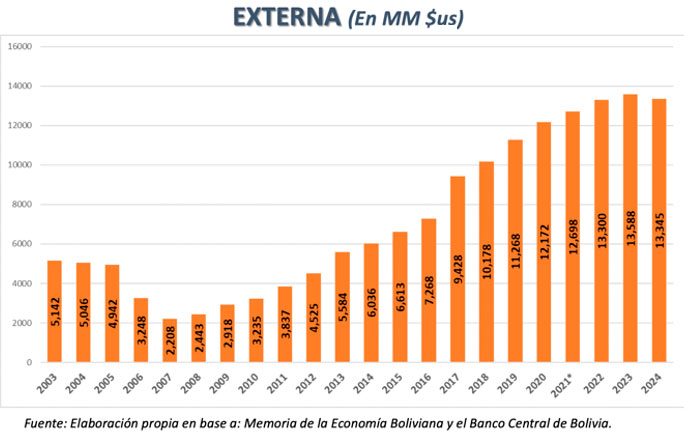
First, there is high public spending, a deep and prolonged deficit, and consequent indebtedness.

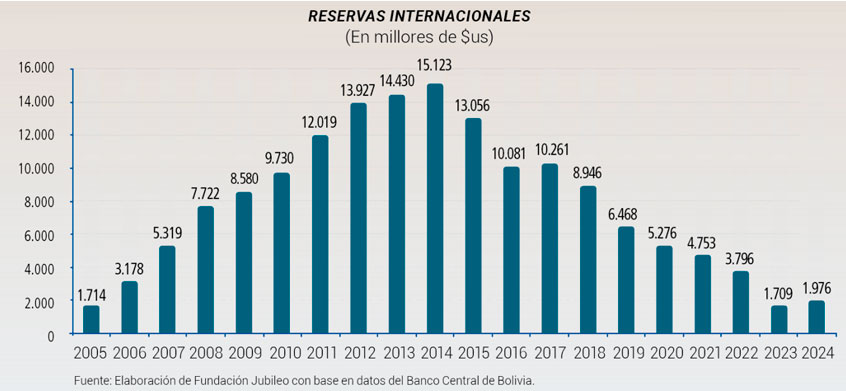
Second, with a fixed exchange rate (and an overvalued national currency) that favors imports and the failure of the hydrocarbons policy, there is a trade deficit and a consequent drop in international reserves, down to depletion.
Finally, there have been no adequate policies for the productive sector (the focus was solely on state-owned enterprises), which means that a productive economy involving transformation or industrialization processes and formal job creation has not been built.
The government has postponed addressing these problems for many years, taking on more debt, and it appears it will not implement any adjustment, meaning we face a crisis that could be both deep and long-lasting.

Necessary but unpopular measures
There is a need to correct macroeconomic imbalances, such as the current official exchange rate issue—with an overvalued national currency—and the fuel subsidy; elements that have distorted the price system. An adjustment plan should include at least the following elements:
1. Reduce spending (and the fiscal deficit), including the fuel subsidy
2. Adjust the exchange rate
3. Policies aimed at the productive sector (shift in the model) – Build or rebuild an export sector
To overcome the crisis, it will be essential, beyond the adjustment measures, to inform the population about what to expect in this delicate moment for the country—an effort that, out of responsibility, should be incorporated into the electoral debate, along the following lines:
- Due to the measures that will be taken to stabilize the economy and begin finding solutions, the crisis would become more intense, such as with high inflation, which could lead to greater public discontent. It is therefore essential that the population have accurate information about the magnitude of the complex situation—information that has been hidden for several years.
- Furthermore, the measures to be taken will not solve the economic situation immediately, as they are intended to address structural problems that have been building and worsening over many years. One of the necessary elements to overcome this type of crisis is to build or rebuild the export sector, which implies a medium-term process.
- In the medium term, overcoming the crisis will not mean a return to an unrealistic or fictitious level of consumption. From now on, development must be sustainable—that is, based on increased productivity, not the sale of the country’s natural wealth. Exiting the crisis will not necessarily mean returning to the previous situation, but rather to a real one.
- To implement these measures, external financing will be needed to sustain the adjustment policies.
The economy is clearly in crisis, leaving a potential economic collapse for future governments, with debts and obligations that will be difficult to meet—problems that will be politically difficult to handle. The different candidates will have to face the challenge of presenting real and responsible proposals, with the added difficulty of entering the electoral race bearing bad news.
Por René Martínez / Fundación Jubileo, Erbol:
Los indicadores económicos muestran un panorama muy complicado, resultado de una crisis que empezó a gestarse desde hace más de una década. Las soluciones no serán inmediatas y la población deberá estar preparada para soportar duras medidas de ajuste que permitan estabilizar la economía, velando por reducir los impactos en los más vulnerables de la sociedad.
En un contexto de carrera electoral, los candidatos a la Presidencia del Estado tienen la responsabilidad de proponer planes realistas y que corrijan los desequilibrios persistentes, con medidas como una reducción del gasto público, incluyendo la subvención a los hidrocarburos; flexibilizar el tipo de cambio; y aplicar políticas para promover al productor nacional, entre otras medidas estructurales.
Los partidos políticos y/o alianzas preparan sus programas de gobierno para la próxima gestión. La opción que gane las elecciones y ejerza el mandato deberá plasmar esas medidas en su Plan de Desarrollo Económico y Social para el siguiente periodo; sin embargo, el país atraviesa por una crisis económica.
Se tiene en frente una situación de inestabilidad económica con un profundo déficit fiscal, escasez de divisas, mayor inflación y otros que, en perspectiva, tienden a agravarse, de modo que se prevé una crisis profunda y de larga duración, que afectaría principalmente a los sectores más pobres.
La estabilidad económica es la condición mínima para tener un nivel de confianza y de certidumbre para emprendimientos e inversiones, y para que los diferentes actores puedan desarrollar sus actividades económicas con oportunidades para generar ingresos y empleo. Consecuentemente, más que un programa de gobierno, como tradicionalmente se plantea, con promesas electorales y propuestas de desarrollo, el momento actual demanda un plan de ajuste que estabilice la economía.
Principales desequilibrios y problemas económicos
Son tres los principales problemas que afronta la economía:
Inicialmente, se tiene un elevado gasto fiscal, profundo y prolongado déficit, y consecuente endeudamiento.
Por otro lado, con un tipo de cambio congelado (con una moneda nacional sobreapreciada) que favorece las importaciones y el fracaso de la política de hidrocarburos, se tiene déficit comercial y consecuente caída de Reservas Internacionales, hasta su agotamiento.
Y, finalmente, no hubo adecuadas políticas para el sector productivo (la apuesta fue solamente para las empresas públicas), por lo que no se ha constituido una economía productiva que involucre procesos de transformación o industrialización y generación de empleo formal.
El Gobierno ha postergado por muchos años la atención de los problemas señalados, contratando mayor endeudamiento y, al parecer, no va a realizar el ajuste, por lo que se tiene en frente una crisis que podría ser de larga duración y muy profunda.
Medidas necesarias, pero antipopulares
Existe la necesidad de corregir los desequilibrios macroeconómicos, como el problema del actual tipo de cambio oficial, con la moneda nacional sobrevaluada, y la subvención a los hidrocarburos; elementos que han distorsionado el sistema de precios. Un plan de ajuste debería contener mínimamente los siguientes elementos:
1. Reducir el gasto (y el déficit fiscal), incluyendo la subvención a los hidrocarburos
2. Ajustar el tipo de cambio
3. Políticas orientadas al sector productivo (giro al modelo) – Constituir o reconstituir un sector exportador
Para salir de la crisis será imprescindible, mas allá de las medidas de ajuste, orientar a la población sobre las expectativas ante este delicado momento en el país, tarea que, en el marco de la responsabilidad, debiera ser incorporado en el debate electoral, en los siguientes términos:
- Debido a las medidas que se vayan a tomar para estabilizar la economía y buscar el inicio de soluciones, la crisis se manifestaría con mayor intensidad, como ser una alta inflación, lo que podría ocasionar un mayor descontento de la población, por lo que es fundamental que la población tenga conocimiento preciso de la magnitud de la complicada situación, información que se ha ocultado por varios años.
- Por otro lado, las medidas que se tomen no resolverán la situación económica de forma inmediata, puesto que están destinadas a enfrentar problemas estructurales que se han ido gestando y agravando durante muchos años. Entre los elementos necesarios para salir de este tipo de crisis se requiere constituir o reconstituir el sector exportador, lo que implica un proceso de mediano plazo hacia delante.
- A mediano plazo, salir de la crisis no implicará un retorno a un nivel de consumo irreal o ficticio. En adelante, habrá que construir un desarrollo que sea sostenible; es decir, sostenido en un aumento de la productividad, no por la venta de la riqueza natural del país. Salir de la crisis no necesariamente implicará un retorno a la situación previa, sino a una situación real.
- Para implementar estas medidas, se necesitará financiamiento externo que permita sostener las políticas de ajuste.
La economía está en una evidente situación de crisis, dejando una potencial debacle económica para los próximos gobiernos, con deudas y obligaciones difíciles de cumplir, problemas que políticamente serán complicados de afrontar. Los diferentes candidatos se enfrentarán a esta situación de plantear propuestas reales y responsables, con la dificultad que significa presentarse a la contienda electoral con malas noticias.

 Bolivian Thoughts | Pensamientos Bolivianos (Bilingual/Bilingüe)