
By Unitel Digital:
Economist on inflation: “In three months, 5% of real wages have been lost”
Economist Gonzalo Chávez points out that low-income families are the most affected, as they allocate 70% of their wages to purchasing food
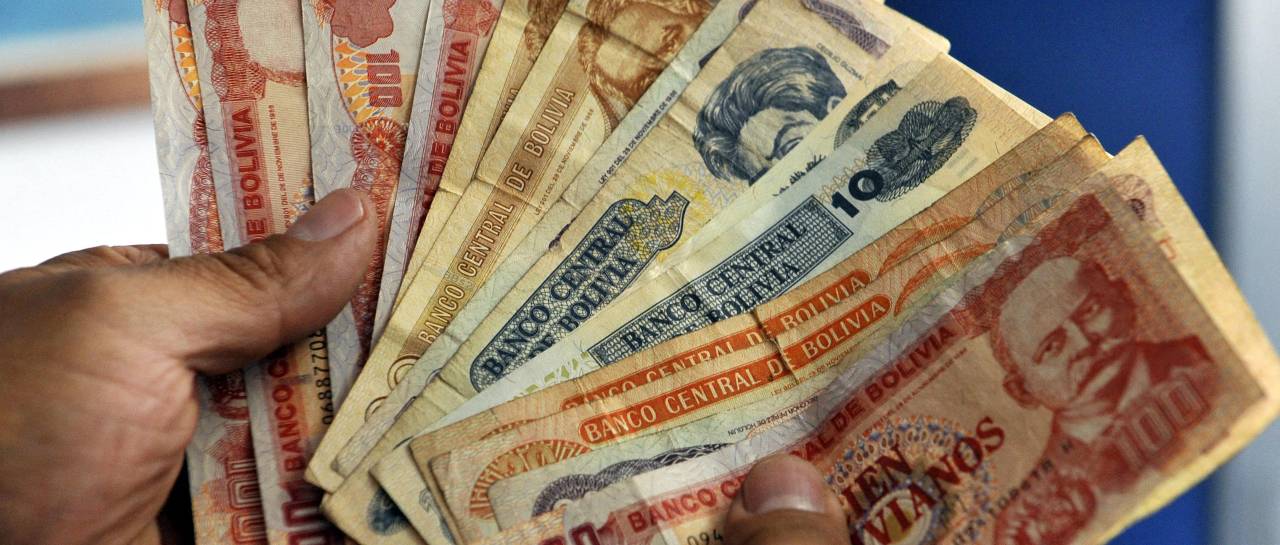
[AFP] / Inflation has reached 5% in the first quarter of 2025
Following the release this Friday of Bolivia’s inflation figures for the first quarter of 2025, economist Gonzalo Chávez questioned the government’s economic management and emphasized that the population has lost 5% of the purchasing power of their wages.
“This is very high inflation because it means that on average, prices rose by 5% in the first three months, while the government had said it would rise by 7.5% over two months,” Chávez said in an interview with UNITEL.
SEE HERE: Accumulated inflation as of March 2025 reaches 5%, the highest in three decades for this period
Meanwhile, the president of the Tarija College of Economists, Fernando Romero, stated that the 5% inflation up to March was the highest figure in the last 33 years.
Chávez also pointed out that the high inflation especially affects low-income families, as they allocate 70% of their income to buying food.
“In three months, they have lost 5% of their real wages (…). This means they can no longer buy, their real wages are cut. Inflation is the worst tax in the economy because it hits hardest especially those who are poorest,” Chávez said.
According to the economist, one of the factors influencing inflation is related to the exchange rate, as the dollar’s official rate is 6.96 bolivianos; however, in the parallel market it is sold for 13 to 14 bolivianos.
“Many of the inputs for national production come from abroad,” the economist stated.
Chávez stated that in order to lower inflation, it is essential to obtain dollars, reduce public spending and contract the monetary base, allow more flexibility in the exchange rate, and partially withdraw subsidies.
“Several measures must be taken together to control inflation, including cutting the monetary base, ending the Central Bank of Bolivia’s financing of the General Treasury of the Nation through net credit. That is money, that is new cash, and that money spreads inflation when your productive sector is at a standstill,” said Chávez.
Por Unitel Digital:
Economista sobre inflación: “En tres meses se ha perdido el 5% del salario real”
El economista Gonzalo Chávez señala que las familias de bajos ingresos son las más afectadas pues destinan el 70% de sus salarios a la compra de alimentos
[AFP] / La inflación ha llegado al 5% en el primer trimestre del 2025
Tras conocerse este viernes las cifras de la inflación en Bolivia del primer trimestre del 2025, el economista Gonzalo Chávez cuestionó el manejo de la economía y destacó que la población ha perdido el 5% del poder adquisitivo que tenían los salarios.
“Es una inflación muy elevada porque hace que los precios en promedio los primeros tres meses subieron 5% cuando el Gobierno dijo que iba a subir 7,5% en dos meses”, señaló Chávez en contacto con UNITEL.
MIRA AQUÍ: La inflación acumulada a marzo de 2025 llega al 5%, la más alta en tres décadas en este periodo
Por su parte, el presidente del Colegio de Economistas de Tarija, Fernando Romero señaló que el 5% de inflación hasta marzo era la cifra más elevada de los últimos 33 años.
Chávez también manifestó que la elevada inflación impacta en especial a las familias de bajos recursos, pues destinan el 70% de sus ingresos a la adquisición de alimentos.
“En tres meses han perdido 5% de su salario real (…).Significa que ya no pueden comprar, se les corta el salario real. La inflación es el peor impuesto en la economía, porque agarra de manera muy dura en especial a la gente más pobre”, dijo Chávez.
Para el economista, uno de los factores que influye en la inflación está relacionado con el tipo de cambio pues el dólar ha pasado de cotizarse oficialmente a 6,96 bolivianos; sin embargo, en el mercado paralelo se lo adquiere en 13 a 14 bolivianos.
“Muchos de los insumos vienen de afuera para la producción nacional”, manifestó el economista.
Chávez señaló que para bajar la inflación es imprescindible conseguir dólares, reducir el gasto público y contraer la base monetaria, flexibilizar el tipo de cambio del dólar y retirar parcialmente los subsidios.
“Hay que hacer varias cosas en conjunto para poder controlar la inflación, entre ellos cortar la base monetaria, cortar el financiamiento del Banco Central de Bolivia al Tesoro General de la Nación, vía crédito neto. Eso es dinero, eso es billete nuevo, eso es el dinero y eso propaga la inflación cuando tú tienes un sector productivo que está parado”, dijo Chávez.

 Bolivian Thoughts | Pensamientos Bolivianos (Bilingual/Bilingüe)