
Por Alex Rodway, CNN; Weny:
“La Montaña que devora hombres.” Esta ciudad boliviana es el único lugar del mundo donde puedes comprar dinamita legalmente
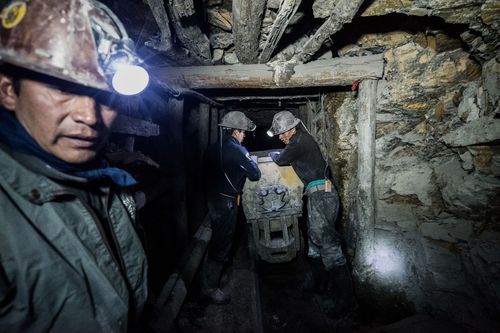
Giles Clarke/Getty Images vía CNN Newsource
(CNN) — Seis turistas con cascos y overoles pesados están encorvados en un estrecho túnel de mina, con apenas espacio suficiente para arrodillarse. El guía local saca un encendedor desechable, prende una mecha verde brillante y les indica con calma que retrocedan. “En cualquier momento”, dice.
Un instante después, una potente onda expansiva sacude el túnel, seguida por una nube de polvo.
Acaba de detonar un cartucho de dinamita comprado esa misma mañana en el mercado local por uno de los turistas. Costó 13 bolivianos (menos de 2 dólares). La ciudad minera de Potosí es el único lugar del mundo donde cualquier persona puede comprar dinamita legalmente.
“Para los mineros, lo más esencial es la dinamita”, dice Jhonny Condori, guía turístico de minas en Potosí. “Si no sabes manejarla, es peligrosa”.
Pero para los mineros experimentados, acelera enormemente el proceso de extracción de minerales.
Con siglos de antigüedad, la red de minas de Potosí es extensa. Los mineros corren por pasajes largos y estrechos, empujando carritos llenos de roca fragmentada sobre rieles desgastados, en una escena que recuerda a “Indiana Jones y el templo de la perdición” o a la Mina de Oro de Wario en Mario Kart.
Potosí está a más de 4.000 metros sobre el nivel del mar, lo que la convierte en una de las ciudades más altas del mundo. Sus calles angostas, los tejados de tejas rojas y las paredes de estuco de sus edificios evocan su pasado colonial español.
Gran parte de la minería ocurre en el adyacente Cerro Rico, una montaña de color rojo bautizada así por la vasta riqueza que una vez aportó a la ciudad. Hoy, “Potosí es considerada una de las regiones más pobres de toda Bolivia”, dice Julio Vera Ayarachi, otro guía turístico local.
La veta de plata del Cerro Rico
Cuenta la leyenda que los ricos yacimientos de plata del Cerro Rico fueron descubiertos por Diego Gualpa, un buscador indígena andino, en 1545. “El secreto se filtró. No puedes esconder una noticia así”, dice Kris Lane, profesor de artes liberales en la Universidad de Tulane en Nueva Orleans y autor de “Potosí: La ciudad de plata que cambió el mundo”.
No pasó mucho tiempo antes de que los colonizadores españoles, que habían llegado a la región pocos años antes, se enteraran del hallazgo y comenzaran a explotar la abundante plata de la montaña.
“Se convirtió rápidamente en un lugar casi de pesadilla”, dice Lane. “Era un sitio sin ley, de trabajo forzado”.
Los indígenas fueron obligados a trabajar y a entregar tributos materiales al rey de España bajo un sistema “muy cercano a la esclavitud”, añade.
Un aluvión de mercaderes adinerados llegó de todo el mundo para construir infraestructura y lucrar con las minas. A medida que mejoraban las técnicas, las condiciones laborales empeoraban. Se introdujo el mercurio tóxico en el proceso de refinación, por ejemplo, lo que contaminó el entorno y causó la muerte de muchos. El Cerro Rico se ganó el apodo de “La montaña que devora hombres”, un nombre que aún persiste entre los mineros.
Potosí se convirtió en la cuarta ciudad más grande del mundo cristiano, con una población de más de 200.000 habitantes a finales del siglo XVI. Se estima que en ese entonces suministraba el 60% de la plata mundial, financiando el imperio español y otras dinastías globales.
“La plata cruzaba fronteras de una manera que una moneda de bronce o cobre no podía”, dice Lane. Su relativa escasez le confería un valor intrínseco y “la gente llegó a considerar que la plata de Potosí era confiable”, explica.
Sin embargo, con el tiempo, las reservas de plata, aparentemente inagotables, comenzaron a agotarse. Para cuando Bolivia declaró su independencia en 1825, casi toda la plata ya había sido extraída, y Potosí quedó como una sombra de su antiguo esplendor.
Aunque la minería aún continúa, en su mayoría se extraen minerales más baratos como el estaño y el zinc. Los cientos de kilómetros de túneles han hecho que la montaña sea inestable. Como resultado, esta es “la época más peligrosa que han presenciado las minas”, dice Lane.
Adoración al diablo
Aun así, “en términos de minería, bueno, no ha cambiado mucho”, dice Oscar Torrez Villapuma, otro guía turístico local. Los mineros de Potosí siguen rezando a los mismos dioses, siguen los mismos rituales y mueren de las mismas enfermedades respiratorias que sus antepasados, siglos atrás.
Cada entrada a un socavón en Potosí está marcada por una efigie con cuernos de apariencia demoníaca, conocida localmente como “El Tío”. El Tío suele ser rojo, adornado con cintas de colores alrededor del cuello y, con frecuencia, representado con un gran pene erecto: un símbolo de fertilidad.
“Somos muy politeístas, creemos en varios dioses”, dice Condori. Si bien muchos indígenas andinos veneran al Dios cristiano introducido por los colonizadores españoles, la mayoría también rinde culto a la Pachamama, o Madre Tierra, una divinidad femenina incaica.
Naturalmente, “debe haber alguna figura masculina del inframundo que proteja a la Pachamama de la sobreexplotación”, dice Lane, ofreciendo una posible explicación del origen de El Tío. Villapuma sugiere, en cambio, que la figura fue introducida por los capataces coloniales para intimidar a la fuerza laboral indígena, “pero hoy en día, es él quien nos da fortuna”, dice.
De cualquier manera, las estatuas de El Tío están cubiertas de hojas de coca, colillas de cigarro, latas de cerveza vacías y botellas de licor: ofrendas de mineros y turistas para que les conceda un paso seguro por la mina y les recompense con minerales abundantes. También se sacrifican llamas y se unta su sangre en las entradas de las minas con la esperanza de saciar la sed de sangre de El Tío.
La vida cotidiana
Se estima que la esperanza de vida de los mineros bolivianos es de apenas 40 años.
Las muertes prematuras son frecuentes debido a los constantes accidentes en las minas y a la silicosis, una enfermedad pulmonar crónica causada por la inhalación de sílice. “Esencialmente, equivale a respirar vidrio molido”, dice Lane.
“Era una muestra de dureza no usar mascarilla”, explica, lo que agrava aún más el problema. “Y los trabajadores mineros en Bolivia son vistos como los más duros de todos”.
La edad mínima legal para trabajar en Bolivia es de 14 años, pero existen vacíos legales que permiten que los niños empiecen mucho antes. Algunos informes sugieren que niños de tan solo seis años siguen trabajando en las minas bolivianas.
“En este espacio de aparente horror, encuentras compañerismo, creatividad… la música surge de este lugar, hay poesía interesante, mucha efervescencia cultural”, dice Lane.
Cada año, entre febrero y marzo, Potosí celebra un vibrante “carnaval minero” que atrae a gran cantidad de viajeros. La tradición dicta que los mineros desfilen por el pueblo con su ropa de trabajo, bebiendo cerveza y cargando títeres de El Tío. Las mujeres locales, conocidas como Cholitas, visten elaborados trajes y realizan coreografías al ritmo de bandas de música.
Tras las festividades, muchos turistas regresan a La Paz en el mismo autobús nocturno con el que llegaron a Potosí. Los mineros y sus familias, sin embargo, se quedan, volviendo a sus brutales y repetitivas rutinas diarias por otro año más.
The-CNN-Wire
™ & © 2025 Cable News Network, Inc., a Warner Bros. Discovery Company. All rights reserved.
By Alex Rodway, CNN; Weny:
‘The Mountain that Eats Men.’ This Bolivian town is the only place in the world where you can legally buy dynamite
Giles Clarke/Getty Images via CNN Newsource
(CNN) — Six tourists wearing hard hats and heavy overalls sit, cramped up in a narrow mineshaft, with barely enough space to kneel. The local tour guide pulls out a disposable lighter, ignites a bright green fuse with it, and calmly ushers everyone backward. “Any moment,” he says.
A moment later, a powerful shockwave rips through the tunnel, tailed by a dust cloud.
He’s just set off a stick of dynamite bought at the local market earlier that day by one of the tourists — it cost 13 Bolivianos (just under $2). The Bolivian mining city of Potosí is the only place in the world where members of the public can legally buy dynamite.
“For the miners, the most essential thing is dynamite,” says Jhonny Condori, a Potosí mine tour guide. “If you don’t know how to handle it, it’s dangerous.”
But for experienced miners, it greatly speeds up the rate at which they can extract minerals.
Centuries old, Potosí’s network of mines is extensive. Miners run up and down long, narrow passageways, pushing carts full of fragmented rock along worn railway tracks — it’s a scene reminiscent of something from “Indiana Jones and the Temple of Doom” or Wario’s Gold Mine in Mario Kart.
Potosí is over 4,000 meters (13,000 feet) above sea level, making it one of the highest cities in the world. Its narrow streets and the red-tiled roofs and stucco walls of its buildings hint at its Spanish colonial past.
Much of the mining takes place within the adjacent, red-colored “Cerro Rico” (literally “Rich Mountain” in English) — so named because of the vast wealth it once brought to the city. Today, “Potosí is considered one of the poorest regions in all of Bolivia,” says Julio Vera Ayarachi, another local tour guide.
The Cerro Rico’s silver lining
Legend tells that the rich silver deposits of the Cerro Rico were first discovered by Diego Gualpa, an indigenous Andean prospector, who stumbled across them in 1545. “The secret got out. You can’t hide that kind of news,” says Kris Lane, professor of liberal arts at Tulane University in New Orleans, and author of “Potosí: The Silver City That Changed the World.”
Before long, Spanish colonizers — who had arrived in the region just a few years before — caught wind of the discovery and began exploiting the mountain’s abundant silver.
“It developed very quickly into a kind of nightmarish place,” says Lane. “It’s a place that’s lawless, it’s a place of forced labor.”
Indigenous people were obligated to work for and produce material tributes to the Spanish king, under a system that was “very close to enslavement,” he adds.
A surge of wealthy merchants began arriving from around the world to build infrastructure and profit from the mines. As techniques improved, conditions declined further, says Lane. Toxic mercury was introduced to the refining process, for example, which leached into the environment and led to the deaths of many. The Cerro Rico became known as “The Mountain That Eats Men” — a name that persists among miners to this day.
Potosí soon grew into to fourth largest city in the Christian world, with a population of more than 200,000 by the end of the 16th century. It’s thought to have supplied 60% of the world’s silver at the time, funding the Spanish empire and other dynasties around the globe.
“Silver crosses borders in a way that a bronze coin or a copper coin could not,” says Lane. Its relative scarcity gave it intrinsic value and “people came to expect that Potosí silver was trustworthy,” he says.
However, over time, the once seemingly endless silver reserves began to dry up. By the time Bolivia declared its independence in 1825, almost all the silver had already been mined and Potosí became a shell of its former self.
Though mining still goes on in there today, much of it is for cheaper minerals like tin and zinc. Hundreds of miles of mine shafts have made the mountain unstable — as a result, it is currently the “most dangerous time that the mines have witnessed,” says Lane.
Worshipping the devil
Nevertheless, “in terms of mining, well, not much has changed,” says Oscar Torrez Villapuma, another local tour guide. Miners in Potosí still pray to the same gods, follow the same rituals and die of the same respiratory diseases as their ancestors, centuries before, he continues.
Each mine shaft entrance in Potosí is marked by a horned, devil-like effigy — known locally as “El Tío” (the uncle). El Tío is usually red, decorated with colorful ribbons around his neck, and frequently portrayed with a large, erect penis: a symbol of fertility.
“We are very polytheistic, we believe in various gods,” says Condori. While many indigenous Andeans worship the Christian God introduced by their Spanish colonizers, most also revere the Pachamama — or Mother Earth — a feminine, Incan divinity.
Naturally, “there must be some underworld male figure that protects Pacha Mama from over-exploitation,” says Lane, providing one possible origin for El Tío. Villapuma suggests, instead, that the figure was introduced by colonial bosses to intimidate their indigenous workforce, “but nowadays, he is the one who gives us fortune,” he says.
Either way, El Tío statues today are littered with coca leaves, cigarette butts, empty beer cans and spirit bottles: offerings from miners and tourists, so that he might grant safe passage through the mine and reward them with abundant minerals. Locals also regularly slaughter llamas and smear the animals’ blood at mine entrances in the hope of quenching El Tío’s thirst for blood.
The everyday
Life expectancy for Bolivian miners is thought to be as low as 40 years.
Common early deaths result from frequent accidents in the mines and silicosis, a chronic lung disease caused by breathing in silica — “essentially ground glass is what it amounts to,” says Lane.
“It was a sign of toughness that you didn’t wear a mask,” he continues, explaining how this exacerbates the issue — “and mine workers in Bolivia are seen as the toughest nuts to crack.”
The legal minimum working age in Bolivia is 14 years old, but loopholes mean that children can often work from much younger. Some reports have suggested that children as young as six still work in Bolivian mines.
“In this space of apparent horror, you find comradery, creativity… music comes out of this place, interesting poetry, lots of cultural fluorescence,” says Lane.
Potosí hosts a vibrant “mining carnival” between February and March each year, which draws in huge numbers of travelers. Tradition dictates that miners dress in their work clothes and dance through the town, drinking beer and wielding El Tío puppets. Local women — known as Cholitas — wear elaborate dresses and perform choreographed displays to the music of marching bands.
Following the festivities, many of the tourists return to Bolivia’s capital, La Paz, along the same bumpy overnight bus route that brought them to Potosí. Miners and their families, however, remain, returning to their often brutal, repetitive daily routines for another year.
The-CNN-Wire
™ & © 2025 Cable News Network, Inc., a Warner Bros. Discovery Company. All rights reserved.

 Bolivian Thoughts | Pensamientos Bolivianos (Bilingual/Bilingüe)