
By Aldo Aguilera, El Dia:
Fuel shortages worsen, while a minister claims the situation is normalizing
At the gas station on Cristo Redentor Avenue and Seventh Ring, the double line of vehicles completely blocked the lane heading north.
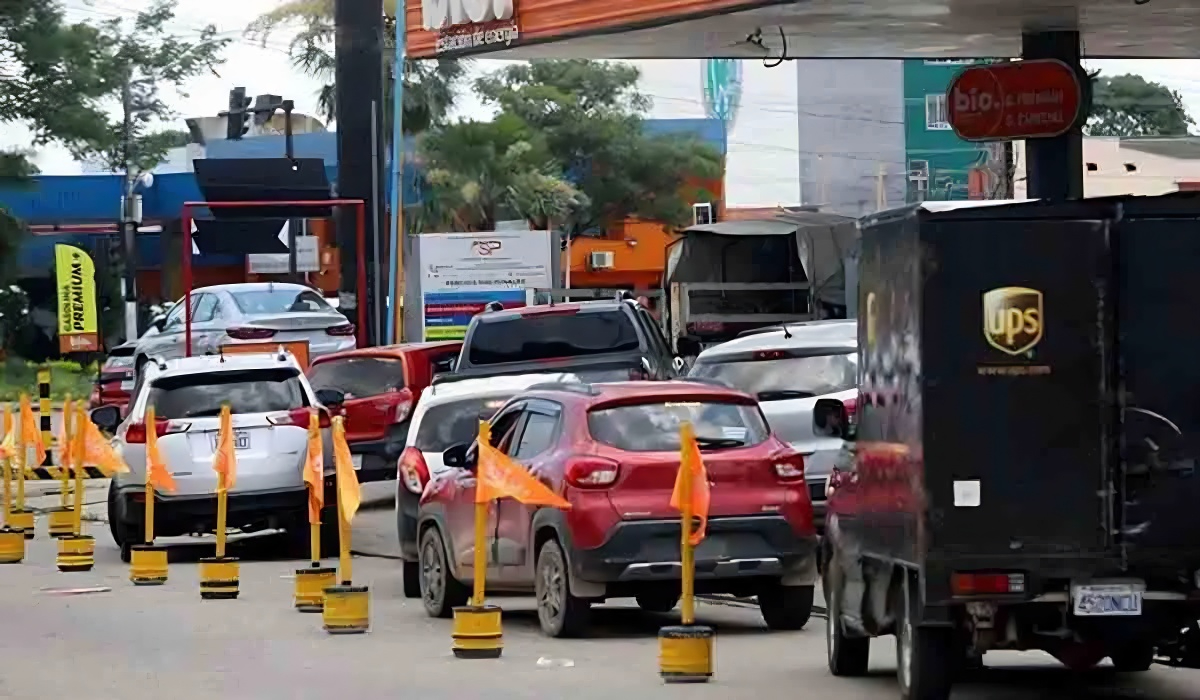
Illustrative image. Photo: Archive.
The fuel shortage and long lines at gas stations worsened this Friday in Santa Cruz compared to previous days. Despite the difficult situation affecting various sectors, the government insists that supply is stabilizing and will be normal during Carnival.
“We are already normalizing these volumes, and we guarantee that during the Carnival period, people will be able to carry out their activities and travel as planned,” said Hydrocarbons Minister Alejandro Gallardo. He admitted that there were issues in recent days due to roadblocks in some regions but emphasized that the appropriate volumes were now being delivered.
At the gas station on Cristo Redentor Avenue and Seventh Ring, the double line of vehicles completely blocked the lane heading north. In other parts of the city, the growing lines also caused more traffic congestion. “I went to several gas stations, and there was no gasoline. I’m coming from Santos Dumont Avenue,” said a driver at a station on Grigotá Avenue, where he had already spent three hours in line.
Social media is filled with accounts of people waiting all night, some running out of fuel just before reaching the pump and being forced to find another station or wait for the next tanker to arrive.
“The fuel issue is very serious. It mainly affects domestic and interdepartmental tourism,” said Luis Ampuero, president of the Bolivian Chamber of Tourism (Cabotur). “I’ve been here since 4 a.m. I need to travel to Saphaqui; we bring vegetables and fruits from the region. What can we do? That’s life—we have to wait,” lamented Milton Ramos, who transports produce from the provinces to La Paz and El Alto.
“No diesel means no food,” warned Klaus Frerking, president-elect of the Eastern Agricultural Chamber (CAO), in a desperate tone, as the summer harvest is set to begin in a few days. According to the National Association of Oilseed and Wheat Producers (Anapo), about 40 million liters of diesel are needed to harvest 1.2 million hectares of soybeans and another 200,000 hectares of corn and sorghum.
Por Aldo Aguilera, El Dia:
Se agrava la escasez de combustible y un ministro afirma que la situación se está normalizando
En el surtidor de la avenida Cristo Redentor y Séptimo Anillo, la doble fila de vehículos provocó el cierre total del carril hacia la zona norte.
Imagen de ilustración. Foto: Archivo.
La escasez de combustibles y las filas en los surtidores se agravaron este viernes en Santa Cruz, en comparación a días anteriores y pese a esta complicada situación para diversos sectores, el gobierno afirma que la situación se está normalizando y que la provisión será normal durante el Carnaval.
“Estamos ya normalizando esos volúmenes y se garantiza que durante el periodo de Carnaval la gente pueda realizar sus diferentes actividades, realizar los viajes planificados”, dijo el ministro de Hidrocarburos, Alejandro Gallardo. Admitió que en días pasados hubo inconvenientes por bloqueos en algunas regiones, pero remarcó que ya se estaban entregando los volúmenes adecuados.
En el surtidor de la avenida Cristo Redentor y Séptimo Anillo, la doble fila de vehículos provocó el cierre total del carril hacia la zona norte. En otros puntos de la ciudad el aumento de las filas también generó mayor caos vehicular. “Fui por varios surtidores y no había gasolina, estoy viniendo de la avenida Santos Dumont”, señalaba un conductor en una estación de servicio de la avenida Grigotá donde ya llevaba tres horas en la fila.
En redes sociales abundan los testimonios de esperas durante toda la noche e incluso el drama de estar cerca de la bomba de carga cuando se acaba el combustible y tienen que ir a otro lado o perar por la llegada de otro cisterna al lugar.
“El tema de los combustibles es muy grave. Afecta, sobre todo, al turismo interno, al turismo interdepartamental”, lamentó Luis Ampuero, presidente de la Cámara Boliviana de Turismo (Cabotur). “Yo estoy desde las 4 de la mañana, yo tengo que viajar a Saphaqui, verduras y frutas traemos de la región. Que podemos hacer, así es la vida, tenemos que esperar”, se lamentaba Milton Ramos, quien transporta verduras de las provincias a La Paz y El Alto.
“Sin diésel no hay alimentos”, advirtió esta semana Klaus Frerking, presidente electo de la Cámara Agropecuaria del Oriente (CAO), en tono de desesperación ya que en unos días debe comenzar la cosecha de verano. Según la Asociación Nacional de Productores de Oleaginosas y Trigo (Anapo) se necesitan unos 40 millones de litros de diésel para cosechar 1,2 millones de hectáreas de soya y otras 200 mil hectáreas de maíz y sorgo.

 Bolivian Thoughts | Pensamientos Bolivianos (Bilingual/Bilingüe)