
By Vision 360:
Shortages and Rising Prices: The Deadly Impact of the Dollar Shortage, According to Importers and Manufacturers
Cifabol and Asprofar agree that the zero tariff for medicine imports, implemented by the government last year and valid until March 2025, is not a solution.
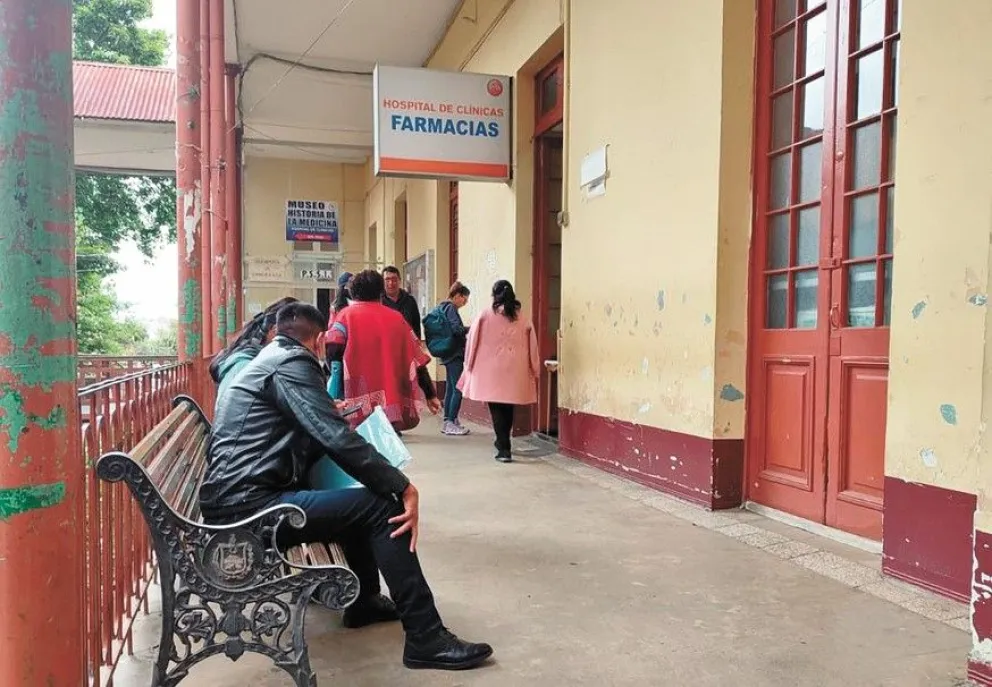
The pharmacy of the Hospital de Clínicas in La Paz, which supplies medications to patients. Photo: Paolo Lizárraga
The price of medications has increased by up to 20% recently due to the shortage of U.S. dollars and the surge in exchange rates on the so-called black market, according to manufacturers and importers. Additionally, the dollar shortage directly interferes with the regular supply of domestic demand.
According to Josep Lino, manager of the Bolivian Pharmaceutical Industry Chamber (Cifabol), the cost of domestically manufactured medications has risen between 10% and 20% because the raw materials required are only available in international markets. “Bolivia depends on foreign raw materials for 90% of its production,” he explained.
Frida Terceros, a board member of the Association of Professional Pharmacy Owners of Bolivia (Asprofar), stated that imported drugs alone have increased in price by 10%, while sales have plummeted drastically.
The first discussion of the dollar shortage in Bolivia since 2011—when the boliviano stabilized—surfaced in April 2023. At that time, long lines formed outside the Central Bank of Bolivia (BCB) offices in La Paz as people tried to purchase U.S. dollars, with some even setting up tents to secure access to the foreign currency.
Despite complaints, the dollar shortage remains unresolved. Currently, U.S. dollars are only available on the informal market at rates as high as Bs 14, far above the official exchange rate of Bs 6.96.
Lino lamented the unresolved situation, which affects many sectors, especially the pharmaceutical industry due to its direct connection to public health. “We understand as Bolivians that prices can’t increase significantly, but the situation has exceeded us,” he stated in an interview with Visión 360.
He stated that the national pharmaceutical industry covers up to 60% of the demand generated in the institutional sphere, namely the health insurance funds, due to regulations prioritizing national industry in this area; meanwhile, it serves 40% of the private sector, which includes pharmacies that acquire both national and imported products.
The manager of Cifabol explained that demand, and therefore supply, varies depending on factors such as procurement, seasons, and especially pandemics. For example, during winter or periods of low temperatures, people catch colds and require cold medications and all necessary treatments to combat the illness.
According to Terceros, the shortage of medications is also explained by the lack of U.S. dollars, as importers cannot obtain foreign currency, making it impossible to bring in certain medications that the population needs.
This situation affects medications in general, but some specific ones that are urgently needed for chronic and terminal illnesses are unavailable. Thus, the most affected are patients suffering from these conditions, along with elderly individuals who, due to their advanced age, have multiple health complications and require medications.
The Asprofar representative identified another collateral issue stemming from this situation: access to certain medications due to price increases, as many people lack the financial resources, leading to reduced medication sales.
Nonetheless, she mentioned that in their desperation to obtain medications, people often turn to institutions that assist in facilitating access after searching through pharmacies, especially when obtaining the medicines becomes urgent.
On August 28 of last year, as a significant solution, the government announced the reduction of import tariffs on medications to zero, a measure initially valid until December 31, 2024, later extended to March 31, 2025. This provision resulted from discussions between the Executive and private entrepreneurs.
On November 27, Economy Minister Marcelo Montenegro stated: “So, tariffs that were at 5, 10, 15% have been reduced to zero. These are 28 subcategories, and this tariff reduction is valid until March 31, 2025.”
According to representatives from Cifabol and Asprofar, the measure did not resolve the price increases or the medication shortage, as the central issue is the lack of U.S. dollars.
“It’s not a solution because the tariff on dollars doesn’t help; there are no dollars in the formal banking system. We must look to other markets where rates are 11, 12, 13, 14 bolivianos, and we cannot stop production,” said Lino.
He recalled that his sector had repeatedly sent letters to the Ministry of Economy and held meetings with its authorities to find a solution, but access to dollars remains impossible.
According to Lino, one alternative is for the government to prioritize the pharmaceutical sector in providing U.S. dollars through the banking system.
Terceros argued that the zero-tariff policy for medication imports “doesn’t help at all.” It might be useful in another situation, but now, “what good is not paying the tariff if dollars are unavailable?”
Visión 360 sought comments from the Ministry of Health but was told there are currently no spokespersons available to address the issue.
Doctors in La Paz are seeking a meeting with the Minister of Health

The La Paz Medical Association seeks a meeting with the Minister of Health, María Renée Castro, to present their concerns and issues requiring solutions, including the increase in medication prices due to the lack of U.S. dollars, which also affects the importation of medical equipment.
Luis Larrea, president of this professional body, who was re-elected in November 2024, explained that after sending the corresponding letter, they hope to receive a response and schedule the meeting in the coming week.
According to Larrea, known for his opposition to the government, the rise in medication costs is solely due to the lack of U.S. dollars. He believes a policy is needed that not only includes a zero tariff for medication imports but also facilitates access to foreign currency for pharmaceutical companies, considering this action should be a priority.
He pointed out that many medication procurement processes have collapsed. For this reason, the La Paz Medical Association requested meetings with these companies to understand the situation. The response was the same: the lack of dollars prevents payments to import requested medications, as well as the raw materials needed to produce medicines in the country.
“For this term, unfortunately, the issue of medications has seen a price increase in the country, and this is primarily due to the lack of dollars. That’s the explanation provided by companies or pharmaceutical firms,” said Larrea.
According to him, the price hike affects all medications equally, as they are either imported or manufactured using inputs purchased from foreign markets.
Larrea added that the situation is so critical that even the public health system cannot supply itself with medications, directing patients to seek them in the private sector, where prices have risen between 10% and 20%. Many cannot afford them despite the pressing need.
In May, the Vice Minister of Consumer and User Defense, Jorge Silva, explained that of 100% of the medications demanded in the country, 85% are produced by national pharmaceutical laboratories, ensuring production. He claimed that any price increase would be minimal, not exceeding 1% in cost structure. However, this statement was later disproven, as national medicines are manufactured using imported inputs.
A month later, in June, Susana Salinas, head of the Ombudsman’s Office Research Unit, cited on the Ombudsman’s website, stated that the National List of Medications (Liname) includes 780 items, encompassing medications and medical supplies. However, Bolivia only has the capacity to produce 45% of the medicines on that list, with the remainder needing to be imported.
Por Visión 360:
Desabastecimiento y alza de precios, el letal impacto de la falta de dólares, según importadores y fabricantes
Cifabol y asprofar coinciden en que el arancel cero, para la importación de medicamentos que dispuso el Gobierno el pasado año, y que está vigente hasta marzo de 2025, no es una solución.
La farmacia del Hospital de Clínicas, en la ciudad de La Paz, que abastece de medicamentos a los pacientes. Foto: Paolo Lizárraga
El precio de los medicamentos se incrementó en el último tiempo hasta en un 20%, debido a la falta de la divisa estadounidense y a que el tipo de cambio se disparó en el denominado mercado negro, según los fabricantes e importadores. Además, la escasez del dólar interfiere directamente en el abastecimiento regular de la demanda interna.
De acuerdo con Josep Lino, gerente de la Cámara de la Industria Farmacéutica Boliviana (Cifabol), en el caso de los medicamentos que se fabrican en territorio nacional, el costo se elevó entre un 10 y 20%, debido a que se precisa materia prima que solo se consigue en mercados del exterior. “Bolivia depende en un 90% de la materia prima del exterior”, indicó.
Mientras que, según Frida Terceros, vocal de la Asociación de Propietarios Profesionales de Farmacias de Bolivia (Asprofar), solo los fármacos importados elevaron su precio en un 10%, y las ventas bajaron drásticamente.
La primera vez que se habló en Bolivia de la falta de dólares fue en abril de 2023, después de 2011, cuando comenzó la estabilización del boliviano. En ese entonces se formaron largas filas de personas en las oficinas del Banco Central de Bolivia (BCB), en La Paz, con el objetivo de comprar la divisa estadounidense. La gente, incluso, instaló carpas para dormir a fin de adquirir la moneda extranjera.
Luego de un tiempo ya ni los reclamos hicieron que la situación del dólar se normalizara. En ese tiempo, y hasta la actualidad, solo en el mercado informal se conseguían dólares, pero ya no a Bs 6,96, el cambio oficial, sino hasta en Bs 14.
Lino lamentó que esta situación no se haya resuelto a la fecha, porque afecta a muchos sectores, pero principalmente al farmacéutico que por su estrecha relación con la salud es más delicada aún.
“Como bolivianos entendemos que no se puede aumentar mucho, pero la situación nos ha sobrepasado”, explicó Lino, en una entrevista con Visión 360.
Aseguró que la industria nacional de medicamentos cubre hasta un 60% de la demanda que se genera en el ámbito institucional, es decir, lo que se denominan las cajas de salud, porque, además, hay una normativa que prioriza la industria nacional en ese ámbito; entre tanto, atiende en un 40% al sector privado, al que pertenecen las farmacias que adquieren los productos nacionales que combinan con los importados.
El gerente de Cifabol explicó que la demanda y por tanto el abastecimiento varían de acuerdo con, por ejemplo, las adquisiciones, la temporada y principalmente las pandemias que se presenten. Es así que cuando es invierno o hay bajas temperaturas, la población se resfría, entonces requiere antigripales y todos los medicamentos necesarios para tratar el contagio.
Según Terceros, el desabastecimiento de medicamentos se explica también por la falta de dólares, porque si los importadores no consiguen la moneda extranjera, están imposibilitados de traer determinados medicamentos que requiere la población.
Esta situación afecta a los medicamentos en general, pero hay algunos, los específicos, que son urgentes para tratamientos de enfermedades crónicas y terminales y no se los puede conseguir. Es así que los más perjudicados son los pacientes que padecen estos males, a los que se suman los adultos mayores que por su edad avanzada tienen varias complicaciones en su salud y necesitan fármacos.
La vocal de Asprofar identificó otro problema colateral de esta situación, que es el acceso de la población a determinados medicamentos debido al incremento del precio, porque carecen de recursos económicos, de ahí que las ventas de fármacos se redujeron.
No obstante, indicó que la población, en su afán por conseguir los medicamentos, muchas veces, luego de buscar en las farmacias, recurre a instituciones que colaboran para que puedan facilitarles el camino, porque además tienen la urgencia de acceder a las medicinas.
El 28 de agosto del pasado año, y como una gran solución, el Gobierno anunció la reducción a cero del arancel de importación de medicamentos, medida vigente hasta el 31 de diciembre de 2024, que después fue ampliada hasta el 31 de marzo de 2025. La disposición fue resultado del diálogo que sostuvo el Ejecutivo con los empresarios privados.
El 27 de noviembre, el titular de Economía, Marcelo Montenegro, manifestó: “Entonces se han reducido las alícuotas que están del 5, 10, 15% a cero. Son 28 subpartidas y esta disminución del gravamen arancelario está vigente hasta el 31 de marzo del 2025”.
En criterio de los representantes de Cifabol y Asprofar, la medida no trajo ninguna solución al incremento del precio y desabastecimiento de los medicamentos, porque el tema central es la falta de dólares.
“No es solución porque el arancel sobre dólares no cubre, no hay dólares en la banca formal; hay que buscar en otros mercados, está en 11, 12, 13, 14 bolivianos y no podemos frenar la producción”, dijo Lino.
Recordó que en reiteradas oportunidades su sector envió cartas al Ministerio de Economía, sostuvo reuniones con las autoridades de esa cartera de Estado, para encontrar una solución, pero no se puede acceder a los dólares.
Según Lino, una alternativa de esta situación es que el Gobierno priorice al sector farmacéutico en la provisión de la divisa estadounidense mediante la banca.
Terceros manifestó que el arancel cero que dispuso el Gobierno para la importación de medicamentos “no favorece en nada”; podrá servir en otra situación, pero ahora “de qué sirve que no paguen el arancel si no consiguen dólares”.
Visión 360 buscó la palabra del Ministerio de Salud, pero indicaron que por ahora no tienen voceros para el tema.
Médicos de La Paz buscan reunión con la titular de Salud
El Colegio Médico de La Paz busca una audiencia con la ministra de Salud, María Renée Castro, para plantear sus preocupaciones y temas que precisan una solución, entre los que se encuentra el incremento de los precios de los medicamentos a raíz de la falta de dólares, que también perjudica a la importación de equipos médicos.
Luis Larrea, presidente de esta instancia colegiada, que volvió a ser elegido en noviembre de 2024, explicó que se espera, que, tras enviar la carta respectiva, se reciba una respuesta y en la semana que se inicia se pueda agendar el encuentro.
De acuerdo con el galeno, conocido por ser de oposición al Gobierno, el aumento de los costos de los fármacos responde únicamente a la falta de la divisa estadounidense por lo que, consideró, que se precisa una política que no solo incluye el arancel cero para importación de medicamentos, sino que facilite a las empresas farmacéuticas el acceso a la moneda extranjera, esta acción debería ser prioritaria.
Indicó que muchas licitaciones de medicamentos se vinieron abajo. Por esa razón, el Colegio Médico de La Paz pidió reunirse con estas compañías para conocer qué es lo que ocurre y la respuesta fue la conocida, la falta de dólares impide cumplir con los pagos para internar los fármacos solicitados, además de las materias primas que se necesitan para la fabricación de medicinas en el país.
“Para esta gestión lastimosamente la parte de medicamentos es algo que ha incrementado su precio en el país, y esto ante todo se debe a la falta de dólares. Esa es la explicación que dan las empresas o farmacéuticas”, señaló Larrea.
Según el galeno, el alza de precios afecta a todos los medicamentos por igual, porque son importados o fabricados con insumos que se adquieren en mercados del exterior.
Larrea agregó que tan crítica es la situación que ni el sistema público de salud puede abastecerse de los fármacos y manda a los pacientes a que busquen las medicinas en el sector privado, en el que el incremento va en el orden del 10 y 20%, y muchos no pueden acceder a comprarlos, aunque la necesidad apremia.
En mayo, el viceministro de Defensa del Usuario y Consumidor, Jorge Silva, explicó que del 100% de los medicamentos que se demandan en el país, el 85% los producen laboratorios farmacéuticos nacionales, por lo cual “la producción está garantizada, y si hay un incremento es leve, no llega ni al 1% en la estructura de costos”. Sin embargo, más adelante la propia realidad lo desmintió porque los fármacos nacionales se producen con insumos que también son importados.
Un mes después, en junio, la jefa de la Unidad de Investigaciones Defensoriales, Susana Salinas, citada en la web de la Defensoría del Pueblo, indicó que la Lista Nacional de Medicamentos (Liname) está integrada por 780 ítems, entre medicamentos e insumos médicos; sin embargo, Bolivia solo tiene capacidad para producir 45% de los fármacos que integran esa lista, por lo que, el resto debe ser importado.

 Bolivian Thoughts | Pensamientos Bolivianos (Bilingual/Bilingüe)