
By El Diario:
Cedla Alert
- The residents of Quime, Tipuani, and Guanay have recently been affected by mudslides in areas where legal and illegal gold mining operations are carried out, according to researcher Alfredo Zaconeta.
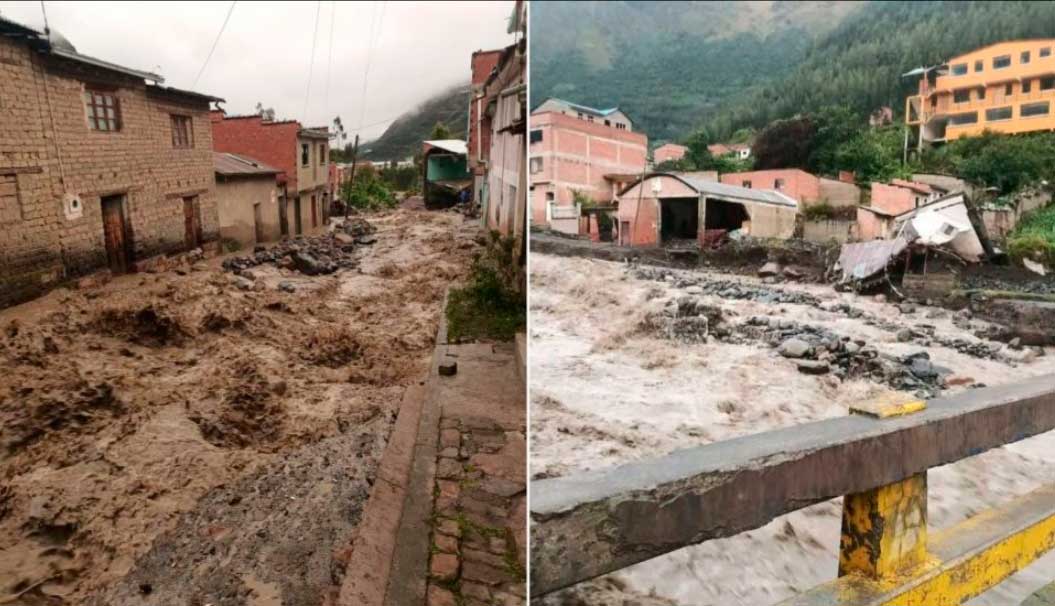
The flooding of populations such as Quime, Tipuani, and Guanay in the department of La Paz is attributable to mining, which diverts rivers to expand its legal and illegal operations at a frantic pace, according to Alfredo Zaconeta, a researcher at the Center for Labor and Agricultural Development (Cedla).
The specialist indicated that while the primary effect of gold mining is contamination due to the use of mercury and fuels, there are other aspects that should not go unnoticed, such as deforestation and river diversion.
“As certain mining areas become depleted, they are migrating to solid ground, and to establish their operations, they deforest, and to continue excavating, they have diverted river courses,” Zaconeta explained to Sumando Voces. He elaborated that this activity “disrupts the entire ecological order and results in these floods.”
Specifically in the case of Quime, he stated that on Friday night, the rising rivers caused the town to flood, leaving approximately 500 families affected and about 40 houses destroyed.
“In the Quime area, several concessions have been granted, predominantly by the Bolivian Mining Corporation, but there are also cooperatives operating in the various river flows. While some are legally established, illegal mining activities, even with foreign financing, have also been detected,” noted Zaconeta. He conducted a study on this issue last year, which led him to travel through Amazonian rivers to document the activity.
He added that many cooperatives, seeing their deposits depleting in Guanay and Tipuani, are seeking new areas of operation, leading them to Quime and the rest of the Inquisivi province.
He reported that gold production has quintupled amid “the government’s passive stance (…) to verify whether they are meeting technical requirements, adhering to the conditions established by regulations for development, and not affecting the areas.”
Por El Diario:
Alerta Cedla
- Los habitantes de Quime, Tipuani y Guanay en los últimos días han sido afectados por mazamorras, en zonas donde se realizan las operaciones mineras auríferas legales e ilegales, según el investigador Alfredo Zaconeta.
La inundación de poblaciones como Quime, Tipuani y Guanay, en el departamento de La Paz, es atribuible a la minería, que desvía los ríos para expandir sus operaciones legales e ilegales son frenéticas, según el investigador del Centro de Desarrollo Laboral y Agrario (Cedla), Alfredo Zaconeta.
El especialista indicó que si bien el primer efecto de la minería aurífera es la contaminación por el uso del mercurio y de combustibles, también hay otros aspectos que no deben pasar inadvertidos, como la deforestación y el desvío de ríos.
“Como hay agotamiento en ciertas zonas mineras, están migrando a terreno firme, y para asentar sus faenas lo que hacen es deforestar, y para seguir excavado han procedido al desvío del cauce de los ríos”, indicó Zaconeta a Sumando Voces. Explicó que esta actividad “altera todo el orden ecológico y deriva en estas inundaciones”.
Asimismo, en el caso concreto de Quime, sostuvo que la noche del viernes la crecida de sus ríos provocó la inundación de la población, dejando unas 500 familias damnificadas y unas 40 casas destruidas.
“Por el sector de Quime, son varias la concesiones otorgadas, hay una predominancia de la Corporación Minera de Bolivia, pero también hay cooperativas que están operando en los diferentes caudales de ríos, las que están legalmente establecidas, también se ha podido detectar actividad minera ilegal incluso con financiamiento extranjero”, señaló Zaconeta, quien hizo un estudio sobre el tema en la gestión pasada, lo que le llevó a recorrer ríos de la Amazonia para documentar esta actividad.
Agregó que hay muchas cooperativas que al ver que se van agotando sus yacimientos en Guanay y Tipuani, están buscando nuevas áreas de trabajo, lo que les ha llevado a Quime y el resto de la provincia Inquisivi, dijo el especialista.
Informó que la producción de oro se ha quintuplicado ante “la pasividad de las instancias del gobierno (…) para ver si están cumpliendo las condiciones técnicas, las condiciones que establecen las normas para el desarrollo y no están afectando las zonas”.
https://www.eldiario.net/portal/2025/01/15/tres-pueblos-inundados-por-desvio-de-rios-para-mineria/

 Bolivian Thoughts | Pensamientos Bolivianos (Bilingual/Bilingüe)