
By Brujula Digital
Indigenous Peoples of the Tarija Chaco Declare Emergency Over Mining Pollution in the Pilcomayo River
They issued a manifesto calling on the authorities of the governments of Bolivia, Argentina, and Paraguay to address this issue.
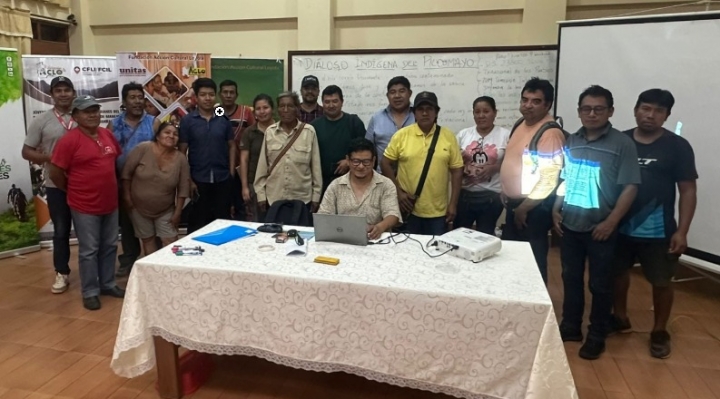
Representatives of the Indigenous Peoples of the Tarija Chaco Gathered for the Pilcomayo. Photo: Provided by the Organizers
Raising Voices
The Guaraní and Weenhayek Indigenous Peoples of the Tarija Chaco have declared a state of emergency and permanent mobilization, as pollution, civil works, and other activities around the Pilcomayo River threaten their fishing-based livelihoods.
In this context, they issued a manifesto asking the authorities of the governments of Bolivia, Argentina, and Paraguay to address this issue, described in a letter sent to the president of the regional forum of representatives of the Gran Chaco Americano, Karen Sánchez, an event taking place this week in Villamontes.
“We declare ourselves in a state of emergency and permanent mobilization to make our voices heard and to obtain the attention of local, national, and international authorities on this issue,” states the first point of the manifesto.
They also demand “that the governments of the states within the trinational Pilcomayo River basin prioritize addressing this issue, taking our organizations into account in decision-making.”
Fish Mortality
They previously described the situation they are experiencing and indicate that there are fewer and fewer fish, and that, even in recent weeks, there was a “great fish mortality.”
They mention that “the Pilcomayo River used to flow freely and was not polluted, but now there is increasingly more sediment and contamination,” which threatens the food security of the Indigenous Peoples.
They describe several aspects that contribute to the pollution and disappearance of fish, such as mining pollution, the presence of other fishers who leave garbage in the river, civil works carried out in the three countries through which the river flows, climate change, and others.
Pollution and Civil Works Worsen the Situation of the Pilcomayo
“The construction of civil works on the river interrupts the sábalo fish cycle, as do the deviations of the river’s course upstream and downstream, and the works on Route 28 (Argentina) prevent the sábalo from migrating through the main course,” they state.
“The pollution of the Pilcomayo River directly affects our fishing communities, leaving us without income and without food, as the restrictions applied, such as the fishing ban, only affect us as fishers,” add the signatories.
The Indigenous Peoples, in addition to asking for attention from the authorities, wish to take charge of a reforestation program in exchange for food.
Por Brújula Digital:
Indígenas del Chaco tarijeño se declaran en emergencia por contaminación minera en río Pilcomayo
Emitieron un manifiesto en el que piden a las autoridades de los gobiernos de Bolivia, Argentina y Paraguay que atiendan esta problemática.
Representantes de los pueblos indígenas del Chaco tarijeño reunidos por el Pilcomayo. Foto: Cedida por los organizadores
Sumando Voces
Los pueblos indígenas Guaraní y Weenhayek, que habitan en el chaco tarijeño, se declararon en emergencia y movilización permanente porque la contaminación, las obras civiles y otras actividades en torno al río Pilcomayo ponen en riesgo su subsistencia asociada a la pesca.
En ese marco, emitieron un manifiesto en el que piden a las autoridades de los gobiernos de Bolivia, Argentina y Paraguay que atiendan esta problemática, que está descrita en una carta enviada a presidenta del foro regional de representantes del Gran Chaco Americano, Karen Sánchez, evento que se lleva a cabo esta semana en Villamontes.
“Nos declaramos en emergencia y en movilización permanente para hacer escuchar nuestra voz y lograr la atención de las autoridades locales, nacionales e internacionales sobre esta problemática”, señala el primer punto del manifiesto.
También exigen “a los gobiernos de los estados de la cuenca trinacional del Río Pilcomayo priorizar la atención de esta problemática tomando en cuenta a nuestras organizaciones en la toma de decisiones”.
Muerte de peces
Previamente describen la situación que atraviesas e indican que cada vez hay menos peces y que, incluso, en semanas recientes hubo una “gran mortandad”.
Mencionan que “antes el río Pilcomayo corría libremente y no estaba contaminado, ahora hay cada vez más sedimentos y contaminación”, lo que pone en riesgo la seguridad alimentaria de los pueblos indígenas.
Describen varios aspectos que contribuyen a la contaminación y a la desaparición de los peces, como la contaminación minera, la presencia de otros pescadores que dejan basura en el río, las obras civiles que se hacen en los tres países por donde atraviesa el cauce, el cambio climático, entre otros.
La contaminación y las obras civiles agravan la situación del Pilcomayo
“La construcción de obras civiles sobre el río interrumpe el ciclo del sábalo, así como las desviaciones del curso del río aguas arriba y aguas abajo, las obras en la ruta 28 (Argentina) no dejan migrar el sábalo por el cauce principal”, señalan.
“La contaminación del río Pilcomayo afecta directamente a nuestras comunidades pescadoras, nos dejan sin ingresos y sin alimento, ya que las medidas de restricción que se aplican, como la veda, nos afectan solo a nosotros como pescadores”, agregan los firmantes.
Los indígenas, además de pedir atención a las autoridades, quieren hacerse cargo de un programa de reforestación a cambio de alimentos.

 Bolivian Thoughts | Pensamientos Bolivianos (Bilingual/Bilingüe)