
By El Deber:
With the parallel dollar hovering around Bs 12, an upward trend is warned due to economic uncertainty
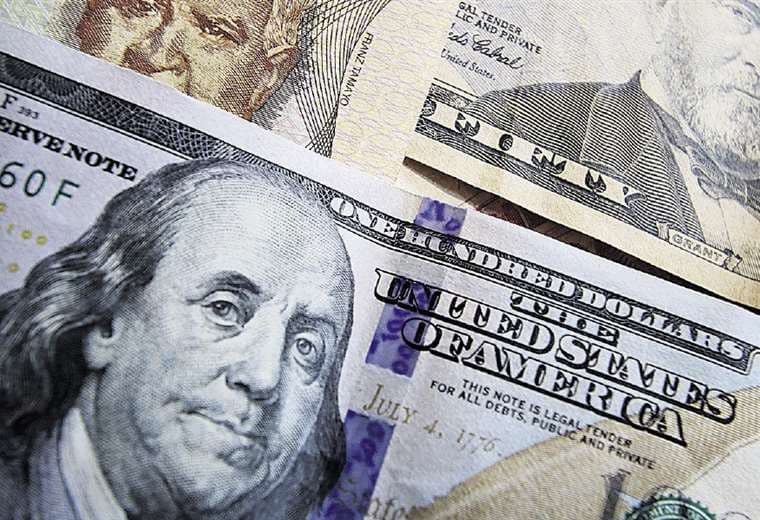
The exchange rates in the black market and on unofficial websites range between Bs 11.50 and Bs 11.70. Some political figures even spoke out this Friday.
The price of the dollar in the parallel market is nearing Bs 12 again, raising concerns about a new surge in the value of the U.S. dollar, which already exceeded Bs 15 in late July and early August.
In fact, the “blue dollar” in Bolivia—what some unofficial websites call it—was priced at Bs 12.10 for purchase and Bs 12.30 for sale at noon this Friday.
Economist Fernando Romero stated that there is a new “upward trend” in the price of the parallel dollar in several regions of the country for sale. “This is due to the uncertainty and negative expectations about our economy in the short term from different economic agents, where politics and social conflicts have had a negative influence.”
With a graph showing the fluctuation of a cryptocurrency price that mimics the variation of the dollar’s cost on the street, Romero said it could be “referential” for the black market. However, according to a survey conducted in several cities, the president of the Tarija Economists’ Association noted that “the dollar in the black market has been increasing in price, both in exchange houses and street currency traders.”
“One factor that has also contributed to the relatively higher price of the dollar in the parallel market in the last two weeks is the government’s approval, through DS 5271, of the free importation of fuels for the private sector. This has sparked greater speculation because the market now knows of a greater need for U.S. dollars to buy diesel and gasoline from abroad,” he emphasized.
But also—he added—since this policy is temporary, and has not improved the severe fuel shortages in the country so far, and this won’t happen in the short term, the parallel dollar market will see more demand due to the lack of a sustainable response to this problem. There will be more people demanding dollars due to the looming fear of fuel price hikes, devaluation, and higher inflation in our economy.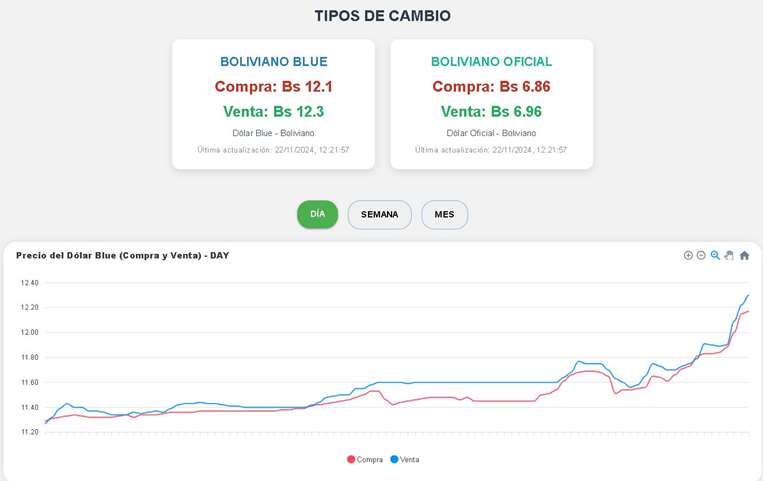
For his part, businessman Samuel Doria Medina assured on his Facebook account that “the price of the dollar has risen again, now it is at Bs 11.70.”
“Some believed the dollar would stabilize for a long time, after being at Bs 10.50 for over a month, but that’s impossible without structural measures to rebalance the relationship between supply and demand. Today, there are practically no dollars to buy in the market, so the pressure for price increases is strong. Agents try to delay their decision to buy, but when they can no longer postpone it, they pay more to obtain foreign currency. This is how devaluation continues,” he stated.
The elected governor of Santa Cruz, Luis Fernando Camacho, also commented on the situation, emphasizing that the economic crisis in Bolivia “is structural and deep,” after it was reported that the exchange rate of the dollar in the black market had risen from Bs 10.50 to Bs 11.50.
“The crisis is not accidental, it is structural and deep. Bolivia has not yet seen the worst of this crisis or its consequences, the government is ‘buying time by kicking the ball forward’ and has already shown it will not face it,” Camacho said in a post on his social media.
Por El Deber:
Con el dólar paralelo bordeando los Bs 12, advierten tendencia alcista debido a la incertidumbre en la economía
Las cotizaciones en el mercado negro y en páginas no oficiales se encuentran entre Bs 11,50 y Bs 11,70. Algunas figuras políticas incluso se pronunciaron este viernes
El precio del dólar en el mercado paralelo ya bordea los Bs 12 y vuelve la preocupación por una nueva escalada en el alza de la divisa estadounidense, que ya sobrepasó los Bs 15 a fines de julio y principios de agosto.
De hecho, el ‘dólar blue’ boliviano -como cotizan algunas páginas no oficiales- se encontraba en Bs 12,10 para la compra y Bs 12,30 para la venta, el medio día de este viernes.
El economista Fernando Romero manifestó que existe una nueva “tendencia alcista” en el precio del dólar paralelo en varias regiones del país para su venta. “Esto como consecuencia de la incertidumbre y expectativas negativas de nuestra economía en el corto plazo por parte de los diferentes agentes económicos, donde la política y conflictos sociales han tenido una influencia negativa”.
Con una gráfica, correspondiente a la variación del precio de una criptomoneda, que simula la variación del costo del dólar en la calle, Romero indicó que puede ser “referencial” para el mercado negro. Sin embargo, de acuerdo con un sondeo realizado en algunas ciudades del país, el presidente del Colegio de Economistas de Tarija evidenció que “el dólar en el mercado negro está teniendo un incremento en su precio, tanto en casas de cambio y libre cambistas de calle”.
“Algo que también ha incidido en que estas dos últimas semanas haya subido relativamente el precio del dólar en el mercado paralelo, es el hecho que el gobierno haya aprobado mediante el DS 5271 la libre importación de carburantes para el sector privado, eso ha despertado una mayor especulación debido a que el mercado sabe ahora de una mayor necesidad de la divisa americana para comprar diésel y gasolina del exterior”, resaltó.
Pero también – agregó el economista- como dicha política es coyuntural, y no ha mejorado hasta la fecha el agudo desabastecimiento de carburantes en el país, y esto no sucederá en el corto plazo, el mercado paralelo del dólar tendrá mayor demanda por la falta de una respuesta sostenible a este problema, habrá mas gente que demande dólares ante un temor latente de un gasolinazo, devaluación y una mayor inflación en nuestra economía.
Por su parte, el empresario Samuel Doria Medina, en su cuenta de Facebook aseguró que “el precio del dólar ha vuelto a subir, está ahora en 11,70 Bs”.
“Algunos creyeron que el dólar se estabilizaría por mucho tiempo, tras estar más de un mes en (Bs) 10,50, pero eso es imposible, sin medidas estructurales que requilibren la relación entre oferta y demanda. Hoy prácticamente no hay dólares que comprar en el mercado, así que la presión hacia el alza de precios es fuerte. Los agentes tratan de postergar la decisión de compra, pero cuando no pueden hacerlo más, pagan más para conseguir divisas. Así sigue la devaluación”, expresó.
El gobernador electo de Santa Cruz, Luis Fernando Camacho, también se manifestó al respecto, subrayando que la crisis económica en Bolivia “es estructural y profunda”, después de que se conociera que la cotización del dólar en el mercado negro pasó de Bs 10,50 a valer Bs 11,50.
“La crisis no es accidental, es estructural y profunda. Bolivia aún no ha visto lo peor de esta crisis ni de sus consecuencias, el Gobierno ‘compra tiempo tirando la pelota hacia adelante’ y ya ha demostrado que no la va enfrentar”, dijo Camacho, mediante una publicación en sus redes sociales.

 Bolivian Thoughts | Pensamientos Bolivianos (Bilingual/Bilingüe)