
By ANF, Eju.tv:
Former BCB President Proposes “Unifying the Exchange Rate,” Turning to the IMF, and Five Other Measures to Address the Crisis
The former president of the Central Bank of Bolivia (BCB), Juan Antonio Morales, proposed seven measures to stabilize the country’s critical economic situation, including unifying the exchange rate, eliminating the parallel market, and seeking support from the International Monetary Fund.
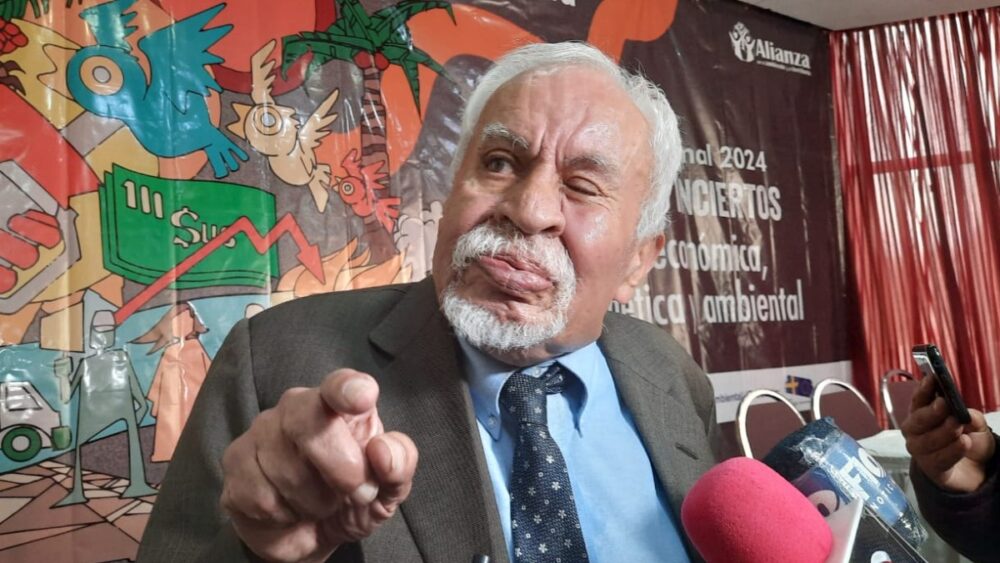
Former BCB President Juan Antonio Morales. Photo: ANF
He pointed to the urgency of unifying the exchange rate by eliminating the parallel market, which currently values the Bolivian currency at levels very different from the official rate. According to the economist, this move would help restore stability in the exchange market.
“It is necessary to liberalize the market, to let the exchange rate — at least for a time — float. If you consider historical experience, which doesn’t always repeat itself, that could take around 7 or 8 months,” Morales said.
Since February of last year, the U.S. dollar has disappeared from the market, prompting the Central Bank of Bolivia to maintain an “unrealistic” exchange rate at Bs 6.96. This situation has created a parallel market where the dollar trades at Bs 12 or more.
Other proposals he made involve exchange, monetary, and fiscal policies, as well as the need for international cooperation and structural adjustments. Morales outlined each in the forum “Uncertain Times: Economic, Energy, and Environmental Crisis,” organized by Fundación Tierra.
He recalled one of the worst periods of hyperinflation, highlighting that after Supreme Decree 21060 was enacted, people eventually accepted the measure because they were exhausted by the situation.
“If they had told people that to stop hyperinflation, they should stand on their heads at noon on a given day, they would have done it. The frustration was such with inflation and shortages that people were willing to accept any measure, no matter how harsh. However, the situation we’re in now isn’t exactly the same. We haven’t reached a level of public exhaustion. We’re not yet in a fully developed crisis, but it’s underway,” he warned.
Despite some sectors’ resistance to the International Monetary Fund (IMF), he believes the country needs the financial and technical support of the IMF to facilitate the transition and overcome the current situation.
“After 21060, support from friendly countries was the first to come. The IMF arrived a year later. They say the IMF is Washington’s slowest wallet, and that may be true,” he noted, estimating the amount needed to be around $3 billion.
He suggested enforcing a strict monetary policy, as stipulated by Article 22 of the Central Bank law, limiting loans to the non-financial public sector except under exceptional conditions.
He argued that enforcing a strict monetary policy is only feasible if the State simultaneously adopts a strict fiscal policy. This includes reducing the fiscal deficit to approximately 3% of the Gross Domestic Product (GDP).
“For many years, we have had a fiscal deficit above 7%, and last year it was nearly 11%. That situation is unsustainable. Financing is no longer feasible, and they’re printing money,” he stated.
He also proposed removing interest rate caps and sectoral allocations to allow for better financial resource allocation and increase market competitiveness in lending.
Additionally, he emphasized the importance of creating a group of allied countries to support Bolivia, similar to the consultative groups that existed in the 1980s and 90s, especially during crises. He also proposed the rescheduling of external debt.
Alongside these immediate measures, Morales underscored the need to invest in strategic sectors to sustain long-term growth. He mentioned developing unconventional natural resources, opening up to foreign investment in key sectors such as lithium, value-added manufacturing, and diversifying the agro-industrial sector. Morales also called for improving institutions that protect private property rights and promoting tourism and telecommuting as potential revenue sources for the country.
Fuel Subsidies
Morales emphasized that the government must also “take action regarding fuel subsidies, which would improve the fiscal situation and limit fiscal spending.” He added that Premium and Ultra Premium gasoline help reduce the subsidy.
“We need to reduce the fuel subsidy, but always protect low-income groups,” said the former BCB president, noting that subsidies have several harmful effects, “they benefit the population, but they also benefit those with large-scale operations and especially those involved in smuggling.”
/NVG/
Por ANF, Eju.tv:
Expresidente del BCB plantea “unificar el tipo de cambio”, acudir al FMI y otras cinco medidas frente a la crisis
El expresidente del Banco Central de Bolivia (BCB) Juan Antonio Morales planteó siete medidas para estabilizar la crítica situación económica que vive el país, entre ellas, unificar el tipo de cambio y eliminar el mercado paralelo, y acudir al Fondo Monetario Internacional.
Expresidente del BCB Juan Antonio Morales. Foto: ANF
Apuntó a la urgencia de unificar el tipo de cambio, eliminando la existencia de un mercado paralelo que actualmente sitúa la moneda boliviana en niveles muy distintos al oficial. Esto, según el economista, permitiría reestablecer la estabilidad en el mercado cambiario.
“Es necesario liberalizar el mercado, dejar que el tipo de cambio -por lo menos- por un tiempo flote. Si uno toma en cuenta la experiencia histórica, que no siempre se repite, eso podría tomar unos 7 u 8 meses”, sostuvo Morales.
Desde febrero del año pasado, la divisa norteamericana ha desaparecido del mercado, lo que ha provocado que el Banco Central de Bolivia mantenga un tipo de cambio “inexistente” en Bs 6,96, esta situación ha creado un mercado paralelo donde el dólar cotiza en Bs 12 o más.
Otras propuestas que hizo están relacionadas a las políticas de cambio, monetarias y fiscales, así como la necesidad de cooperación internacional y ajustes estructurales, Morales describió cada una de ellas en el foro Tiempos inciertos: crisis económica, energética y ambiental, organizado por Fundación Tierra.
En su exposición rememoró una de las peores situaciones de hiperinflación, resaltó que tras la aprobación del Decreto Supremo 21060, la población finalmente terminó aceptando la medida porque estaba hastiada de esa situación.
“Si decían que para parar la hiperinflación se pongan de cabeza a las 12 del día, de un día dado, la gente lo haría. El cansancio era tal con la inflación y con el desabastecimiento que estaban dispuestos a aceptar cualquier medida, por más dura que fuera. Ahora bien, la situación en la que vivimos actualmente no es exactamente la misma. Todavía no hemos llegado a un nivel de cansancio de la población. No hemos llegado a ese nivel. No es una crisis que esté completamente desarrollada, pero está en desarrollo”, advirtió.
Cree que a pesar de la reticencia de algunos sectores hacia el Fondo Monetario Internacional (FMI), cree en la necesidad de contar con el respaldo financiero y técnico de esta institución para facilitar la transición y superar la coyuntura actual.
“Les hago notar que después del 21060, fue el apoyo de los países amigos el primero en venir. El FMI llegó un año más tarde. Dicen que el FMI es la billetera más lenta de Washington, posiblemente es el caso”, sostuvo, al estimar que el monto podría ser de $us 3.000 millones.
Propuso aplicar una política monetaria estricta, como lo establece el artículo 22 de la ley del Banco Central, limitando los créditos al sector público no financiero salvo en condiciones excepcionales.
Planteó que ejercer una política monetaria estricta es solo viable si el Estado adopta a la par una política fiscal también estricta. Para ello, se plantea reducir el déficit fiscal a aproximadamente un 3% del Producto Interno Bruto (PIB).
“Durante muchos años hemos tenido un déficit fiscal por encima del 7% , el año pasado fue casi del 11%, esa situación es insostenible. No ha de haber cómo financiar, están imprimiendo dinero”, afirmó.
En línea con la flexibilización, también propuso eliminar los techos a las tasas de interés y las asignaciones sectoriales. Esta medida permitiría una mejor asignación de los recursos financieros y aumentaría la competitividad del mercado crediticio.
Por otro lado, destacó la importancia de crear un grupo de países aliados que respalden a Bolivia, al estilo de los grupos consultivos que existieron en los años 80 y 90, especialmente en tiempos de crisis y finalmente propuso el reescalonamiento de la deuda externa.
Además de estas medidas inmediatas, Morales destacó la importancia de invertir en sectores estratégicos que puedan sostener el crecimiento a largo plazo. Entre ellos, mencionó el desarrollo de recursos naturales no convencionales, una apertura a la inversión extranjera en sectores clave como el litio, la manufactura con valor agregado, y la diversificación del sector agroindustrial. Morales también hizo un llamado a mejorar las instituciones que protegen los derechos de propiedad privada y fomentan el turismo y el teletrabajo como fuentes potenciales de ingresos para el país.
Subsidio a los combustibles
Morales enfatizó que al Gobierno también “le toca tomar medidas con relación al subsidio a los combustibles lo que mejoraría la situación fiscal, además limitar sus gastos fiscales”. Añadió que las gasolinas Premium y Ultra Premium contribuyen a reducir el subsidio.
“Hay que reducir el subsidio a los combustibles, pero siempre protegiendo a los grupos con ingresos más bajos”, afirmó el expresidente del BCB, al precisar que en el subsidio hay varios efectos nocivos, “tiene ventajas para la población, pero también tiene ventajas para los que tienen a actividades grandes y sobre todo para los que sacan de contrabando”.
/NVG/

 Bolivian Thoughts | Pensamientos Bolivianos (Bilingual/Bilingüe)