
By Carlos Quisbert, Vision 360:
Talina, Potosí
The ayllu is fighting to protect its water sources against mining companies polluting the Pilcomayo River
Four companies have been operating without environmental licenses. The Tupiza Municipality claims to be unaware of the complaints, while the Potosí Governor’s Office is awaiting a report.
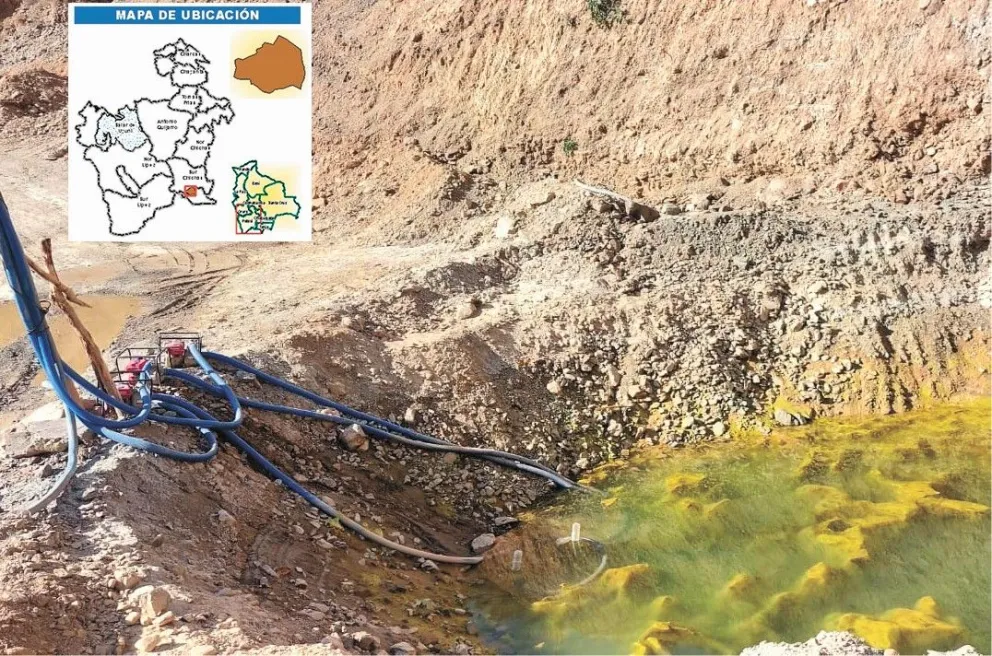
Part of the Talina River in Potosí is contaminated, and its waters flow into the San Juan del Oro River, which eventually reaches the Pilcomayo in Tarija. Photo: Ayllu Talina
The gold buried beneath the Ayllu Talina has only brought ruin to the over 800 families living in its nine communities, spread across two provinces and two municipalities in the Potosí department. Mercury and other chemical residues used by miners pollute underground springs near the Talina River, whose flow reaches the San Juan del Oro and finally empties into the Pilcomayo River in Tarija.
The community members, owners of these lands, state that the wealth generated by illegal mining companies, operating under the eyes of municipal and departmental authorities, does not reach them. They are aware that even if miners were to give them a share of the gold, in the future, when the miners abandon the lands, leaving them barren and desolate, this precious metal will be of no use to buy something vital for the survival of their ayllu: water.
“Those of us who live off what our land produces in Ayllu Talina want the miners to leave. They know they are illegal, operating without our permission and polluting the springs, water sources, and the Talina River. They have even been reported from Tarija; authorities came to shut down their mines because the contamination reaches the Pilcomayo. That’s why we are denouncing them, we want them to stop and be expelled; the communities don’t benefit, and the damage to the land is greater,” said cacique Olga Alicia Toconas Velas to Visión 360.
She states that for some time, “the farmland has become salty, and since 2018, the water in the wells has noticeably decreased. When it rains, and the water brings (mineral waste) along the path and the river, that soil enters our fields, and the production is no longer there,” Toconas laments.
The indigenous authority raises the complaint in a distressed tone because the grievances of the nine communities that make up her ayllu are not being addressed by the authorities, and because she and her leaders have already faced harassment and verbal abuse. Additionally, the miners have threatened them with legal action in retaliation for the defense of their land.
Senator Cecilia Requena, from Comunidad Ciudadana, argues that the violent behavior of cooperative miners and the criminalization of environmental defenders have become characteristic of such conflicts, due to the systematic violation of individual and collective human rights, as well as the environmental degradation of the territory, particularly water sources.
The legislator emphasizes that “historically,” mining companies have operated with little transparency, fueling distrust and discontent among affected communities. This point was confirmed in past administrations, when four mining companies were “sanctioned” with the suspension of their activities after the overflow of toxic waste from sedimentation pits was confirmed, endangering the water of the San Juan del Oro River.
The fact that these companies have tailings dams that exceeded their capacity is a confirmation that they have been operating for several years without environmental licenses.
Facts
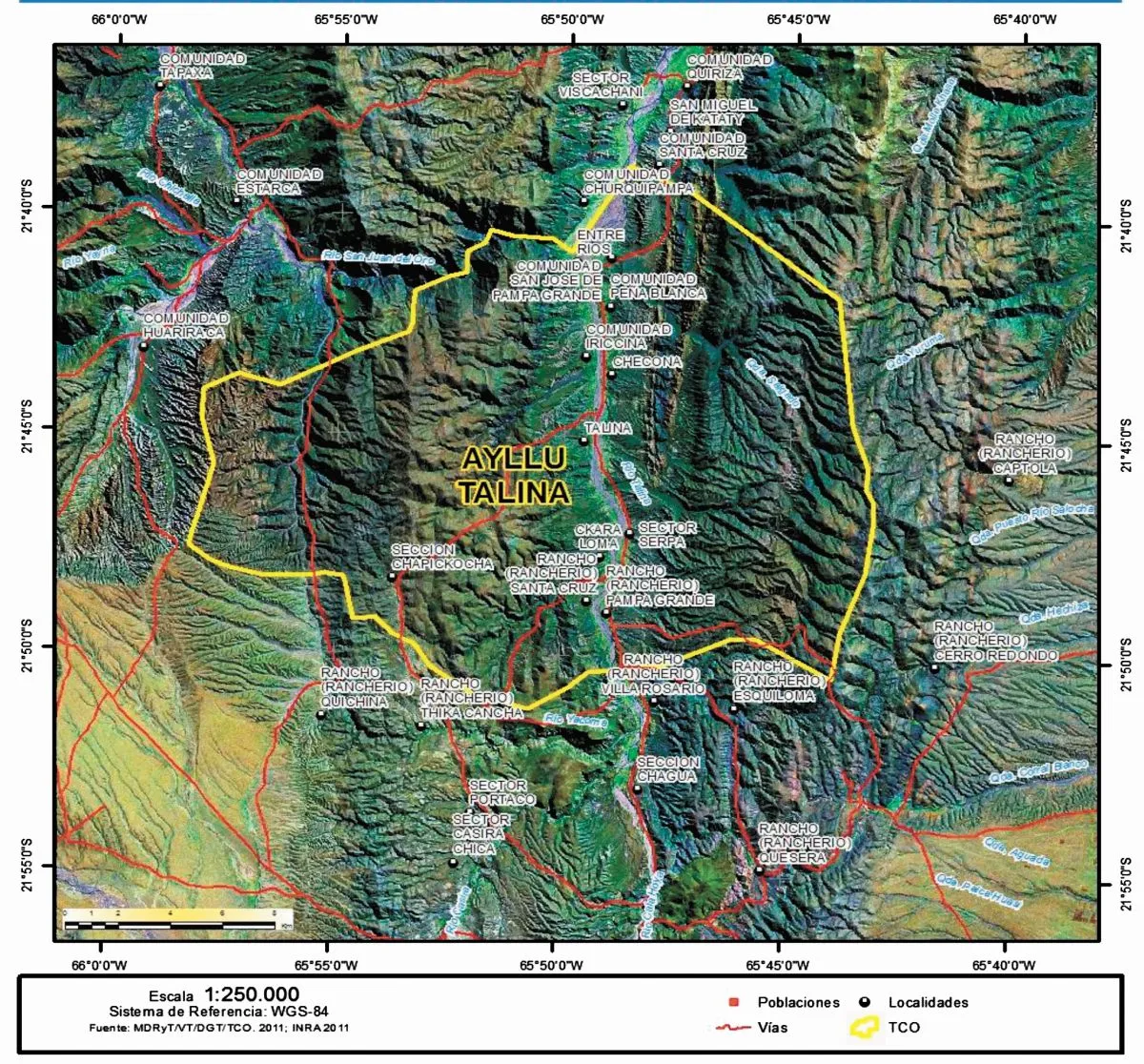
According to Olga Toconas, the Ayllu Talina area affected by illegal mining consists of nine communities: Casilda, Chakicocha, Chipihuayco, Talina, Checona, Iriccina Peña, Blanca del Carmen, San José de Pampa Grande, and Entre Ríos de Acanapa.
These communities are located in the Potosí provinces of Sur Chichas and Modesto Omiste, specifically within the jurisdictions of the municipalities of Tupiza and Villazón. The latter borders the department of Tarija to the south and is part of the border with Argentina, sharing the waters of the Pilcomayo River.
According to data from the Vice Ministry of Lands, the organization of the Ayllus of Talina has indigenous characteristics; their communities are affiliated with the Council of the Chicha and Wisijsa Nations and, at the national level, belong to the National Council of Ayllus and Markas of Qullasuyu.
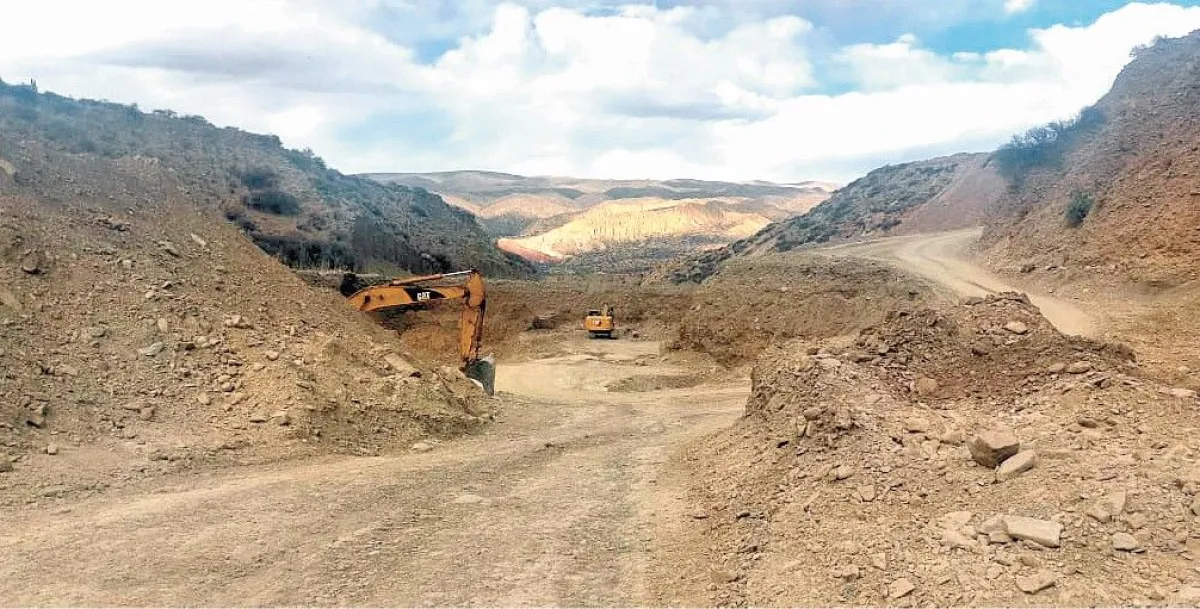
Cacique Toconas states that community members have identified more than 10 companies operating illegally throughout their territory. Some lack authorization from the community, most do not have the environmental license, which is a state competency; others also do not have the operating license granted by the municipalities, but all, the communities assert, violate laws regarding the safe handling of their waste.
Most communities depend on the agricultural production of garlic, corn, fava beans, and potatoes. They also raise livestock such as goats, cows, donkeys, pigs, and other types of wild animals.
“People have reported that goats have been born with deformities in their legs and eyes. We are documenting everything, but in the first cases, people got scared and sacrificed them. It’s a nightmare; we no longer feel safe living on our own land,” the cacique recounts.
Municipalities
In contrast, the municipalities of Tupiza, Villazón, and the Potosí Governor’s Office claim they have not received official complaints about the drama these communities are experiencing. However, Toconas points out that, due to the authorities’ indifference, they decided to seek independent help and organized themselves to obtain irrefutable evidence, including water analyses to confirm the presence of mercury, a chemical element used by illegal cooperativists to separate gold from the earth.
In November 2023, specialists collected samples at 12 points, including springs, underground sources, and rivers. The results confirmed that the water shows toxic levels of various minerals; the documents will be submitted as evidence to the municipal authorities and the Potosí Governor’s Office.
However, regarding mercury, experts explained to the community members that samples should be taken during specific weather conditions when it rains because this element settles in the beds of water sources.
“The municipalities know that we have conducted the analyses, but the environmental officials do not want to take action; they blame each other. They tell us it’s the responsibility of the other municipality or that we must wait for the Departmental Secretary of Mother Earth and Environment to respond, but we, our animals, and our crops continue to suffer from the contamination,” laments the cacique.
In contact with Visión 360, the Environmental Officer of Tupiza, Hugo Vedia, stated that the community members did not present any complaints and that no operating licenses have been issued for the past year.
However, the departmental secretary of Mother Earth from the Potosí Governorate, Aldo Tejerina, contradicted this version and indicated to this outlet that, on one hand, last year that agency moved to halt the operations of four cooperatives that were operating without environmental licenses in the municipality of Tupiza, along the San Juan del Oro River basin.
One specific case was that of the Azulejos Cooperative. In addition to lacking an environmental license, its sedimentation pond had overflowed with material. He explained that a ruling from the Agro-environmental Court is still pending.
Nevertheless, he assured that after conducting water analyses, no toxic residues were found. “We have the results; we have informed the judge handling the case in the Agro-environmental Court in Tarija and are awaiting their determination,” said the secretary.
Tejerina mentioned that they also do not have a record of an official complaint from the Ayllu Talina, but due to unofficial reports that reached that agency last week, they requested documents from the Tupiza Mayor’s Office, which has yet to deliver the requested materials.
Bureaucracy
For the leaders of Ayllu Talina, the authorities complicate any solution, deny that they have not made complaints, and discredit the work of officials for drowning their requests in bureaucratic responses that only serve to allow mining companies to remain unpunished. Visión 360 reviewed several letters sent to different entities that clearly express the context.
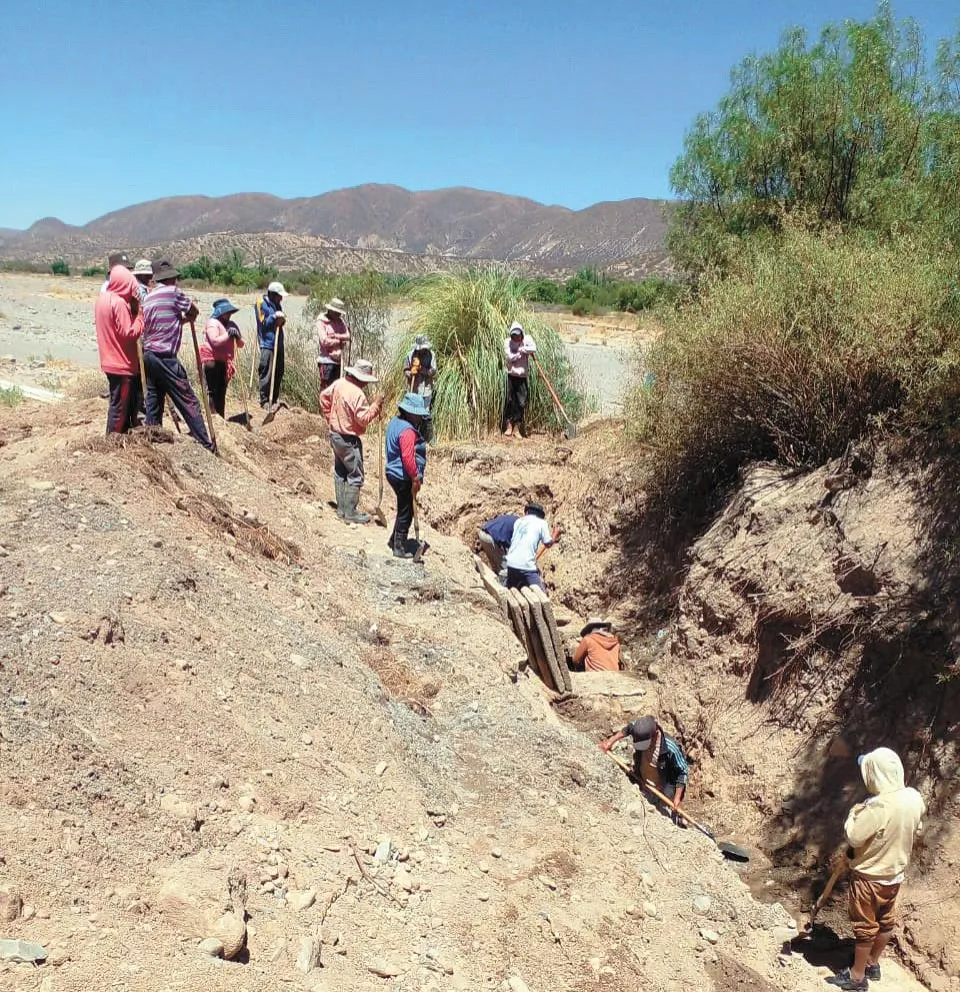
In July 2021, the negligent attitude of the authorities prompted the community members to take action, and after blocking access to mining exploitation areas, they successfully prevented the entry of a new illegal mining operation.
The residents, mostly elderly, reported that the cooperativists brought in supplies and heavy machinery for gold extraction without the community’s authorization.
“Our leaders have clearly explained in all the letters and meetings that we do not agree with mining exploitation,” Toconas asserts. She also pointed out that the cooperativists have initiated actions that create division among the communities, as one of them authorized the exploitation of its resources in exchange for 1,000 bolivianos annually.
“These miners use large amounts of water, which they then discharge into the river; the damage to our land cannot be reversed, which is why we do not accept the continuation of mining companies. We demand that the authorities listen to us,” the chief concluded.
Por Carlos Quisbert, Vision 360:
Talina, Potosí
Ayllu lucha por sus vertientes contra mineras que contaminan el Pilcomayo
Cuatro empresas operaban sin licencia ambiental. La Alcaldía de Tupiza dice no conocer las denuncias, pero la Gobernación de Potosí espera un informe.
Parte del río Talina, en Potosí, con el agua contaminada. Desemboca en el río San Juan del Oro y este, a su vez, en el Pilcomayo en Tarija. Foto: Ayllu Talina
El oro que está en las entrañas del territorio del Ayllu Talina solo ha traído ruina para las más de 800 familias que habitan en las nueve comunidades que la componen, repartidas sobre las intersecciones de dos provincias y dos municipios en el departamento de Potosí. Los residuos de mercurio y otros químicos, utilizados por los mineros, contaminan vertientes subterráneas cerca del río Talina, cuyo cauce va hacia el San Juan del Oro y finalmente desembocan en el río Pilcomayo, en el departamento de Tarija.
Los comunarios dueños de esas tierras afirman que la riqueza que generan las empresas mineras ilegales, que operan a vista y paciencia de las autoridades municipales y departamentales, no llega a sus manos. Ellos reflexionan y saben que, aunque los mineros les entreguen parte de ese oro, en el futuro, cuando estos abandonen sus tierras y las dejen estériles y desérticas, este metal precioso no les servirá para comprar algo que es vital para la supervivencia de su ayllu: el agua.
“Quienes vivimos de lo que produce nuestra tierra en el Ayllu Talina queremos que se vayan los mineros. Saben ellos que son ilegales, que están operando sin nuestro permiso y contaminan las vertientes, los ojos de agua y el río Talina. Incluso los han denunciado desde Tarija; subieron para clausurar sus minas porque la contaminación llega hasta el Pilcomayo. Por eso los estamos denunciando, queremos que paren y que los expulsen; las comunidades no se benefician y es más el daño a la tierra”, relató a Visión 360 la cacique Olga Alicia Toconas Velas.
Ella afirma que desde hace un tiempo “los terrenos (de cultivo) se han vuelto salitrosos y desde 2018 ya se nota cómo ha disminuido el agua en los pozos. Cuando llueve y el agua trae (desechos minerales) por el camino y el río, esa tierra entra a nuestros chacos, ya no da más la producción”, lamenta Toconas.
La autoridad originaria lanza la denuncia en tono afligido, porque las denuncias de las nueve comunidades que componen su ayllu no son atendidas por las autoridades, y porque ella y sus dirigentes ya han sufrido acoso y agresiones verbales. Además, los mineros ya los amenazaron con procesos judiciales, en represalia a la defensa que ella y sus vecinos hacen de su tierra.
Para la senadora Cecilia Requena, de Comunidad Ciudadana, la actitud violenta de mineros cooperativistas y la criminalización de los defensores ambientales es ya característica en este tipo de conflictos, por la violación sistemática a los derechos humanos individuales, colectivos y la degradación ambiental del territorio, en particular de las fuentes de agua.
La legisladora remarca que, “históricamente”, las empresas mineras operan con escasa transparencia, lo que alimenta la desconfianza y el descontento entre las poblaciones afectadas. Este punto se confirmó en pasadas gestiones, cuando cuatro empresas mineras fueron “sancionadas” con la paralización de sus actividades, luego de que se confirmara el rebalse de los desechos tóxicos de las fosas de sedimentación, situación que puso en riesgo el agua del río San Juan del Oro.
Pero el hecho de que estas empresas cuenten con diques de cola, que sobrepasaron su capacidad es una confirmación de que estas operaban desde hace varios años, sin licencia ambiental.
Datos
De acuerdo con Olga Toconas, el sector del Ayllu Talina, afectado por la minería ilegal, está compuesto por nueve comunidades: Casilda, Chakicocha, Chipihuayco, Talina, Checona, Iriccina Peña, Blanca del Carmen, San José de Pampa Grande y Entre Ríos de Acanapa.
Estas comunidades están asentadas, territorialmente, sobre las provincias potosinas de Sur Chichas y Modesto Omiste, más exactamente en la jurisdicción de los municipios de Tupiza y Villazón. Este último limita al sur con el departamento de Tarija y es parte de la frontera con Argentina, territorios con los que se comparte el agua del río Pilcomayo.
Según los datos del Viceministerio de Tierras, la organización de los Ayllus de Talina es de características originarias; sus comunidades se hallan afiliadas al Consejo de la Nación Chicha y Wisijsa y, a nivel nacional, pertenecen al Consejo Nacional de Ayllus y Markas del Qullasuyu.
La cacique Toconas afirma que los comunarios han identificado más de 10 empresas que operan de forma ilegal en todo su territorio. Algunas no cuentan con la autorización de la comunidad, la mayoría no tiene la licencia ambiental que es de competencia estatal; otras tampoco tendrían la licencia de funcionamiento otorgada por las alcaldías, pero todas, aseguran las comunidades, incumplen las leyes sobre el manejo seguro de sus residuos.
En su mayoría, las comunidades dependen de la producción agrícola de ajo, maíz, haba y papa. También cuentan con animales de pastoreo como chivos, vacas, burros, chanchos y otros tipos de animales silvestres.
“La gente ha denunciado que han nacido chivos con deformaciones de sus patas y ojos. Estamos documentando todo, pero en los primeros casos la gente se asustó y los ha sacrificado. Es una pesadilla, ya no nos sentimos seguros de vivir en nuestra propia tierra”, relata la cacique.
Alcaldías
En contraparte, desde las alcaldías de Tupiza, Villazón y la Gobernación de Potosí, afirman que no tienen denuncias oficiales sobre el drama que viven estas comunidades. Sin embargo, Toconas señala que, ante la indiferencia de las autoridades, decidieron buscar ayuda independiente y así se organizaron para lograr pruebas irrefutables, con análisis del agua para confirmar la presencia del mercurio, elemento químico empleado por los cooperativistas ilegales para la separación del oro de la tierra.
De esa forma, en noviembre de 2023, especialistas tomaron muestras en 12 puntos, ojos de agua, vertientes y ríos. Los resultados confirmaron que el agua presenta niveles tóxicos de diferentes minerales; los documentos serán entregados como respaldo ante las autoridades de las alcaldías y a la Gobernación de Potosí.
Pero sobre el mercurio, los expertos explicaron a los comunarios que las muestras deben ser tomadas en temporadas climáticas específicas, cuando llueve, debido a que ese elemento está asentado en los lechos de las fuentes de agua.
“Los municipios saben que hemos hecho los análisis, pero los encargados de medio ambiente no quieren hacer nada, entre ellos se acusan. Nos dicen que es competencia del otro municipio o que hay que esperar que se pronuncie (la Secretaría Departamental de) Madre Tierra (y Medio Ambiente), pero nosotros, nuestros animales, los cultivos, siguen sufriendo por la contaminación”, lamenta la cacique.
En contacto con Visión 360, el responsable de Medio Ambiente de Tupiza, Hugo Vedia, aseguró que los comunarios no presentaron ninguna denuncia y que desde hace un año no se emitieron licencias de funcionamiento.
Sin embargo, el secretario departamental de Madre Tierra, de la Gobernación de Potosí, Aldo Tejerina, desmintió esa versión y señaló a este medio que, por una parte, en la pasada gestión esa instancia procedió a paralizar el trabajo de cuatro cooperativas que operaban sin licencia ambiental en el municipio de Tupiza, sobre la cuenca del río San Juan del Oro.
Uno de los casos puntuales fue el de la Cooperativa Azulejos. Además de no contar con licencia ambiental, su poza de sedimentación presentaba el rebalse del material. Explicó que aún está pendiente un fallo del Tribunal Agroambiental.
No obstante, aseguró que luego de realizar análisis del agua, no hallaron residuos tóxicos. “Tenemos los resultados, hemos informado al juez que está llevando el caso en el Tribunal Agroambiental en Tarija y esperamos su determinación”, sostuvo el secretario.
Tejerina mencionó que tampoco tienen registro de una denuncia oficial por parte del Ayllu Talina, pero por las versiones extraoficiales que llegaron a esa instancia la pasada semana se solicitaron informes a la Alcaldía de Tupiza, la que aún no ha entregado los documentos.
Burocracia
Para los dirigentes del Ayllu Talina las autoridades dificultan cualquier solución, desmienten que no hayan hecho las denuncias, descalifican el trabajo de los funcionarios por sumergir sus pedidos en respuestas burocráticas que solo benefician dejar en la impunidad a las empresas mineras. Visión 360 revisó varias de las cartas enviadas a diferentes entidades, en las que se expresa con claridad el contexto.
En julio de 2021, esa actitud negligente de las autoridades provocó que los comunarios asumieran medidas de hecho y luego de bloquear el ingreso a zonas de explotación aurífera, lograron evitar el ingreso de una nueva minera ilegal.
Los pobladores, en su mayoría de la tercera edad, denunciaron que los cooperativistas ingresaron insumos y maquinaria pesada para la explotación de oro, sin la autorización de la comunidad.
“Nuestros dirigentes, en todas las cartas y reuniones han explicado con claridad que no estamos de acuerdo con la explotación minera”, asegura Toconas. Pero, además, hizo notar que los cooperativistas han iniciado acciones que generan división entre las comunidades, puesto que una de ellas autorizó la explotación de sus recursos a cambio de 1.000 bolivianos anuales.
“Estos mineros usan grandes cantidades de agua que luego lanzan al río; ese daño a nuestra tierra no se puede revertir, por eso no aceptamos que sigan las empresas mineras. Exigimos que nos escuchen las autoridades”, concluyó la cacique.

 Bolivian Thoughts | Pensamientos Bolivianos (Bilingual/Bilingüe)