
By Rosío Flores, La Razon, Eju.tv:
The dollar crisis does not stop the real estate business in Bolivia
Despite economic uncertainty due to the dollar shortage in the country, a significant portion of middle- and high-income consumers view real estate as an investment opportunity.
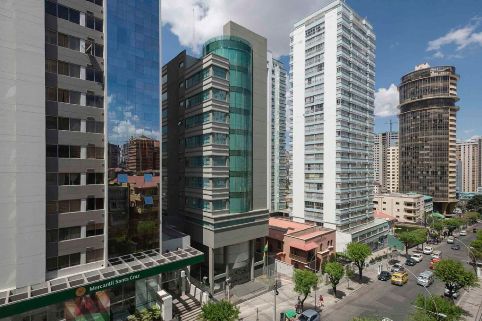
These consumers seek to profit from their savings through property purchases, seeing this business as a way to capitalize on their resources and generate additional income.
“The dollar shortage has made it difficult for some buyers, but the market is moving forward. Many people have found ways to keep buying and selling, adapting to the situation. The market has had to adjust, but there is still interest and movement, even if at a different pace,” said Oliver Viera, president of RE/MAX Bolivia, to La Razón.
For Viera, purchasing property has always been a way to protect capital, especially in uncertain times. He noted that real estate is an investment that tends to remain stable and sometimes even appreciate over time. Moreover, “owning a property can also generate rental income, which is a great benefit for many,” the president of the real estate agency said.
OFFICIAL
He added that most sales are usually based on the official exchange rate, as it is the standard and generates confidence. “However, in some cases, the parties may agree to use another exchange rate if it provides them more peace of mind. Each agreement is unique, depending on what both parties consider fair.”
Although the real estate business remains solid, the Bolivian Chamber of Real Estate Developers (CBDI) believes that exchange rate fluctuations have significantly impacted the real estate sector, particularly in the costs of imported construction materials.
Due to the dollar shortage and additional fees for international transfers, many developers have been forced to review and adjust their business models.
“According to a study by the consulting firm CITRINO, real estate prices in the first half of the year showed no significant variations compared to the previous year. However, it is important to note that the increase in construction material costs, driven by the dollar shortage, will lead to a rise in the prices of new projects to compensate for these additional costs,” said CBDI president Juan Pablo Saavedra.
He stated that in response to this challenge, the CBDI has implemented the Housing Construction Cost Index (ICC-CBDI), which is a key tool for both developers and buyers to understand variations in housing construction costs. This allows prices and payments to be adjusted over time, more effectively mitigating the effects of currency volatility.
Saavedra affirmed that no significant increase in property values has yet been observed, as developers have tried to maintain price stability to meet housing demand.
“However, if economic difficulties persist, we will likely see a moderate adjustment in property values, especially in new projects where the increase in construction costs is more evident.”
An exact percentage cannot yet be specified, but it is a scenario that we are closely monitoring through the Housing Construction Index (ICC-CBDI), he argued.
According to CITRINO’s study, understanding the behavior of real estate asset prices requires a significant distinction between two terms.
One, value: which is the intrinsic component of a property, land, and building. The former, if located in a development area with construction, will become scarce and appreciate, known as added value. Buildings, if properly maintained, can contribute to their appreciation over time.
The price, unlike value, is what the market is willing to pay and depends on the demand’s purchasing power and willingness to buy, as well as the supply of similar properties.
ADDED VALUE
“The value tends to increase (added value) over time, sometimes more rapidly, but the price fluctuates cyclically; there are times when the price is above the value, others below. Therefore, it is very important to know the occupancy cycle of a specific type of asset in a particular region,” explained Julio Valenzuela, founder of Citrino Capitales Inmobiliarios, to La Razón.
He gave the example of the city of Santa Cruz, where the occupancy rate is 94%, meaning that out of every 100 residential properties (houses and apartments), six are unoccupied, very different from the situation in 2016, where 99% were occupied.
This situation means that these assets are in a recession phase generated by overproduction of properties or oversupply.
“Additionally, we need to understand what has happened with the rental values of these assets in foreign currency. We must differentiate this situation in two instances, pre-monetary devaluation and post-devaluation. From 2017 to 2022, rents decreased in real terms by 26%. And from the owner’s perspective, from 2023 to 2024, due to devaluation, the owner receives 21% less in dollars, consolidating a real income loss in dollars of 42% from 2017 to 2024,” Valenzuela added.
According to the interviewees, there is a high possibility of a sharp drop in real estate prices in the medium term in the country due to the existing economic situation, but they always tend to recover after the fall.
Por Rosío Flores, La Razon, Eju.tv:
La crisis del dólar no frena el negocio inmobiliario en Bolivia
A pesar de la incertidumbre económica por la escasez del dólar en el país, una parte significativa de los consumidores de ingresos medios y altos percibe los inmuebles como una oportunidad de inversión.
Estos consumidores buscan rentabilizar sus ahorros mediante la compra de propiedades, pues ven a este negocio como una forma de capitalizar sus recursos y generar ingresos adicionales.
“La escasez de dólares ha hecho que algunos compradores tengan dificultades, pero el mercado sigue adelante. Muchas personas han encontrado maneras de seguir comprando y vendiendo, adaptándose a la situación. El mercado ha tenido que ajustarse, pero sigue habiendo interés y movimiento, aunque sea a un ritmo diferente”, dijo a La Razón el presidente de la agencia inmobiliaria RE/MAX Bolivia, Oliver Viera.
Para Viera, adquirir una propiedad siempre ha sido una forma de proteger el capital, sobre todo en tiempos inciertos. Señaló que los bienes inmuebles son una inversión que tiende a mantenerse estable y a veces incluso a apreciarse con el tiempo. Además, “tener una propiedad también puede generar ingresos por alquiler, lo que es un gran beneficio para muchos”, señaló el presidente de la agencia inmobiliaria.
OFICIAL
Añadió que, normalmente, la mayoría de las ventas se hacen basadas en el tipo de cambio oficial, ya que es el estándar y genera confianza. “Pero, en algunos casos, las partes pueden estar de acuerdo en usar otro tipo de cambio si eso les da más tranquilidad. Cada acuerdo es único, y depende de lo que ambas partes consideren justo”.
Si bien el negocio inmobiliario continúa sólido, la Cámara Boliviana de Desarrolladores Inmobiliarios (CBDI) considera que la fluctuación en el tipo de cambio ha generado un impacto significativo en el sector inmobiliario, particularmente en los costos de los materiales de construcción importados.
Debido a la escasez de dólares y las comisiones adicionales para giros al exterior, muchos desarrolladores se han visto obligados a revisar y ajustar sus modelos de negocio.
“De acuerdo con un estudio realizado por la consultora CITRINO, los precios de los bienes inmuebles en el primer semestre del año no mostraron variaciones significativas en comparación con el año anterior. Sin embargo, es importante destacar que el aumento en los costos de los materiales de construcción, impulsado por la escasez de dólares, llevará a un incremento en los precios de los nuevos proyectos para compensar estos sobrecostos”, señaló a este medio de comunicación el presidente de la CBDI, Juan Pablo Saavedra.
Dijo que, en respuesta a este desafío, la CBDI ha implementado el Índice de Costos de Construcción de Viviendas (ICC-CBDI), que es una herramienta clave para que tanto desarrolladores como compradores puedan entender las variaciones en los costos de construcción de viviendas. Esto permite ajustar los precios y cuotas a lo largo del tiempo, mitigando de manera más efectiva los efectos de la volatilidad cambiaria.
Saavedra afirmó que aún no se ha observado un incremento significativo en el valor de las propiedades, ya que los desarrolladores han tratado de mantener estabilidad en los precios para cumplir con la demanda de viviendas.
“No obstante, si las dificultades económicas persisten, es probable que veamos un ajuste moderado en el valor de las propiedades, especialmente en nuevos proyectos, donde el aumento en los costos de construcción se hace más evidente”.
Aún no se puede precisar un porcentaje exacto, pero es un escenario que estamos monitoreando de cerca a través del Índice de Construcción de Vivienda (ICC-CBDI), argumentó.
Según el estudio de CITRINO, para entender el comportamiento de los precios de los activos inmobiliarios se debe hacer una gran diferenciación entre dos términos.
Uno, el valor: que es el componente intrínseco de un inmueble, tierra y edificación. La primera, si se encuentra en una zona de desarrollo con construcción, se volverá escasa y se valorizará, lo que conocemos como plusvalía. Las edificaciones, si mantenidas adecuadamente podrán aportar a su valoración en el tiempo.
El precio, a diferencia de valor, es lo que el mercado está dispuesto a pagar y este depende de la capacidad de pago y voluntad de compra de la demanda, como también del nivel de oferta de inmuebles similares.
PLUSVALÍA
“El valor tienda a incrementarse (plusvalía) en el tiempo, en ciertos momentos de forma más acelerada, pero el precio fluctúa de forma cíclica, hay momentos que el precio se encuentra por encima del valor, otros por debajo del valor. Por ello es muy importante conocer el ciclo de ocupación de un tipo de activo en una región específica”, explicó a La Razón el fundador de Citrino Capitales Inmobiliarios, Julio Valenzuela.
Puso como ejemplo a la ciudad de Santa Cruz, donde el nivel de ocupación se encuentra en 94%, es decir de cada 100 inmuebles residenciales (casas y departamentos) 6 se encuentran desocupados, muy diferente a la situación del año 2016, donde el 99% se encontraban ocupados.
Esta situación significa que estos activos se encuentran en una fase de recesión generada por una sobre producción de inmuebles o sobre oferta.
“Adicionalmente necesitamos comprender qué ha sucedido con los valores de alquiler de estos activos en moneda extranjera. Debemos diferenciar esta situación en dos instancias, un momento predevaluación monetaria y posterior a la misma. Desde 2017 a 2022, los alquileres se redujeron de forma real un 26%. Y desde la perspectiva del propietario, desde 2023 a 2024, por los efectos de la devaluación, el propietario recibe un 21% menos en dólares. Consolidando una pérdida real de ingresos en dólares de un 42% desde 2017 a 2024”, acotó Valenzuela.
Para los entrevistados, es altamente posible que haya una bajada brusca de los precios de bienes inmuebles en el mediano plazo en el país, debido a la coyuntura económica existente, pero siempre tienden a recuperarse después de la caída.

 Bolivian Thoughts | Pensamientos Bolivianos (Bilingual/Bilingüe)