
Carlos Mesa and Luis Fernando Camacho claim
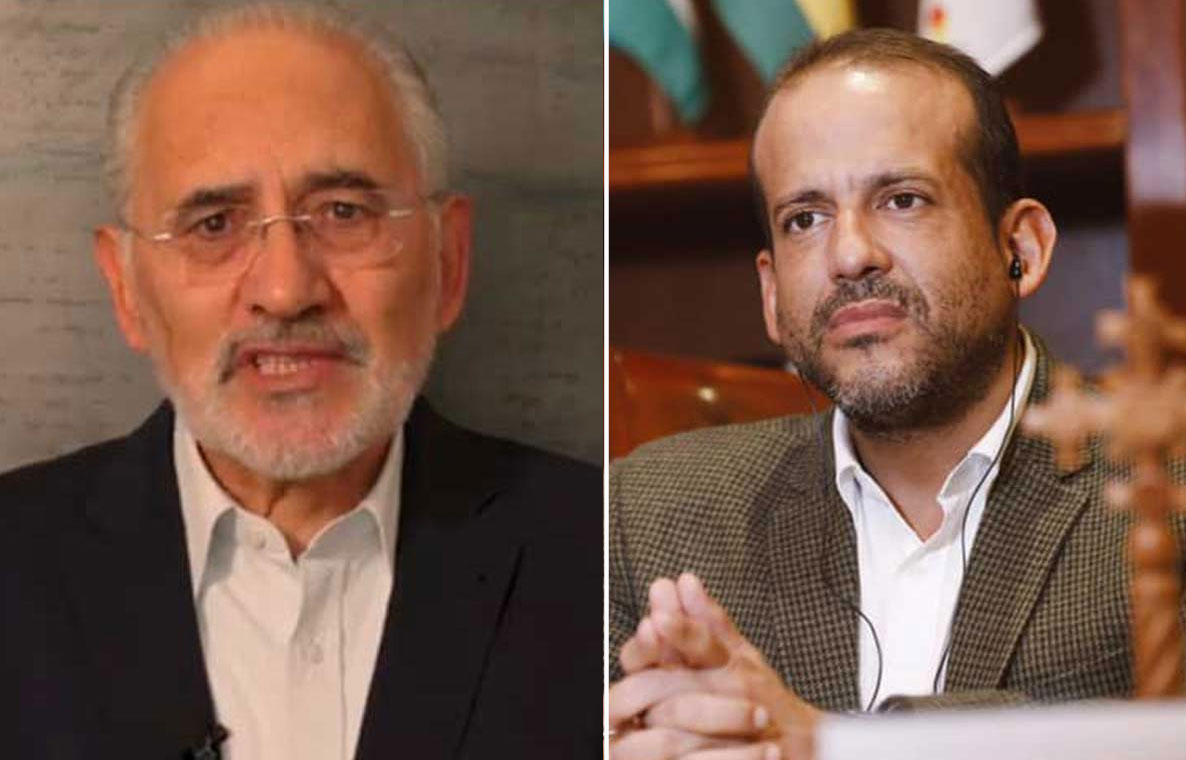
Opposition political leaders Carlos Mesa and Luis Fernando Camacho separately criticized the questions of the referendum officially proposed by President Luis Arce Catacora to the Supreme Electoral Tribunal (TSE).
Carlos Mesa, the head of Comunidad Ciudadana (CC), argued that the referendum not only violates the Constitution but is also a “big deception” because it would delay the application of the results of the Population and Housing Census and the decision of the February 21, 2026 referendum by five years.
Mesa stated that by accepting the consultation, the president refuses to address the urgent issues like the lack of dollars, smuggling, and fuel shortages.
Meanwhile, Camacho, the governor of Santa Cruz, called the referendum a “desperate political measure to hide his irresponsibility in the face of the crisis” the country is going through.
“Our economy is sinking, and instead of taking corrective measures to stop the rise in food prices, the president proposes a referendum that will cost nearly 180 million bolivianos. Another waste typical of masismo,” Camacho said.
According to Camacho, the questions Arce sent to the TSE are about issues that “do not require a referendum to be implemented.”
“The limitation on re-election was already defined by the Bolivian people on February 21, 2016. Continuing to push for a new referendum on this topic is once again trampling on the vote of the Bolivians. Bringing this question to a referendum is an attempt to involve the entire population in an internal political conflict of masismo,” he explained.
Regarding the fuel subsidy, Camacho said it is a technical and economic issue that the President should decide, while the results of the Census should be applied in the redistribution of seats and a new fiscal pact “so that all regions receive more resources.”
“This referendum is an invention by Luis Arce to create more unnecessary political controversies and debates,” Camacho added, asserting that the president cannot call a referendum by decree as it violates the Constitution.
POLITICAL DISTRACTION
Political scientist Marcelo Silva expressed serious criticism about the referendum questions proposed by President Luis Arce Catacora, stating that it is a “lifeline” for an administration besieged by economic problems. According to Silva, the consultation aims to buy time and pass responsibilities to the people due to the government’s inability to make crucial decisions.
“Arce wants to buy time and shift responsibilities to the population because his government is unable to solve problems or make important decisions,” Silva said.
He added that although this referendum is on its way, the questions have serious flaws. “The first question is completely confusing, and the Supreme Electoral Tribunal (TSE) has the authority to clarify what is really being asked. The other two are biased, which is unacceptable in a referendum.”
Silva also pointed out deeper issues in the process, highlighting that two of the proposed questions involve constitutional reforms, an area where the president cannot intervene through a referendum. “The big problem is that this is a kind of distraction, political oxygen in response to calls for early elections in 2025 and critical economic problems,” he said.
Silva questioned the government’s intention to consult the public on issues that “cannot be resolved.” He described this referendum as an irresponsible tactic by the government to avoid direct management of the crisis.
Finally, Silva outlined the referendum process, stating that the TSE has 72 hours to review and correct the questions before submitting them to the Plurinational Constitutional Court (TCP). “We have two filters left: let’s see what the TSE and TCP say about the questions,” he concluded.
THE QUESTIONS
The political scientist warned that the first question is “completely confusing.” It asks: “Do you agree that the constitutionally established re-election of the President and Vice President of the State, which is limited to once consecutively, should be extended to allow for non-consecutive re-election, which would imply modifying the Constitution?” “The TSE has the authority to clarify what is really being asked,” Silva said.
He cautioned that the other two questions “are biased.” “One of the fundamental requirements for drafting a referendum question is that it must be impartial and clear. The two following questions are leading, which cannot be done in a referendum question.”
Additionally, Silva emphasized the importance of the first and fourth questions, both of which involve constitutional reform. “The president does not have the authority to invoke constitutional reform through a referendum, especially by supreme decree,” he clarified.
BY DECREE
Justice Minister Iván Lima announced that the referendum would be called by presidential decree and that the process must be completed by August 31 to hold the referendum on December 1, the same day as the judicial elections.
“After the Electoral Tribunal comments on the letter we sent and returns the process to us, President Luis Arce will submit this consultation to the Plurinational Constitutional Court (TCP). Therefore, the highest interpreter of the Constitution will also comment on this procedure,” Minister Lima stated.
“The TSE president will speak, and then the TCP will speak. Once these two bodies have analyzed and reviewed the questions we have formulated, the Arce administration will issue a Supreme Decree that will be submitted to the TSE, completing the legal process under Law 026,” explained Minister Lima.
The Minister emphasized the importance of meeting legal deadlines. “This process must be completed by August 31. We cannot exceed that deadline. The TSE and the TCP must speak by the end of the week,” Lima stated.
Lima urged the TCP to expedite its review. “The TCP has 15 days, but we urge them to take less time. If they take the full 15 days, we would be delayed and unable to hold the referendum on December 1,” the Justice Minister said.
Finally, Minister Lima emphasized the government’s commitment to the popular consultation. “We will not engage in a debate over who has better ideas because the law has an authorized voice. The TSE, as the highest electoral authority, and the TCP, as the highest constitutional interpreter, will speak, and the President will respect that judgment in issuing the decree.” (Erbol/Brújula Digital)
Carlos Mesa y Luis Fernando Camacho afirman
Los líderes políticos de oposición Carlos Mesa y Luis Fernando Camacho cuestionaron ayer, por separado, las preguntas del referéndum planteadas oficialmente por el presidente del Estado, Luis Arce Catacora, ante el Tribunal Supremo Electoral (TSE).
El jefe de Comunidad Ciudadana (CC), Carlos Mesa, consideró que la consulta no solo viola la Constitución Política del Estado (CPE) sino que es un “gran engaño” porque postergaría por cinco años la aplicación de los resultados del Censo de Población y Vivienda y de la decisión del referéndum del 21 de febrero de 2026.
Al aceptar la consulta, Mesa dijo que el mandatario se niega a cumplir con la “urgencia debida, la indeclinable responsabilidad que le corresponde de enfrentar la falta de dólares, el contrabando y el desabastecimiento de carburantes”.
Mientras que el gobernador cruceño consideró que el referendo convocado por es una “medida política desesperada para ocultar su irresponsabilidad ante la crisis” que atraviesa el país.
“Nuestra economía se está hundiendo y en lugar de tomar medidas correctivas que tengan el efecto de parar la subida del precio de los alimentos, el presidente propone un referendo que costará cerca de 180 millones de bolivianos. Un despilfarro más típico del masismo”, sostuvo.
Según Camacho, las preguntas que envió Arce al TSE, son temas que “no necesitan un referendo para aplicarse”.
“La limitación a la reelección ya la definió el pueblo boliviano el 21F de 2016. Seguir insistiendo con un nuevo referendo sobre este tema es pisotear nuevamente el voto de los bolivianos. Llevar esta pregunta a referendo es intentar inmiscuir a todo el pueblo en un conflicto político interno del masismo”, explicó.
Sobre la subvención de combustibles, dijo que es un tema técnico y económico que le corresponde definirlo al Presidente, mientras que los resultados del Censo deben aplicarse en la redistribución de escaños y en un nuevo pacto fiscal “para que todas las regiones reciban más recursos”.
“Este referendo es un invento de Luis Arce para generar más controversias y debates políticos innecesarios”, añadió Camacho a tiempo de asegurar que el mandatario no puede convocar por decreto a un referendo ya que vulnera la Constitución.
DISTRACCIÓN POLÍTICA
El politólogo, Marcelo Silva, expresó serias críticas sobre las preguntas del referendo por parte del presidente del Estado, Luis Arce Catacora, señalando que se trata de una “tabla de salvación” para una gestión asediada por problemas económicos. Según Silva, la consulta tiene como objetivo ganar tiempo y traspasar responsabilidades al pueblo ante la incapacidad del gobierno de tomar decisiones cruciales.
“Lo que quiere hacer Arce, aparte de ganar tiempo, es traspasar responsabilidades a la población en la imposibilidad de su gobierno de solucionar problemas o tomar decisiones en temas importantes», afirmó Silva.
Añadió que este referendo, aunque encaminado a consolidarse, presenta serias deficiencias en las preguntas propuestas. “La primera pregunta es completamente confusa, y el Tribunal Supremo Electoral (TSE) tiene la atribución de clarificar qué es lo que realmente se quiere preguntar. Las otras dos tienen un carácter tendencioso, lo cual es inaceptable en un referendo”.
Silva también advirtió sobre los problemas de fondo en el proceso, subrayando que dos de las preguntas propuestas implican reformas constitucionales, un ámbito en el que el presidente no tiene la atribución de intervenir a través de un referendo. “El gran problema es que esto es una especie de distracción, oxígeno político en función de pedidos de anticipar las elecciones del 2025 y ante problemas críticos en el ámbito económico”, señaló.
El politólogo también cuestionó la intención del Gobierno de consultar al pueblo sobre temas que “no se van a poder resolver”. En su análisis, describió este referendo como una táctica irresponsable por parte del gobierno para evadir la gestión directa de la crisis.
Finalmente, Silva explicó el procedimiento que seguirá el referendo, indicando que el TSE tiene 72 horas para revisar y corregir las preguntas antes de remitirlas al Tribunal Constitucional Plurinacional (TCP). «Nos faltan dos tamices: veremos qué dice el TSE y qué dice el TCP en torno al carácter de las preguntas», concluyó.
LAS PREGUNTAS
El politólogo advirtió que la pregunta uno es “completamente confusa”. ¿Está usted de acuerdo en que la reelección establecida constitucionalmente por una sola vez de manera continua del Presidente y Vicepresidente del Estado, sea ampliada para incorporar la reelección de manera discontinua lo cual implicaría modificar la Constitución Política del Estado? “El TSE tiene la atribución de clarificar qué es lo que realmente se quiere preguntar”, afirmó Silva.
Advirtió que las otras dos “tienen un carácter tendencioso”. “Uno de los requisitos fundamentales para elaborar una pregunta en un referendo es que sea imparcial y clara. Las dos preguntas (siguientes) marca una tendencia a que la gente vote y eso no se puede hacer en una pregunta del referendo”.
Además, dijo que “el tema de fondo” se encuentra en las preguntas 1 y 4. “Ambas tienen un carácter de reforma constitucional y el presidente no tiene la atribución de invocar una reforma constitucional mediante un referendo menos, por un decreto supremo”, precisó.
POR DECRETO
El ministro de Justicia, Iván Lima, anunció que la convocatoria para el referéndum será realizada por decreto presidencial y que el trámite debe concluir antes del 31 de agosto para que la consulta se realice el primero de diciembre, el mismo día de las elecciones judiciales.
“Después de que el Órgano Electoral se pronuncie respecto a la carta que hemos enviado y nos devuelvan el trámite, el Presidente Luis Arce mandará esta consulta al Tribunal Constitucional Plurinacional (TCP). Por tanto, el máximo intérprete de la Constitución también se va a pronunciar en este procedimiento que iniciamos”, declaró el ministro Lima.
“Hablará el TSE a la cabeza de su presidente y luego hablará el TCP. Cuando terminen estas dos instancias de analizar y revisar estas preguntas que hemos formulado, al final del trámite el Gobierno del Presidente Arce emitirá un decreto Supremo que será remitido ante el TSE, concluyendo el trámite que señala la norma legal, la Ley 026,” explicó el Ministro Lima.
El Ministro subrayó la importancia de cumplir con los plazos legales establecidos. “Este trámite tiene que ser concluido antes del 31 de agosto. No podemos excedernos de ese plazo. La fecha límite que tenemos para que el TSE hable y el TCP emita la sentencia es la próxima semana,” afirmó Lima.
Además, Lima hizo un llamado al TCP para acelerar su revisión. “El TCP tiene 15 días, pero le exhortamos que, una vez que mandemos la pregunta, puedan tomar menos tiempo. Si ellos tomaran los 15 días, estaríamos desfasados y no podríamos realizar el referéndum el 1 de diciembre,” expresó el Ministro de Justicia.
Finalmente, el Ministro Lima enfatizó el compromiso del Gobierno con la consulta popular. “No vamos a entrar en una discusión de un principio tan importante como es consultarle al pueblo. El pueblo debe ser escuchado y no tiene sentido que entremos en un debate sobre quién tiene mejores ideas, porque la ley ya tiene una voz autorizada. Hablará el TSE, que es la máxima instancia de la justicia electoral; hablará el TCP, que es la máxima instancia de interpretación constitucional, y el Presidente respetará ese criterio al emitir el decreto”. (Erbol/Brújula Digital)

 Bolivian Thoughts | Pensamientos Bolivianos (Bilingual/Bilingüe)