
By Raúl Domínguez El Deber:
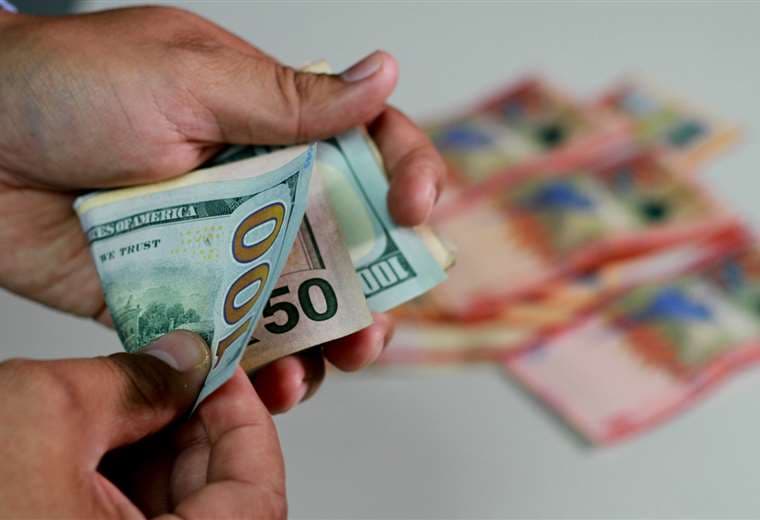
In recent months, the website bolivianblue.com has gained notoriety. Salomón Eid clarifies that its exchange rates are based on cryptocurrencies.
Starting the weekend, the price of the dollar in the black or parallel market, due to the now normalized shortage, had exceeded Bs 11 in some cities in the country, such as Oruro, which has a strong link with trade from Chile. In Santa Cruz, this Sunday, the US dollar surpassed Bs 10.50, and the trend is upward.
As in Argentina, the parallel dollar in Bolivia is already beginning to be called ‘blue’ – in the neighboring country there are up to five exchange rates – and in recent months websites have even emerged that provide exchange rates for the Bolivian ‘blue’ dollar.
The lawyer specialized in banking and finance, Salomón Eid, analyzed the data from the website bolivianblue.com and found that the rate it provides is not based on the value of dollars on the street but on cryptocurrencies whose value is tied to the dollar. The website quotes the “Boliviano Blue” this Sunday at Bs 10.01 for buying and Bs 10.17 for selling.
“This website offers updated information on the blue dollar price compared to the boliviano. With a simple interface, it shows an updated blue dollar buy and sell rate every few minutes. Not much more,” Eid highlighted.
According to the expert, bolivianblue.com solved the problem of the lack of official or unofficial easily accessible information on the price of the parallel dollar in Bolivia, though nothing extraordinary. “Here’s the interesting part: the website gained so much notoriety that it went from being a curiosity site to being the reference for the unofficial dollar in the country. If you ask someone the dollar price, they probably got it from this website,” he noted.
He emphasized that a large number of businesses, traders, tourists, and citizens are making daily decisions based on the information from this website. It is even being used as a reference for the purchase of products such as cars and cell phones.
Eid highlighted that the problem lies in the risks, which he enumerates:
- Risk 1: The rate on bolivianblue.com is not based on the value of dollars on the street but on cryptocurrencies whose value is tied to the dollar. Two very different things.
- Risk 2: The cryptocurrency used to calculate these rates, USDT, has limited availability in Bolivia, so the blue dollar price does not reflect the availability of dollars in the country but the availability of USDT. Two very different things.
- Risk 3: People use this website’s reference without necessarily being aware of these factors when making decisions, although the website warns about it.
“I find it fascinating how a website with few data points can generate such interesting dynamics. Far from criticizing this effort, I believe that society should seek to be better informed, and the purpose of my research is to generate a conversation on these topics,” Eid concluded.ación es generar una conversación sobre estos temas”, concluyó Eid.
Por Raúl Domínguez El Deber:
En los últimos meses ha cobrado notoriedad la página bolivianblue.com. Salomón Eid aclara que sus cotizaciones se basan en criptomonedas
Iniciando el fin de semana, el precio del dólar en el mercado negro o paralelo, a raíz de la ya normalizada escasez, había sobrepasado los Bs 11 en algunas ciudades del país, como Oruro, que tiene un fuerte vínculo con el comercio que llega desde Chile. En Santa Cruz, este domingo, la moneda estadounidense sobrepasaba los Bs 10,50 y la tendencia es a la subida.
Como en Argentina, en Bolivia ya se empieza a denominar al dólar paralelo como ‘blue’ -en el país vecino existen hasta cinco tipos de cambio- y en los últimos meses incluso han surgido sitios o páginas en internet que se dedican a brindar cotización sobre el dólar ‘blue’ boliviano.
El abogado especializado en banca y finanzas, Salomón Eid, analizó los datos de la página web bolivianblue.com y evidenció que la cotización que brinda no se basa en el valor de dólares en la calle, sino en criptomonedas cuyo valor está atado al dólar. La página cotiza este domingo el “Boliviano Blue” en Bs 10,01 para la compra y Bs 10,17 para la venta.
“Esta web ofrece información actualizada del precio del dólar blue en comparación con el boliviano. Con una interfaz simple, muestra una cotización de venta y compra de dólar blue actualizada cada pocos minutos. No mucho más”, resaltó Eid.
Según el experto, bolivianblue.com resolvió el problema de falta de información oficial o extraoficial de fácil acceso sobre el precio del dólar paralelo en Bolivia, aunque nada extraordinario. “Aquí viene lo interesante: la página ganó tanta notoriedad que pasó de ser un sitio de curiosidad a ser la referencia del dólar extraoficial del país. Si le preguntas a alguien el precio del dólar, probablemente lo sacó de esta web”, indicó.
Resaltó que una gran cantidad de negocios, comerciantes, turistas y ciudadanos están tomando decisiones diarias basadas en la información de esta web. Incluso se está tomando como referencia para la compra de productos como autos y celulares.
Eid subrayó que el problema se encuentra en los riesgos, y los enumera:
– Riesgo 1: La cotización de bolivianblue.com no se basa en el valor de dólares en la calle, sino en criptomonedas cuyo valor está atado al dólar. Dos cosas muy diferentes.
– Riesgo 2: La criptomoneda usada para calcular estas cotizaciones, USDT, tiene una disponibilidad limitada en Bolivia, por lo que el precio del dólar blue no refleja la disponibilidad de dólares en el país, sino la disponibilidad del USDT. Dos cosas muy diferentes.
– Riesgo 3: Las personas usan la referencia de esta web sin estar necesariamente al tanto de estos factores cuando toman decisiones, aunque la web lo advierte.
“Me parece fascinante cómo una web con pocos datos puede generar dinámicas tan interesantes. Lejos de criticar este esfuerzo, creo que la sociedad debe buscar estar mejor informada, y el propósito de mi investigación es generar una conversación sobre estos temas”, concluyó Eid.

 Bolivian Thoughts | Pensamientos Bolivianos (Bilingual/Bilingüe)
I think the exchange rate of USDT to BOB is a may better measurement of the unofficial rate than the one “from the streets”. The street rate is different in every street, let alone city because of the high friction associated with transferring physical money. In comparison, USDT traded on P2P exchanges is a lot more direct and produces a more efficient market, which is way better at price discovery.
PS: It seems like the new page tracking this is http://www.BolivinBlue.net