
Brújula Digital:
Milenio warns of a decline in the economy and a fiscal deficit above 12%
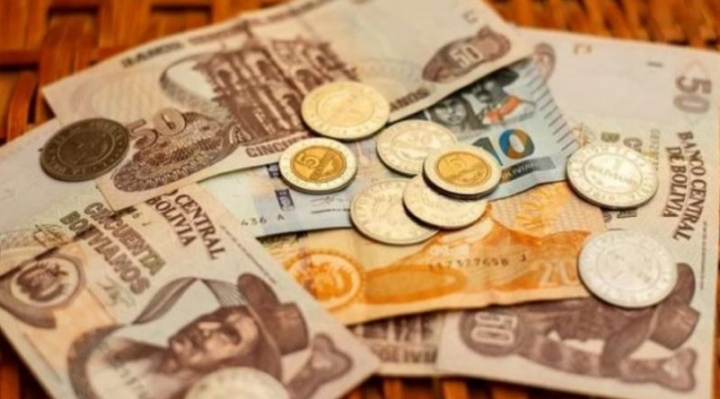
Photo: Social Networks
The Milenio Foundation warned of a “risky trend of economic decline” in the country and a “worsening of fiscal, monetary, exchange and financial imbalances.” It considers that the fiscal deficit could be above 12% of GDP (US$ 5 billion) and to avoid catastrophic situations, it proposes a change in the development model to attract investment and other measures.
The “Report on the Bolivian Economy 2024” published by the foundation ensures that the immediate and medium-term prospects for Bolivia’s economy “are not favorable.” This is due to the fall in exports and the depletion of the international reserves of the Central Bank of Bolivia (BCB), which generated negative effects on economic activity.
In 2023, the public debt increased by $us 5,436 million, reaching a total stock of $us 36,296 million, which is equivalent to 81% of GDP. 37% corresponds to external debt and 73% to internal debt. The report highlights that the absolute amount of the increase of US$5,436 million represents 12.1% of GDP, which could be “an indicator of the real level of fiscal deficit during the last year.”
Monetary policy continued to be subordinated to fiscal policy and was focused on financing the fiscal deficit on behalf of the Central Bank of Bolivia (BCB). The increase in credit to the public sector impacted international reserves, so that monetary emission remained under control.
“Current conditions are different, particularly due to the depletion of the RINs. In 2023, the BCB’s net credit to the public sector increased 93%, while reserves fell 18.4%, and the monetary supply increased 9%. If this trend continues, pressure will be generated to depreciate the exchange rate,” Milenio warns.
The document details that the fall in hydrocarbon production, the increase in internal demand “collides” with the lack of foreign currency. “Which generates a shortage of these products in the markets, while protests and pressures grow in the streets, (…) social conflict that interferes with business,” the study warns.
Foreign trade
The document details that in 2023 the value of exports of goods decreased 21% compared to 2022 and the trade deficit stood at 2.6% of GDP. As of March of this year, exports fell 8%. Imports fell 16%, partly due to the shortage of foreign currency. The trade balance shows a deficit of $us 456.1 million, which exceeds the deficit registered in the first three months of the previous year.
The Bolivian economy also suffered the impact of international interest rates, which increase the cost of external debt.
The proposal
The Milenio Foundation proposes to reduce the fiscal deficit due to the “large and inefficient” fuel subsidies, excess public employment, and the situation of financial disaster in state companies.
It proposes restoring the independence of the BCB and the professionalization of its officials. “The validity of Art. 22 of the Central Bank Law, which prohibits it from making loans to the public sector, must be restored,” the document suggests.
It aims to promote non-traditional exports because they have greater potential for expansion in the short term, especially food. It also suggests negotiating a financing program with the International Monetary Fund (IMF) to obtain fresh resources to alleviate reserves and the shortage of foreign currency.
BD/RED
Brújula Digital:
Milenio advierte caída de la economía y un déficit fiscal por encima del 12%
Foto: RRSS
La Fundación Milenio advirtió una “riesgosa tendencia de caída económica” del país y un “agravamiento de los desequilibrios fiscales, monetarios, cambiarios y financieros”. Considera que el déficit fiscal podría estar por encima del 12% del PIB (US$ 5 mil millones) y para evitar situaciones catastróficas propone un cambio de modelo de desarrollo para atraer inversión y otras medidas.
El “Informe sobre la Economía de Bolivia 2024” publicado por la fundación asegura que las perspectivas inmediatas y de mediano plazo de la economía de Bolivia “no son favorables”. Esto se debe a la caída de las exportaciones y al agotamiento de las reservas internacionales del Banco Central de Bolivia (BCB), lo que generó efectos negativos en actividad económica.
En 2023, la deuda pública aumentó en $us 5.436 millones, llegando a un stock total de $us 36.296 millones lo que equivale al 81% del PIB. El 37% corresponde a la deuda externa y 73% a la deuda interna. El informe subraya que el monto absoluto del incremento $us 5.436 millones representa el 12.1% del PIB que podría ser “un indicador del nivel real de déficit fiscal durante el último año”.
La política monetaria continuó subordinada a la fiscal y estuvo centrada en financiar el déficit fiscal por cuenta del Banco Central de Bolivia (BCB). El incremento del crédito al sector público impactó en las reservas internacionales, de manera que la emisión monetaria se mantuvo bajo control.
“Las condiciones actuales son diferentes, particularmente por el agotamiento de las RIN. En 2023 el crédito neto del BCB al sector público aumentó 93%, mientras que las reservas caían 18.4%, y la masa monetaria aumentaba 9%. De continuar esta tendencia se generarán presiones para depreciar el tipo de cambio”, alerta Milenio.
El documento detalla que la caída de la producción de los hidrocarburos, el incremento de la demanda interna “choca” con la falta de divisas. “Lo que genera escasez de estos productos en los mercados, a la vez que crecen las protestas y presiones en las calles, (…) la conflictividad social que interfiere los negocios”, advierte el estudio.
Comercio exterior
El documento detalla que en 2023 el valor de las exportaciones de bienes se redujo 21% respecto de 2022 y el déficit comercial se situó en 2.6% del PIB. A marzo de este año, las exportaciones cayeron un 8%. Las importaciones se redujeron 16%, en parte por la escasez de divisas. El balance comercial arroja un déficit de $us 456,1 millones, que supera el déficit registrado en los primeros tres meses del año anterior.
La economía boliviana también sufrió el impacto de las tasas de interés internacional, que incrementan el costo del endeudamiento externo.
La propuesta
La Fundación Milenio propone reducir el déficit fiscal debido a los subsidios “cuantiosos e ineficientes” a los carburantes, el exceso de empleo público, la situación de descalabro financiero en las empresas estatales.
Propone restituir la independencia del BCB y la profesionalización de sus funcionarios. “Se debe restablecer la vigencia del Art. 22 de la Ley del Banco Central que le prohíbe hacer préstamos al sector público”, sugiere el documento.
Apunta a fomentar las exportaciones no tradicionales porque poseen un mayor potencial de expansión en el corto plazo, sobre todo de alimentos. También sugiere negociar un programa de financiamiento con el Fondo Monetario Internacional (FMI) para obtener recursos frescos que alivien las reservas y la escasez de divisas.
BD/RED

 Bolivian Thoughts | Pensamientos Bolivianos (Bilingual/Bilingüe)