
El Deber:
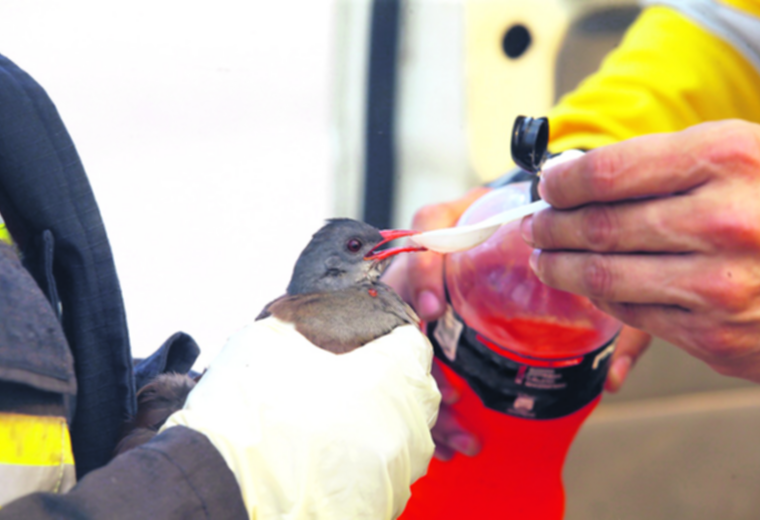
Until September, the Care and Referral Center (CAT) of the Santa Cruz Governorate hosted almost a hundred and a half birds, monkeys, foxes, etc. In the Senda Verde Custody Center alone there are already a thousand specimens of various species
The onslaught of the fire, which destroys the vegetation, also hurts the fauna. Although those interviewed agreed that in recent times there have been fewer cases of animals burned or suffocated by smoke, unlike in 2019, these continue to be part of the painful panorama that seems to be normalized in front of everyone of the authorities on duty.
The fauna is not only affected by the flames, but also by petism and wildlife trafficking, despite the current regulations, the Political Constitution of the State (CPE), the Penal Code that contemplates the figure of biocide, the article 11 of Law 1333, and Supreme Decree 4489.
According to Sofía Bello, veterinarian at the Wildlife Care and Custody Center (CAD) of the Santa Cruz Governorate, until September of this year, 132 animals were housed in that place, 80% birds, and some neonates.
Although the majority arrived as a result of traffic and pet behavior, she acknowledged that especially the newborns, such as a three-day-old sloth and three foxes, arrived due to the fires.
“Those most affected by fires are always reptiles. We also have monkeys, badgers, foxes, sloths, tamanduas (anteaters), deer, but there are more birds. We have amazons, which are the talkative parrots, the macaws because they are the most commercialized, along with the myopsittas, which are the lead-breasted parrots,” she said.
Bello acknowledged that for the myopsittas there is no project that allows them to be reintegrated, as they are an invasive species of crops, and that they are the ones that are sold the most in the markets. “We get up to 80 parrots in a cardboard box, one on top of the other, mixed alive and dead, the infection is terrible,” she explained.
Likewise, she acknowledged that the strong winds, added to the high temperatures, have left many birds injured.
Bello also said that in Santa Cruz there are around 30 custody centers, to which animals are referred, but that at most four or five have capacity for larger animals, such as jaguars or pumas. “There are few of them, not only because of the danger to humans, but also because of the cost, for example a puma eats 2.5 kilos of meat a day and not everyone has that possibility,” she accepted.
Saturation
Only in Senda Verde, a custody center in the yungas of La Paz, there are already 1,100 animals housed, of 70 species, including jaguars.
“We do not receive burned animals, unfortunately most of them do not manage to escape the fires,” she acknowledged.
Antonio Cajías, active environmentalists and founder of The Voice of Nature, pointed out that the experience of 2019 has shown that there is no coordination between the national, departmental and municipal levels with respect to the rescue and rescue of wildlife affected by fires, which mainly They develop in Chiquitania, Amazonia and Chaco, the most affected ecoregions.
TO KNOW
INSPECTION
Custody centers are supervised by public authorities, but they do not receive fixed injection of resources so that they can sustain themselves.
VOLUNTEERING
Antonio Cajías said that many of the efforts to cure, save, rescue wildlife are the result of the work of environmentalists, NGOs,
independent veterinarians, and even from the custody centers themselves.
Hasta septiembre, el Centro de Atención y Derivación (CAT) de la Gobernación cruceña acogía a casi un centenar y medio de aves, monos, zorros, etc. Solamente en el Centro de Custodia Senda Verde ya hay mil ejemplares de diversas especies
El embate del fuego, que arrasa con la vegetación, también hiere a la fauna. Si bien los entrevistados coincidieron que en el último tiempo se vieron menos casos de animales quemados o asfixiados por el humo, a diferencia de 2019, estos siguen siendo parte del doloroso panorama que parece normalizarse a vista y paciencia de las autoridades de turno.
La fauna no solamente es afectada por las llamas, sino también por el mascotismo y por el tráfico de vida silvestre, a pesar de la normativa vigente, la Constitución Política del Estado (CPE), el Código Penal que contempla la figura del biocidio, el artículo 11 de la Ley 1333, y el Decreto Supremo 4489.
Según Sofía Bello, veterinaria del Centro de Atención y Custodia de Vida Silvestre (CAD) de la Gobernación cruceña, hasta septiembre de este año, en ese lugar tenían albergados a 132 animales, un 80% aves, y algunos neonatos.
Aunque la mayoría arribó como consecuencia del tráfico y por mascotismo, reconoció que sobre todo los neonatos, como por ejemplo un perezoso de tres días de nacido, y tres zorros, llegaron por los incendios.
“Los más afectados por incendios siempre son reptiles. También tenemos monos, tejones, zorros, perezosos, tamandúas (oso hormiguero), ciervos, pero hay más aves. Tenemos amazonas, que son los loros habladores, las parabas porque son las más comercializadas, junto con las myopsittas, que son las cotorras pecho plomo”, dijo.
Bello reconoció que para las myopsittas no hay un proyecto que permita reintegrarlas, al ser una especie invasora de cultivos, y que son las que más se venden en los mercados. “Las cotorritas nos llegan hasta 80 en una caja de cartón, una encima de la otra, mezcladas vivas y muertas, la infección es terrible”, explicó.
Asimismo, reconoció que los vientos fuertes, sumados a las fuertes temperaturas, han dejado como saldo muchas aves heridas.
Bello, además, dijo que en Santa Cruz hay alrededor de 30 centros de custodia, a los que se derivan los animales, pero que a lo mucho unos cuatro o cinco tienen capacidad para animales mayores, como jaguares o pumas. “Son pocos, no solo por el peligro para el ser humano, sino por el costo, por ejemplo un puma come 2,5 kilos de carne al día y no todos tienen esa posibilidad”, aceptó.
Saturación
Solo en Senda Verde, un centro de custodia en los yungas de La Paz, ya suman 1.100 los animales albergados, de 70 especies, incluidos jaguares.
“No recibimos animales quemados, la mayor parte lamentablemente no logra escapar de los incendios”, reconoció.
Antonio Cajías, ambientalistas activo y fundador de La voz de la naturaleza, apuntó a que la experiencia de 2019 ha demostrado que no existe coordinación entre los niveles nacional, departamental y municipal con respecto al rescate y salvataje de fauna silvestre afectada por incendios, que principalmente se desarrollan en Chiquitania, Amazonía y Chaco, las ecorregiones más afectadas.
PARA SABER
FISCALIZACIÓN
Los centros de custodia son fiscalizados por las instancias públicas, pero no reciben una inyección de recursos fija para que puedan sostenerse.
VOLUNTARIADO
Antonio Cajías dijo que muchos de los esfuerzos para curar, salvar, rescatar a la vida silvestre, es resultado de la labor de ambientalistas, ONG,
veterinarios independientes, e incluso de los mismos centros de custodia.

 Bolivian Thoughts | Pensamientos Bolivianos (Bilingual/Bilingüe)