
Cristina Cotari, Los Tiempos:
Experts: Drought will last a decade in Cochabamba and will dry up southern rivers
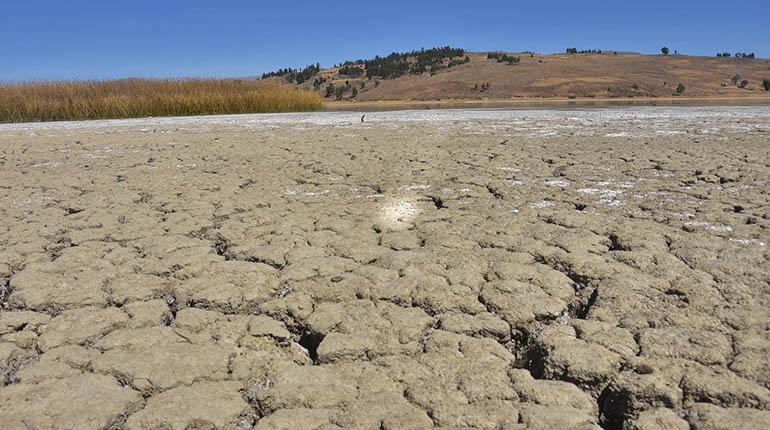 The Parco Qhocha de Vacas lagoon, in the high valley, turned into a desert. | Daniel James
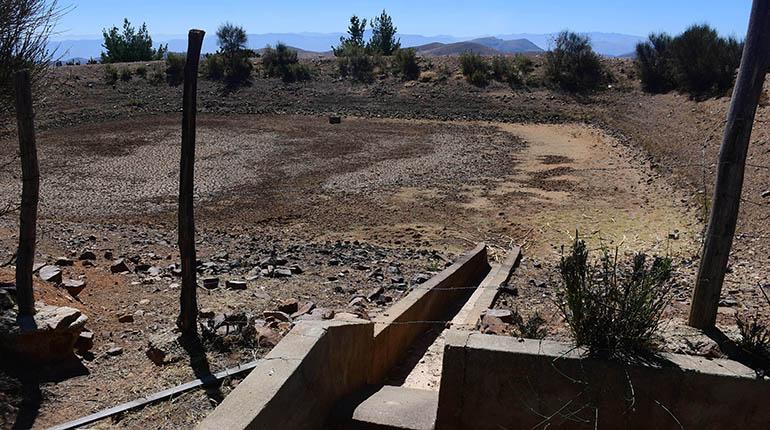 A dried dew pond on Anzaldo. | Carlos López
 The low water level in La Angostura. | Carlos López
Cochabamba will endure prolonged periods of drought in the next 10 years due to the lack of rain, due to the El Niño phenomenon, according to experts. The lack of rainfall will mainly affect the southern cone region, where the flow of some rivers has already been reduced by up to 10 percent, according to specialists.
The forecasts were shared yesterday at the launch of the Departmental Water Summit, which seeks to coordinate actions to face the climate crisis and drought. The activity was organized by the Government and the international organization Water For People.
The researcher and representative of the Bolivian Association of Sanitary Engineering, Mauricio Villazón, indicated that, in the next decade, the department “will probably have significant droughts” and that the lack of rain will cause “variability” in the climate.
“Currently, we are semi-arid due to the rainfall we have, but we will become more arid in the inter-Andean valleys,” he said.
The expert made the projections through the analysis of the amount of annual rainfall reported by the National Meteorology and Hydrology Service (Senamhi) since 1950.
He explained that El Niño hit the department with severe droughts in 1983, in 1994, in 1997 and in 2015.
He said the situation in 2023 could be worsened by climate change, the effects of gases and the repercussions of global warming.
Meanwhile, the researcher and associate of the Stockholm Environment Institute (SEI), Gustavo Ayala, indicated that in the update of the country’s water balance it was detected that in Cochabamba the flow of the Mizque River, in the southern cone, has decreased.
“This is a challenge for people who are working to size infrastructure projects such as dams, irrigation systems, because eventually you have to enter those areas very carefully so as not to overestimate the flow,” he pointed out.
Governor Humberto Sánchez reported that, to date, 19 municipalities have declared themselves in emergency and three in disaster due to the lack of water for consumption and irrigation. For this reason, the possibility of a departmental emergency declaration is being analyzed.
Among the alternatives to alleviate the drought, the Government proposed resuming the cloud bombing proposal, but the technical aspects are still being debated, according to the Director of Irrigation, Ronald Equilea.
Alternatives to mitigate water scarcity will be discussed at the Water Summit, which will take place on September 28 and 29.
Producers
The manager of the Agricultural Chamber, Rolando Morales, commented that the Departmental Legislative Assembly was requested to declare a disaster due to drought, in order to channel economic resources to deal with projects and thus guarantee access to water resources for the population.
Expertos: Sequía durará una década en Cochabamba y secará ríos del sur
- La laguna Parco Qhocha de Vacas, en el valle alto, convertida en un desierto. | Daniel James
- Un atajado seco en Anzaldo. | Carlos López
- El bajo nivel de agua en La Angostura. | Carlos López
Cochabamba soportará prolongados periodos de sequía en los próximos 10 años por la falta de lluvias, debido al fenómeno de El Niño, según los expertos. La escasez de precipitaciones afectará, principalmente, a la región del cono sur, donde el caudal de algunos ríos ya se redujo hasta un 10 por ciento, de acuerdo a los especialistas.
Los pronósticos fueron socializados ayer en el lanzamiento de la Cumbre Departamental de Agua, que busca concertar acciones para enfrentar la crisis climática y la sequía. La actividad fue organizada por la Gobernación y la organización internacional Water For People.
El investigador y representante de la Asociación Boliviana de Ingeniería Sanitaria, Mauricio Villazón, indicó que, en la próxima década, el departamento “probablemente tendrá sequías importantes” y que la falta de lluvias ocasionará “variabilidad” en el clima.
“Actualmente, somos semiáridos por las precipitaciones que tenemos, pero pasaremos a ser más áridos en los valles interandinos”, dijo.
El experto hizo las proyecciones a través del análisis de la cantidad de precipitaciones anuales que reportó el Servicio Nacional de Meteorología e Hidrología (Senamhi) desde 1950.
Detalló que El Niño golpeó con agudas sequías al departamento en 1983, en 1994, en 1997 y en 2015.
Dijo que la situación en 2023 podría agravarse por el cambio climático, los efectos de los gases y las repercusiones del calentamiento global.
Entre tanto, el investigador y asociado del Instituto de Medio Ambiente de Estocolmo (SEI), Gustavo Ayala, indicó que en la actualización del balance hídrico del país se detectó que en Cochabamba el caudal del río Mizque, en el cono sur, ha disminuido.
“Esto es un desafío para las personas que están trabajando para dimensionar proyectos de infraestructura como represas, sistemas de riego, porque eventualmente hay que ingresar con mucho cuidado a esas zonas para no sobrestimar el caudal”, puntualizó.
El gobernador Humberto Sánchez informó que, a la fecha, 19 municipios se han declarado en emergencia y tres en desastre por la falta de agua para consumo y riego. Por ello, se analiza la posibilidad de una declaratoria de emergencia departamental.
Entre las alternativas para paliar la sequía desde la Gobernación se planteó retomar la propuesta del bombardeo de nubes, pero aún se debaten los aspectos técnicos, de acuerdo al director de Riegos, Ronald Equilea.
Las alternativas para mitigar la escasez de agua se debatirán en la Cumbre del Agua, que se llevará a cabo el 28 y 29 de septiembre.
Productores
El gerente de la Cámara Agropecuaria, Rolando Morales, comentó que se solicitó a la Asamblea Legislativa Departamental que declare desastre por sequía, a fin de canalizar recursos económicos para atender con proyectos y así garantizar el acceso a los recursos hídricos a la población.

 Bolivian Thoughts | Pensamientos Bolivianos (Bilingual/Bilingüe)