
Editorial, Los Tiempos:
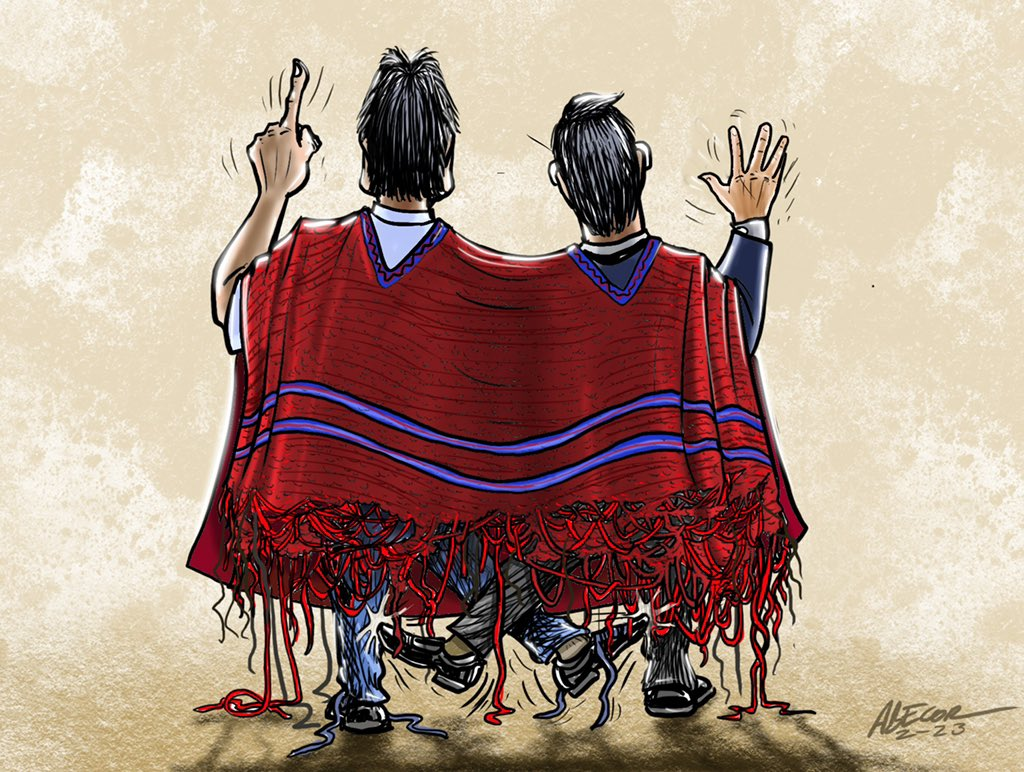
The open struggle between the two factions of the MAS —evistas, radicals and arcistas, renovators— has been going on for nearly 18 months, during which there are episodes of resurgence and others, less numerous, of a kind of temporary reconciliation, for specific reasons that are far from permanent and tends to last for at least several more months.
The question, with a random answer, is how long and how far will the intra-party struggle continue?
The least possible hypothesis —considering that the reason for the conflict is who will be the MAS presidential candidate for the 2025 general elections— is that the fracture will disappear when one of the two candidates, Morales or Arce, resigns from that claim that neither has stated, at least in public.
As things are, and in the absence of an opposition option with minimal chances of facing the ruling party in the 2025 elections, it is unlikely that either of them will decide to support the other’s candidacy for the sake of a hypothetical MAS unity.
All the more hypothetical as the tone and intensity of the hostilities between both sides have caused a fracture that continues to widen.
And if some thought that the appearance of Arce and Morales laughing at a sporting event in Villa Tunari was a sign of the end of hostilities, the former president did not take long to disappoint them, criticizing, less than 24 hours later, the government option for the exploitation of lithium.
This questioning of the Government’s policies is yet another of the many formulated by Morales and his followers, in the scenario of harassment of the Executive Branch whose actions occur on two fronts: the media, where criticism alternates with denunciations and accusations, especially of corruption and drug trafficking, and the parliamentary one, where the Executive depends on the votes of the bancada evista to sanction the laws it needs.
It is there where the radicals can exert greater pressure to weaken their rivals, in need of laws that help mitigate the effects of an economic crisis that is increasingly difficult to hide with statements.
On the other hand, the renovators, sheltered in the very convenient Plaza of the Executive Branch, intensify their rapprochement with the social movements and multiply the adhesions of support for the Government, that is, for Arce.
This dynamic could take the manifestations of the rivalry to another scenario —appreciated by the MAS, but risky in this case—: the streets.
This is perhaps the eventuality that the tenth congress of that party, in October, will try to avoid, perhaps they will succeed, but the MAS soap opera is not close to ending.
La abierta pugna entre las dos facciones del MAS —evistas, radicales y arcistas, renovadores— lleva ya cerca de 18 meses durante los cuales se suceden episodios de recrudecimiento y otros, menos numerosos, de una especie de reconciliación pasajera, por motivos puntuales que está lejos de ser permanente y tiende a prolongarse por lo menos varios meses más.
La pregunta, de azarosa respuesta, es ¿hasta cuándo y hasta dónde se prolongará la pugna intrapartidaria?
La hipótesis menos posible —considerando que el motivo del conflicto es quién será el candidato presidencial del MAS para las elecciones generales de 2025— es que la fractura desaparecerá al renunciar uno de los dos aspirantes, Morales o Arce, a esa pretensión que ninguno ha enunciado, al menos en público.
Como están las cosas, y en la ausencia de una opción opositora con mínimas posibilidades de hacer frente al oficialismo en los comicios de 2025, es poco probable que cualquiera de ellos decida apoyar la candidatura del otro en aras de una hipotética unidad del MAS.
Tanto más hipotética cuanto el tono e intensidad de las hostilidades entre ambos bandos han provocado una fractura que no cesa de ensancharse.
Y si algunos pensaron que la aparición de Arce y Morales riendo en un evento deportivo en Villa Tunari era una señal del fin de las hostilidades, el expresidente no demoró en desengañarlos, criticando, menos de 24 horas después, la opción gubernamental para la explotación de litio.
Ese cuestionamiento a las políticas del Gobierno es otro más de los numerosos que formula Morales y sus seguidores, en el escenario del hostigamiento al Órgano Ejecutivo cuyas acciones se producen en dos frentes: el mediático, donde críticas alternan con denuncias y acusaciones, especialmente, de corrupción y narcotráfico, y el parlamentario, donde el Ejecutivo depende de los votos de la bancada evista para sancionar las leyes que necesita.
Es ahí donde los radicales pueden ejercer mayor presión para debilitar a sus rivales, necesitados de leyes, que ayuden a mitigar lo efectos de una crisis económica cada vez más difícil de disimular con declaraciones.
En contrapartida, los renovadores, parapetados en la muy conveniente plaza del Órgano Ejecutivo, intensifican sus acercamientos con los movimientos sociales y multiplican las adhesiones de apoyo al Gobierno, es decir, a Arce.
Esa dinámica podría llevar las manifestaciones de la rivalidad a otro escenario —apreciado por el MAS, pero riesgoso en este caso—: las calles.
Esta es quizás la eventualidad que el décimo congreso de ese partido, en octubre, intentará evitar, tal vez tienen éxito, pero el culebrón del MAS no está cerca de terminar.
https://www.lostiempos.com/actualidad/opinion/20230709/editorial/culebron-del-mas

 Bolivian Thoughts | Pensamientos Bolivianos (Bilingual/Bilingüe)