
By Correo del Sur:
Community members are asking authorities for help; a regional legislator demands a disaster declaration
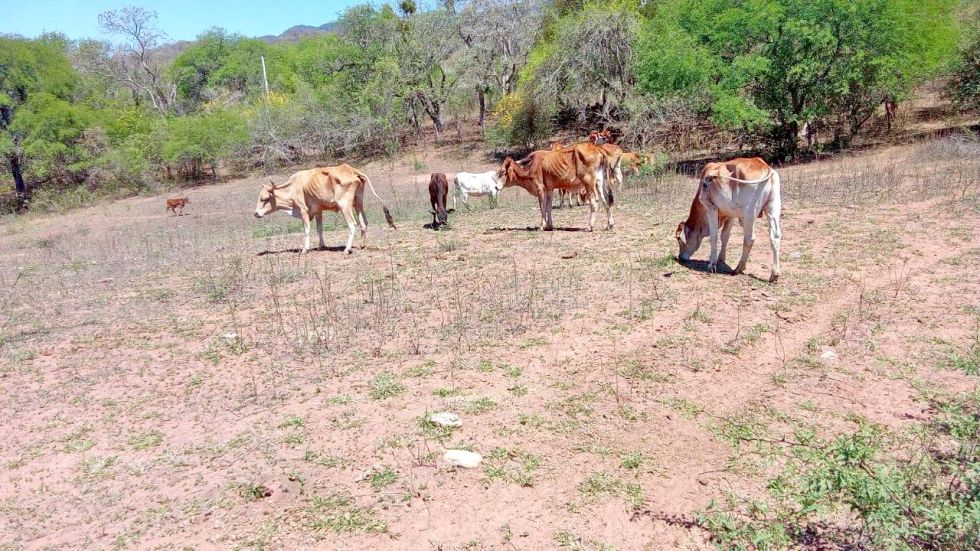
INGRE. The lack of water and pasture is also causing animals to lose weight and suffer miscarriages. Photo: Courtesy
The severe drought affecting the Chuquisaca Chaco region is causing cattle deaths, especially in communities in the southern area of Rosario del Ingre, in the municipality of San Pablo de Huacareta, where producers are also facing a shortage of drinking water and a lack of feed for their livestock.
According to reports from Radio La Ingreña, the situation worsened considerably last week in communities such as Atirimbia, Tentapuco, Ibaviranti, and Itacaray, among others.
Residents described the situation as critical and requested urgent intervention from municipal, departmental, and national authorities.
FOUR DAYS WITHOUT WATER
Cattle rancher Bernardo Martínez, a resident of Atirimbia, reported on Sunday that the community has gone more than four days without water for human consumption. The shortage is also directly affecting livestock production and has already caused the death of several animals.
“The drought is hitting us hard here. There is a shortage of water; we have none for the animals, and many are dying,” he said. The producer explained that he has already lost nine head of cattle, including adult cows. Several calves have also been left orphaned and are currently being fed with bottles.
Martínez explained that there is still no consolidated figure for the total number of animals that have died in the area. However, he noted that the situation faced by other community members is similar to his own, meaning that each producer has already lost around a dozen head of cattle.
The lack of water is compounded by a shortage of feed. The rancher stated that the surrounding grazing areas are virtually devoid of pasture, leaving cattle without enough food to survive.
In response, he called for the immediate excavation of wells in nearby ravines to provide water for livestock, as well as repairs and maintenance to the drinking water system. Residents are also requesting the supply of silage and other feed for their animals.
Martínez said the problem is not new and that community members, through their Local Territorial Organization (OTB), have previously sought assistance and requested a water system for livestock, but so far their appeals have gone unanswered.
Reports of the livestock deaths were accompanied by photographs illustrating the critical situation faced by producers and their animals in this part of the Chuquisaca Chaco region.
DEATH OF WILDLIFE
Meanwhile, departmental legislator for the Chaco region, Claribel Villarroel, told this newspaper Sunday night that she is concerned about the situation and confirmed reports of cattle deaths, as well as cases of miscarriages and severe weight loss among animals.
“The situation being experienced is truly alarming,” the official said, warning that the water shortage is also affecting wildlife. In some areas, wild animals have reportedly died due to the absence of water sources.
Villarroel said one of the most urgent actions is to mobilize machinery to excavate ravines and search for water sources that could supply livestock.
She explained that the Ingre district is vast and naturally dry due to its geographic characteristics, a condition that has worsened this year because of climate conditions associated with the El Niño phenomenon.
She also criticized the delay in declaring a departmental disaster and the lack of timely support from the central government. Villarroel said the Departmental Legislative Assembly’s Environment Commission will meet this week to analyze actions that can be implemented immediately.
DISASTER DECLARATION
The Chuquisaca Governor’s Office announced that it expects to issue a departmental disaster declaration this week, with the goal of subsequently seeking assistance from the national government.
Por Correo del Sur:
Los comunarios piden auxilio a las autoridades; asambleísta exige declarar desastre
INGRE. La falta de agua y pasto deriva también en el enflaquecimiento y aborto de los animales. Foto: Gentileza
La intensa sequía en el Chaco chuquisaqueño provoca la mortandad de ganado vacuno, especialmente en comunidades de la zona sur de Rosario del Ingre, en el municipio de San Pablo de Huacareta, donde los productores enfrentan además la falta de agua para consumo humano y la escasez de alimento para sus animales.
Según reportes de Radio La Ingreña, durante la semana pasada la situación se agravó considerablemente en comunidades como Atirimbia, Tentapuco, Ibaviranti e Itacaray, entre otras.
Los comunarios calificaron de crítica la situación y solicitaron la intervención urgente de las autoridades municipales, departamentales y nacionales.
CUATRO DÍAS SIN AGUA
El ganadero Bernardo Martínez, comunario de Atirimbia, informó este domingo que llevan más de cuatro días sin agua para el consumo humano. La escasez también golpea directamente a la producción ganadera y ya ocasionó la muerte de varios animales.
“Por acá nos tiene atacando grave la sequía, hay escasez de agua, no tenemos para los animales, muchos están muriendo”, manifestó. El productor relató que, en su caso, ya perdió nueve cabezas de ganado, entre ellas vacas adultas. Además, varios terneros quedaron huérfanos y actualmente deben ser alimentados con mamadera.
Martínez explicó que todavía no existe una cifra consolidada sobre la cantidad total de animales muertos en la zona; aunque señaló que la situación de otros comunarios de la zona es similar a la suya, es decir, que cada uno ya perdió alrededor de una decena de cabezas de ganado.
La falta de agua se suma a la escasez de alimento. El ganadero señaló que los montes se encuentran prácticamente sin pastura, por lo que el ganado no tiene suficiente alimento para sobrevivir.
Ante esta situación, demandó la excavación inmediata de pozos en las quebradas para garantizar agua para los animales, además de la reposición y atención del sistema de agua para consumo humano. También solicitaron gestionar la dotación de ensilaje y otros alimentos para el ganado.
Martínez afirmó que la problemática no es reciente y que los comunarios, mediante su Organización Territorial de Base (OTB), realizaron gestiones para conseguir ayuda y un sistema de agua destinado a los animales, pero hasta ahora sus pedidos no fueron atendidos.
Los reportes sobre la mortandad fueron acompañados por fotografías que reflejan la situación crítica que atraviesan los productores y sus animales en esta zona del Chaco chuquisaqueño.
MUERTE DE FAUNA SILVESTRE
Por su parte, la asambleísta departamental por la región del Chaco, Claribel Villarroel, expresó anoche a este periódico su preocupación por la situación y confirmó que existen reportes de la mortandad de ganado, además de casos de aborto y enflaquecimiento de animales.
“Es realmente preocupante la situación que se está viviendo”, señaló la autoridad al advertir que la falta de agua también está afectando a la fauna silvestre. En algunos sectores, dijo, se reportó la muerte de animales silvestres debido a la ausencia de fuentes de agua.
Villarroel consideró que una de las acciones más urgentes es movilizar maquinaria para realizar excavaciones en las quebradas y buscar fuentes de agua que permitan atender al ganado.
Explicó que el distrito del Ingre es extenso y, por sus características, una zona naturalmente seca, algo que se agravó este año por las condiciones climáticas asociadas al fenómeno de El Niño.
Asimismo, lamentó la demora en la declaratoria de desastre departamental y la falta de apoyo oportuno del nivel central. Dijo que esta semana se reunirá la Comisión de Medio Ambiente de la Asamblea Legislativa Departamental para analizar las acciones que pueden ejecutarse de manera inmediata.
DECLARATORIA
La Gobernación de Chuquisaca anticipó que durante esta semana emitirá la declaratoria de desastre departamental, con la expectativa de gestionar posteriormente apoyo del Gobierno nacional.


Leave a comment