
By Germaine Barriga, Vision 360:
Quiroga Calls It “Extremely Serious” That the U.S. Revoked Visas of Authorities and Former Officials, Urges Legislative Investigation
“I ask the authorities of Congress, the presidents of both chambers, and the Joint Constitutional Commission to gather all information on this case and proceed with all investigations, proceedings, and prosecutions.”
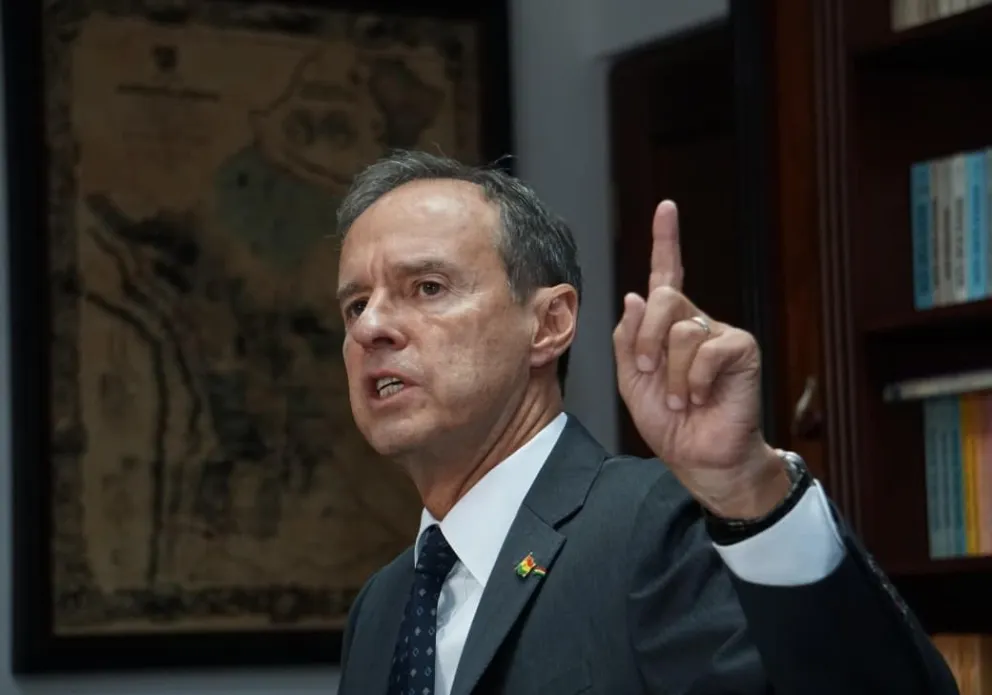
Former Bolivian President Jorge Quiroga at a press conference. Photo: APG
Former Bolivian President Jorge Quiroga described as “extremely serious” the decision by the United States Department of State to revoke the visas of Attorney General Roger Mariaca, judges, prosecutors, a magistrate, and a police officer, arguing that the matter should be investigated by the Legislative Assembly.
“I ask the authorities of Congress, the presidents of both chambers, and the Joint Constitutional Commission to gather all information on this case and proceed with all investigations, proceedings, and prosecutions,” he said during a press conference.
Quiroga, leader of the Libre Alliance, stated that it is the Assembly’s responsibility to investigate all authorities who enjoy special jurisdiction before Congress and the Judiciary. He also called for an immediate investigation of lower-ranking officials and for proceedings against them through the Council of the Judiciary.
Under Bolivia’s Constitution and Law 044, officials subject to such special proceedings include the President, Vice President, members of the Supreme Court of Justice (TSJ), the Plurinational Constitutional Court (TCP), the Agro-Environmental Court, members of the Council of the Judiciary, and the Attorney General.
In a press release, the U.S. Department of State announced the revocation of visas for the following Bolivian officials and their family members, arguing that their actions “undermine democratically elected governments in the Western Hemisphere”: Martín Daniel Irusta Flores, senior prosecutor; Alberto Zeballos Flores, Santa Cruz departmental prosecutor; and Álvaro Mauricio Nava Morales Carrasco, senior prosecutor and former departmental prosecutor of Chuquisaca.
Among the judges affected are Albania Chane Caballero Saavedra, First Anti-Corruption and Violence Against Women Investigating Judge in Santa Cruz; Rosario Ximena Flores Paniagua, Criminal Investigating Judge in Santa Cruz; and Rodrigo Aldo Vedia Espinoza, Mixed Civil and Commercial, Family, and First Criminal Instruction Judge of La Guardia.
Also included are Israel Ramiro Campero Méndez, Constitutional Magistrate; Iván Manolo Lima Magne, former Minister of Justice and Institutional Transparency; Alberto Samuel Soto de la Vía, former interim executive president of the National Customs Service; Iván Ramiro Campero Villalba, former alternate magistrate of the Supreme Court of Justice; Frans William Cabrera Quispe, colonel of the Bolivian Police; and José Luis Iriarte Cussi, private businessman.
Regarding Mariaca, the U.S. government alleges that he abused his position by requesting and accepting bribes to facilitate drug trafficking and help violent criminals evade justice.
Quiroga said it is sad, troubling, and painful for Bolivia to see people subjected to visa revocation procedures over alleged wrongful acts that have surprised the public.
“I do not know any of these individuals. I know many come from the MAS administration, were selected by the previous Congress, and many may have had an institutional relationship with this government, but I do not know any of them,” he stated.
He argued that the issue goes beyond the U.S. government simply informing the public that visas were revoked. If there were wrongful actions or cases that have remained unpunished—such as the “narco-suitcase” case and others—they should be fully investigated.
According to Quiroga, Bolivia is emerging from 20 years during which governments defended coca production in the Chapare region, much of which, he claimed, was destined for drug trafficking. He said this occurred under policies that expelled agencies from Brazil, Argentina, the DEA, and the United States, preventing an effective fight against narcotics.
He further stated that one of the most prominent drug-trafficking figures in the region was Sebastián Marset, who was captured in March of this year. Quiroga suggested that significant information could emerge from Marset’s arrest and judicial proceedings.
Everything must be investigated, he said, including who protected him, who provided cover, and who was involved in criminal activities, in order to uncover the full truth.
Quiroga also argued that part of the country’s reconstruction effort should involve eliminating drug trafficking and corruption, particularly the expansion of narcotics-related activity that he says followed the legalization of increased coca production under Law 906 in 2017 during the government of former President Evo Morales.
However, he noted that ten months into the current administration, full relations with the United States had not been restored, nor had offices of Brazil’s Federal Police, Argentina’s Federal Police, Chilean authorities, or the DEA been reestablished in Bolivia.
Por Germaine Barriga, Vision 360:
Quiroga califica de “máxima gravedad” que EEUU quite visas a autoridades y exfuncionarios y pide investigar en la Asamblea
“Yo pido a las autoridades del Congreso, presidentes de las cámaras, Comisión Mixta de Constitución que recaben toda la información sobre este caso y, que procedan a hacer todas las investigaciones, procesos y enjuiciamientos”.
El expresidente de Bolivia, Jorge Quiroga, en conferencia de prensa. Foto: APG
El expresidente del país Jorge Quiroga calificó de “máxima gravedad” que el Departamento de Estado de los Estados Unidos haya quitado la visa al fiscal general del Estado, Roger Mariaca; a jueces, fiscales, un magistrado y un policía, y sostuvo que debe ser materia de una investigación en la Asamblea Legislativa.
“Yo pido a las autoridades del Congreso, presidentes de las cámaras, Comisión Mixta de Constitución que recaben toda la información sobre este caso y, que procedan a hacer todas las investigaciones, procesos y enjuiciamientos”, afirmó en conferencia de prensa.
Quiroga, quien es jefe de la Alianza Libre, sostuvo que es una tarea de la Asamblea investigar a todas las autoridades que gocen de caso de corte en el Congreso y el Poder Judicial, que haga una investigación inmediata a las autoridades de menor rango y se les procese en el Consejo de la Magistratura.
De acuerdo con la Constitución Política del Estado y la Ley 044, las autoridades sujetas a este juicio de corte son: el Presidente del Estado; el Vicepresidente; los miembros del Tribunal Supremo de Justicia (TSJ), Tribunal Constitucional Plurinacional (TCP), Tribunal Agroambiental y consejeros del Consejo de la Magistratura, y el Fiscal General.
En una nota de prensa, el Departamento revocó las visas de los siguientes funcionarios bolivianos y de sus familias, con el argumento de que sus acciones “socavan los gobiernos elegidos democráticamente en el hemisferio occidental”: Martín Daniel Irusta Flores, fiscal superior; Alberto Zeballos Flores, fiscal departamental de Santa Cruz; Álvaro Mauricio Nava Morales Carrasco, fiscal superior y exfiscal departamental de Chuquisaca.
Entre los jueces se encuentran Albania Chane Caballero Saavedra, jueza de Instrucción Anticorrupción y de Violencia contra la Mujer Primera del departamento de Santa Cruz; Rosario Ximena Flores Paniagua, jueza de Instrucción en lo Penal del departamento de Santa Cruz; Rodrigo Aldo Vedia Espinoza, juez Público Mixto Civil y Comercial, de Familia e Instrucción Penal Primero de La Guardia.
Además, Israel Ramiro Campero Méndez, magistrado Constitucional; Iván Manolo Lima Magne, exministro de Justicia y Transparencia Institucional; Alberto Samuel Soto de la Vía, expresidente ejecutivo interino de la Aduana Nacional; Iván Ramiro Campero Villalba, exmagistrado suplente del Tribunal Supremo de Justicia; Frans William Cabrera Quispe, coronel de la Policía Boliviana; José Luis Iriarte Cussi, empresario privado.
Respecto a Mariaca, el Gobierno estadounidense sostiene que abusó de su cargo al solicitar y aceptar sobornos para facilitar el narcotráfico y ayudar a criminales violentos a evadir la justicia.
Quiroga sostuvo que es triste, penoso y doloroso para Bolivia ver que hay gente que está entrando a estos procedimientos de remoción de visas por actos que serían dolosos y que a todos nos sorprenden.
“No conozco a ninguna de las personas, sé que muchos vienen de la gestión del MAS, fueron selecciones en el anterior Congreso, muchos habrán tenido una relación institucional con este gobierno, yo no conozco a ninguno de ellos”, precisó.
Consideró que no se trata de que el Gobierno de los Estados Unidos informe que se les quitó la visa, por lo que demandó que, si hay “manejos dolosos”, casos que han quedado en la impunidad, como el caso de las “narcomaletas” y otros, deben ser investigados y llegar al fondo.
El país está saliendo de 20 años en los que los gobiernos defendían la producción de la coca del Chapare, que se destinaba al narcotráfico, bajo esquemas en los que se expulsaba a todas las agencias de Brasil, Argentina, la DEA o los Estados Unidos, para que no se haga una efectiva lucha contra el narcotráfico, sostuvo.
Afirmó que una de las figuras más connotadas y de mayor relevancia en el tema del narcotráfico en la región fue Sebastián Marset, que fue capturado en marzo de este año y “me imagino que de la captura y procesos a este señor Marset, el narco más peligroso, más connotado que se suponía que había en esta región, (…) producto de ese arresto y de ese proceso va a salir mucha información “.
Tiene que investigarse todo, quién lo protegía, quién le cuidaba, quiénes estaban involucrados en estas actividades delictivas, porque hay que llegar al fondo, aseguró.
Quiroga afirmó que parte de la tarea de reconstrucción que se tenía que efectuar era limpiar el país del narcotráfico y la corrupción, en particular el narcotráfico que se exacerbó cuando se legalizó la producción de la coca, con la Ley 906, en 2017, durante el Gobierno del expresidente Evo Morales.
Sin embargo, observó que, a 10 meses de la nueva gestión de Gobierno, no se restablecieron relaciones plenas con los Estados Unidos y no se instalaron oficinas de la Policía Federal de Brasil, de la Policía Federal de Argentina, de Chile y una oficina de la DEA.


Leave a Reply