By Germaine Barriga, Vision 360:
Exporters Reveal That Chile’s Prosecutor’s Office Used AI to Identify Products That Could Be Contaminated with Drugs
The president of the organization, Oswaldo Barriga, announced that the problem affecting timber exporters must be resolved within the next two weeks, before the arrival of President José Antonio Kast, because there is evidence that the work carried out to find “alleged drugs” lacks evidence, lacks proof, and even the laboratory used was not certified to perform the tests that were conducted.
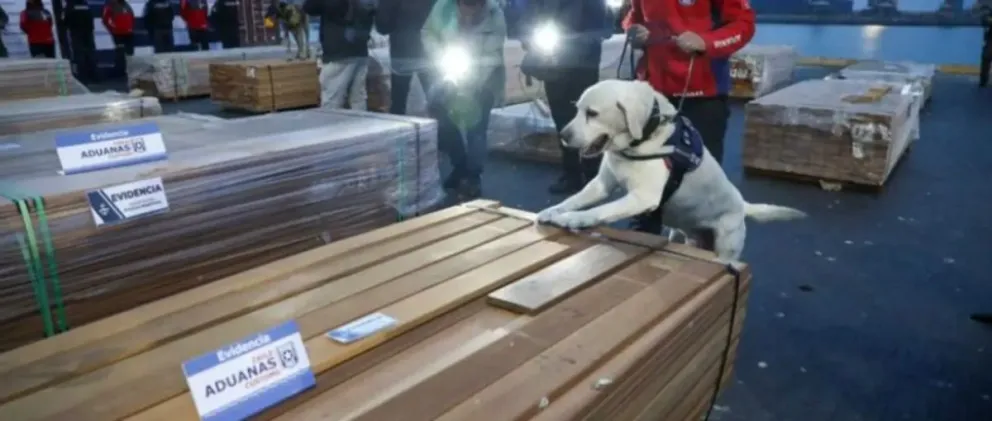
Chile’s Prosecutor’s Office used artificial intelligence to create a list of export products that could be contaminated with drugs, according to exporters. Photo: CNN
Organizations representing Bolivian exporters revealed that Chile’s Prosecutor’s Office used artificial intelligence to develop an algorithm that identifies cargo shipments that could be contaminated with drugs. Based on that argument, authorities seized 1,080 tons of timber belonging to 23 Bolivian companies, causing multimillion-dollar losses, loss of markets, dozens of layoffs, and business closures.
Mario Rojas, manager of the La Paz Exporters Chamber, provided details about reports prepared by hired experts and said he wanted to address the origin of the accusation.
“In Chile they used artificial intelligence, some algorithms, to determine which cargoes were considered contaminated,” he said.
He stated that this is a major concern for the sector because, if nothing is done now, other export products could be targeted in the future.
“It could be Brazil nuts, soybeans, and many other products that we export. They could all fall within this algorithm as being susceptible to contamination,” he warned.
Oswaldo Barriga, president of the organization, said that the issue affecting timber exporters must be resolved within the next two weeks, before President José Antonio Kast arrives, because there is evidence that the efforts made to find “alleged drugs” lack proof and supporting evidence, and that the laboratory used was not certified to conduct the tests performed.
“What kind of openness, brotherhood, or relationship are we talking about if they have caused us more than $1 billion in damages through the effects of those seizures?” he questioned.
As a result of the losses, Bolivian exporters are developing a strategy to use alternative routes instead of Arica, including ports in Peru and other Chilean ports connected to waterways, so that cargo can move through different channels while Chilean authorities fail to sanction and prosecute those responsible.
“In the case of Chile, we will try to reduce our use of Chilean routes as much as possible until Chilean authorities truly take action, dismiss everyone who should be dismissed, and initiate criminal proceedings against all those who harmed the Bolivian forestry export sector. Using artificial intelligence for something so sensitive is regrettable. It is unfortunate that a country like Chile allowed itself to be involved in something like this,” he said.
Barriga reported that the owners of the affected companies hired DEA experts and a forensic chemist specialized in drug investigations. These professionals are familiar with inspection procedures, sample collection, chemical analysis, and profiling of potential drug traffickers. According to Barriga, both experts verified that there is not the slightest evidence supporting the accusations.
“There is not the slightest evidence showing that the timber shipments seized arbitrarily and abusively by Chilean authorities, by the prosecutor in Arica, and which remain trapped in an informal judicial process, contained drugs. Our companies still have more than 45 containers that have been seized,” he said.
The reports conclude that the 100 tons seized on June 8 on allegations of drug contamination were falsely identified.
“With the information we have, we declare the seizure and accusations against all timber-exporting companies absolutely false. These companies are currently being prosecuted and investigated without evidence,” he stated.
Barriga announced that they will now begin international efforts to denounce what they describe as an abuse. He called on authorities and the United Nations, currently meeting in New York, to demand that Kast release the seized cargo and dismiss all officials who acted irresponsibly against Bolivia’s export sector.
He also said efforts would be made to seek compensation for the damages inflicted on the high-quality and reliable timber export sector and for the irreversible harm caused to Bolivia.
Walter Rioja, manager of the Bolivian Forestry Chamber, supported Barriga’s statements and argued that inconsistencies were found in the claims made by Chilean authorities regarding the alleged presence of controlled substances in the cargo.
He said that due to a lack of certifications, equipment that should not have been used for sample collection ended up creating “a supposed case,” whose investigation began months ago and still lacks evidence.
“This is a case that has destroyed a sector employing more than 200,000 people. It has caused the loss of 20,000 jobs, not only in exporting companies but also in indigenous communities that supply 80% of the timber in this country. It has damaged not only the reputation of Bolivia’s forestry sector but also all of us as citizens of this country,” he said.
Rioja argued that the seized shipments must be released because that is the appropriate course of action. He said the cargoes have been unfairly tarnished by a flawed process riddled with irregularities that has devastated an entire formal sector of the economy.
He estimated the direct damage at $10 million, considering only the containers seized in Chile. However, he said the true impact is incalculable because exports across the country were slowed, including those of companies not involved in the case.
He noted that June was the worst month in the sector’s history because approximately $16 million in exports were lost. He added that this translates into about 183 million bolivianos for the national economy, since the timber industry has a multiplier effect of 3.3.
“Talking about figures becomes almost impossible because we are still living with the consequences,” he said.
He added that some companies have had to shut down operations, others have laid off more than 90% of their workforce because the situation has become unsustainable, and even companies unrelated to the case have suffered border delays.
Por Germaine Barriga Velarde, Vision 360:
Exportadores revelan que Fiscalía de Chile utilizó IA para identificar productos que podrían estar contaminados con droga
El presidente de esa organización, Oswaldo Barriga, anunció que el problema ocasionado a los exportadores de madera debe ser resuelto en las próximas dos semanas, antes de la llegada del presidente José Antonio Kast, porque se tiene evidencia de que estos trabajos que se hicieron para encontrar “supuesta droga” no tienen evidencia, carecen de pruebas e incluso el laboratorio que fue utilizado no está certificado para realizar las pruebas que se han hecho.
Fiscalía de Chile usó inteligencia artificial para elaborar una lista de productos de exportación que podrían estar contaminados con droga, según los exportadores. Foto: CNN
Organizaciones que representan a los exportadores de Bolivia revelaron que la Fiscalía chilena utilizó inteligencia artificial para elaborar un algoritmo que identifique las cargas que podrían estar contaminadas con droga y, con ese argumento, procedieron a incautar 1.080 toneladas de madera de 23 empresas bolivianas que tuvieron que enfrentar pérdidas millonarias, pérdida de mercados, despidos de decenas de trabajadores y cierres.
El gerente de la Cámara de Exportadores de La Paz, Mario Rojas, dio detalles sobre los informes realizados por los expertos contratados y precisó que quería ir al origen de la acusación: “En Chile manejaron inteligencia artificial, unos algoritmos para ver qué cargas están consideradas como que estuvieran contaminadas”.
Dijo que ese hecho causa preocupación al sector, “porque si ahora no hacemos absolutamente nada, posteriormente va a ser otro producto que podamos exportar, puede ser la castaña y la soya, con tantos productos que estamos exportando, pueden estar dentro de este algoritmo, como susceptibles de esta contaminación”, advirtió.
El presidente de esa organización, Oswaldo Barriga, anunció que el problema ocasionado para los exportadores de madera debe ser resuelto en las próximas dos semanas, antes de la llegada del presidente José Antonio Kast, porque se tiene evidencia de que estos trabajos que se hicieron para encontrar “supuesta droga” no tienen evidencia, carecen de pruebas e incluso el laboratorio que fue utilizado no está certificado para realizar las pruebas que se han hecho.
De qué apertura, de qué hermandad o relacionamiento se está hablando, si “nos han hecho un daño de más de $us 1.000 millones, a través de los efectos que provocaron esas incautaciones”, observó.
A raíz de los perjuicios provocados, los exportadores bolivianos definen una estrategia que les permita utilizar vías alternas a la de Arica, entre ellas puertos de Perú, en Chile, los que se encuentran en hidrovías, para que la carga pueda moverse no solamente por esa vía, mientras las autoridades del vecino país no sancionen y procesen legalmente a los responsables de estas acciones.
“En el caso de Chile, mientras menos podamos utilizar, manejar nuestra carga por Chile lo intentaremos hacer hasta que las autoridades chilenas realmente tomen cartas en el asunto y destituyan a todos lo que tengan que destituir y les inicien procesos penales a todos los que hicieron daño al sector forestal exportador boliviano, utilizando inteligencia artificial para algo tan delicado, es lamentable que un país como Chile se haya prestado a un juego como este”, manifestó.
Barriga informó que los propietarios de las empresas afectadas por las acusaciones hechas por la Fiscalía chilena contrataron a expertos de la DEA y un químico forense especializado en el tema de drogas que conocen bien los procesos de fiscalización, identificación de obtención de muestras, análisis químicos, perfilamiento de posibles narcotraficantes; en resumen, ambos profesionales han verificado que no existe la mínima prueba.
“No existe la mínima prueba que declare que las maderas que fueron incautadas de manera arbitraria, de manera abusiva por las autoridades en Chile, por el fiscal de Arica y que hasta ahora siguen en un proceso de ‘judicialización’ informal, y nuestras empresas siguen varadas, con muchísimos contenedores, más de 45 contenedores que han sido incautados”, afirmó.
Los informes concluyen que las 100 toneladas incautadas el 8 de junio porque estaban impregnadas en droga son falsas. “Nosotros con la información que tenemos, declaramos absolutamente falsa la incautación, la acusación a todas las empresas exportadoras madereras que en este momento están siendo acusadas, judicializadas sin pruebas”, sostuvo.
Barriga anunció que, a partir de ahora, iniciarán gestiones para denunciar este abuso a nivel internacional e hizo un llamado a las autoridades y a la Organización de Naciones Unidas, que se hallan reunidas en Nueva York, Estados Unidos, para que exijan a Kast liberar la carga incautada y que despida a todas las autoridades que actuaron de manera irresponsable en contra del sector exportador del país.
Además, dijo que también se harán gestiones para pedir el resarcimiento por los daños causados al sector exportador de madera de alta calidad y confiabilidad y por el daño irreversible provocado contra Bolivia.
El gerente de la Cámara Forestal Boliviana, Walter Rioja, respaldó las afirmaciones realizadas por Barriga y sostuvo que se encontró una inconsistencia en los argumentos de las autoridades chilenas, que argumentaban la presencia de sustancias controladas en la carga.
Sostuvo que, debido a la falta de certificaciones, equipos que no deberían haber sido utilizados para la toma de muestras terminaron creando “un supuesto caso”, cuya investigación empezó hace meses y hasta ahora no tiene ninguna evidencia.
“Un caso que ha destruido a un sector que emplea a más de 200 mil personas, un caso que ha provocado (la pérdida de) 20 mil puestos de empleo, no solo en las empresas exportadoras, sino también en las comunidades indígenas, que son proveedoras del 80% de la madera en este país, y un caso que ha hecho mella no solo en la reputación del sector forestal boliviano, sino en todos nosotros como ciudadanos de este país”, afirmó.
Rioja planteó que se tiene que conseguir la liberación de las cargas porque es lo que corresponde, cargas que lastimosamente han sido empañadas por un proceso mal realizado, un proceso que tiene muchos vicios, un proceso que “ha destruido a todo un sector formal de la economía”.
Informó que el daño provocado se estima en $us 10 millones, solo en los contenedores incautados que se encuentran en Chile; sin embargo, consideró que el daño es incalculable porque, a raíz de esas acusaciones, las exportaciones del país fueron frenadas, inclusive de empresas que no están involucradas en esta denuncia.
Sostuvo que junio fue el peor año de su historia como sector, porque “se había perdido alrededor de $us 16 millones en exportaciones que además de eso se traduce en Bs 183 millones a la economía nacional, porque la madera tiene un efecto multiplicador del 3,3. Hablar de números resulta incalculable, porque las consecuencias las seguimos viviendo”, afirmó.
Dijo que hay empresas que han tenido que cerrar operaciones, hay empresas que han despedido a más del 90% de su personal, porque la situación se ha vuelto insostenible, y empresas que ni siquiera se han visto involucradas en este problema han sufrido retrasos en frontera.


Leave a comment