Editorial Bolivian Thoughts:
There is an uncomfortable truth Bolivia has avoided for far too long:
Politicians do not appear out of nowhere. We elect them.
So when a country finds itself short of dollars, struggling to secure fuel, running persistent fiscal deficits, supporting loss-making state companies and turning to external financing, it is not enough to blame the government of the day.
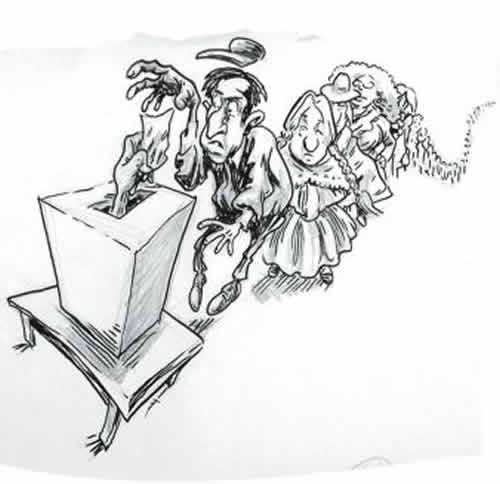
We also have to look at the ballot box.
For two decades, too many Bolivians accepted a politically convenient formula: the state could spend more, subsidize more, create more public jobs and establish more state-owned companies. The question that rarely accompanied those promises was the most basic one:
Who pays for it?
While Bolivia’s natural-gas boom was generating exceptional revenues, that question could be postponed. Gas production then began to decline, international reserves deteriorated and the country eventually found itself facing a shortage of foreign currency and mounting fiscal pressures. This was not a sudden accident. It was the accumulated result of decisions made over many years. El País, on Bolivia’s gas-sector decline
Now the bill has arrived.
And this is where a far more uncomfortable responsibility comes into view: the responsibility of the voter.
Politicians make promises. Citizens vote. And votes create incentives.
If voters repeatedly reward candidates who offer subsidies, cash transfers, public jobs and higher government spending without demanding a credible explanation of how those promises will be financed, politicians receive a very clear message: keep promising.
If voters punish politicians who warn that spending must be reduced, subsidies reformed, inefficient state companies closed or difficult adjustments accepted, the message is equally clear: do not touch anything.
Then the crisis arrives, and everyone acts surprised.
They should not be.
You cannot vote for the benefits and then protest when the bill comes due.
This does not absolve governments. Quite the opposite. Rodrigo Paz should be judged by what his administration does—and by what it fails to do.
If subsidies are reduced while the government avoids confronting unproductive public spending with equal determination, the adjustment will be incomplete. If Bolivia borrows money while the state continues spending beyond what the economy can sustain, part of the problem is simply being pushed into the future.
And if ordinary citizens are asked to make sacrifices while loss-making state companies, unnecessary bureaucracy and corruption remain largely untouched, people have every right to ask:
Why does the sacrifice begin with the citizen rather than with the state?
Fiscal discipline is not simply replacing one subsidy with a loan.
It means making the numbers add up again.
That requires reviewing public spending, eliminating privileges, measuring state-owned companies by results, prosecuting corruption and accepting that some institutions created during the boom may no longer have an economic justification.
But Bolivia needs to confront another issue, and this one may be even harder.
The voter has to grow up.
Democratic maturity means understanding that an election is not an auction in which the winner is whoever offers the most.
It means understanding that a fuel subsidy does not make fuel cheaper by magic. Someone pays for it. A cash transfer has a cost. A state company can lose money. An oversized public payroll has to be financed. Foreign borrowing is not a gift. Spending reserves does not create new wealth.
And it means stopping the habit of looking for an external culprit every time a policy fails.
For years, when policies failed to deliver the promised results, the explanation was remarkably consistent: they were not implemented “properly”; there was sabotage; more time was needed; the opposition blocked them; business interests interfered; international conditions were unfavorable.
The idea itself was never responsible.
It simply had not been applied sufficiently.
That is politically convenient because every failure becomes an argument for trying the same thing again.
A mature society should do the opposite: look at the results and change course when reality contradicts the promises.
It should also be suspicious of political solutions that sound too easy.
Economies do not operate on slogans. Sustainable wealth creation requires investment, productivity, capital, legal certainty, functioning markets, innovation and time. Redistributing wealth is politically much easier than creating it.
And this is where another problem of our time enters the picture: political debate has increasingly become a competition over sensitivity. People worry more about causing offense than about being wrong. Policies that are financially unsustainable are sometimes defended because questioning them might make someone uncomfortable. Disagreement is treated as hostility.
A mature democracy requires the opposite:
hard debate, evidence and the ability to tolerate ideas that are uncomfortable.
That includes young people.
They do not need permission to question the views of their friends, professors, social-media circles or political groups. They do not have to agree with the majority simply to avoid an argument. Democratic coexistence does not mean eliminating disagreement. It means being able to disagree without turning every disagreement into a personal feud.
And this applies to the left, the right and every political tendency in between.
The problem is not that strong political ideas exist.
The problem begins when society stops examining them.
Bolivia does not need citizens who simply repeat what they hear. It needs citizens who ask how much something costs, who pays for it, what results it produced and what happens when the money runs out.
Because the voter is not merely a permanent victim of politics.
The voter is part of the mechanism that produces it.
Governments have an obligation to make difficult decisions. Citizens have another: to vote with their eyes open and accept that votes have consequences.
If we continue rewarding politicians who promise the impossible, we will continue producing politicians who promise the impossible.
If we continue believing that the state can spend indefinitely, we will continue running into the same wall.
And if, after two decades of deficits, subsidies, state companies and economic strains, we still insist that the problem is simply that the same model was not applied “deeply enough,” then the problem is no longer merely economic.
It is educational.
It is cultural.
It is electoral.
Bolivia does not need its politicians to stop playing politics while voters continue rewarding political gamesmanship.
The real reform begins when citizens stop asking, “What will this politician give me?” and start asking:
“What will this politician produce, what will it cost, and who will pay for it?”
Until that question becomes an electoral demand, no government will be able to fundamentally reform a country that still expects easy answers.
Change does not begin in the presidential palace. It begins in the voter’s mind—and ends at the ballot box.
Editorial, Pensamientos Bolivianos:
Hay una verdad que Bolivia lleva demasiado tiempo evitando: los políticos no aparecen de la nada. Los elegimos.
Por eso, cuando un país termina con escasez de dólares, problemas de combustibles, déficit fiscal, empresas públicas que requieren recursos, subsidios difíciles de sostener y la necesidad de recurrir al financiamiento externo, no basta con señalar al gobierno de turno.
Hay que mirar también hacia la urna.
Durante veinte años, demasiados bolivianos aceptaron una fórmula políticamente cómoda: el Estado puede dar más, gastar más, subsidiar más y crear más empresas públicas. La pregunta que rara vez acompañó esas promesas fue la más elemental: ¿quién lo paga?
Mientras el gas financiaba buena parte de esa fiesta, la pregunta podía ser postergada. La producción hidrocarburífera cayó, las reservas se deterioraron y el país terminó enfrentando una crisis de divisas y crecientes dificultades fiscales. No fue un accidente repentino. Fue un proceso acumulativo. El País, sobre el deterioro del sector gasífero boliviano
Ahora llegó la factura.
Y aquí aparece una responsabilidad que incomoda mucho más que culpar al político de turno: la responsabilidad del elector.
Los políticos prometen. Los ciudadanos votan. Y los votos crean incentivos.
Si durante años se premia al candidato que ofrece subsidios, bonos, empleos y gasto público sin explicar cómo serán financiados, el mensaje que recibe la clase política es evidente: siga prometiendo.
Si se castiga electoralmente a quien advierte que habrá que reducir gastos, reformar subsidios, cerrar empresas estatales deficitarias o aceptar sacrificios temporales, el mensaje vuelve a ser evidente: no toque nada.
Después llega la crisis y nos sorprendemos.
No debería sorprendernos.
No se puede votar por el beneficio y luego protestar contra la factura.
Esto no exonera a los gobernantes. Todo lo contrario. Rodrigo Paz debe responder por lo que hace y, sobre todo, por lo que no hace.
Si se eliminan o reducen subsidios pero no se enfrenta con la misma determinación el gasto público improductivo, el resultado será incompleto. Si se pide dinero prestado mientras el Estado continúa gastando por encima de sus posibilidades, simplemente se está trasladando parte del problema hacia adelante.
Y si se exige sacrificio a la población mientras las empresas públicas deficitarias, la burocracia innecesaria y la corrupción permanecen sin una revisión profunda, la ciudadanía tiene todo el derecho de preguntar: ¿por qué el sacrificio empieza por el ciudadano y no por el Estado?
La disciplina fiscal no consiste en sustituir un subsidio por un préstamo.
Consiste en hacer que las cuentas vuelvan a cerrar.
Eso significa revisar gastos, eliminar privilegios, medir empresas públicas por resultados, perseguir la corrupción y aceptar que algunas estructuras creadas durante la bonanza quizá ya no tengan justificación económica.
Pero hay otra conversación que Bolivia necesita tener, y probablemente sea todavía más difícil.
El votante debe madurar.
Madurar democráticamente significa dejar de creer que cada elección es una subasta en la que gana quien ofrece más.
Significa entender que un bono no aparece por generación espontánea. Que un combustible subsidiado tiene un costo. Que una empresa estatal puede perder dinero. Que una nómina pública excesiva termina siendo pagada por alguien. Que una deuda externa no es un regalo. Que imprimir, endeudarse o utilizar reservas no crea riqueza permanente.
Y significa dejar de buscar siempre un culpable externo.
Durante años, cuando las políticas no dieron los resultados prometidos, apareció la misma explicación: no se aplicaron “de verdad”; hubo sabotaje; faltó tiempo; la oposición bloqueó; los empresarios conspiraron; el contexto internacional fue adverso.
La idea nunca tenía la culpa.
Siempre faltaba aplicarla mejor.
Ese razonamiento es políticamente perfecto porque convierte cada fracaso en una excusa para intentarlo nuevamente.
Pero una sociedad adulta debería hacer exactamente lo contrario: examinar los resultados y cambiar de rumbo cuando los resultados contradicen las promesas.
También debería desconfiar de las soluciones excesivamente fáciles.
La economía no funciona con consignas. Crear riqueza requiere inversión, productividad, capital, seguridad jurídica, mercados, innovación y tiempo. Distribuir riqueza es políticamente mucho más sencillo que producirla.
Y allí aparece uno de los grandes problemas de nuestra época: demasiadas discusiones políticas se han convertido en concursos de sensibilidad. Se teme más ofender que equivocarse. Se evita decir que una política es financieramente insostenible porque alguien podría sentirse incómodo. Se confunde tolerancia con la obligación de aceptar cualquier argumento.
Una democracia adulta necesita exactamente lo contrario: debate duro, datos y capacidad para soportar ideas que incomodan.
Eso incluye a los jóvenes.
No necesitan pedir permiso para cuestionar las ideas de sus amigos, de sus profesores, de sus redes sociales o de ningún grupo político. No tienen obligación de coincidir con la mayoría para evitar una discusión. La convivencia democrática no consiste en evitar el conflicto; consiste en poder discutir sin convertir el desacuerdo en una enemistad personal.
Y esto vale para la izquierda, para la derecha y para cualquier otra corriente.
El problema no es que existan ideas fuertes.
El problema aparece cuando una sociedad deja de examinarlas.
Bolivia no necesita ciudadanos que simplemente repitan lo que escuchan. Necesita ciudadanos que pregunten cuánto cuesta, quién paga, qué resultados produjo y qué ocurrirá cuando se termine el dinero.
Porque el elector no es una víctima permanente de la política.
También es parte del mecanismo que la produce.
Los gobernantes tienen la obligación de tomar decisiones difíciles. Pero los ciudadanos tienen otra: elegir con los ojos abiertos y asumir que el voto tiene consecuencias.
Si seguimos premiando al político que promete lo imposible, seguiremos fabricando políticos que prometen lo imposible.
Si seguimos creyendo que el Estado puede gastar indefinidamente, seguiremos llegando a la misma pared.
Y si después de veinte años de resultados, déficits, subsidios, empresas públicas y crisis todavía creemos que el problema consiste simplemente en que “no se aplicó suficientemente” el mismo modelo, entonces el problema ya no será solamente económico.
Será educativo.
Será cultural.
Será electoral.
Bolivia no necesita que sus políticos dejen de hacer politiquería mientras sus votantes continúen premiándola.
La verdadera reforma comienza cuando el ciudadano deja de preguntar “¿qué me va a dar este político?” y empieza a preguntar:
“¿Qué va a producir, cuánto va a costar y quién va a pagarlo?”
Hasta que esa pregunta se convierta en una exigencia electoral, ningún gobierno podrá reformar profundamente un país que todavía espera soluciones fáciles.
El cambio no empieza en el Palacio Quemado. Empieza en la cabeza del elector y termina en la urna.


Leave a comment