By AHORA | Historias y Leyendas de Bolivia, Facebook:
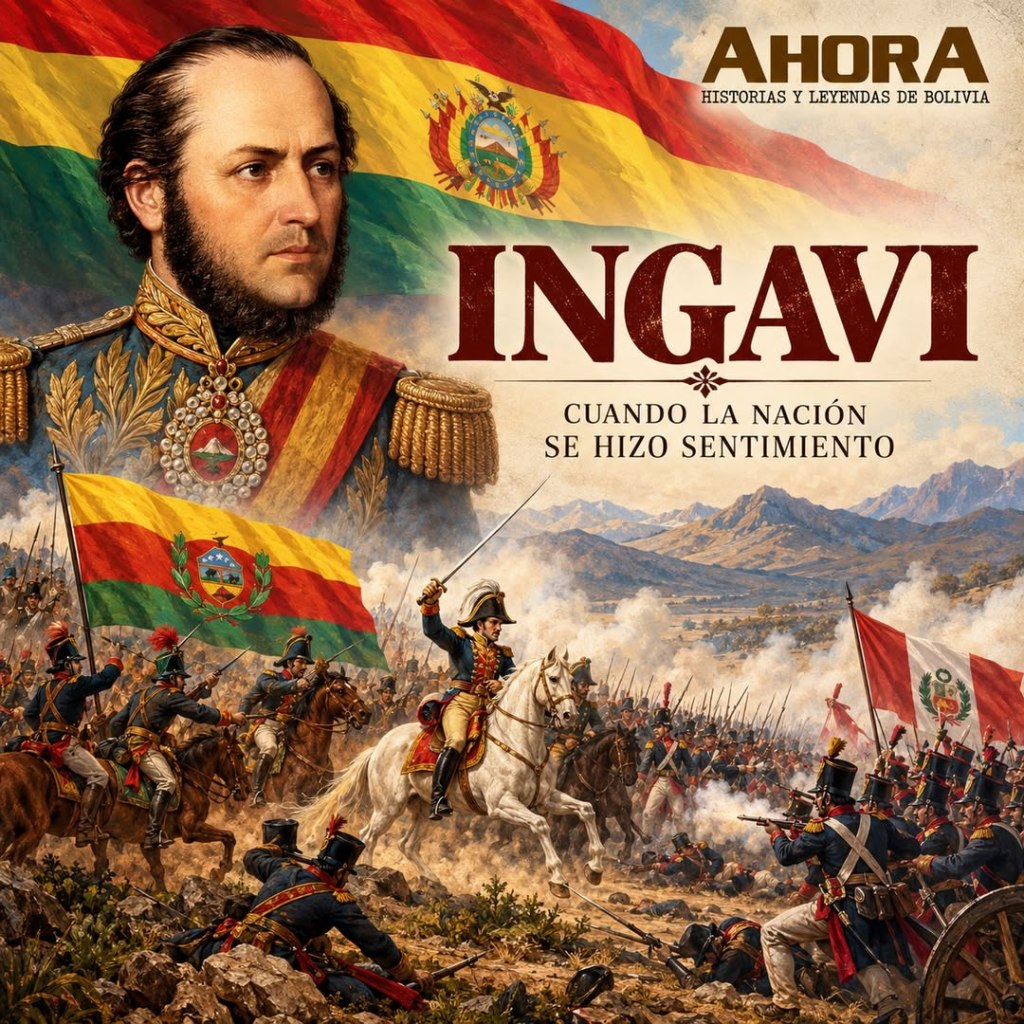
On November 18, 1841, on the fields of Ingavi, the Bolivian army, under General José Ballivián, defeated Peruvian forces led by Agustín Gamarra, who was killed in the battle. Bolivia was defending far more than its territory: it was fighting for its very survival as an independent nation.
But one question deserves reflection: Why was a battle necessary to strengthen the sense of belonging to a single nation?
Bolivia had won its independence after fifteen years of war against the Spanish Empire. Yet the country remained divided by rivalries among political leaders, power struggles, and competing visions for its future. Bolivians shared a territory, but they did not always share a common vision of their country.
Faced with the threat of invasion, rival factions found a cause greater than their differences: the defense of Bolivia. Ballivián took command of the army and united forces from the country’s five departments. The victory at Ingavi thus became a symbol of national sovereignty and shared pride.
Was Ingavi the event that united Bolivians under a common national identity? Or was it, rather, one of the first moments when many began to see themselves as part of a shared destiny?
Today, nearly two centuries later, we must ask ourselves: What will it take for us to feel like one country? How can we build a shared identity while respecting our cultural, historical, and linguistic differences? Does recognizing multiple nations within a single state help us better understand Bolivia, or does it make building a common national project more difficult?
Diversity does not have to be the enemy of unity. The challenge is to build a Bolivia where no one has to give up their identity to feel that they belong.
Do you know the story of General José Ballivián and the Battle of Ingavi? Do you believe we share a national identity today, or are we still searching for what unites us?
A historical clarification about the Bolivian flag: The flag’s colors and their arrangement have changed over time. In the image, the flag from the period of the Battle of Ingavi (1841) appears with yellow, red, and green horizontal stripes, while the current flag, shown at the top, displays red, yellow, and green. This difference reflects the evolution of one of Bolivia’s most important national symbols.
AHORA | Stories and Legends of Bolivia
Por AHORA | Historias y Leyendas de Bolivia, Facebook:
El 18 de noviembre de 1841, en los campos de Ingavi, el ejército boliviano al mando del general José Ballivián derrotó a las fuerzas peruanas dirigidas por Agustín Gamarra, quien murió durante la batalla. Bolivia defendía mucho más que su territorio: defendía su propia existencia como país independiente.
Pero hay una pregunta que merece nuestra reflexión: ¿por qué fue necesaria una batalla para fortalecer el sentimiento de pertenecer a una misma nación?
Habíamos conquistado la independencia después de quince años de guerra contra el Imperio español. Sin embargo, seguíamos divididos por rivalidades entre caudillos, disputas políticas y proyectos enfrentados. Los bolivianos compartían un territorio, pero todavía no siempre una idea común de país.
Ante la amenaza de una invasión, las facciones enfrentadas encontraron una causa superior a sus diferencias: la defensa de Bolivia. Ballivián asumió el mando militar y reunió fuerzas procedentes de los cinco departamentos. La victoria de Ingavi se convirtió así en un símbolo de soberanía y de orgullo compartido.
¿Fue Ingavi el acontecimiento que unificó los sentimientos de los bolivianos? ¿O fue, más bien, uno de los primeros momentos en que muchos pudieron reconocerse como parte de un destino común?
Y hoy, casi dos siglos después, debemos preguntarnos: ¿qué nos hace falta para sentirnos un solo país? ¿Cómo podemos construir una identidad compartida respetando nuestras diferencias culturales, históricas y lingüísticas? ¿Hablar de múltiples naciones dentro de un mismo Estado nos ayuda a comprender Bolivia o dificulta la construcción de un proyecto común?
La diversidad no tiene por qué ser enemiga de la unidad. El desafío consiste en construir una Bolivia donde nadie tenga que renunciar a su identidad para sentirse parte de ella.
¿Conoces la historia del general José Ballivián y la batalla de Ingavi? ¿Crees que hoy compartimos una identidad nacional o todavía estamos buscando aquello que nos une?
Una aclaración histórica sobre la bandera boliviana: los colores y su disposición cambiaron a lo largo del tiempo. En la imagen, la bandera de la época de la batalla de Ingavi (1841) aparece con las franjas amarilla, roja y verde, mientras que en la parte superior se muestra la bandera actual, con el orden rojo, amarillo y verde. Esta diferencia refleja la evolución de uno de nuestros principales símbolos nacionales.
AHORA | Historias y Leyendas de Bolivia


Leave a Reply