
By Erbol:
IN SPAWNING SEASON
Riberalta: Nearly 300 Yellow-Spotted River Turtle Eggs Seized in Wildlife Trafficking Operation
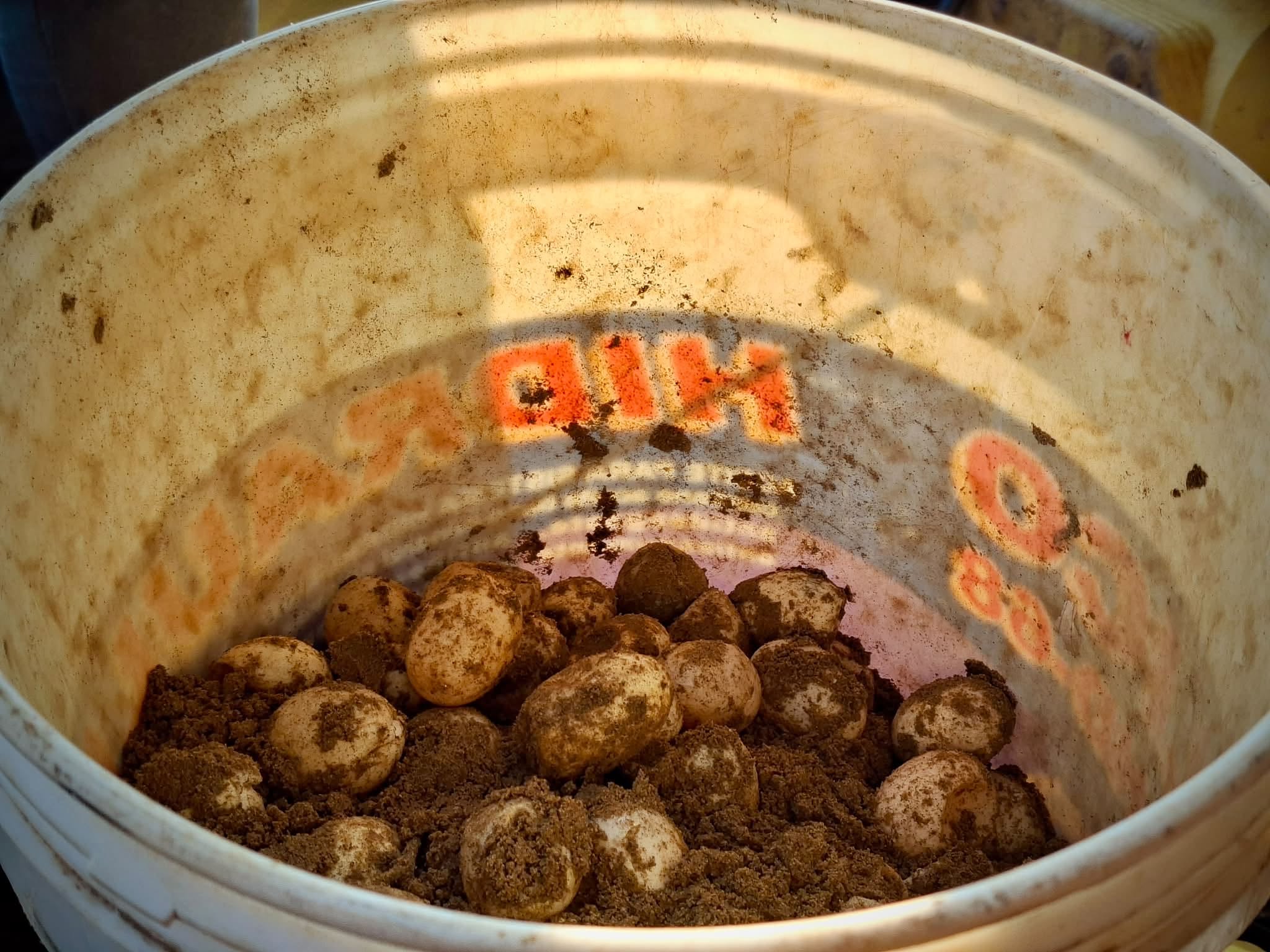
Yellow-spotted river turtle eggs. Photo: Autonomous Municipal Government of Riberalta
During the peak spawning season of the yellow-spotted river turtle (Podocnemis unifilis), municipal authorities in Riberalta, Beni, carried out an enforcement operation against the illegal trade of wildlife. Approximately 300 eggs were confiscated from the city’s main markets.
The operation was confirmed by Henry Gushi Álvarez, Riberalta’s Municipal Director of Environment, who outlined to La Región the scope of the intervention, the legal framework supporting it, and the challenges involved in combating environmental crimes of this nature.
Gushi explained that the operation resulted from prior coordination with the Forest and Environmental Police (Pofoma) and the Municipal Intendancy. “We coordinated all of this several days in advance,” the official stated.
The intervention focused on the best-known commercial hubs of the Amazonian city: the Central Market, the Abasto Market, and other strategic locations where, according to the municipal authority, “people go out and sell turtle eggs and bushmeat.”
He added that these actions are part of an ongoing effort throughout the turtle spawning season.
The nearly 300 eggs recovered during the operation were donated to two shelters: “Cristo te Salva” and “Angelitos.”
Legal Framework
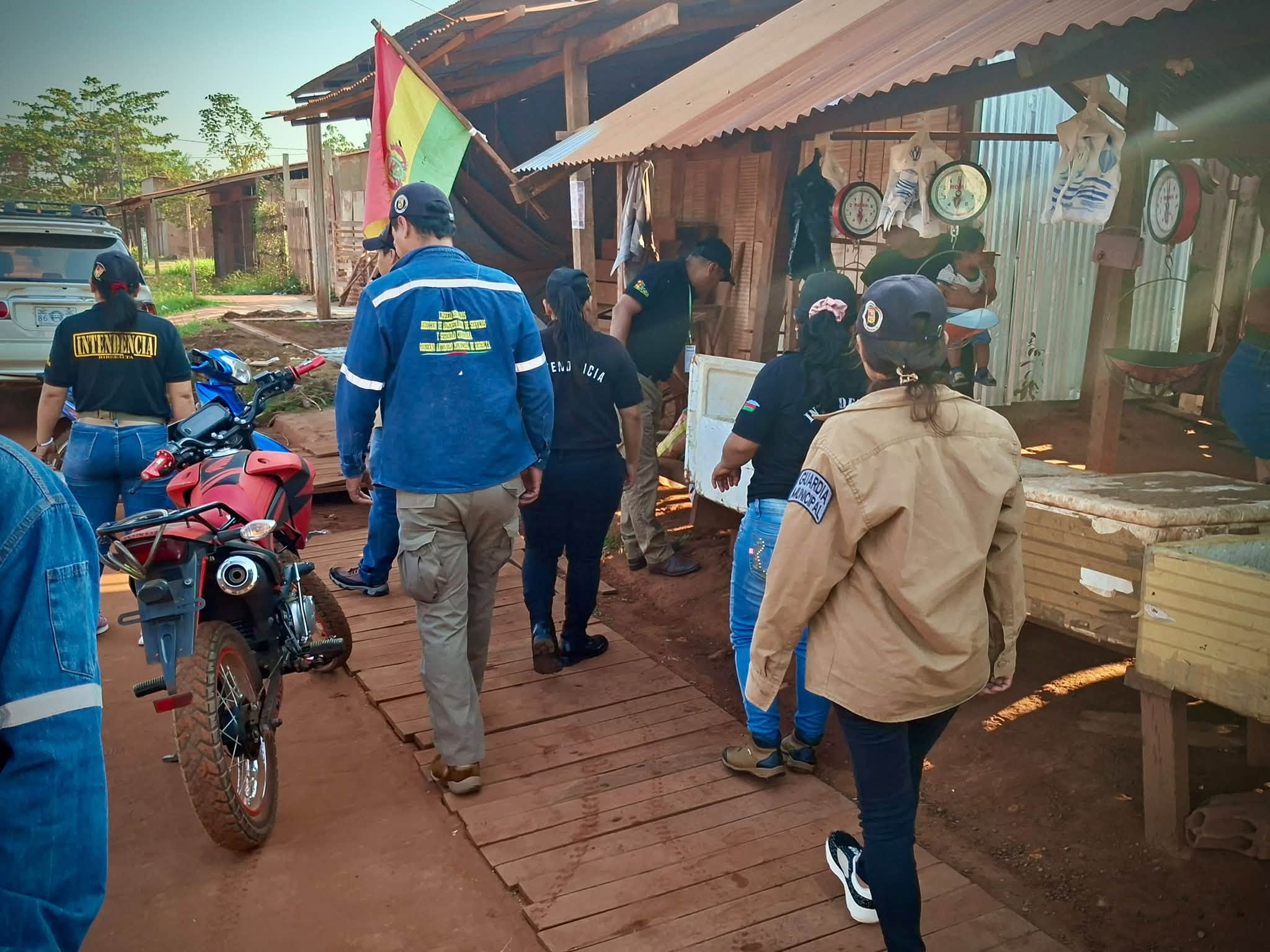
Authorities inspected several sales points during the operation. Photo: Municipal Government of Riberalta
Under Law 1525, trafficking wild animals is a criminal offense under Bolivia’s Penal Code and can carry prison sentences of up to eight years in aggravated cases.
The operation also falls within Bolivia’s national environmental legislation, which regulates the protection of natural resources and wildlife.
Gushi emphasized that before intensifying seizure operations, the Municipal Environmental Directorate conducted awareness campaigns within the community. Public notices were issued in coordination with the Institute for the Protection of the Amazon (IPA) and the Autonomous University of Beni (UAB).
“Now we are actively taking action against people who sell turtle eggs,” he said.
So far, enforcement measures have been limited to confiscations rather than arrests. If offenders are caught repeatedly violating the law, authorities will coordinate with the Riberalta Police to proceed according to legal provisions.
During one of the operations, a group of vendors resisted the intervention on Caranday Avenue, where relatives and neighbors of sellers attempted to scuffle with police officers. Despite the tension, the operation was completed without major incidents.
When asked about the origin of the eggs sold in Riberalta’s markets, Gushi pointed to informal networks of collectors who travel during the spawning season to riverbank areas of the Amazon region, particularly toward rivers bordering Peru’s Madre de Dios region. From there, the eggs are transported to Riberalta for sale, often openly.
“Sometimes they do not even try to hide anymore, because they sit in avenue planters with their tubs or buckets full of eggs,” he described.
The situation in Riberalta reflects a recurring challenge across Bolivia’s Amazon region. An informal market for wildlife products—such as turtle eggs and bushmeat—continues to exist despite laws imposing years of imprisonment for wildlife trafficking. Effective enforcement largely depends on local operational capacity and interinstitutional coordination.
Meanwhile, environmental authorities in Riberalta say inspections and enforcement operations will continue throughout the spawning season in an effort to curb a trade that, by many accounts, is often conducted in broad daylight.
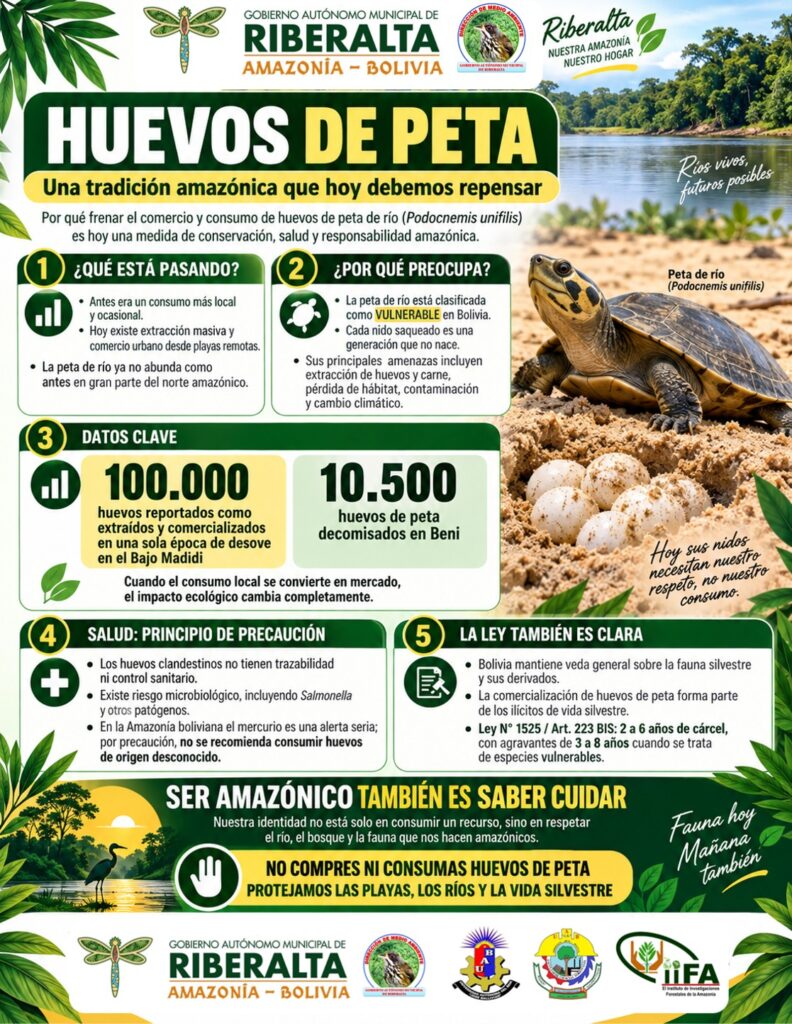
The yellow-spotted river turtle is currently listed as “Vulnerable” to extinction in Bolivia’s Red Book of Vertebrates.
Why should we not consume turtle eggs?
Consuming turtle eggs contributes directly to the decline of wild turtle populations. Each egg removed from a nest is one fewer hatchling that can reach adulthood and reproduce. Because river turtles mature slowly and face natural predators, large-scale egg harvesting can rapidly reduce their numbers. The practice also fuels illegal wildlife trafficking networks and undermines conservation efforts aimed at protecting vulnerable species and maintaining the ecological balance of Amazonian river ecosystems.
Por Erbol:
EN TEMPORADA DE DESOVE
Riberalta: Decomisan cerca de 300 huevos de peta en operativo contra el tráfico de fauna silvestre
Huevos de peta de río. Foto: Gobierno Autónomo Municipal de Riberalta
En plena temporada de desove de la peta de río (Podocnemis unifilis), autoridades municipales de Riberalta, Beni, ejecutaron un operativo de control contra el comercio ilegal de fauna silvestre. Alrededor de 300 huevos fueron decomisados en los principales mercados de la ciudad.
El hecho fue confirmado por Henry Gushi Álvarez, director municipal de Medio Ambiente, quien detalló a La Región los alcances de la intervención, el marco legal que la respalda y los desafíos que enfrenta la lucha contra este tipo de delitos ambientales.
Gushi explicó que el operativo fue el resultado de una coordinación previa con la Policía Forestal y de Medio Ambiente (Pofoma) y la Intendencia Municipal. “Coordinamos todo esto con días de anticipación”, señaló el funcionario.
La intervención se concentró en los puntos de venta más conocidos de la urbe amazónica: el mercado central, el mercado Abasto y otros sitios estratégicos donde, según la autoridad edil, “la población sale y comercializa estos huevos de peta y carne del monte”.
Asimismo, aseguró que estas acciones forman parte de un trabajo sostenido a lo largo de la temporada de desove.
Los cerca de 300 huevos recuperados fueron entregados a dos albergues: “Cristo te Salva” y “Angelitos”.
El respaldo legal
El grupo de autoridades recorrió diversos puntos de venta durante el operativo. Foto: Gobierno Municipal de Riberalta
Gracias a la Ley 1525, traficar animales silvestres es un delito tipificado en el Código Penal de Bolivia con hasta ocho años de cárcel, en caso de agravantes.
Las acciones descritas también se enmarcan en la normativa ambiental vigente a nivel nacional, que regula la protección de los recursos naturales y la fauna del país.
Gushi dejó en claro que antes de intensificar los operativos de decomiso, la Dirección de Medio Ambiente del municipio realizó un trabajo de prevención con la comunidad. Se emitieron comunicados dirigidos a la población en coordinación con el Instituto de Protección de la Amazonía (IPA) y con la Universidad Autónoma del Beni (UAB). “Ahora ya estamos saliendo a accionar contra las personas que venden huevos de peta”, sostuvo.
Hasta el momento, la respuesta institucional se limitó a los decomisos y no así arrestos. En caso de que los infractores reincidan, se coordinará con la Policía de Riberalta para proceder según la norma.
Durante uno de los operativos, un grupo de comerciantes se resistió a la intervención en la avenida Caranday, donde vecinos y familiares de vendedores intentaron forcejear con efectivos policiales. Pese a la tensión, la acción logró completarse, por fortuna, sin mayores incidentes.
Consultado sobre el origen de los huevos que llegan a los mercados de Riberalta, Gushi apuntó a redes informales de recolectores que se trasladan durante esta temporada hacia zonas ribereñas de la región amazónica, en dirección a los ríos fronterizos con Madre de Dios. Desde allí, explicó, los huevos son trasladados hacia Riberalta para su venta, en muchos casos de manera abierta. “A veces ya ni siquiera se esconden, porque se asientan en las jardineras de las avenidas con sus bañadoras o sus baldes”, describió.
El caso de Riberalta ilustra una tensión que se repite cada año en distintas regiones amazónicas de Bolivia. La persistencia de un mercado informal para productos derivados de la fauna silvestre —huevos de peta, carne de monte— frente a un marco normativo que castiga con años de cárcel su tráfico, pero cuya aplicación efectiva depende en gran medida de la capacidad operativa y de coordinación interinstitucional a nivel local.
Mientras tanto, en Riberalta, las autoridades ambientales sostienen que los operativos continuarán durante toda la temporada de desove, en un esfuerzo por frenar un comercio que, según reconocen sus propios protagonistas, muchas veces se realiza a plena luz del día.
En tanto, la peta de río figura en el Libro Rojo de Vertebrados de Bolivia como “Vulnerable” a la extinción.
¿Por qué no debemos consumir huevos de peta?


Leave a Reply