By Oscar A. Heredia, El Diario:
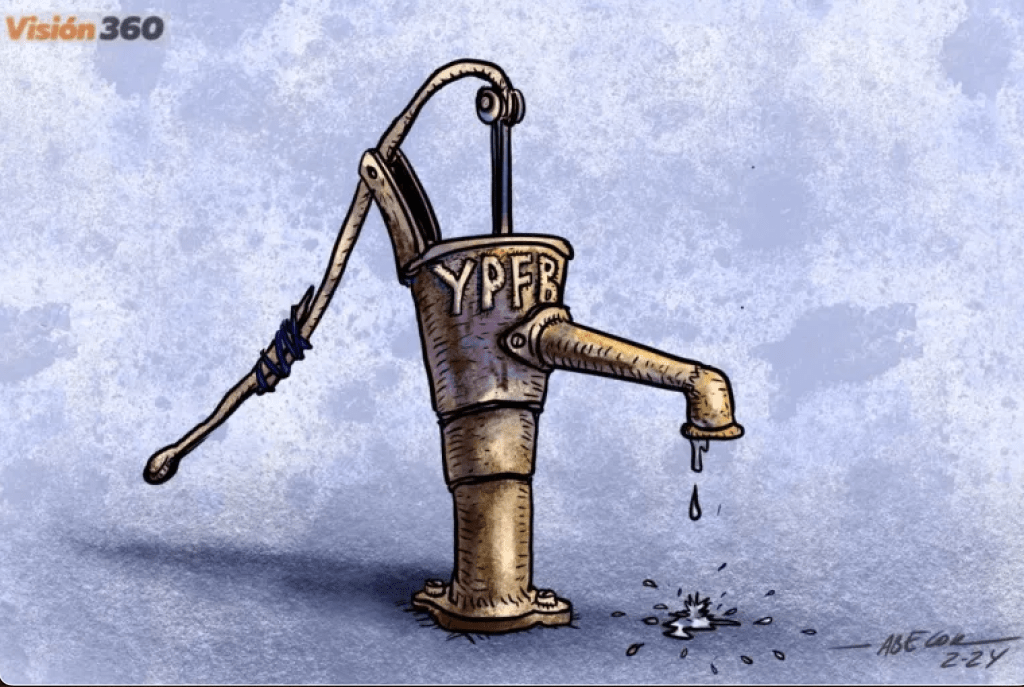
The price of diesel changed in a single day. Now Bolivia will have to discover what it really costs to produce.
Diesel has changed price, but the real change is still yet to be seen.
Since September 19, the price per liter rose from Bs 9.80 to Bs 17.95, and its price is now linked to import costs and international benchmarks. Gasoline, for now, remains subsidized. The government argues that the decision seeks to guarantee supply and free up resources for production, investment, and social measures.
Those are the facts. What matters begins now.
Because diesel is not just any product. It powers the tractors that work the land, the trucks that transport harvests, the machinery that builds infrastructure, freight transportation, and the distribution of goods. When its price changes, it is not only the cost of filling a tank that changes—it is the cost of doing many things.
The question is how much of this new cost our economy can absorb without reducing production, consumption, investment, or employment.
Not everyone will be able to do so in the same way. A company with capital, technology, and financial capacity may reorganize its costs. A small producer, an independent transporter, or a merchant operating with narrow margins has far less room to maneuver.
The new price will follow different paths: part of it may be absorbed by producers or transporters, part may be passed on to sale prices, and part may result in lower economic activity.
That path will be more important than the price displayed at the pump, because diesel costs move through multiple stages of economic activity. They may appear in freight charges, ticket prices, food prices, or service costs. And when they reach food prices, the issue ceases to be only economic: lower-income households have less capacity to absorb increases in essential goods.
But there is an even deeper issue.
For years, subsidized fuel allowed part of the cost of producing in Bolivia to remain absent from direct economic decision-making. That cost never disappeared; it was assumed by the State.
Now part of that bill is changing hands and is beginning to reach those who actually use the fuel.
This may produce an effect that deserves close attention: the economy begins receiving a price signal that is closer to the real cost of fuel. A price signal may be necessary, but it does not by itself create a more efficient economy. What it can do is reveal problems that were previously partially hidden.
If an activity ceases to be profitable when fuel is priced closer to its real cost, we will have to ask why. Is technology lacking? Is productivity too low? Are our logistics costs too high?
The problem may also lie in a productive structure that became accustomed over many years to artificially cheap fuel.
These questions are more uncomfortable than simply debating the price of diesel, but they may determine what happens next.
A price can change in a day. An economy needs years to adapt.
That is why the end of the subsidy should not conclude with a discussion about how much money the State will save. It should also open a discussion about what Bolivia will do to produce more efficiently and with costs that can be sustained over time.
The government has stated that it was spending around US$55 million per week on fuel subsidies and that those resources can now be redirected toward infrastructure, public services, production, and social measures. It has also announced the Pepe II Bonus, an increase in the Juancito Pinto program, and preferential loans for productive sectors. These are official commitments that must now demonstrate results.
Because saving money does not guarantee transformation.
If the State stops spending to artificially keep diesel prices low, but those resources simply end up covering other expenses without increasing productive capacity, the economy will have changed the way it pays the bill, but not necessarily its structure.
This also brings up the issue of smuggling. The government has argued that the gap between subsidized domestic prices and prices in neighboring countries created incentives for diversion and resale. Eliminating that distortion may reduce those incentives, but it does not remove the State’s responsibility to control fuel distribution.
That requires knowing who buys fuel, how much they buy, where it is transported, and where it ultimately ends up. It requires controls, technology, traceability, institutional coordination, and effective sanctions.
Price adjustments can reduce an illegal business opportunity. They cannot replace the State’s capacity to enforce control.
There is another development that may alter Bolivia’s relationship with fuel: diesel prices are now linked to international import costs. The government itself has indicated that if international prices fall, domestic prices may also decline.
This means external events will have a more direct impact on a price that was previously partially shielded by subsidies.
A rise in international oil prices, a supply disruption, or a change in import costs could end up affecting the cost of transporting freight within Bolivia. This external exposure forces us to ask how resilient our economy is when international prices fluctuate.
For that reason, alongside the new pricing system, Bolivia must ensure fuel supply, improve refining capacity, reduce logistics costs, facilitate investment, and temporarily protect those who cannot absorb a change of this magnitude.
In that direction, the government has authorized the importation of crude oil to be processed in Bolivian refineries and sold as refined products at market prices. According to official projections, importing 10,000 barrels of crude oil per day could increase gasoline production from 27% to 40% and diesel production from 5% to 8% within one year. These are official targets that must now be proven in practice.
That will be one of the key tests.
Because ending fuel subsidies while maintaining an economy increasingly dependent on expensive imports would not solve the structural problem. The real transformation would consist of producing, refining, transporting, and competing more efficiently.
Producing requires more than work. It requires resources, knowledge, technology, and effort to be transformed into goods and services capable of covering their own costs.
When fuel ceases to be inexpensive because of State policy, many activities will have to demonstrate whether they can absorb those costs and remain competitive.
Bolivia has already made a decision regarding diesel subsidies. Now comes the difficult part: observing how much of the new cost businesses will absorb, how much will be passed on to consumers, how much will affect production, and what the State will do with the resources previously allocated to maintaining the subsidized price.
Society also has the right to ask what it receives in return for that sacrifice.
Changing who pays is not yet the same as changing the economy.
The day after diesel will not simply be the day Bolivia stops paying the subsidy. It will be the moment when we discover whether we are capable of producing, transporting, and competing while paying the true cost of doing so.
The challenge is not merely ending diesel subsidies. It is building an economy capable of producing without needing the State to conceal its real costs.
An economy does not become stronger by hiding its costs. It becomes stronger by learning how to produce more efficiently.
The author is a political and economic analyst and former Rector of the UMSA.
Por Oscar A. Heredia Vargas, El Diario:
El precio del diésel cambió en un día. Ahora Bolivia tendrá que descubrir cuánto cuesta realmente producir.
El diésel cambió de precio, pero el verdadero cambio todavía está por verse.
Desde el 19 de septiembre, el litro pasó de Bs 9,80 a Bs 17,95 y su precio queda vinculado al costo de importación y a referencias internacionales. La gasolina, por ahora, mantiene el subsidio. El Gobierno sostiene que la decisión busca garantizar el abastecimiento y liberar recursos para la producción, la inversión y medidas sociales.
Hasta aquí están los hechos. Lo importante comienza ahora.
Porque el diésel no es un producto cualquiera. Está en el tractor que trabaja la tierra, en el camión que transporta una cosecha, en la maquinaria que construye, en el transporte de carga y en la distribución de mercancías. Cuando cambia su precio, no cambia solamente el costo de llenar un tanque: cambia el costo de hacer muchas cosas.
La pregunta es cuánto de ese nuevo costo podrá absorber nuestra economía sin reducir producción, consumo, inversión o empleo.
No todos podrán hacerlo de la misma manera. Una empresa con capital, tecnología y capacidad financiera puede reorganizar sus costos. Un pequeño productor, un transportista independiente o un comerciante que trabaja con márgenes estrechos, tiene mucho menos espacio.
El nuevo precio tendrá distintos recorridos: una parte podrá ser absorbida por quien produce o transporta, otra llegará al precio de venta y otra podría convertirse en menor actividad económica.
Ese recorrido será más importante que el precio anunciado en el surtidor, porque el costo del diésel atraviesa distintas etapas de la actividad económica. Puede aparecer en el precio de una carga, de un pasaje, de un alimento o de un servicio. Y cuando llega a los alimentos, el problema deja de ser solamente económico: los hogares de menores ingresos tienen menos capacidad para absorber aumentos en productos esenciales.
Pero existe una cuestión todavía más profunda.
Durante años, el combustible subsidiado permitió que una parte del costo de producir en Bolivia no apareciera directamente en las decisiones económicas. Ese costo no desaparecía; lo asumía el Estado.
Ahora una parte de esa cuenta cambia de lugar y comienza a llegar directamente a quienes utilizan el combustible.
Esto puede producir un efecto que debemos observar con especial atención: la economía empieza a recibir una señal de precio más cercana al costo real del combustible. Y una señal de precios puede ser necesaria, pero no produce por sí sola una economía más eficiente. Lo que sí puede hacer es revelar problemas que antes permanecían parcialmente ocultos.
Si una actividad deja de ser rentable cuando el combustible tiene un precio más cercano a su costo, tendremos que preguntarnos por qué. ¿Falta tecnología? ¿Falta productividad? ¿Son demasiado altos nuestros costos logísticos?
Puede que el problema esté también en una estructura productiva que durante años se acostumbró a un combustible artificialmente barato.
Estas preguntas son más incómodas que discutir solamente el precio del diésel, pero pueden determinar lo que ocurra después.
Un precio puede cambiar en un día. Una economía necesita años para adaptarse.
Por eso, el fin del subsidio no debería terminar en una discusión sobre cuánto dinero dejará de gastar el Estado. También debería abrir una discusión sobre qué hará Bolivia para producir mejor y con costos que puedan sostenerse en el tiempo.
El Gobierno ha señalado que destinaba alrededor de US$55 millones semanales a la subvención de combustibles y que esos recursos podrán orientarse a infraestructura, servicios públicos, producción y medidas sociales. También anunció el Bono Pepe II, el incremento del Juancito Pinto y créditos preferenciales para sectores productivos. Son compromisos oficiales que ahora deberán mostrar resultados.
Porque ahorrar no garantiza transformar.
Si el Estado deja de gastar en sostener artificialmente bajo el precio del diésel, pero los recursos terminan simplemente cubriendo otros gastos sin aumentar la capacidad de producir, la economía habrá cambiado la forma de pagar la factura, pero no necesariamente su estructura.
Aquí aparece también el problema del contrabando. El Gobierno ha sostenido que la diferencia entre el precio subsidiado y el precio de los países vecinos generaba incentivos para el desvío y la reventa. Eliminar esa distorsión puede reducir ese incentivo, pero no elimina la obligación del Estado de controlar la distribución del combustible.
Eso requiere saber quién compra, cuánto compra, dónde se transporta y dónde termina el producto. Requiere controles, tecnología, trazabilidad, coordinación institucional y sanciones efectivas.
El precio puede reducir una oportunidad de negocio ilegal. No puede reemplazar la capacidad del Estado para controlar.
Y existe otra novedad que puede cambiar la relación de Bolivia con el combustible: el precio del diésel queda ahora vinculado al costo internacional de importación. El propio Gobierno ha señalado que, si los precios internacionales disminuyen, el precio interno podrá bajar.
Esto significa que acontecimientos externos tendrán una incidencia más directa sobre un precio que antes estaba parcialmente protegido por la subvención.
Una subida internacional del petróleo, una interrupción del suministro o un cambio en los costos de importación pueden terminar afectando el costo de transportar una carga dentro de Bolivia. Esa exposición externa obliga a preguntarnos cuánto puede resistir nuestra economía cuando los precios internacionales cambian.
Por eso, junto con el nuevo régimen de precios, Bolivia necesita asegurar el abastecimiento, mejorar la refinación, reducir costos logísticos, facilitar la inversión y proteger temporalmente a quienes no tienen capacidad para absorber un cambio de esta magnitud.
En esa dirección, el Gobierno autorizó la importación de petróleo crudo para procesarlo en las refinerías bolivianas y comercializar sus derivados a precios de mercado. Según proyecciones oficiales, con la importación de 10.000 barriles diarios de crudo, la producción de gasolina podría aumentar del 27% al 40% y la de diésel del 5% al 8% en un año. Son metas oficiales que ahora tendrán que demostrarse en la práctica.
Ahí estará una de las pruebas de fondo.
Porque dejar de subsidiar el combustible y, al mismo tiempo, mantener una economía dependiente de importar cada vez más caro no resolvería el problema estructural. La verdadera transformación tendría que consistir en producir, refinar, transportar y competir mejor.
Producir exige algo más que trabajar. Exige que los recursos, el conocimiento, la tecnología y el esfuerzo puedan convertirse en bienes y servicios capaces de sostener sus propios costos.
Cuando el combustible deja de ser barato por decisión del Estado, muchas actividades tendrán que demostrar si pueden cubrir esos costos y seguir siendo competitivas.
Bolivia ya tomó una decisión sobre el subsidio al diésel. Ahora comienza la parte difícil: observar cuánto del nuevo costo absorberán las empresas, cuánto llegará a los consumidores, cuánto afectará a la producción y qué hará el Estado con los recursos que antes destinaba a sostener el precio subsidiado.
La sociedad también tendrá derecho a preguntar qué recibe a cambio del sacrificio.
Cambiar quién paga no es todavía cambiar la economía.
El día después del diésel no será simplemente el día en que Bolivia deje de pagar el subsidio. Será el momento en que descubramos si somos capaces de producir, transportar y competir pagando el verdadero costo de hacerlo.
El desafío no es solamente dejar de subsidiar el diésel. Es construir una economía que pueda producir sin necesitar que el Estado oculte sus verdaderos costos.
Una economía no se fortalece escondiendo sus costos. Se fortalece aprendiendo a producir mejor.
El autor es analista político y económico. Ex Rector de la UMSA.
https://www.eldiario.net/portal/2026/10/01/el-dia-despues-del-diesel/


Leave a Reply