By Gina Mendía, El Deber:
The Challenge Is Making Paucerna River Excursions Profitable

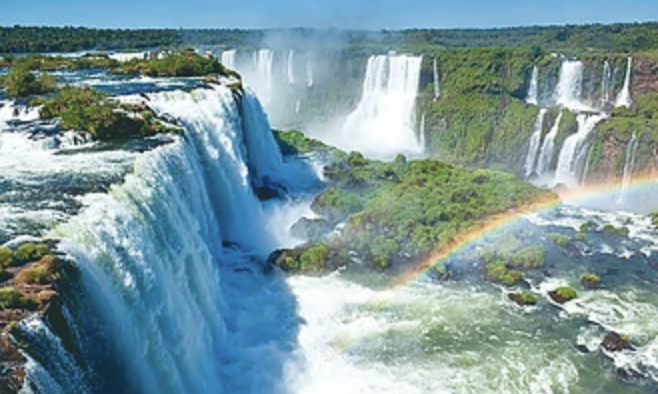
Federico Ahlfeld Falls is a majestic setting where the Paucerna River ends its journey. It is a tourist destination to enjoy and protect
The powerful river, which rises on the Caparú Plateau within a protected area, has the potential to drive the municipality’s economy, but exploitation and environmental degradation must be avoided.
With the recent appointment of Deputy Governor Cristian Méndez as chairman of the board of the Noel Kempff Mercado National Park, a historic opportunity has emerged—one that has remained largely overlooked for decades: transforming the Paucerna River into a sustainable economic engine for the municipality, without outside concessions, without environmental destruction, and with wealth shared among local residents.
The Paucerna River originates on the Caparú Plateau, within a protected area in the territory of San Ignacio de Velasco. Its crystal-clear waters flow through untouched forests before plunging into the majestic Federico Ahlfeld Falls, an internationally renowned landscape that nevertheless generates little benefit for local communities.
Comparative studies of similar ecotourism destinations in Bolivia and the Amazon region suggest that the responsible use of the Paucerna could generate up to Bs 9 million annually, distributed across three main areas.
Achieving this goal requires promoting sustainable tourism. With an estimated 5,000 to 15,000 visitors per year, income from local guides, transportation, food services, lodging, and handicrafts could range between Bs 2 million and Bs 6 million per season.
The river’s water resources, managed through irrigation projects for coffee and fruit crops, as well as a potential bottled water brand with a designated origin, could generate close to Bs 900,000 annually.
The new president of Noel Kempff Park aims to advance conservation programs, environmental services, and international partnerships capable of mobilizing more than Bs 2.1 million in additional funding.
Valuing Without Destroying
The Paucerna River creates another form of wealth that cannot be measured in money. It provides clean water that sustains forests, soils, and wildlife.
This water resource attracts visitors from around the world who come to experience its natural wonders, while also protecting biodiversity by providing shade, clean air, fruits, natural medicines, and maintaining the ecological balance that supports entire generations.
Experts warn that the key is to avoid repeating models that extract wealth and then leave. The Paucerna does not require massive infrastructure projects or concessions to outside companies. Instead, it needs signage, training for local guides, national and international promotion, and—above all—a sense of ownership among the people of San Ignacio.
“Paucerna does not belong to the park. It belongs to San Ignacio. The park is in our home. As long as we keep its water clean and its forest standing, this river can provide jobs, livelihoods, and progress for thousands of families every year, forever,” says Sofía Landívar, a resident of the municipal capital.
Among the immediate actions suggested for the new director of Noel Kempff Mercado National Park are the creation of community-based ecotourism routes led by locally trained guides. Other proposals include developing irrigation and drinking water projects that make use of the river’s flow, promoting the “Paucerna River–San Ignacio de Velasco” brand in all outreach efforts, and establishing joint monitoring by authorities and communities to prevent deforestation within the watershed.
An Inexhaustible Source of Wealth
Unlike resources that are extracted and eventually depleted, the Paucerna renews its flow every day. Its economic value is directly linked to its conservation. The more intact it remains, the more income it can generate.
For Deputy Governor Cristian Méndez, the goal is clear: to demonstrate that conservation and progress are not opposing paths, and that San Ignacio’s greatest wealth did not come from elsewhere—it has always been there, waiting for its own people to recognize it.
Many speak of distant rivers, unseen lands, and riches carried away by others. Yet in San Ignacio, something more valuable than gold flows through the waters of the Paucerna River.
Méndez maintains that he clearly understands that making use of this natural resource must go hand in hand with protecting biodiversity, ensuring that it continues to sustain future generations.
Por Gina Mendía, El Deber:
El desafío es hacer rentables los paseos por el Paucerna
La catarata Federico Ahlfeld es un majestuoso escenario donde desemboca el río Paucerna. Es un destino turístico para disfrutar y proteger
El caudaloso río, que nace en la meseta Caparú, dentro de un área protegida, puede mover la economía del municipio, pero se debe evitar la depredación
Con la reciente posesión del subgobernador Cristian Méndez como presidente del directorio del Parque Nacional Noel Kempff Mercado, se abre una oportunidad histórica que durante décadas ha permanecido oculta, como es convertir al río Paucerna en motor económico sostenible para el municipio, sin concesiones externas, sin depredación y con la riqueza distribuida entre los habitantes de la zona.
El río Paucerna nace en la Meseta de Caparú, dentro de un área protegida en el territorio de San Ignacio de Velasco. Sus aguas cristalinas recorren bosques intactos, hasta desembocar en la majestuosa Catarata Federico Ahlfeld, un paisaje de renombre internacional que, sin embargo, apenas genera beneficios para las comunidades locales.
Estudios comparados con destinos similares de ecoturismo en Bolivia y la región amazónica señalan que el aprovechamiento responsable del Paucerna podría generar incluso hasta Bs 9 millones anuales, distribuidos en tres ejes centrales.
Para lograr este objetivo es importante promover el turismo sostenible. Con una proyección de 5.000 a 15.000 visitantes al año, los ingresos para guías locales, transporte, gastronomía, alojamiento y artesanías podrían alcanzar entre Bs 2 millones y Bs 6 millones por temporada.
El recurso hídrico, gestionado con proyectos de riego para cultivos de café y frutas, además de una eventual marca de agua embotellada de origen, podría generar cerca de Bs 900.000 al año.
El nuevo presidente del Parque Noel Kempff tiene como meta impulsar programas de protección, servicios ambientales y alianzas internacionales para movilizar más de Bs 2,1 millones adicionales.
Valorar sin destruir
El río Paucerna genera otro tipo de riqueza, de la que no se puede contar en billetes. Se trata de agua limpia que alimenta los bosques, suelos y animales.
Este recurso hídrico atrae visitantes de todo el mundo que llegan a conocer sus maravillas, pero a la vez protege la biodiversidad porque da sombra, aire puro, frutos y medicina natural y mantiene el equilibrio de la tierra para que siga dando sustento a generaciones enteras
La clave, advierten especialistas, radica en no repetir modelos que extraen riqueza y se van. El Paucerna no requiere grandes obras ni concesiones a empresas externas, requiere señalización, capacitación de guías locales, promoción nacional e internacional y —fundamentalmente— que la población de San Ignacio se apropie del recurso.
“El Paucerna no es del parque. Es de San Ignacio. El parque está en nuestra casa. Mientras mantengamos su agua limpia y su bosque de pie, este río puede dar trabajo, sustento y progreso a miles de familias, todos los años, para siempre”, señala Sofía Landívar, una vecina de la capital ignaciana.
Entre las acciones inmediatas que se sugieren tomar al nuevo director del parque Noel Kemppf Mercado, está el diseño de rutas ecoturísticas comunitarias con guías formados en el municipio. También se plantea impulsar proyectos de riego y agua potable aprovechando el caudal. Otra propuesta es impulsar la marca ‘Río Paucerna-San Ignacio de Velasco’ en toda difusión y establecer vigilancia conjunta entre autoridades y comunidades para evitar la deforestación en la cuenca.
Riqueza inagotable
A diferencia de recursos que se extraen y desaparecen, el Paucerna renueva su caudal cada día. Su valor económico está ligado a su conservación. Cuanto más intacto se mantenga, más ingresos puede generar.
Para el subgobernador Cristian Méndez, la meta está trazada: demostrar que proteger y progresar no son caminos opuestos. Y que la mayor riqueza de San Ignacio no vino de fuera: siempre estuvo esperando que sus propios habitantes la reconozcan.
Muchos hablan de ríos lejanos, de tierras que no se ven y de riquezas que se llevan otros. Pero en San Ignacio algo que vale más que el oro son las aguas del río Paucerna.
Méndez sostiene que tiene bien claro que aprovechar el recurso natural viene acompañado de proteger la biodiversidad, para que siga dando sustento a generaciones enteras.
https://eldeber.com.bo/santa-cruz/desafio-hacer-rentables-paseos-paucerna_1788956814


Leave a comment