By Francesco Zaratti:
Tell me quando quando quando
That is how the famous 1962 song by Tony Renis begins. Set to a bossa nova rhythm, it was interpreted by artists such as Pat Boone in English and José Guardiola in Spanish.
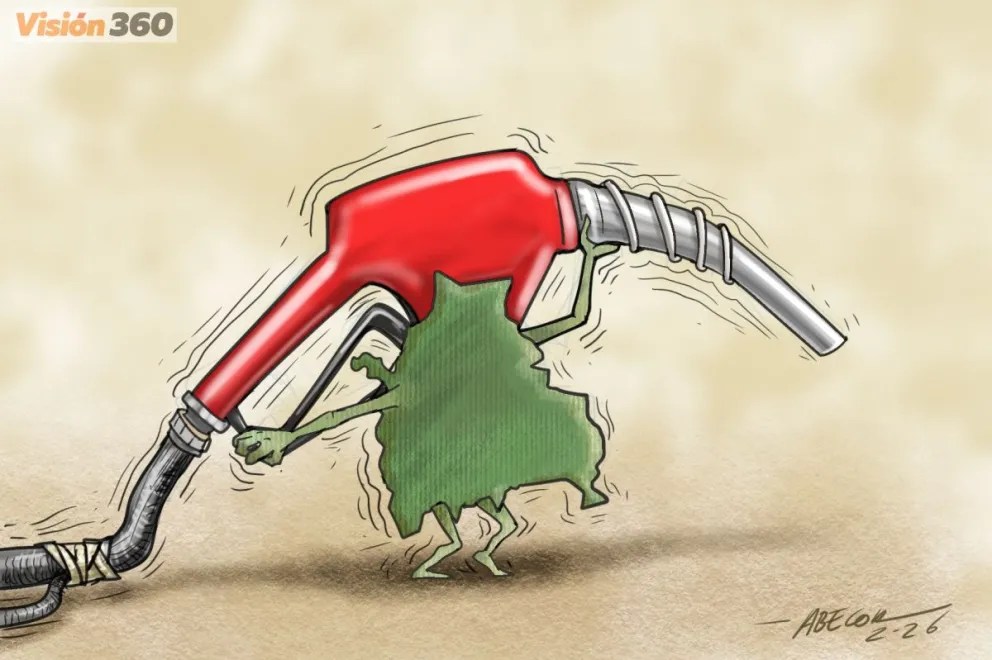
Applied to Bolivia’s current energy emergency, that refrain echoes daily in the nervousness of those who ask when the crisis will “kiss” us head-on; when the gas will run out and power outages will hit the electricity sector. This is not mere idle curiosity, but rather existential questioning by companies and institutions trying to plan their future.
The answer I usually give, as a member of the guild of energy palm readers, begins by clarifying the scope of the question. For such a crisis to erupt, the relevant issue is not knowing “when the gas runs out,” but when a deficit will materialize—that is, when domestic demand will surpass national production. At that moment, Bolivia will have to import gas.
In fact, Bolivia already suffers from a deficit of diesel and gasoline, which we are forced to import while heavy subsidies cushion the blow. Likewise, we are facing an imminent deficit of LPG (liquefied petroleum gas), the bottled gas essential for households that the residential gas network has not yet reached.
As for future deficits—in natural gas and electricity—I prefer to draw inspiration from the biblical prophets who foretold disasters conditioned upon a change of attitude: “If you do not repent, this and that will happen to you.” It is in that spirit that we must interpret the warnings, even from sector authorities, that if we keep doing the same things, the gas deficit will arrive before 2030. The situation is even more alarming given that nearly 70% of our electricity is generated precisely from gas. Therefore, the crucial question is what is being done to avoid or, at least, postpone that tragic rendezvous with energy collapse.
In this regard, I often use a simple metaphor: Bolivia’s energy sector stands on two legs—hydrocarbons and electricity. Today, the former is gravely ill and the latter deeply weakened. However, the therapy undertaken to cure both limbs is despairingly slow and confused.
I perceive a tug-of-war between two souls within the government: a reformist one, seeking to reverse the suffocating statism of the last 20 years that created the current disaster, and a “gattopardism” one, determined to maintain the status quo by partially replacing executives and beneficiaries of failed public energy enterprises—YPFB and ENDE at the forefront—while leaving inherited inefficiency and corruption completely untouched.
Time is running out. It is urgent to approve new hydrocarbon and electricity laws, eliminate subsidies, democratize power generation, and rebuild confidence to attract private investment. Meanwhile, the dispute between those two souls continues, and upon its outcome will depend the answer to the song.
Unfortunately, this ambiguity is not a monopoly of the government. From the national business sector, one would expect a liberal, anti-monopoly, and anti-statist attitude. Yet what we witness regarding ethanol is the opportunistic exploitation of the state monopoly to impose the mandatory and excessive purchase and use of a product that raises reasonable doubts about potential damage to the vast majority of Bolivia’s vehicle fleet.
Ultimately, beyond preventive measures dictated by a “every man for himself” mentality, what is sorely missed is a strategic Plan to guide the revitalization of the energy sector based on the sustainable development of renewable energies.
Quando, quando quando?
https://fzaratti.blog/en/2026/11/tell-me-quando-quando-quando/
Por Francesco Zaratti:
Dime cuándo tú vendrás…
“… dime cuándo, cuándo, cuándo, el año, el día y la hora en que quizás me besarás.”
Así empieza la famosa canción de Tony Renis (1962), interpretada, al ritmo de bossa nova, por artistas como Pat Boone en inglés o por José Guardiola en español.
Aplicado a la emergencia energética que vive Bolivia, ese estribillo resuena todos los días en el nerviosismo de los que preguntan cuándo “nos besará” de lleno la crisis; cuando se acabará el gas y se sufrirán apagones del sector eléctrico. No se trata de mera curiosidad sino de interrogantes existenciales de empresas e instituciones que intentan planificar su futuro.
La respuesta que suelo dar, como miembro del gremio de los quiromantes energéticos, empieza por matizar el alcance de la pregunta. Para que estalle semejante crisis, lo relevante no es saber “cuándo se acaba el gas”, sino cuándo se materializará su déficit, es decir, cuando la demanda interna supere la oferta de la producción nacional. En ese momento, Bolivia deberá importar gas.
De hecho, Bolivia padece ya un déficit de diésel y gasolinas que se ve obligada a importar, incluso subvencionándolos. Asimismo, estamos ante un inminente déficit de GLP, el gas de garrafa indispensable en los hogares a los que aún no llega la red de gas domiciliario.
En cuanto a déficits futuros – de gas natural y electricidad- prefiero inspirarme en los profetas bíblicos que anunciaban desgracias condicionadas a un cambio de actitud: “si no os convertís, os sucederá eso y lo otro”. En ese sentido se debe interpretar la advertencia, incluso por parte de autoridades del sector, de que, si se sigue haciendo lo mismo, el déficit de gas llegará antes del 2030. La situación es aún más alarmante debido a que cerca del 70% de nuestra electricidad se genera precisamente a partir del gas. Por lo tanto, la pregunta crucial es qué se está haciendo para evitar o, por lo menos, postergar esa cita trágica con el colapso energético.
Al respecto, suelo utilizar una metáfora sencilla: el sector energético boliviano se apoya sobre dos piernas —la de los hidrocarburos y la de la electricidad—. Hoy, la primera está gravemente enferma y la segunda profundamente debilitada. Sin embargo, la terapia emprendida para curarlas resulta desesperantemente lenta y confusas.
Percibo la pugna de dos almas dentro del gobierno: la reformista, que busca revertir el estatismo asfixiante de los últimos 20 años, artífice del desastre actual, y la “gattopardista” que se empeña en mantener el status quo, reemplazando parcialmente a ejecutivos y beneficiarios de las empresas públicas fracasadas -YPFB y ENDE a la cabeza–, pero dejando intactas la ineficiencia y la corrupción heredadas.
El tiempo se agota. Es urgente aprobar nuevas leyes de hidrocarburos y de electricidad, eliminar los subsidios, democratizar la generación eléctrica y reconstruir la confianza para atraer inversión privada. Mientras tanto continúa la disputa entre esas dos almas, de cuyo desenlace dependerá la respuesta a la canción.
Desafortunadamente, esa ambigüedad no es monopolio del gobierno. Del empresariado nacional se esperaría una actitud liberal, anti monopolica y antiestatista. Sin embargo, lo que presenciamos en el tema del etanol es el aprovechamiento oportunista del monopolio estatal para imponer la compra y uso, obligatorio y desmesurado, de un producto que deja dudas razonables sobre los posibles daños que podría causar a una mayoría del parque automotor boliviano.
En fin, más allá de las medidas preventivas dictadas, que se parecen a un “sálvese quien pueda”, se extraña un Plan que oriente la reactivación del sector energético con base en el desarrollo sostenible de las energías renovables.
¿Cuándo, cuándo, cuándo?


Leave a Reply