By ANF, AND; Eju.tv:
Cashless Society in Bolivia: QR Codes, Mobile Banking and the Systems Behind the Digital Economy
The change is already part of everyday life. Paying for a product, transferring money or settling a bill can now be done from a mobile phone, without any physical exchange of cash.

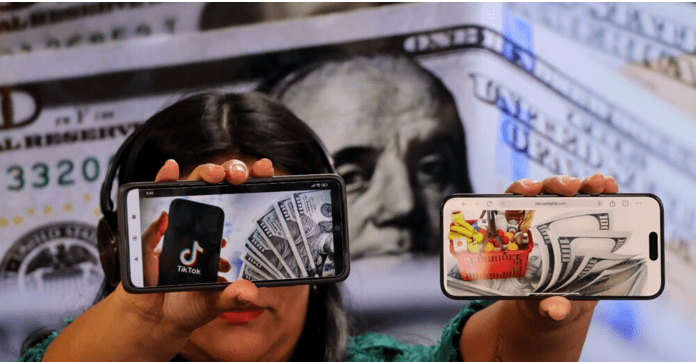
The phenomenon represents more than a shift in consumer habits. Photo: Unifranz
A cashless society is one in which a growing share of transactions is carried out through digital methods such as QR codes, mobile banking, cards and digital wallets. In Bolivia, the expansion of these systems is reducing dependence on physical cash, but it is also increasing the need to ensure financial inclusion, cybersecurity, connectivity and the capacity to respond to technological failures.
The change is already part of daily life. Paying for a product, transferring money or paying for a service can be completed from a smartphone without any physical exchange of banknotes.
The phenomenon represents more than a change in consumer behavior. It is also transforming financial infrastructure, professional skills and the security measures required to sustain a digital economy.
What systems are replacing cash?
The main mechanisms are QR payments, mobile banking and digital wallets. QR payments, for example, allow users to make transfers after scanning a code through an application. Mobile banking moves financial operations to smartphones, while digital wallets enable payments and transfers through electronic platforms.
The Central Bank of Bolivia has promoted the QR BCB Bolivia standard, designed to facilitate interoperable electronic payments among different financial institutions.
According to Alejandro Soruco, Director of the Commercial Engineering program at Unifranz, digital payments, especially through QR codes, “are gaining ground because they offer a more agile, secure and efficient alternative to cash in everyday transactions.” His statement highlights one of the main drivers behind adoption: the ability to complete transactions quickly without handling physical money.
Is Bolivia moving toward a cashless economy?
Bolivia is moving toward an economy with reduced cash usage, but it cannot yet be considered a completely cashless society. The process is linked to the growth of electronic payments, wider access to smartphones and the adoption of digital financial solutions.
Sergio Santivañez, a financial technology expert and professor of Commercial Engineering at Unifranz, explains that electronic transactions and payments play an important role in the transformation toward cashless economies because they reduce the use of physical money.
The same expert notes that in Bolivia there is still a traditional association between security and cash, although new ecosystems have emerged to enable secure electronic transactions. This means the transition depends not only on technology, but also on trust.
What is the relationship between digital payments and financial inclusion?
Digital financial inclusion aims to expand access to and use of financial services through technological tools, but digitizing payments does not automatically guarantee that everyone will be included.
Participating in a digital economy requires devices, connectivity, financial and digital literacy, and confidence in the platforms being used. Fintech companies and digital wallets can reduce certain barriers to access because they allow transactions to be carried out without visiting a bank branch.
Ronald Bedregal, Director of the Economic Engineering program at Unifranz, argues that financial transformation demands new skills and knowledge to understand how digital services work and their economic implications. Inclusion, therefore, is not simply about providing an application; it also requires users to understand and use it safely.
Why is cybersecurity essential in a cashless economy?
Cybersecurity is indispensable to a digital economy because it protects accounts, personal data and transactions from threats such as phishing, identity theft and social engineering.
Marcelo Pacheco, Director of Systems Engineering and Digital Innovation at Unifranz, states: “Cybersecurity has become a fundamental pillar of digital development. Protecting the data of individuals and organizations is no longer an option but a strategic necessity to strengthen trust in digital services.”
The risk does not affect only banks. It also extends to users making payments from their phones, businesses receiving transfers and companies storing financial information.
Pacheco also emphasizes prevention and the development of responsible digital habits as tools to reduce exposure to cybercriminals. As a result, an economy with less cash requires citizens with stronger digital security awareness.
What happens if the technological infrastructure fails?
A digital economy becomes increasingly dependent on internet access, devices, electricity, servers, financial platforms and authentication systems. This creates a different type of vulnerability from that found in an economy based primarily on cash.
If a banking app stops working, an internet connection is interrupted or a device becomes unusable, a person may temporarily lose the ability to carry out a transaction.
Technological dependence does not mean cash is superior. It means that a digital economy requires backup systems and resilience mechanisms to keep services functioning during disruptions.
What professionals does this new economy need?
Financial transformation is also reshaping professional education. Fintech, data analytics, digital banking, cybersecurity, regulation and risk management require professionals capable of combining financial and technological expertise.
Kadir Lanza, Director of Economic and Financial Engineering at Unifranz, argues that “digital payment platforms reflect a structural transformation in financial markets,” driven by optimized capital flows and reduced dependence on traditional intermediaries.
His analysis further suggests that this new ecosystem requires professionals who understand both the advantages and the risks. In this environment, future skills extend beyond mastery of digital tools and include analytical thinking, critical reasoning, risk management and adaptability.
Will the future be completely cashless?
There is no single answer. The data shows an expansion of digital payment methods, but the continued presence of cash is influenced by economic, cultural, technological and trust-related factors.
The transition toward a society with less cash can bring benefits in terms of speed, traceability and access to services, but it also requires solutions to challenges involving connectivity, security, financial education and technological dependence.
The question therefore changes. It is no longer simply about when cash will disappear, but whether Bolivia can build a digital economy that is secure, inclusive and resilient enough to function when technology becomes the primary channel for moving money.
Por ANF, AND; Eju.tv:
Sociedad sin efectivo en Bolivia: QR, banca móvil y los sistemas detrás de la economía digital
El cambio ya forma parte de la vida cotidiana. Pagar un producto, transferir dinero o cancelar un servicio puede resolverse desde un teléfono celular, sin que exista intercambio físico de billetes.
El fenómeno no representa únicamente un cambio en los hábitos de consumo. Foto: Unifranz
Una sociedad sin efectivo es aquella en la que una parte creciente de las transacciones se realiza mediante medios digitales como códigos QR, banca móvil, tarjetas y billeteras digitales. En Bolivia, el crecimiento de estos sistemas está reduciendo la dependencia del dinero físico, pero también aumenta la necesidad de garantizar inclusión financiera, ciberseguridad, conectividad y capacidad de respuesta ante fallas tecnológicas.
El cambio ya forma parte de la vida cotidiana. Pagar un producto, transferir dinero o cancelar un servicio puede resolverse desde un teléfono celular, sin que exista intercambio físico de billetes.
El fenómeno no representa únicamente un cambio en los hábitos de consumo. También modifica la infraestructura financiera, las competencias profesionales y las medidas de seguridad necesarias para sostener una economía digital.
¿Qué sistemas están reemplazando al efectivo?
Los principales mecanismos son los pagos QR, la banca móvil y las billeteras digitales. El pago QR, por ejemplo, permite realizar una transferencia después de escanear un código desde una aplicación. La banca móvil traslada operaciones financieras al teléfono y las billeteras digitales permiten realizar pagos y transferencias desde plataformas electrónicas.
El Banco Central de Bolivia ha impulsado el estándar QR BCB Bolivia, que busca facilitar pagos electrónicos interoperables entre diferentes entidades.
Para Alejandro Soruco, director de la carrera de Ingeniería Comercial de Unifranz, los pagos digitales, especialmente mediante códigos QR, “están ganando terreno porque ofrecen una alternativa más ágil, segura y eficiente frente al efectivo en las transacciones cotidianas”. La afirmación permite identificar uno de los principales factores detrás de la adopción: la posibilidad de realizar operaciones de forma rápida sin necesidad de manejar dinero físico.
¿Bolivia avanza hacia una economía sin efectivo?
Bolivia avanza hacia una economía con menor uso de efectivo, pero todavía no puede considerarse una sociedad completamente sin dinero físico. El proceso está vinculado al crecimiento de los pagos electrónicos, la expansión del acceso a teléfonos inteligentes y la incorporación de soluciones financieras digitales.
Sergio Santivañez, experto en tecnología financiera y docente de Ingeniería Comercial de Unifranz, explica que las transacciones y pagos electrónicos desempeñan un papel importante en la transformación hacia economías cashless, porque permiten reducir el uso de dinero en efectivo.
El mismo especialista advierte que en Bolivia existe una asociación tradicional entre seguridad y efectivo, aunque también se han desarrollado nuevos ecosistemas para realizar transacciones electrónicas de forma segura. Esto significa que la transición no depende solamente de la existencia de tecnología. También requiere confianza.
¿Qué relación existe entre pagos digitales e inclusión financiera?
La inclusión financiera digital consiste en ampliar el acceso y uso de servicios financieros mediante herramientas tecnológicas, pero digitalizar los pagos no garantiza automáticamente que todas las personas estén incluidas.
Para participar en una economía digital se necesitan dispositivos, conectividad, conocimientos financieros y digitales y confianza en las plataformas. Las fintech y las billeteras digitales pueden reducir determinadas barreras de acceso porque permiten realizar operaciones sin acudir a una sucursal bancaria.
Ronald Bedregal, director de la carrera de Ingeniería Económica de Unifranz, sostiene que la transformación financiera exige nuevas competencias y conocimientos para comprender el funcionamiento de los servicios digitales y sus implicaciones económicas. La inclusión, por tanto, no consiste solamente en ofrecer una aplicación. También implica que los usuarios puedan comprenderla y utilizarla de manera segura.
¿Por qué la ciberseguridad es clave para una economía sin efectivo?
La ciberseguridad es indispensable para una economía digital porque protege las cuentas, los datos personales y las transacciones frente a amenazas como phishing, robo de identidad e ingeniería social.
Marcelo Pacheco, director de Ingeniería de Sistemas e Innovación Digital de Unifranz, afirma: “La ciberseguridad se ha convertido en un pilar fundamental para el desarrollo digital. Proteger los datos de las personas y organizaciones ya no es una opción, sino una necesidad estratégica para fortalecer la confianza en los servicios digitales”.
El riesgo no afecta únicamente a los bancos. También alcanza a usuarios que realizan pagos desde sus teléfonos, comercios que reciben transferencias y empresas que almacenan información financiera.
Pacheco también plantea la prevención y la formación de hábitos digitales responsables como herramientas para reducir la exposición a los ciberdelincuentes. Por ello, una economía con menos efectivo necesita ciudadanos con mayores conocimientos de seguridad digital.
Servicios y productos de seguridad
¿Qué ocurre si falla la infraestructura tecnológica?
Una economía digital aumenta su dependencia de internet, dispositivos, electricidad, servidores, plataformas financieras y sistemas de autenticación. Esto crea una vulnerabilidad diferente a la que existe en una economía basada principalmente en efectivo.
Si una aplicación bancaria deja de funcionar, una conexión se interrumpe o un dispositivo queda inutilizado, una persona puede perder temporalmente la capacidad de realizar una operación.
La dependencia tecnológica no significa que el efectivo deba considerarse superior. Significa que una economía digital necesita sistemas de respaldo y mecanismos de resiliencia para mantener sus servicios ante interrupciones.
¿Qué profesionales necesita esta nueva economía?
La transformación financiera también está modificando la formación profesional. Fintech, análisis de datos, banca digital, ciberseguridad, regulación y gestión de riesgos requieren perfiles capaces de combinar conocimientos financieros y tecnológicos.
Kadir Lanza, director de Ingeniería Económica y Financiera de Unifranz, sostiene que “las plataformas digitales de pago son el reflejo de una transformación estructural en los mercados financieros”, impulsada por la optimización de los flujos de capital y una menor dependencia de intermediarios tradicionales.
El mismo análisis plantea que este nuevo ecosistema requiere profesionales capaces de comprender ventajas y riesgos. En este escenario, las competencias del futuro no se limitan al dominio de herramientas digitales: también incluyen análisis, pensamiento crítico, gestión de riesgos y capacidad para adaptarse.
¿El futuro será completamente sin efectivo?
No existe una respuesta única. Los datos muestran una expansión de los medios digitales, pero la permanencia del efectivo responde a factores económicos, culturales, tecnológicos y de confianza.
La transición hacia una sociedad con menos efectivo puede generar beneficios en rapidez, trazabilidad y acceso a servicios, pero también exige resolver problemas de conectividad, seguridad, educación financiera y dependencia tecnológica.
La pregunta, entonces, cambia. No se trata únicamente de saber cuándo desaparecerá el efectivo, sino de determinar si Bolivia puede construir una economía digital que sea segura, inclusiva y suficientemente resiliente para funcionar cuando la tecnología se convierta en la principal vía para mover el dinero.


Leave a comment