By Freddy Lacio, El Deber:

The airstrip in the Huanchaca mountain range where the triple murder that shocked all Bolivians took place
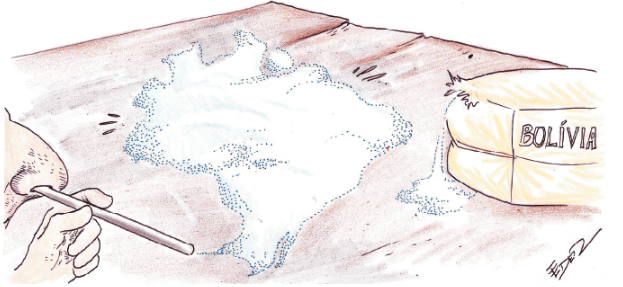
The murder of Noel Kempff Mercado exposed the dangers of cocaine. Bolivia now faces territorial disputes, contract killings, and growing concern over the penetration of organized crime into institutions and the legal economy.
Forty years ago, the Huanchaca triple murder revealed to Bolivia a criminal structure capable of building a cocaine factory deep in the jungle, operating an airstrip, and killing anyone who came too close. Today, the challenge is more complex: drug trafficking has become decentralized into networks dedicated to production, transit, storage, money laundering, and territorial control.
According to criminal law expert and former prosecutor Joadel Bravo, the main threat is that this criminal activity could evolve into a parallel structure of economic, territorial, and institutional power, paving the way toward a narco-state.
In 1986, naturalist Noel Kempff Mercado, pilot Juan Cochamanidis, and guide Franklin Parada were murdered on the Caparuch Plateau, where a cocaine-processing facility was operating. Two Brazilians were convicted, but the owners and masterminds behind the operation were never identified. Two months later, Congressman Edmundo Salazar Terceros, who was investigating the massacre, was gunned down with complete impunity.
Four decades later, Bolivia has developed greater anti-drug operational capacity, but it also faces a more sophisticated criminal landscape. Government Minister Marco Antonio Oviedo reported 7,546 operations, 2,187 arrests, 16.29 tons of cocaine seized, and 446 drug-processing facilities destroyed.
Henry Oporto, director of the Milenio Foundation, argues that Bolivia has moved from merely producing coca leaves and coca paste to occupying a higher position in the drug trade chain: cocaine processing and manufacturing, as well as serving as a route for international trafficking. Smuggling, illegal mining, and money laundering have also become intertwined with these activities.
Oporto attributes this evolution to state weakness, limited territorial control, and the “capture” of institutions by criminal groups. Infiltration of the police and judicial system, combined with highly porous borders, has reduced the country’s ability to combat organized crime.
A Delicate Situation
Santa Cruz occupies a central position because of its borders with Brazil and Paraguay. The director of the Milenio Foundation also notes that it has become a refuge for drug traffickers. The case of Sebastián Marset demonstrated the ability of criminal organizations to deploy security networks, real estate holdings, and air logistics. Following his capture, Deputy Minister Ernesto Justiniano warned: “If one Marset is caught, there are probably nine others in the making.”
Police are investigating a dispute over these territories, involving the PCC and Comando Vermelho. As of September 3, authorities had recorded 46 deaths in 37 attacks displaying characteristics of executions or contract killings. Not all can be attributed to drug trafficking, but several involve theories of score-settling and disputes between criminal organizations.
For Bravo, this violence is what distinguishes the current scenario. In the past, Bolivia discovered the existence of powerful drug barons; today, it faces a decentralized and transnational criminal network seeking to control territories, routes, and markets.
“In 1986, Bolivia discovered that it had drug trafficking; 40 years later, the challenge is to prevent drug trafficking from becoming a parallel structure of economic, territorial, and institutional power, which would pave the way for Bolivia to become a narco-state,” he stated.
Huanchaca left behind a question that remains unanswered 40 years later: who was behind the business, and who protected it? The challenge continues to be tracing the money, uncovering the protection networks, and identifying those responsible who remain hidden behind the criminal structure.
Por Freddy Lacio Fernández, El Deber:
La pista para aviones en plena serranía de Huanchaca, donde ocurrió el triple asesinato que conmocionó a todos los bolivianos
El asesinato de Noel Kempff Mercado expuso el peligro de la cocaína. Bolivia ahora enfrenta disputas territoriales, sicariato y una creciente preocupación por la penetración del crimen organizado en instituciones y economías legales
Hace 40 años, el triple crimen de Huanchaca reveló a Bolivia una estructura capaz de instalar una fábrica de cocaína en plena selva, operar una pista aérea y asesinar a quienes se acercaran demasiado. Hoy, el desafío es más complejo: el narcotráfico se ha descentralizado en redes de producción, tránsito, almacenamiento, lavado y disputa territorial.
Para el penalista y exfiscal Joadel Bravo, la amenaza central es que esa criminalidad termine convirtiéndose en una estructura paralela de poder económico, territorial e institucional, allanando el camino hacia un narcoestado.
En 1986, el naturalista Noel Kempff Mercado, el piloto Juan Cochamanidis y el guía Franklin Parada, fueron asesinados en la meseta de Caparuch, donde operaba una factoría de cocaína. Dos brasileños fueron condenados, pero nunca se identificó a los propietarios ni a los autores intelectuales. Dos meses después, el diputado Edmundo Salazar Terceros, que investigaba la masacre, fue acribillado con impunidad.
Cuatro décadas después, Bolivia muestra mayor capacidad operativa antidroga, pero también un escenario criminal más sofisticado. El ministro de Gobierno, Marco Antonio Oviedo, reportó 7.546 operativos, 2.187 aprehendidos, 16,29 toneladas de cocaína incautadas y 446 fábricas destruidas.
Henry Oporto, director de la Fundación Milenio, sostiene que Bolivia pasó de producir hoja de coca y pasta base a ocupar un eslabón superior: procesamiento y fabricación de cocaína y ruta para el tráfico internacional. Se suman contrabando, minería ilegal y lavado de dinero.
Oporto atribuye este salto a la debilidad estatal, el débil control territorial y la ‘captura’ de instituciones por grupos criminales. La infiltración de la Policía y la Justicia, junto con fronteras demasiado permeables, ha reducido la capacidad de combate.
Con cuidado
Santa Cruz ocupa un lugar central por sus fronteras con Brasi y Paraguay. El director de la Fundación Milenio señala además que se convirtió en refugio para narcotraficantes. Sebastián Marset mostró la capacidad del narcotráfico de desplegar seguridad, inmuebles y logística aérea. Tras su captura, el viceministro Ernesto Justiniano advirtió: “Si se agarra un Marset, probablemente otros nueve se están cocinando”.
La Policía investiga una disputa por esos espacios, con presencia del PCC y el Comando Vermelho. Hasta el 3 de septiembre se contabilizaron 46 fallecidos en 37 ataques con características de ejecución o sicariato. No todos pueden atribuirse al narcotráfico, pero varios incluyen hipótesis de ajustes de cuentas y disputas entre organizaciones.
Para Bravo, esa violencia distingue el escenario actual. Antes, Bolivia descubrió que existían grandes barones de la droga; hoy enfrenta una criminalidad descentralizada y transnacional que busca controlar territorios, rutas y mercados. “En 1986, Bolivia descubrió que tenía narcotráfico; 40 años después, el desafío es evitar que el narcotráfico termine convirtiéndose en una estructura paralela de poder económico, territorial e institucional, lo que instituye en el camino allanado para que Bolivia se convierta en narcoestado”, apuntó.
Huanchaca dejó una pregunta que 40 años después sigue abierta: quiénes estaban detrás del negocio y quiénes lo protegían. El desafío continúa siendo llegar al dinero, las redes de protección y los responsables que permanecen detrás de la estructura criminal.


Leave a Reply